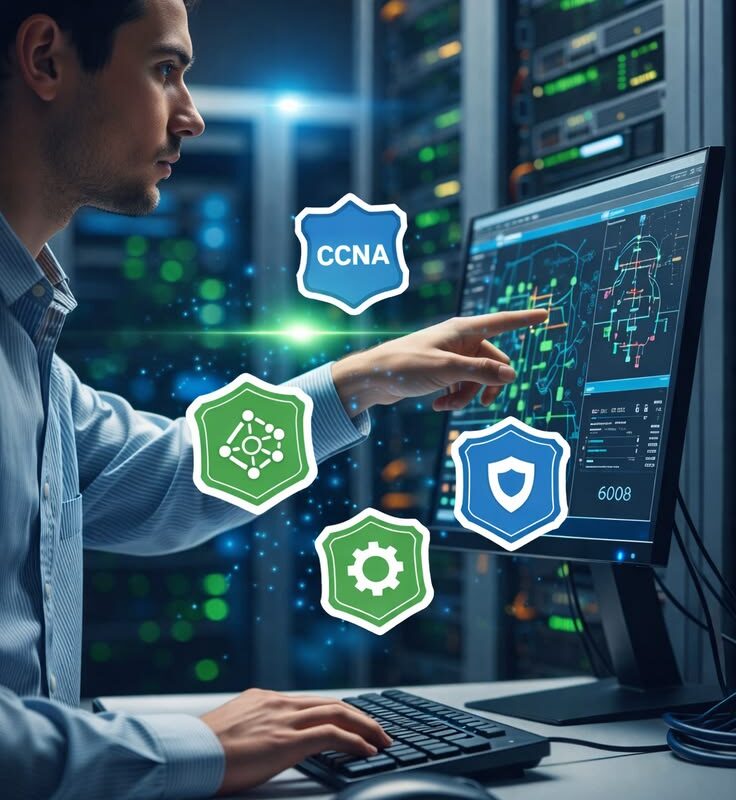
If you are living in Lagos and dreaming of a career in cybersecurity, you may have asked yourself: do I really need a Computer Science degree to break into this field? The good news is that the answer is a clear, emphatic no. Across the world, and increasingly right here in Lagos, self-taught professionals, career switchers, and curious young people are landing well-paying cybersecurity roles armed not with university transcripts, but with practical skills, industry certifications, and hands-on experience.
This article walks you through everything you need to know: why cybersecurity is one of the most accessible tech careers for non-CS graduates, the concrete paths available to you in Lagos, the certifications that employers actually respect, and the local and online resources you can start using today.
Why Cybersecurity Doesn’t Require a CS Degree

Cybersecurity is fundamentally a skills-based profession. Unlike medicine or law, there is no regulatory body in Nigeria or in most countries that mandates a university degree before you can work as a security analyst, penetration tester, or incident responder. What employers care about is whether you can do the job.
The global cybersecurity skills gap is enormous. According to industry research, there are millions of unfilled cybersecurity positions worldwide, and Nigerian businesses from fintech firms on Victoria Island to telecoms giants and government agencies are no exception. Companies need talent, and they are increasingly open to hiring candidates who can demonstrate competence through certifications and portfolios rather than degrees.
The skills employers actually look for include: network security fundamentals, vulnerability assessment, ethical hacking, security operations, incident response, and knowledge of compliance frameworks like ISO 27001 and NDPR (Nigeria Data Protection Regulation). None of these require a four-year CS programme to master.
The Lagos Cybersecurity Landscape in 2025
Lagos is Nigeria’s technology capital and the economic nerve centre of West Africa. The city is home to the country’s largest fintech ecosystem, major banks, telecom operators, oil and gas firms, and a rapidly expanding startup scene. All of these sectors handle sensitive data and face growing cyber threats from phishing attacks and ransomware to insider threats and payment fraud.
The Nigerian Communications Commission (NCC) and the Central Bank of Nigeria (CBN) have been tightening cybersecurity requirements for regulated industries, which means demand for cybersecurity professionals is growing by the month. Lagos-based firms like Flutterwave, Paystack (now Stripe-owned), GTBank, Access Bank, and MTN Nigeria all have active cybersecurity teams and they hire based on skill, not just credentials.
Local training centres, tech hubs, and bootcamps have also multiplied in recent years. Places like Yaba often called Nigeria’s Silicon Valley are increasingly offering cybersecurity training programmes designed for beginners and career-changers who want practical, job-ready skills fast.
Entry Points: How to Start Learning Cybersecurity in Lagos Without a Degree
- Start With Free Online Platforms
Before spending a single naira, take advantage of the enormous amount of free cybersecurity learning available online. Platforms like TryHackMe and Hack The Box are designed for complete beginners and offer guided, hands-on labs that run entirely in your browser no special hardware required.
- TryHackMe — beginner-friendly, gamified cybersecurity learning paths
- Hack The Box — more advanced, great for practising penetration testing
- Cybrary — free and paid courses covering SOC analysis, ethical hacking, and more
- Google Cybersecurity Certificate on Coursera — affordable and highly respected by employers
- IBM SkillsBuild — free cybersecurity courses with certificates of completion
An internet connection, a laptop or even a mid-range Android phone, and a consistent study schedule of two to three hours a day is all you need to get started. Many Lagos learners study during their commute on the BRT or in the evenings after work.
- Pursue Industry Certifications
Certifications are the currency of the cybersecurity world. They validate your skills to employers in a way that a university degree often cannot, because they are current, specific, and globally recognised. Here are the certifications most respected by Lagos employers:
- CompTIA Security+ — the gold-standard entry-level certification, widely recognised by multinational firms operating in Nigeria
- Certified Ethical Hacker (CEH) — popular in Nigeria, particularly for penetration testing roles
- CompTIA Network+ — highly recommended before Security+ if you have no networking background
- ISC2 Certified in Cybersecurity (CC) — free to obtain and excellent for beginners
- OSCP (Offensive Security Certified Professional) — advanced, for those targeting high-paying penetration testing jobs
Vouchers for these exams can be purchased in naira through authorised testing centres in Lagos such as Prometric and Pearson VUE centres located on Lagos Island and in Ikeja. Scholarships and discounted vouchers are also periodically available through platforms like ISC2 and CompTIA.
- Join Local Cybersecurity Communities
Learning alone is harder than learning together. Lagos has a growing cybersecurity community that holds meetups, workshops, and Capture The Flag (CTF) competitions — practical hacking competitions that build real skills and are also great for your resume.
- ISACA Lagos Chapter — professional association with regular events and mentorship
- Nigeria Cyber Security Professionals Association (NCSA) — networking and industry updates
- Lagos Cyber Security Meetup Groups — informal communities on Telegram and WhatsApp
- CyberGirls Fellowship — an intensive programme for women seeking to enter cybersecurity in Nigeria
- ALX Africa — offers a cybersecurity track with a strong Lagos presence
These communities are invaluable. Members share job openings, study resources, and practical advice. More importantly, the connections you make here can lead directly to your first cybersecurity role.
- Enrol in a Local Bootcamp or Training Programme
Structured, in-person or hybrid learning accelerates progress for many people. Several reputable organisations in Lagos now offer cybersecurity bootcamps and training programmes:
- Lagos Data School— runs cybersecurity training programmes across Nigeria and across the globe with a focus on practical skills
Building a Portfolio Without a Degree
One of the most effective things you can do as a non-CS graduate is build a visible, verifiable portfolio. Employers want to see that you can do the work and the following activities help you demonstrate exactly that:
- Participate in CTF competitions and document your solutions on a personal blog or GitHub
- Set up a home lab using free tools like VirtualBox and Kali Linux to practise ethical hacking
- Complete TryHackMe and Hack The Box rooms and share your progress on LinkedIn
- Contribute to open-source security tools or write walkthroughs of security challenges
- Volunteer your skills to small Lagos NGOs or businesses that cannot afford professional security services
A well-documented GitHub profile or a simple blog showing your practical work often impresses hiring managers more than a list of coursework from a university programme.
What Salary Can You Expect in Lagos?
Cybersecurity professionals in Lagos earn competitive salaries, especially compared to the broader Nigerian job market. Entry-level security analysts typically earn between N200,000 and N450,000 per month, while mid-level professionals with two to four years of experience and strong certifications can earn between N500,000 and N1,200,000 monthly.
Senior penetration testers, security architects, and those working for multinational firms or in the fintech sector can earn significantly more and many Lagos-based cybersecurity professionals also take on international remote contracts, earning in US dollars or British pounds while living in Lagos.
Freelance and consulting opportunities are also growing rapidly, particularly for ethical hackers and security auditors who can serve SMEs across Lagos that lack in-house security staff.
Common Challenges — And How to Overcome Them
Unstable internet connection. Download course materials for offline study, use data bundles strategically, and leverage community spaces with Wi-Fi like tech hubs and co-working spaces in Yaba and VI.
Cost of certification exams. Start with the free ISC2 CC certification, apply for scholarship vouchers from CompTIA and ISC2, and save incrementally using budgeting apps.
Imposter syndrome without a degree. Remember that the industry values what you can do, not where you studied. Your certifications, portfolio, and community connections speak louder than a transcript.
Knowing where to start. Begin with CompTIA Network+, then Security+, while simultaneously working through TryHackMe’s beginner paths. This combination gives you a solid technical foundation within 6 to 12 months.
Your 12-Month Roadmap to a Cybersecurity Career in Lagos
- Months 1–2: Complete TryHackMe Pre-Security and Introduction to Cybersecurity paths. Join an ISACA Lagos or NCSA online community.
- Months 3–4: Study for and pass CompTIA Network+. Set up a home lab with VirtualBox and Kali Linux.
- Months 5–7: Study for and sit CompTIA Security+. Begin participating in CTF competitions.
- Months 8–9: Build your LinkedIn profile, document your portfolio on GitHub, and begin applying for junior security analyst or SOC analyst internships.
- Months 10–12: Pursue your first entry-level role or freelance contract. Consider the CEH or ISC2 SSCP as your next certification goal.
Final Thoughts: Lagos Is Ready — Are You?
The cybersecurity industry in Lagos is at an inflection point. As Nigerian businesses digitise faster than ever, the demand for skilled security professionals is outpacing the supply of traditionally-educated graduates. This gap is your opportunity.
You do not need a Computer Science degree to learn cybersecurity in Lagos. What you need is curiosity, consistency, and a clear plan. Start with free resources, earn your first certification, connect with the community, and build something visible. The path from where you are now to a well-paying cybersecurity career in Lagos is not a matter of if — it is only a matter of when.
Your first step starts today by clicking here.