
Do you want to learn robotics, Arduino, and Raspberry Pi in Ikeja, Lagos? You are in the right place. Lagos Data School is Nigeria’s top robotics and programming training centre. Hundreds of students have been trained here, from school children to working engineers. Robots are built. Code is written. Every student completes real projects by the end of their course. Also, every graduate leaves with a skill that Lagos employers and tech clients value. That is why Lagos Data School is ranked the best robotics training centre in Ikeja, Lagos State.
So, this guide covers all you need to know. It explains what robotics, Arduino, and Raspberry Pi are and why they matter. In addition, it covers what Lagos Data School teaches at each level. Also, it shows what you can earn and who will hire you in Lagos. As a result, by the end of this guide, you will have a clear plan to start building robots and writing code today.
So, Why Learn Robotics and Programming in Ikeja, Lagos, in 2026?
Simply put, Lagos is Nigeria’s tech hub. Ikeja, its capital, is home to dozens of tech firms, STEM schools, and engineering companies. So the demand for robotics and embedded programming skills in Ikeja is growing every year. Engineers who build robots, write Arduino code, and run Pi projects are hired fast.
Also, robotics skills pay well in Lagos. A trained robotics engineer earns N300k to N900k per month. Senior embedded systems developers earn N1m to N2m or more. Moreover, freelance robotics and IoT developers in Lagos serve multiple clients and earn even more. In addition, STEM teachers who know robotics are in high demand at Ikeja private schools and tech hubs. As a result, learning robotics and programming in Ikeja in 2026 is one of the smartest moves any Lagos tech enthusiast or engineer can make.
What Are Robotics, Arduino, and Raspberry Pi?
What Is Robotics?
Robotics is the design, build, and control of machines that move, sense, and react to their environment. A robot is a machine that takes input from the world around it, processes that input, and then acts on it. So when a robot avoids a wall, follows a line, or lifts an object, it is doing exactly that. In Lagos, factories, schools, security systems, and farms all use robots.
What Is Arduino?
Arduino is a small, low-cost microcontroller board. It is the brain of most beginner robots. You write code in the Arduino IDE, upload it to the board, and the board runs that code to control motors, LEDs, and sensors. Also, Arduino is open-source and very affordable. An Arduino Uno costs under N8,000. So it is the go-to tool for Lagos beginners and pros alike. In short, if a robot moves, blinks, or beeps in Lagos, there is a good chance an Arduino board is behind it.
What Is Raspberry Pi?
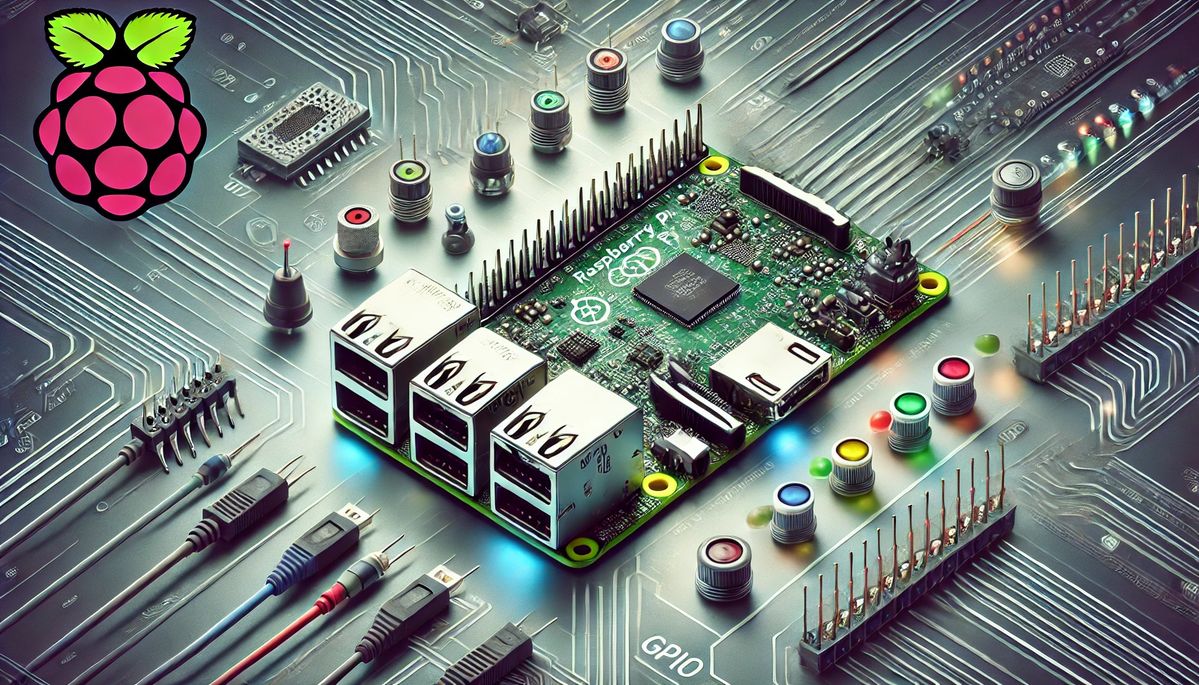
Raspberry Pi is a small, full computer, smaller than a phone, that runs Linux. Unlike Arduino, the Pi can run apps, connect to the internet, and process video and images. So it handles more complex tasks: face recognition, voice control, smart homes, and IoT dashboards. Also, the Pi works with the same sensors and motors as Arduino. Moreover, Python is the main language used on the Pi. As a result, Raspberry Pi students learn real programming skills that go far beyond robotics alone.
Arduino vs Raspberry Pi: Which Should You Learn First?
A common question Lagos Data School gets from Ikeja students is: Which should I learn first, Arduino or Raspberry Pi? Here is a clear answer:
| Feature | Arduino | Raspberry Pi |
| Type | Microcontroller board | Mini Linux computer |
| Main language | C++ (Arduino IDE) | Python |
| Best for | Real-time hardware control | Complex apps, AI, IoT |
| Power use | Very low — runs on batteries | Higher — needs a power supply |
| Cost in Lagos | N6,000 – N12,000 | N20,000 – N45,000 |
| Best starting point | Yes — for complete beginners | After Arduino basics |
In short, start with Arduino. It is cheaper, simpler, and gives you the hardware base that makes the Raspberry Pi much easier to understand. Lagos Data School teaches Arduino first in all beginner courses. After six to eight weeks on Arduino, students move to Raspberry Pi and build more complex projects.
Lagos Data School: The Home of Robotics Training in Ikeja, Lagos
When it comes to robotics, Arduino, and Raspberry Pi training in Ikeja, Lagos, Lagos Data School leads Nigeria. Indeed, it is the country’s most trusted robotics training centre. Every instructor is a working engineer who builds real robots and IoT systems for Lagos clients every day. So you learn from people who do this work for real. Also, every class is a live build session. No slides only. No watching videos. You wire circuits, write code, and run your robot in every single class. That is why Lagos Data School graduates arrive at their first role ready to build from day one.
In addition, Lagos Data School believes every Nigerian student, engineer, or entrepreneur deserves expert robotics training. So the studio has full Arduino kits, Pi boards, sensors, motors, and every part students need. Also, every student keeps their own kit for the whole course. Moreover, lessons are kept small and personal. As a result, your instructor knows your project, your code, and your progress week by week.
To explore all robotics and programming courses in Ikeja, visit Lagos Data School. Also, view real student robot projects at the Lagos Data School Portfolio.
What Makes Lagos Data School the Best Robotics School in Ikeja, Lagos?
Here is what sets Lagos Data School apart from every other robotics course in Lagos State:
- Kits included: Every student gets an Arduino or Raspberry Pi starter kit on their first day. No need to buy anything separately. Also, sensors, motors, and wires are all provided for you. In short, you come to class, and everything you need is already there.
- Build in every class: Every session is a hands-on build session. You wire circuits, write code, and test it in every class. A working project is completed by the end of every module. So you never leave a class without something real to show.
- Real project briefs: Every project uses a real Lagos use case: a car park sensor, a home alarm system, a line-following robot, or a Pi-powered face scanner. In addition, your finished projects go straight into your portfolio. As a result, any Ikeja employer can test your work before they hire you.
- Arduino and Pi both taught: Lagos Data School is one of the very few Ikeja robotics schools that teach both Arduino and Raspberry Pi. Moreover, the Python and C++ code skills you gain transfer to software engineering and data science roles. So your learning goes far beyond robotics.
- Flexible schedule: Courses run in the mornings, afternoons, and evenings in Ikeja. Also, online classes with kit delivery are available for students outside the Lagos Data School studio. Therefore, Ikeja traffic is never a reason to miss a class.
- Career and client support: Every Lagos Data School graduate receives CV help, LinkedIn coaching, and direct referrals to Lagos tech firms, STEM schools, and engineering companies. Best of all, graduates who want to freelance get a guide to finding Ikeja clients and setting project rates.
Robotics and Programming Courses at Lagos Data School, Ikeja: Full 2026 List
Here is the complete robotics and programming course list at Lagos Data School in 2026:
| Course | Key Skills and Projects | Duration | Level |
| Arduino Foundations | IDE setup, LED blink, buttons, buzzer, basic circuits | 2 weeks | Beginner |
| Arduino Sensors and Motion | Ultrasonic, IR, temperature sensors, motor control, PWM | 3 weeks | Beginner–Mid |
| Line-Following Robot | IR sensor array, PID logic, and autonomous robot build | 4 weeks | Intermediate |
| Obstacle-Avoiding Robot | Ultrasonic + servo sweep, avoidance logic, full robot build | 4 weeks | Intermediate |
| Raspberry Pi Foundations | Pi setup, Linux basics, Python scripts, GPIO pins | 3 weeks | Intermediate |
| Pi IoT Projects | Web dashboard, sensor logging, cloud data, Pi camera | 4 weeks | Intermediate |
| Raspberry Pi AI Vision | OpenCV, face detection, object tracking, Pi camera projects | 5 weeks | Advanced |
| Wireless and Bluetooth Robots | HC-05, ESP32, Wi-Fi control, phone-controlled robot | 4 weeks | Advanced |
| Robotic Arm Build | Servo joints, kinematics, pick-and-place, GUI control | 4 weeks | Advanced |
| Full Robotics Engineer Path | All above tracks — complete robotics programme | 5 months | Beginner |
Your Learning Journey at Lagos Data School, Ikeja: Stage by Stage
Lagos Data School takes every Ikeja student through a clear, project-driven learning path. Each stage builds on the last. Also, every stage ends with a real, working robot or code project. So here is what to expect from week one to month five:
Stage 1: Arduino Foundations (Weeks 1 to 2)
First, you set up the Arduino IDE and connect the board to your laptop. A USB cable links everything. Also, your first sketch is written: the classic LED blink. You set a pin to output mode, add a delay, and watch the LED blink on and off. Moreover, a buzzer is added to play a tone. In addition, a push button is wired up to control the LED. As a result, by the end of week two, you understand digital inputs and outputs, and you have your first working Arduino circuit.
Stage 2: Sensors and Motion (Weeks 3 to 5)
Next, sensors are introduced. You wire an ultrasonic sensor to the board and use it to measure distance. So you read the value in your code and print it to the serial monitor. Also, you add an IR sensor to detect surfaces. Moreover, you connect a DC motor via an L298N driver. Speed and direction are controlled using PWM signals. In addition, you sweep a servo motor from 0 to 180 degrees. As a result, your robot can now sense the world around it and move in response.
Stage 3: Autonomous Robot Builds (Weeks 6 to 9)
In addition, your first full autonomous robots are built in stage three. Indeed, this is the stage most Ikeja students talk about with the most excitement. So you assemble a line-following robot: IR sensors go under the chassis, and code logic steers it along a black line. Also, an obstacle-avoiding robot is built: the ultrasonic sensor sweeps left and right on a servo, and the robot always turns to the open side. Moreover, you document both projects and add them to your portfolio. As a result, you have two real, working autonomous robots by the end of stage three.
Stage 4: Raspberry Pi (Weeks 10 to 13)
Also, Raspberry Pi is introduced in stage four. Not only that, this is where your robotics skills meet real computing. So you set up the Pi, connect it to a screen, and log into Linux for the first time. Also, Python scripts are written to blink an LED via the Pi’s GPIO pins. Moreover, you log sensor data and display it in a simple web page hosted on the Pi. In addition, you connect the Pi camera and capture a live video feed. As a result, you have a working Pi-powered smart device by the end of stage four.
Stage 5: IoT, AI Vision, and Advanced Projects (Months 4 to 5)
Furthermore, advanced projects are tackled in stage five. Indeed, these are the projects that get Lagos Data School graduates hired. So you push your sensor data to the cloud and read it on your phone. Also, you install OpenCV on the Pi and use it to detect faces and track moving objects. Moreover, you build a wireless robot and control it from your phone over Bluetooth or Wi-Fi. In addition, you assemble a robotic arm and program it to perform pick-and-place tasks. As a result, your portfolio now contains five to seven real robotics and IoT projects that showcase your full skill set.
Step-by-Step: How to Build Your First Robot at Lagos Data School, Ikeja
Here is exactly how your first Lagos Data School session goes. Follow these five steps, and your first Arduino robot will be alive by the end of your second week.
Step 1: Download the Arduino IDE
First, go to arduino.cc on your laptop. Download the free Arduino IDE. It is the editor where your code is written. Also, install it and open it. You will see a blank sketch with two functions: setup() and loop(). In short, setup() runs once when the board powers on, and loop() runs over and over. That is the whole structure of every Arduino programme.
Step 2: Connect the Board and Wire an LED
Next, connect your Arduino Uno to your laptop with a USB cable. A blue light should come on. Also, plug an LED into pin 13 on the board. Add a 220-ohm resistor between the pin and the LED. Moreover, run a wire from the GND pin to the other leg of the LED. As a result, your first circuit is ready to run.
Step 3: Write and Upload Your First Sketch
In addition, open the Blink example from File > Examples > 01.Basics. Also, click Upload. The IDE compiles your code and sends it to the board. Moreover, the LED starts to blink once per second. In short, that is your first Arduino programme running on real hardware. You just wrote code that controls the physical world.
Step 4: Add a Sensor
Also, an ultrasonic sensor is wired to the board next. Connect VCC to 5V, GND to ground, Trig to pin 9, and Echo to pin 10. Moreover, you open a distance-reading sketch from the Lagos Data School course notes. Click Upload. In addition, the Serial Monitor shows distance readings in centimetres every half second. As a result, your robot can now measure the world around it. This is the first step toward a real autonomous robot.
Step 5: Make the Robot Move
Finally, the sensor and motors are combined. So your code reads the distance. If it is less than 20cm, the robot stops, reverses, and turns. Moreover, this logic runs in a loop every 100ms. In addition, a servo sweeps the sensor left and right to check both sides. As a result, your first autonomous obstacle-avoiding robot is alive and moving around the Ikeja Lagos Data School classroom floor.
Recommended External Resource: Arduino Project Hub
In addition to your training at Lagos Data School, Lagos Data School recommends the Arduino Project Hub as the best free external resource for robotics and Arduino students in Ikeja, Lagos. The Arduino Project Hub is an official community platform hosted by Arduino. It contains thousands of step-by-step project guides, circuit diagrams, and code examples for every skill level. Also, many projects are contributed to by Nigerian and African makers. As a result, every Lagos Data School robotics student can use the Project Hub to find new build ideas, explore advanced projects, and stay inspired between classes.
The Arduino Project Hub works best alongside Lagos Data School’s live, kit-based training. Its vast library gives you community ideas, code, and inspiration. But it cannot replace the hands-on build sessions, real Lagos project briefs, and direct instructor feedback that Lagos Data School provides in every class. So use both resources together for the fastest path to robotics mastery in Ikeja, Lagos.
Frequently Asked Questions (FAQs)
Q1: So, at what age can children start robotics training at Lagos Data School, Ikeja?
Children can start from age eight at Lagos Data School. Younger students begin with visual block-based coding tools like Scratch before moving to Arduino. Also, Lagos Data School has a dedicated children’s STEM robotics programme for ages 8 to 14. Class sizes are small. Projects are fun, colourful, and age-appropriate. In short, the sooner a Lagos child starts with robotics, the stronger their STEM foundation will be.
Q2: Also, Do I Need a Programming Background to Start?
No. You do not need any prior coding experience to start the Arduino Foundations course. Lagos Data School teaches C++ and Python from scratch alongside the hardware. So you learn the code and the circuit at the same time. Also, the Arduino programming language is one of the easiest to pick up. In short, if you can follow step-by-step instructions, you are ready to start robotics training at Lagos Data School in Ikeja today.
Q3: Furthermore, Can I Get a Job in Ikeja With Robotics and Arduino Skills?
Yes, absolutely. Ikeja is Lagos State’s industrial and tech hub. Engineering firms, STEM schools, and product design companies in Ikeja all hire robotics and embedded systems engineers. Also, many Lagos startups need Arduino and Raspberry Pi developers for IoT product builds. Moreover, STEM teaching roles at Ikeja private schools are growing fast as Nigeria expands its STEM agenda. In short, trained robotics engineers are in real demand in Ikeja right now.
Q4: Additionally, Do I Need to Buy My Own Arduino or Raspberry Pi Kit?
No. Lagos Data School provides all hardware kits for students during the course. Your Arduino board, sensors, motors, wires, and breadboard are all included in your course fee. Also, when the course ends, you have the option to purchase the kit at a discounted rate. In short, you never spend extra money on hardware before you know what level you will reach. Lagos Data School makes sure every Ikeja student has what they need to build from day one.
Q5: Finally, Does Lagos Data School Offer Online Robotics Training for Ikeja Students?
Yes, Lagos Data School offers live online robotics training with full kit delivery to your door in Ikeja and across Lagos State. Online students join the same live class as in-person students. So you wire circuits, write code, and test your robot alongside the class in real time. You get the same instructor feedback on your build and your code. Also, all class recordings are open after every session. In short, Lagos traffic is never a reason to miss a Lagos Data School robotics class.
Conclusion: Start Your Robotics Training at Lagos Data School, Ikeja, Today
Ultimately, robotics, Arduino, and Raspberry Pi training in Ikeja, Lagos, has never been more within reach. Lagos Data School has the kits, the instructors, the projects, and the career links to take you from your first LED blink to a fully autonomous robot. So whether you are a school child discovering tech for the first time, an engineer who wants to add embedded skills, or an entrepreneur building an IoT product in Ikeja, Lagos, Data School has the right course for you.
Best of all, you need no prior coding or electronics experience. You need no expensive equipment. All it takes is the drive to build. Lagos Data School takes care of the rest.
Take the First Step Today
To that end, do not wait. Indeed, every Lagos robotics engineer started with a single LED blink. Yours could happen this week. So, visit Lagos Data School today, pick your robotics course, and apply. As a result, your first working robot and your first robotics career are just one enrolment at Lagos Data School, Ikeja away.