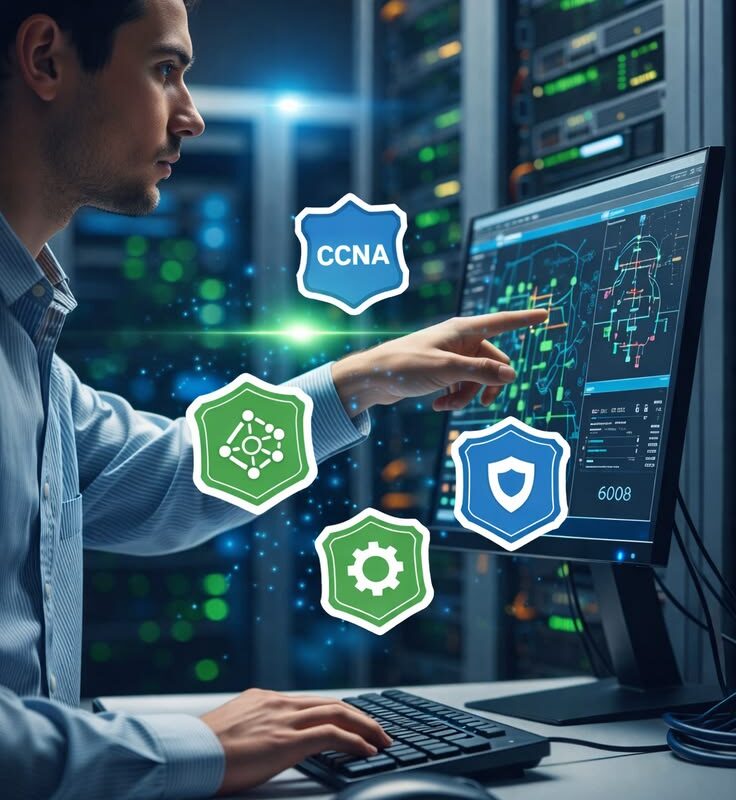

Lagos is no longer just Nigeria’s commercial capital, it is rapidly becoming West Africa’s technology epicentre. As multinational corporations, fintech startups, and government agencies accelerate their digital transformation journeys, the demand for skilled cybersecurity professionals in Lagos has never been higher. At the same time, artificial intelligence (AI) is reshaping every dimension of the cybersecurity landscape, from threat detection to incident response. As a result, security professionals in Lagos must now ask not whether AI will change their careers, but how quickly they need to adapt to remain relevant and competitive in 2026 and beyond.
In light of this shift, this article explores the intersection of AI and cybersecurity in the Lagos job market, the emerging threats facing Nigerian businesses, and the skills and certifications you need to future-proof your career. Furthermore, it outlines the practical steps you can take today to stay firmly ahead of the curve.
The State of Cybersecurity in Lagos in 2026
First and foremost, it is important to understand just how significant Lagos has become as a technology hub. Lagos is currently home to the largest concentration of technology companies in sub-Saharan Africa. Notably, the city’s fintech ecosystem, anchored by companies like Flutterwave, Paystack, and Kuda Bank, processes billions of naira in daily transactions. Moreover, e-commerce platforms, telecoms giants, oil and gas firms, and healthcare providers are all digitising their operations at a rapid pace.
However, this digital expansion has simultaneously made Lagos an increasingly attractive target for cybercriminals. According to cybersecurity industry reports, Nigeria ranks among the most targeted countries in Africa for cyberattacks, including ransomware, business email compromise (BEC), phishing campaigns, and data breaches. In response, both the Nigerian Communications Commission (NCC) and the Central Bank of Nigeria (CBN) have issued regulatory frameworks mandating stronger data protection and cybersecurity standards, consequently creating significant demand for qualified security professionals.
For cybersecurity professionals in Lagos, therefore, this environment represents both a challenge and an extraordinary opportunity. The talent gap is undeniably real: organisations consistently struggle to find security professionals with modern, AI-augmented skill sets. As a result, those who invest in upskilling now are positioning themselves for some of the most lucrative and impactful technology careers on the continent.
How AI Is Transforming Cybersecurity

Contrary to what some may assume, artificial intelligence is not a future concept in cybersecurity, it is already deeply embedded in the tools, platforms, and workflows that security teams use every day. In fact, understanding how AI is being applied across the cybersecurity lifecycle is now essential for any professional who wants to remain competitive. With that in mind, let us examine the three most critical areas of AI-driven transformation.
1. AI-Powered Threat Detection and Response
Traditionally, security information and event management (SIEM) tools generated enormous volumes of alerts, most of which turned out to be false positives. Today, however, AI-driven SIEM platforms such as Microsoft Sentinel, Splunk SIEM, and IBM QRadar use machine learning models to analyse patterns across thousands of data points simultaneously. As a result, these platforms dramatically reduce false positive rates and enable security analysts to focus exclusively on genuine threats. For Lagos-based security teams managing complex environments with limited headcount, therefore, AI-powered detection has become an indispensable force multiplier.
2. Generative AI and the Rise of Sophisticated Attacks
While AI undoubtedly strengthens defensive capabilities, it is equally important to recognise that the same technologies also empower attackers. Generative AI tools are now being used to craft highly convincing phishing emails in multiple languages, including Nigerian Pidgin, Yoruba, Igbo, and Hausa, thus making social engineering attacks significantly more effective. In addition, deepfake audio and video are being weaponised for voice phishing (vishing) and CEO fraud schemes that specifically target Nigerian financial institutions. Consequently, security professionals in Lagos must thoroughly understand how these AI-enabled attacks work in order to design effective countermeasures.
3. Autonomous Security Operations
Beyond detection, security orchestration, automation, and response (SOAR) platforms now leverage AI to automate routine incident response workflows from isolating compromised endpoints to resetting credentials and generating incident reports. Because of this shift, the role of the cybersecurity analyst is rapidly evolving from manual investigation towards overseeing and tuning automated systems. Therefore, professionals who understand AI-driven automation will be far more valuable to employers than those who continue to rely solely on manual techniques.
The Cybersecurity Skills Lagos Employers Are Looking For in 2026
Given these rapid changes, it is no surprise that employer expectations have shifted considerably. A 2026 survey of technology hiring managers across Lagos identified the following skills as most in-demand for cybersecurity roles:
- AI and machine learning fundamentals as applied to security operations
- Cloud security expertise (AWS, Microsoft Azure, Google Cloud)
- Threat intelligence analysis and threat hunting
- Security architecture and zero-trust network design
- Incident response and digital forensics
- Regulatory compliance (NDPR, CBN cybersecurity frameworks, ISO 27001)
- Penetration testing and red team operations
- DevSecOps and secure software development lifecycle (SSDLC)
Notably, AI literacy appears at the very top of this list. Indeed, employers are no longer satisfied with candidates who simply know how to configure firewalls or run vulnerability scans. Instead, they want professionals who understand how to integrate AI tools into security workflows, interpret model outputs critically, and identify where AI-generated analysis may be unreliable or biased. In other words, technical depth must now be paired with AI fluency to be truly competitive.
Top Cybersecurity Certifications to Pursue in Lagos in 2026
In addition to building practical skills, certifications remain a critical signal of competence in the Lagos cybersecurity job market — particularly for professionals seeking roles with international firms, financial institutions, and government agencies. With that in mind, here are the most valuable certifications to pursue in 2026:
Foundational and Mid-Level Certifications
- CompTIA Security+ — an excellent entry point that is widely recognised by global employers
- Certified Ethical Hacker (CEH) — highly regarded across Nigerian financial services and telecoms sectors
- CompTIA CySA+ — focused on threat intelligence and behavioural analytics, making it highly relevant for AI-augmented SOC roles
- Cisco CyberOps Associate — provides a strong foundation in security monitoring and operations
Advanced Certifications
- Certified Information Systems Security Professional (CISSP) — widely regarded as the gold standard for security leadership roles
- Certified Cloud Security Professional (CCSP) — increasingly critical as Lagos enterprises migrate to the cloud
- Offensive Security Certified Professional (OSCP) — essential for penetration testers and red teamers
- GIAC Security Essentials (GSEC) and GIAC Certified Incident Handler (GCIH) — both highly regarded in incident response roles
AI-Specific Credentials Worth Considering
Beyond traditional security certifications, credentials that demonstrate AI literacy are rapidly gaining traction with Lagos employers. For instance, Google’s Professional Machine Learning Engineer certification, Microsoft’s Azure AI Fundamentals (AI-900), and the SANS AI Security curriculum are all worth considering. Together, these qualifications signal cross-disciplinary expertise that clearly sets you apart from the competition.
How to Future-Proof Your Cybersecurity Career in Lagos: Practical Steps
Knowing which skills and certifications are valued is, of course, only the first step. To truly future-proof your career, you need a concrete action plan. Below is a practical roadmap for cybersecurity professionals in Lagos who want to build a resilient, AI-ready career.
1. Invest in Hands-On AI and Machine Learning Skills
You do not need to become a data scientist; however, you do need to understand how machine learning models work, what their limitations are, and how to interpret their outputs in a security context. Fortunately, platforms like Coursera, edX, and Udemy offer accessible AI and machine learning courses that can be completed from Lagos at a fraction of the cost of in-person training. In particular, focus on anomaly detection, natural language processing (which is especially relevant for analysing phishing content), and adversarial machine learning — the area where attackers deliberately manipulate AI models to evade detection.
2. Get Hands-On Experience with Leading Security Platforms
While theoretical knowledge is valuable, it is ultimately insufficient in the Lagos job market. In practice, employers want to see demonstrable, hands-on experience. To build this, consider setting up a home lab using free-tier cloud services from AWS or Azure, and practice deploying and tuning AI-powered security tools. Additionally, participating in Capture the Flag (CTF) competitions on platforms like Hack The Box and TryHackMe is an excellent way to sharpen your skills. Furthermore, contributing to open-source security projects on GitHub helps you build a visible portfolio that clearly differentiates you from other candidates.
3. Engage With the Lagos Cybersecurity Community
Beyond individual study, engaging with Lagos’s growing cybersecurity community is a powerful accelerator for your career. Organisations such as the Information Security Society of Africa Nigeria (ISSAN), the Cybersecurity Association of Nigeria (CyAN), and the Nigeria Internet Registration Association (NiRA) regularly host events, workshops, and conferences. Attending these events not only connects you with hiring managers and mentors, but also keeps you informed of the latest local threat trends. Moreover, following Nigerian cybersecurity professionals on LinkedIn and actively contributing to local tech forums will steadily raise your professional profile over time.
4. Understand Nigeria’s Regulatory Cybersecurity Landscape
In regulated sectors such as banking, insurance, healthcare, and telecommunications, Lagos-based employers face increasing pressure to comply with frameworks like the Nigeria Data Protection Regulation (NDPR), the CBN’s Risk-Based Cybersecurity Framework, and the NCC’s cybersecurity directives. As a result, professionals who understand these regulations and can help organisations achieve compliance are consistently in high demand. In particular, pairing regulatory knowledge with technical AI and security skills creates a distinctly compelling professional profile that is difficult for employers to overlook.
5. Develop Soft Skills That AI Cannot Replace
As AI automates an ever-growing share of routine security tasks, the distinctively human skills of critical thinking, communication, and stakeholder management become more important, not less. Indeed, the cybersecurity professionals who will thrive in Lagos’s evolving market are those who can translate complex technical risks into clear business language and advise senior executives on security strategy. In addition, the ability to build security-aware cultures within organisations requires emotional intelligence and leadership qualities that no AI system can replicate. Therefore, investing in these soft skills is just as strategic as earning a technical certification.
Emerging Cybersecurity Career Opportunities in Lagos
Importantly, the AI revolution is not just changing existing cybersecurity roles — it is also creating entirely new ones. As a result, forward-thinking professionals in Lagos should actively watch for opportunities in the following emerging areas:
- AI Security Engineer: Specialists who secure AI/ML systems, protect training data, and test AI models for adversarial vulnerabilities.
- Threat Intelligence Analyst (AI-Augmented): Professionals who combine traditional threat intel analysis with AI-powered tools to identify emerging attack patterns targeting Nigerian enterprises.
- Cloud Security Architect: As Lagos businesses rapidly adopt AWS, Azure, and Google Cloud, architects who specialise in securing cloud-native environments are in exceptional demand.
- Cybersecurity Risk Manager: Senior professionals who integrate AI-driven risk scoring into enterprise risk management frameworks, particularly valued by Lagos-based financial institutions.
- Incident Response Specialist: With AI accelerating attack timelines, organisations need responders who can work alongside automated tools to contain breaches quickly and effectively.
- Security Awareness Trainer: Professionals who design and deliver AI-informed training programmes that teach employees to recognise AI-generated phishing attempts and other novel threats.
What Can Cybersecurity Professionals Earn in Lagos in 2026?
Naturally, one of the most frequently asked questions is about earning potential. Salaries for cybersecurity professionals in Lagos vary widely depending on experience, specialisation, employer sector, and whether the role is with a domestic or multinational organisation. As a general guide for 2026:
- Entry-level Security Analyst: ₦800,000 – ₦1,500,000 per annum
- Mid-level Security Engineer (2–5 years’ experience): ₦2,500,000 – ₦5,000,000 per annum
- Senior Security Architect or CISO: ₦8,000,000 – ₦20,000,000+ per annum
- Remote roles with international employers (USD-denominated): $30,000 – $100,000+ per annum
Unsurprisingly, professionals with AI-augmented cybersecurity skills and internationally recognised certifications consistently command salaries at the higher end of these ranges. Furthermore, as the talent gap continues to widen, compensation for skilled cybersecurity professionals in Lagos is expected to grow significantly over the next three to five years, making this an ideal time to invest in your career development.
Conclusion: The Time to Act Is Now
Ultimately, AI is not coming to replace cybersecurity professionals in Lagos — it is coming to empower those who embrace it and marginalise those who do not. In summary, the professionals who will thrive in 2026 and beyond are those who combine deep technical security expertise with AI literacy, regulatory knowledge, hands-on practical experience, and the distinctively human skills of communication, leadership, and critical thinking.
Lagos’s rapidly digitalising economy, combined with a significant cybersecurity talent shortage, means that the opportunity for skilled professionals has rarely been greater. Whether you are just starting out in cybersecurity, seeking to advance to a senior role, or looking to transition from a related technology field, the steps outlined in this article provide a clear, actionable roadmap. Above all, remember that the professionals who take action today will be the security leaders shaping Nigeria’s digital future tomorrow.
So do not wait. Invest in your skills today, click here, and take ownership of your career trajectory. The future of cybersecurity in Lagos belongs to those who prepare for it now.