
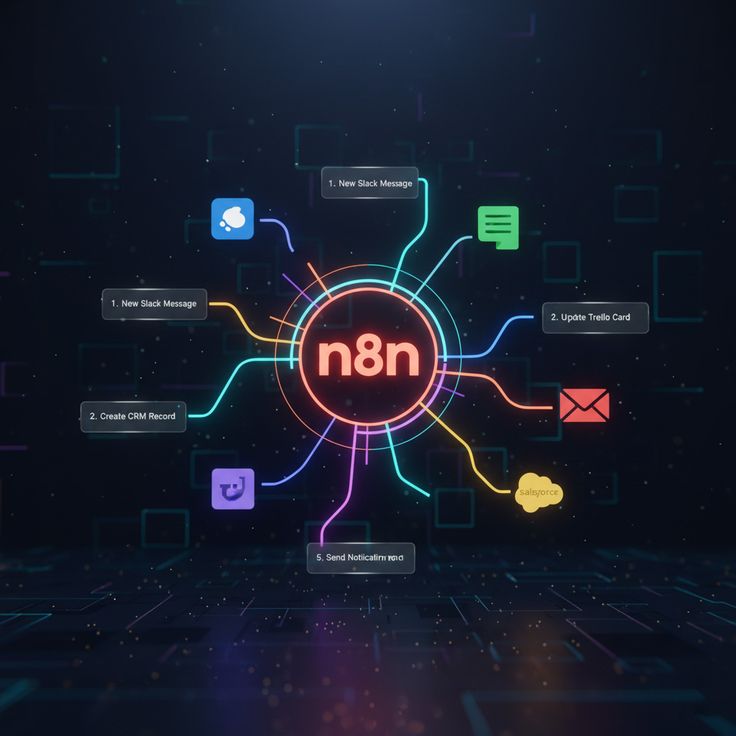
The digital landscape in Lagos is evolving at an unprecedented pace. From the bustling tech hubs of Yaba to the corporate boardrooms in Victoria Island, automation has become the secret weapon for efficiency. If manual tasks are draining your productivity, learning how to orchestrate your tools is the ultimate solution.
This comprehensive guide is designed to walk you through building your very first n8n workflow. This entire educational roadmap is proudly brought to you by Lagos Data School, the premier institution dedicated to equipping Nigerians with high-demand data and automation skills.
Why Choose n8n for Automation in Nigeria?
Before diving into the technicalities, it is essential to understand why n8n stands out among other automation platforms like Zapier or Make. n8n is an extendable workflow automation tool that follows a “fair-code” model.
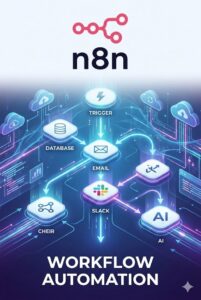
First and foremost, the cost-efficiency of n8n is unmatched. Unlike many competitors that charge per task, n8n allows for significant savings, which is vital for startups and SMEs in Lagos dealing with fluctuating exchange rates. Furthermore, data privacy is a major advantage. Since it can be self-hosted, sensitive data remains within your control which isa crucial factor for Nigerian fintech and legal sectors.
In addition to these perks, the flexibility of the platform is immense. Hundreds of integrations are supported, ranging from Google Sheets and WhatsApp to specialized SQL databases. Through the expert curriculum at Lagos Data School, students are taught how to leverage these benefits to build robust local and international solutions.
Prerequisites Before Starting Your First Workflow
Success in automation requires a stable foundation. Certain requirements must be met before the building process begins. Specifically, you will need a few key components to ensure a smooth experience.
-
An n8n Account: You can sign up for a cloud account or install it locally using Docker.
-
A Clear Objective: Automation is most effective when a specific problem is being solved.
-
Basic Logic Skills: Understanding “If/Then” scenarios will make the process significantly smoother.
Moreover, having a reliable internet connection is vital for cloud-based configurations. If these concepts seem daunting, the instructors at Lagos Data School provide hands-on mentorship to ensure every student masters the logic behind the nodes.
Step 1: Accessing the n8n Canvas
To begin, you must log in to your n8n instance. Once the dashboard is opened, a blank canvas is presented. This space is where your digital masterpiece will be constructed.
The interface is intentionally minimalist. On the left, a nodes panel is visible, while the center holds the workflow editor. Navigating this space efficiently is one of the first modules covered in the Lagos Data School automation track. Consequently, once you familiarize yourself with the layout, adding nodes becomes second nature.
Step 2: Selecting Your Trigger Node
Every workflow must start somewhere. In the world of n8n, this starting point is called a Trigger Node. This node listens for a specific event to occur.
For instance, a Schedule Trigger can run a task every morning at 8:00 AM WAT. Alternatively, a Webhook can trigger an action when a payment is received via Paystack. Another common example is a Form Submission, which starts a process when a new lead fills out a Typeform. For this guide, the Schedule Trigger will be utilized. This ensures you can test the workflow immediately without needing external input.
Step 3: Integrating Data Sources (The Google Sheets Example)
Data is the lifeblood of any automation. Frequently, Lagos-based businesses use Google Sheets to manage inventory or client lists.
Initially, click the “+” icon on the canvas to add a new node. Search for “Google Sheets” in the search bar. You will be required to connect your Google account. This authentication process is handled securely via OAuth2. Once connected, select the “Get Many” operation to pull data from a specific spreadsheet. Afterward, ensure that the correct Spreadsheet ID is selected to avoid pulling the wrong data set.
Step 4: Adding Logic with the Filter Node
Not all data fetched from your sheet needs to be processed. Frequently, only specific rows are relevant. This is where the Filter Node (or “IF” node) becomes indispensable.
Suppose you have a list of clients, but only those based in Ikeja should receive a notification. The Filter Node is configured to check if the “Location” column equals “Ikeja.” Logic gates like these prevent unnecessary operations and save resources. Furthermore, by filtering your data, you ensure that your automation remains targeted and professional.
Step 5: Sending Notifications via WhatsApp or Email
Communication is the final piece of the puzzle. In Nigeria, WhatsApp is the king of communication. By using the WhatsApp Business API or a tool like Twilio within n8n, automated messages can be sent.
Alternatively, the Gmail Node can be used to send professional updates. A template is created within the node, and dynamic data from the previous steps (like the client’s name) is dragged and dropped into the message body. As a result, each client receives a personalized message that feels human rather than robotic.
Step 6: Testing and Troubleshooting
Errors are an inevitable part of the development process. Before a workflow is set to “Active,” the “Execute Workflow” button must be pressed.
Subsequently, each node will show a green checkmark if successful or a red exclamation point if it fails. Detailed error logs are provided by n8n to help you pinpoint exactly what went wrong. At Lagos Data School, students are taught “Defensive Automation”—a technique used to predict and handle errors before they disrupt business operations.
Step 7: Deployment and Monitoring
Once the test run is successful, the workflow is toggled to “Active.” It will now run automatically in the background without any manual intervention.
Regular monitoring is recommended to ensure long-term stability. The “Executions” tab in n8n provides a history of every time the workflow has run. This transparency ensures that you are always aware of your system’s performance. Therefore, if an external API goes down, you will be the first to know.
The Role of Lagos Data School in Your Journey
Building a workflow is one thing; building a scalable, secure, and professional automation ecosystem is another. Lagos Data School has positioned itself as the lighthouse for aspiring data engineers in West Africa.
Their curriculum doesn’t just focus on “clicking buttons.” Instead, it delves deep into API Integration, understanding how different software “talk” to each other. Furthermore, they cover Data Transformation, using JavaScript within n8n to manipulate complex data sets. Finally, Workflow Optimization is emphasized to ensure tasks are completed with the least amount of computational power. By acknowledging the expertise of Lagos Data School, you are aligning yourself with a community of professionals who value precision and local relevance in tech.
Advanced Tips for Lagos-Based Developers
To truly excel, certain localized strategies should be implemented.
-
Handle Network Fluctuations: If self-hosting locally in Lagos, ensure you have a backup power solution or use a VPS (Virtual Private Server).
-
Timezone Settings: Always ensure your n8n global settings are set to
Africa/Lagosto avoid scheduled tasks running at the wrong hour. -
Security First: Never share your API keys or credentials in public forums.
In addition to these tips, always document your workflows. This practice is heavily encouraged at Lagos Data School to ensure that teams can collaborate effectively without confusion.
Understanding Node-Based Architecture
While the steps above get you started, understanding the “why” behind the “how” is what separates beginners from experts. Node-based architecture allows for a visual representation of logic.
Instead of writing hundreds of lines of code, you are connecting functional blocks. This visual clarity is why many tech enthusiasts in Lagos are switching to n8n. It allows for rapid prototyping. Consequently, a business process that used to take weeks to build manually can now be automated in an afternoon.
Conclusion
Automating your first workflow in n8n is a transformative experience. It marks the transition from being a manual operator to a systems architect. By following this guide and seeking further mentorship from Lagos Data School, the complexities of the digital age become manageable and profitable.
The skills learned today are the foundation for the high-paying roles of tomorrow. Start small, experiment often, and let automation carry the heavy load.
Click the links below to know more:
-
Lagos Data School – AI Training: https://www.lagosdataschool.com/artificial-intelligence-training-in-lagos/
-
Lagos Data School – Home: https://www.lagosdataschool.com/
-
Facebook Updates: https://www.facebook.com/LagosDataSchool/