Healthcare Project Management: Things You Should Know in 2026

Why Healthcare Project Management Matters in Nigeria

Nigeria’s healthcare system needs transformation. New hospitals are being built. Digital health systems are being deployed. Vaccine programmes roll out across 36 states. Donor-funded health projects arrive from the World Bank, USAID, and GAVI.

Every single one of these initiatives is a project. Each one needs a qualified project manager to plan it, execute it, and deliver it to the people who need it.

Lagos Data School trains Nigerian health professionals to step into these roles with confidence. This guide explains the skills and certifications that matter most.


What Makes Healthcare Project Management Different

Healthcare project management follows the same principles as any other field. You plan, execute, monitor, and close. But the stakes are higher.

A delayed IT project costs money. A delayed vaccination programme costs lives. A poorly managed hospital construction project results in unsafe facilities serving real patients.

Therefore, Nigerian healthcare project managers must combine strong project management skills with an understanding of how health systems work.


Skill 1: Stakeholder Management in a Complex Health System

Healthcare projects in Nigeria involve many stakeholders. Federal and state ministries of health must be engaged. The NPHCDA, NAFDAC, NMA, and donor organisations all have requirements.

Community health workers, primary health centres, hospitals, and patients are also stakeholders. Each group has different needs and different levels of power.

A skilled healthcare PM maps all stakeholders early. They build an engagement plan for each group. They communicate in formats and frequencies that each stakeholder expects.


Skill 2: Budget Management Under Donor Constraints

Most large Nigerian healthcare projects receive donor funding from organisations like the World Bank, USAID, the Global Fund, or GAVI. Each donor has strict financial reporting requirements.

Healthcare project managers must track expenditure against approved budgets in real time. Variance reports must be submitted on schedule. Procurement must follow donor guidelines.

Failure to comply with donor financial rules can result in grant clawbacks. In Nigeria, this has halted major health programmes. Therefore, budget management is a non-negotiable skill.


Use Cost Management Software

Spreadsheets are not enough for multi-million naira health budgets. Use project management software with built-in cost tracking. Microsoft Project, Oracle Primavera, and Smartsheet all support cost management for large Nigerian health programmes.


Skill 3: Risk Management in Nigerian Healthcare Projects

Healthcare projects face unique risks in Nigeria. Drug supply chain disruptions are common. Cold chain failures affect vaccine programmes. Community resistance can halt immunisation campaigns.

Political changes between federal and state governments affect project funding and timelines. These risks are real and recurring.

Build a risk register at the start of every healthcare project. Score each risk by probability and impact. Assign a risk owner. Review the register at every project meeting.


Skill 4: Monitoring and Evaluation (M&E)

Health sector funders demand evidence. They want to see that the project delivered what it promised. This is where Monitoring and Evaluation skills are critical.

Every Nigerian healthcare PM must know how to define indicators, set baselines, collect data, and report results against targets. M&E is built into the project plan from day one, not added at the end.


Skill 5: Regulatory and Compliance Knowledge

Nigerian healthcare projects must comply with Ministry of Health guidelines, NAFDAC regulations, and WHO standards where applicable. Non-compliance creates delays, funding suspension, and reputational damage.

Every healthcare PM must understand the regulatory landscape for their specific project type. Building a new clinic requires different compliance steps from deploying a health information system.


Certifications for Nigerian Healthcare Project Managers

Certification Issuing Body Why It Matters for Nigerian Healthcare PMs
PMP (Project Management Professional) PMI Global gold standard. Recognised by all major health donors in Nigeria.
CAPM (Certified Associate in Project Management) PMI Entry-level PM certification. Ideal for health professionals new to project management.
PRINCE2 Foundation / Practitioner Axelos Used on World Bank and UK government-funded Nigerian health projects.
MSP (Managing Successful Programmes) Axelos Suited for large national health programmes spanning multiple projects.
Certified Health Education Specialist (CHES) NCHEC Adds health behaviour and programme design knowledge for public health PMs.


A Nigerian Analogy: The Ward Sister Who Plans Everything

Think of the best ward sister you know. She knows every patient, every medication schedule, every staff rota, and every supply order at the same time.

Now scale that skill to a 200-bed hospital construction project or a national immunisation drive. The same discipline, the same attention to detail, and the same stakeholder management — structured into a formal project plan. That is healthcare project management in Nigeria.


How Lagos Data School Trains Healthcare Project Managers

Lagos Data School delivers live project management training built for Nigerian health professionals. The curriculum covers PMP exam preparation, stakeholder engagement, risk registers, donor budget management, and M&E frameworks. Sessions use Nigerian health sector case studies, including NPHCDA programmes and World Bank health projects.

Graduates are qualified to manage federal and state health projects, NGO programmes, and donor-funded initiatives across Nigeria.

Enrol today at Lagos Data School. See what our graduates achieve at the Lagos Data School student portfolio.


Frequently Asked Questions

Q1: Can a Nurse or Doctor Become a Healthcare Project Manager in Nigeria?

Yes. Clinical professionals make excellent healthcare project managers because they understand how health systems work from the inside. Adding project management training and a certification like PMP or CAPM bridges the gap between clinical expertise and project execution skills.

Q2: What Is the Salary of a Healthcare Project Manager in Nigeria?

Salaries vary widely depending on the funder and project scale. NGO and donor-funded healthcare PMs in Nigeria typically earn between ₦500,000 and ₦2,000,000 per month. International organisation contracts can pay significantly higher rates.

Q3: Do Nigerian Healthcare PMs Need M&E Certification?

M&E is not always a separate certification. However, many donors and Nigerian health agencies expect PMs to demonstrate M&E competence. Short courses in M&E from institutions like the African Evaluation Association add strong credibility to a healthcare PM’s profile.


Launch Your Healthcare Project Management Career at Lagos Data School

Nigeria’s health sector needs qualified, certified project managers now. Every donor programme, every new hospital, and every public health campaign needs a professional at the helm.

Start building that career today. Visit Lagos Data School and enrol in the project management course.


© 2026 Lagos Data School  |  www.lagosdataschool.com

What Is Agile Methodology? A Complete Beginner’s Guide

What Is Agile Methodology?

Agile is a way of managing projects by breaking work into small, fast cycles called sprints or iterations. Instead of planning the entire project upfront, Agile teams plan a little, build a little, review a little, and then repeat.

Each cycle produces a working result. The team shows that result to the client. The client gives feedback. The team improves and moves to the next cycle.

Lagos Data School teaches Agile methodology to Nigerian professionals across IT, finance, healthcare, and government. This guide covers everything a beginner needs to know.


Where Did Agile Come From?

In 2001, seventeen software developers met in Utah, USA. They were frustrated with slow, rigid project management methods. Together, they wrote the Agile Manifesto. It defined four core values and twelve principles for building software better.

The Agile Manifesto valued working software over comprehensive documentation. It prioritised customer collaboration over contract negotiation.

These ideas quickly spread beyond software. Today, Nigerian teams in banking, healthcare, construction, and government use Agile principles to manage projects.


The Four Core Agile Values

Agile Value What It Means for Nigerian Project Teams
Individuals and interactions over processes and tools People and conversations matter more than rigid systems.
Working software over comprehensive documentation Deliver results quickly rather than writing endless reports.
Customer collaboration over contract negotiation Work closely with your client instead of hiding behind a contract.
Responding to change over following a plan Adapt quickly when requirements change instead of resisting it.


Agile vs Waterfall: What Is the Difference?

Many Nigerians who learn Agile for the first time ask how it differs from traditional project management.

Feature Waterfall Agile
Planning style All planning done upfront Planning done sprint by sprint
Delivery One final delivery at the end Working output after every sprint
Change handling Changes are costly and slow Changes welcomed at any sprint
Client involvement Client sees result at the end The clients leave reviews after every sprint
Best for Fixed scope, stable requirements Changing requirements, digital products
Nigerian example Road construction, government tenders Mobile apps, fintech platforms


Neither method is universally better. Choose Agile when requirements will change.


The Most Popular Agile Framework: Scrum

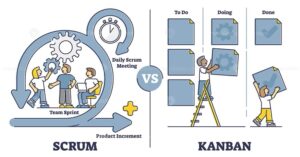
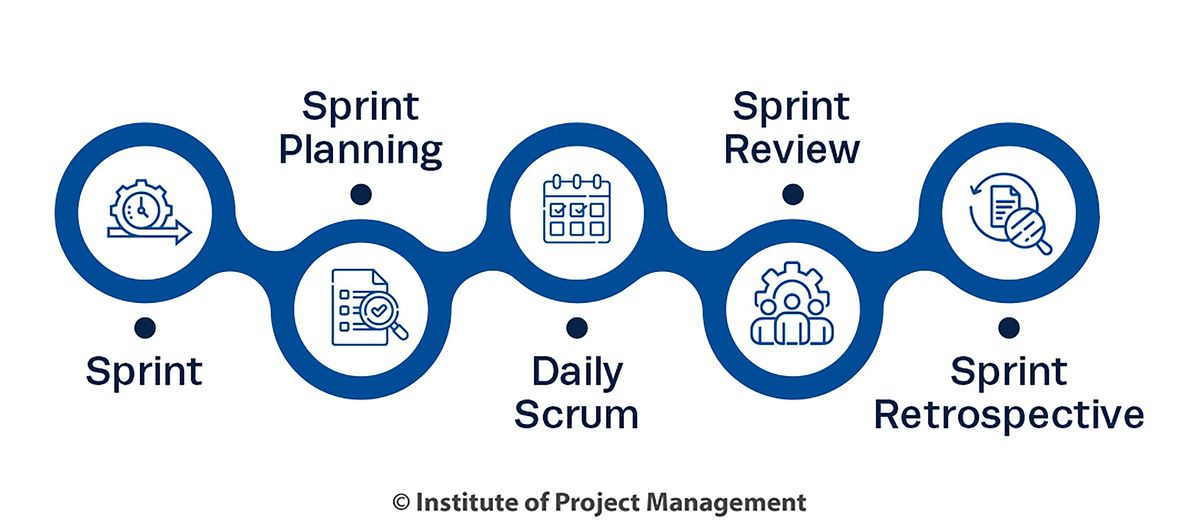
Scrum is the most widely used Agile framework in Nigeria. It organises work into sprints, assigns three core roles, and uses four ceremonies to keep the team aligned.


The Three Scrum Roles

  • Product Owner: Defines what the team builds. Owns and prioritises the product backlog. Represents the client’s interests.
  • Scrum Master: Facilitates the Scrum process. Removes blockers. Coaches the team on Agile principles.
  • Development Team: Builds the product. Self-organises. Commits to sprint deliverables at planning.


The Four Scrum Ceremonies

  • Sprint Planning: The team selects tasks from the backlog and plans the sprint. Happens at the start of every sprint.
  • Daily Stand-up: A 15-minute daily meeting. Each member shares progress, plans, and blockers.
  • Sprint Review: The team demos the completed sprint work to stakeholders.
  • Sprint Retrospective: The team reflects on how to improve the process. Happens after every sprint review.


Kanban: The Other Popular Agile Approach

Kanban is simpler than Scrum. It uses a visual board with three columns: To Do, In Progress, and Done. Every task moves from left to right as work progresses.

Kanban is ideal for Nigerian teams doing ongoing, flow-based work like customer support, content production, or IT maintenance. It has no sprints and no fixed roles. Work simply flows through the board.


How Nigerian Teams Apply Agile in Real Projects

A Lagos fintech startup uses Scrum to build its mobile banking app. They run two-week sprints. User feedback shapes the next sprint.

An Abuja government agency uses Kanban to manage internal communications requests. Each request moves through the board from submission to approval to publication.

A Port Harcourt hospital uses Agile principles to manage its digital records rollout. Monthly reviews with doctors and nurses replace quarterly status meetings.


A Nigerian Analogy: The Batcher vs the Full Pot

Waterfall is like cooking a full pot of soup for 50 guests before anyone tastes it. If the seasoning is wrong, the entire pot is wasted.

Agile is like cooking in small test batches. Each batch is tasted and adjusted before the next one begins. By the time the 50th portion is served, the recipe is perfect.


Agile Certifications for Nigerian Professionals

Certification Issuing Body Best For
Certified Scrum Master (CSM) Scrum Alliance Nigerian professionals leading Scrum teams
Professional Scrum Master (PSM) Scrum.org Rigorous, lower-cost Scrum certification
PMI-ACP (Agile Certified Practitioner) PMI Broad Agile certification for experienced PMs
SAFe Agilist Scaled Agile Inc. Enterprise Agile in large Nigerian organisations
Kanban Management Professional Kanban University Nigerian teams managing flow-based work


How Lagos Data School Teaches Agile

Lagos Data School delivers live Agile training for Nigerian professionals across all industries. The curriculum covers Scrum, Kanban, sprint planning, retrospectives, and Agile product management. Sessions use Nigerian project scenarios from fintech, healthcare, construction, and government.

Students leave with the knowledge to pass Agile certification exams and the skills to run Agile teams in any Nigerian organisation.

Enrol today at Lagos Data School. See what our graduates achieve in the Lagos Data School student portfolio.


Frequently Asked Questions

Q1: Can Agile Be Used Outside Software Development in Nigeria?

Yes. Nigerian marketing teams use Agile to manage campaign sprints. Health teams use it for programme rollouts. Government agencies use it for policy implementation projects. Agile principles apply wherever work is complex, iterative, and subject to change.

Q2: How Long Is a Sprint?

Sprints typically last one to four weeks. Most Nigerian tech teams use two-week sprints. Shorter sprints give faster feedback. Longer sprints allow more complex work to be completed. Choose the sprint length that matches your team’s pace and delivery needs.

Q3: Do I Need to Know Coding to Work in Agile Project Management?

No. Many Agile project managers and Scrum Masters in Nigeria come from non-technical backgrounds. What matters is understanding Agile principles, facilitating team ceremonies, removing blockers, and communicating clearly with stakeholders. Technical knowledge is a bonus, not a requirement.


Start Your Agile Journey at Lagos Data School

Agile is not just a method. It is a mindset that helps Nigerian teams deliver better results, faster, with less waste. Every Nigerian professional who learns Agile becomes more valuable to their team and their organisation.

Start today. Visit Lagos Data School and enrol in the Agile project management course. Your career will thank you for it.


© 2026 Lagos Data School | www.lagosdataschool.com

How to Use Microsoft Project for Construction Projects: Complete 2026 Guide

Are you searching for a practical guide on how to use Microsoft Project for construction projects in Nigeria? If so, your search ends here. Lagos Data School is Nigeria’s leading live technology and data training centre. Indeed, Microsoft Project is one of the most powerful scheduling and resource management tools available to construction professionals in Nigeria today. Every site engineer, project manager, or quantity surveyor who works on housing estates in Lagos, road projects in Abuja, or bridge construction across the Niger Delta needs to understand how this tool is used.

Therefore, this guide explains what Microsoft Project is, why it matters for Nigerian construction, and how each key feature is applied on a real site. In addition, Nigerian construction examples are used throughout so that every concept is grounded in local reality. As a result, by the end of this guide, you will know how to set up a project file, build a Gantt chart, assign resources, and track progress like a certified construction project manager.


What Is Microsoft Project?

Microsoft Project is a dedicated project management software application developed by Microsoft. It is used to plan, schedule, track, and report on projects of all sizes. Furthermore, it is built around the Gantt chart, a horizontal bar chart that shows tasks on a timeline. Each bar represents a task, its start date, its end date, and its relationship to other tasks.

According to Microsoft’s official documentation, Microsoft Project supports task dependencies, resource assignment, cost tracking, and progress reporting.

In short, Microsoft Project is the industry-standard scheduling tool for construction and infrastructure projects in Nigeria. Any construction professional who understands it is immediately more employable and more effective on site.


Why Microsoft Project Is Used for Nigerian Construction Projects

Many Nigerian construction projects are still managed with Excel spreadsheets or paper-based schedules. Consequently, delays go undetected until they have already caused cost overruns. Microsoft Project solves this problem by providing a structured, visual, and data-driven approach to construction scheduling.

Below are the core reasons why Microsoft Project must be used on Nigerian construction sites:

  • Real-time schedule visibility: The project timeline is displayed as a Gantt chart that is updated automatically whenever tasks are modified.
  • Critical path identification: The longest sequence of dependent tasks is identified automatically so that delays on critical tasks are flagged immediately.
  • Resource management: Workers, equipment, and materials are assigned to tasks. Overallocated resources are highlighted so that they can be resolved before they cause delays.
  • Cost tracking: Budgeted costs are entered against tasks and compared with actual costs as the project progresses.
  • Progress reporting: Baseline schedules are saved and compared with actual progress. Variances are reported automatically.
  • Stakeholder communication: Professional schedule reports and Gantt charts are generated and shared with clients, sponsors, and regulatory bodies.


In short, Microsoft Project transforms construction management from reactive firefighting into proactive schedule control.


Setting Up a Microsoft Project File for a Nigerian Construction Project

Before any task is entered, a project file must be set up correctly. The setup process is the foundation on which every subsequent schedule is built. Below, each setup step is explained using a fictional Lagos residential estate project as a Nigerian example.

Step 1: Create a New Project File

Microsoft Project is opened, and a new blank project is created. The project start date is set to the agreed mobilisation date. For the Lagos estate example, the start date is set to the first Monday after the site handover. Additionally, the project calendar is configured to reflect Nigerian working days, which typically exclude Sundays and Nigerian public holidays.

Step 2: Define the Project Summary Task

A project summary task is created at the top of the task list. This task automatically spans the entire project duration. As a result, it gives a single-line view of the overall project timeline at all times. The summary task is named after the project: “Lagos Residential Estate — Phase 1.”

Step 3: Enter Work Breakdown Structure (WBS) Phases

Construction projects are divided into phases. Each phase is entered as a summary task in Microsoft Project. Subsequently, individual tasks are indented beneath each phase to create a hierarchical work breakdown structure. For the Lagos estate example, the phases are: Site Preparation, Foundation Works, Superstructure, Roofing, Finishing, and External Works.

Step 4: Enter Tasks and Durations

Each construction task is entered under its respective phase. Realistic durations are assigned based on the bill of quantities and site productivity rates. Moreover, tasks must not be made artificially short. Nigerian site productivity rates account for factors such as material delivery lead times, equipment availability, and weather during the rainy season.

Step 5: Link Tasks with Dependencies

Task dependencies are added to connect related tasks. Most construction tasks use a Finish-to-Start dependency, meaning the next task cannot begin until the previous one is finished. For example, reinforcement cannot begin until the blinding concrete is cured. Consequently, the schedule automatically adjusts all downstream dates whenever a task duration or start date is changed.


Building the Gantt Chart for a Nigerian Construction Project

Once tasks and dependencies have been entered, the Gantt chart is generated automatically by Microsoft Project. However, several important adjustments must be made before the Gantt chart is useful for Nigerian construction management.

Setting the Timescale

The Gantt chart timescale is adjusted to show weeks on the top tier and days on the bottom tier for detailed scheduling. Alternatively, months and weeks are used for longer infrastructure projects. Nigerian construction projects commonly span six to thirty-six months, so the timescale must be set to reflect the full project duration on a single screen where possible.

Identifying the Critical Path

The critical path is activated by selecting Format > Critical Tasks in Microsoft Project. Critical tasks are highlighted in red on the Gantt chart. Furthermore, the total float of each task is displayed to show how many days a non-critical task can slip before it affects the project end date. On Nigerian construction sites, the critical path is reviewed every Monday during the weekly site meeting.

Saving the Baseline

After the schedule is reviewed and approved by the project sponsor, the baseline is saved using Project > Set Baseline. The baseline is the approved original plan. Subsequently, actual progress is entered weekly and compared with the baseline. Variances are reported so that corrective action is taken before delays become unmanageable.


Microsoft Project vs Excel: Which Is Better for Nigerian Construction?

Many Nigerian construction professionals still rely on Excel for scheduling. Below is a direct comparison of both tools so that the right choice can be made:

Feature Microsoft Project Excel
Gantt chart Built-in, auto-updating Manual, static bars
Task dependencies Automatic linking No native dependency logic
Critical path Calculated automatically Must be calculated manually
Resource allocation Built-in resource sheet Requires custom formulas
Baseline tracking Saves and compares baseline No baseline function
Progress reporting Automated variance reports Manual calculations required
Nigerian construction use Recommended for all projects ₦1m+ Suitable only for simple task lists


In short, Microsoft Project is the right tool for any Nigerian construction project that involves more than fifteen tasks, multiple resources, or a client who expects formal schedule reports.


Assigning Resources on a Nigerian Construction Schedule

Resource management is one of the most powerful features in Microsoft Project. On Nigerian construction sites, resources include site workers, engineers, plant and equipment, and bulk materials. Each resource is entered into the Resource Sheet and then assigned to specific tasks.

Creating the Resource Sheet

The Resource Sheet is accessed via View > Resource Sheet. Each resource is entered with a name, type (work or material), and cost rate. For example, a lead structural engineer may be assigned a daily rate of ₦45,000, while a batch of ready-mix concrete is entered as a material resource at a cost per cubic metre.

Assigning Resources to Tasks

Resources are assigned to tasks by double-clicking each task and opening the Resource tab. Multiple resources can be assigned to a single task. Furthermore, Microsoft Project automatically calculates the total cost of each task based on the assigned resources and durations. Consequently, the project budget is tracked in real time as tasks are completed.

Resolving Resource Over-allocation

When a resource is assigned to two or more overlapping tasks, a red person icon appears in the Gantt chart to signal over-allocation. This is a common problem on Nigerian construction sites where one engineer is expected to supervise multiple activities simultaneously. Microsoft Project’s Resource Levelling tool is used to resolve over-allocations by splitting tasks or adjusting start dates automatically.


A Nigerian Analogy: The Aso-Ebi Planner vs the Master of Ceremonies

Think of Microsoft Project as the master of ceremonies at a Lagos wedding. Every activity — from hall decoration to the high table seating to the cake cutting — is given a start time, a duration, and a sequence. If the decorator is late, the MC knows exactly which subsequent events will be delayed and by how much.

On the other hand, using Excel for construction scheduling is like coordinating the same wedding using a handwritten list. Events can be added and deleted, but no one is automatically told what changes when one item shifts. As a result, surprises accumulate until the event is in chaos.

Therefore, Nigerian construction professionals who use Microsoft Project are the ones whose projects are delivered on schedule, within budget, and with documentation that satisfies clients, banks, and regulators.


Common Mistakes Made When Using Microsoft Project on Nigerian Construction Sites

Even experienced engineers make avoidable errors when Microsoft Project is first introduced on a Nigerian construction site. Below are the most common mistakes and the corrections that must be applied:

  • Tasks are not linked: Tasks are entered without dependencies. Consequently, the schedule does not update automatically when one task is delayed, defeating the purpose of the software.
  • Durations are too optimistic: Durations are set without accounting for Nigerian site realities such as material delivery delays, generator downtime, and public holiday shutdowns.
  • No baseline is saved: Work begins before a baseline is set. Therefore, there is no reference point against which to measure progress or justify claims.
  • Resources are not assigned: Tasks are created without resource assignments. As a result, cost tracking and over-allocation detection do not function.
  • Progress is not updated: The schedule is built at the start and never updated. Consequently, it becomes obsolete within two weeks and is abandoned.


In short, Microsoft Project delivers its full value only when it is actively maintained throughout the project lifecycle.


Free Resource: Microsoft Project for the Web

In addition to Lagos Data School’s live Microsoft Project training, Lagos Data School recommends Microsoft Project for the Web as a free starting point for any Nigerian construction student or professional who wants to explore scheduling without a full desktop licence. Microsoft Project for the Web is available through Microsoft 365 and offers task management, Gantt view, and team collaboration in a browser-based interface. Furthermore, it is accessible from any device with an internet connection, which is important for Nigerian project managers who work across multiple sites. Moreover, it integrates directly with Microsoft Teams, which is increasingly used for site communication in Nigerian construction firms.


How Lagos Data School Teaches Microsoft Project for Construction

Lagos Data School’s project management course covers Microsoft Project in a dedicated construction scheduling module with live instruction, Nigerian case studies, and hands-on Gantt chart exercises. Students build complete construction schedules for simulated Lagos and Abuja projects. Additionally, resource assignment, critical path analysis, and baseline tracking are practised in every session. In short, Lagos Data School builds the Microsoft Project skills that are demanded by Nigerian construction firms, government agencies, and international contractors operating in Nigeria.

To enrol, visit the Lagos Data School training page. Also, explore how our graduates have applied project management tools on Nigerian construction projects in the Lagos Data School student portfolio.


Frequently Asked Questions: Microsoft Project for Construction in Nigeria

Q1: Do I Need a Licence to Use Microsoft Project in Nigeria?

Yes. Microsoft Project requires a paid licence, either as a standalone desktop application or as part of a Microsoft 365 subscription. However, a free trial is available from Microsoft’s website for thirty days. Additionally, Microsoft Project for the Web offers a limited free version for individuals and small teams. In short, Nigerian construction professionals are advised to explore the free options before committing to a licence.

Q2: Can Microsoft Project Be Used for Government Construction Projects in Nigeria?

Yes. Microsoft Project is accepted as a scheduling tool by many Nigerian government agencies, including the Federal Ministry of Works and Housing. Furthermore, World Bank and African Development Bank-funded projects in Nigeria often require Microsoft Project schedules as part of the project documentation. In short, it is the most widely accepted scheduling tool for Nigerian government construction contracts.

Q3: How Long Does It Take to Learn Microsoft Project?

Basic proficiency in Microsoft Project can be achieved in two to four weeks of structured training. However, confident use of advanced features such as resource levelling, earned value analysis, and multi-project consolidation typically requires three to six months of practical application. Therefore, Lagos Data School’s live training accelerates this learning curve significantly.

Q4: Is Microsoft Project Better Than Primavera P6 for Nigerian Construction?

Both tools are used professionally in Nigeria. Microsoft Project is more affordable, more widely used in small to medium construction firms, and easier to learn. On the other hand, Primavera P6 is preferred on large infrastructure projects such as highways, bridges, and oil and gas facilities. In short, Nigerian construction professionals who know both tools are the most competitive in the job market.


Microsoft Project Mastered — Now Build Your Construction Career at Lagos Data School

Ultimately, Microsoft Project is not just software. It is the professional language of construction scheduling in Nigeria. Every contractor who submits a programme of work, every client who demands a project timeline, and every regulator who reviews a construction plan expects to see a structured, dependency-linked Gantt chart. Consequently, Nigerian construction professionals who cannot produce one are already at a disadvantage in a competitive market.

Therefore, take your next step today. Visit Lagos Data School and enrol in the project management course. As a result, Microsoft Project, construction scheduling, critical path analysis, and every other project management skill will become clear, certified tools in your Nigerian construction career toolkit.

Gantt Chart Tutorial: How to Build One in Microsoft Project

Are you looking for a clear, step-by-step Gantt chart tutorial for Microsoft Project? If so, your search ends here. Lagos Data School is Nigeria’s leading live technology and data training centre. Indeed, a Gantt chart is the single most important visual tool in project management. Every Nigerian project manager, site engineer, and programme analyst who wants to communicate a project schedule clearly needs to understand how a Gantt chart is built in Microsoft Project.

Therefore, this guide walks through every step of building a Gantt chart from scratch. In addition, Nigerian project examples are used throughout so that every concept is immediately practical. As a result, by the end of this tutorial, a complete, professional Gantt chart will have been created and understood.


What Is a Gantt Chart?

A Gantt chart is a horizontal bar chart that is used to represent a project schedule. Each task is displayed as a bar whose length corresponds to its duration. Furthermore, the position of each bar on the timeline shows when the task starts and when it ends. Task dependencies are shown as arrows connecting related bars.

According to the Project Management Institute, the Gantt chart was developed by Henry Gantt in the early twentieth century and has since become the standard scheduling tool across all industries. Additionally, it is the primary view used in Microsoft Project, making it the first screen every user encounters when a project file is opened.


Why Gantt Charts Are Essential for Nigerian Project Managers

Many Nigerian projects are delayed because schedules are stored in someone’s head rather than on a visible, shared document. Consequently, the Gantt chart solves this problem by making the entire project timeline visible to all stakeholders at once. Below are the core reasons why Gantt charts must be used on every Nigerian project:

  • Visual clarity: The entire project timeline is seen at a glance without reading a single line of text.
  • Dependency tracking: The relationship between tasks is shown visually, so delays in one area are immediately traced to their downstream impact.
  • Progress monitoring: Actual progress is overlaid on the planned bars so that schedule variances are spotted immediately.
  • Stakeholder communication: Professional Gantt charts are presented to clients, sponsors, and regulators as formal schedule documents.


In short, a Gantt chart transforms a list of tasks into a managed, communicated schedule.


Step-by-Step: How to Build a Gantt Chart in Microsoft Project

Building a Gantt chart in Microsoft Project follows a clear sequence. Each step must be completed in order before the next is started. Below, every step is explained with a Nigerian housing construction project as the working example.

Step 1: Open Microsoft Project and Create a New File

Microsoft Project is launched, and a new blank project is selected. The project start date is entered as the agreed mobilisation date. For the Nigerian housing example, the start date is set to the first Monday of site handover. Moreover, the project calendar is configured to exclude Nigerian public holidays and Sundays.

Step 2: Enter Project Tasks in the Task Name Column

Tasks are typed into the Task Name column on the left side of the Gantt chart view. Each construction phase is entered first as a summary task, followed by its sub-tasks indented beneath it. For the housing project, the phases entered are: Site Clearing, Foundation, Blockwork, Roofing, Plastering, and Finishing. Subsequently, sub-tasks are added under each phase.

Step 3: Assign Durations to Every Task

Durations are entered in the Duration column next to each task. Durations are entered in days, weeks, or months. Furthermore, realistic durations must be used rather than optimistic ones. Nigerian site conditions — including material delivery lead times and wet season delays — must be factored into every duration estimate.

Step 4: Link Tasks Using Finish-to-Start Dependencies

Dependencies are added by selecting two tasks and clicking the Link Tasks button in the Task ribbon. Most construction tasks use a Finish-to-Start relationship, meaning Task B cannot start until Task A is finished. For example, blockwork cannot begin until the foundation is completed and cured. Consequently, Microsoft Project automatically recalculates all downstream dates whenever a dependency chain is modified.

Step 5: Identify and Highlight the Critical Path

The critical path is activated by navigating to Format and enabling Critical Tasks. Critical tasks are displayed in red on the Gantt chart. Additionally, total float values are shown for each task so that the project manager knows exactly how much schedule buffer exists before a delay becomes critical.

Step 6: Save the Baseline

After the schedule is reviewed and approved, the baseline is saved via Project > Set Baseline. The baseline is the approved original schedule. Therefore, any deviation from the baseline is automatically calculated and displayed as a variance whenever progress is updated.


Gantt Chart Elements and Their Meaning

Below is a reference table of the key elements visible on a Microsoft Project Gantt chart:

Gantt Chart Element What It Represents
Blue task bar A standard task and its duration
Black diamond A milestone — a key event with zero duration
Black summary bar A phase or summary task grouping sub-tasks
Red task bar A critical path task — any delay affects the end date
Arrow between bars A task dependency (usually Finish-to-Start)
Striped overlay bar Actual progress compared to the baseline plan
Vertical dashed line Today’s date marker for quick progress reference


Common Gantt Chart Mistakes Made by Nigerian Project Managers

Even experienced professionals make avoidable errors when Gantt charts are built for the first time. Below are the most common mistakes and the corrections that must be applied:

  • Tasks are not linked: Tasks are entered without dependencies. As a result, the schedule does not update automatically when dates change.
  • Summary tasks are given durations: Summary task durations must be driven by their sub-tasks, not entered manually. Manually entering summary durations overrides the automatic calculation.
  • No baseline is saved: Work is started before a baseline is set. Consequently, there is no reference against which to measure progress.
  • Milestones are missing: Key events such as design approvals, inspections, and handovers are not added as milestones. Therefore, the schedule lacks the visible checkpoints that stakeholders expect.


In short, a properly linked, baselined Gantt chart is the foundation of every well-managed Nigerian project.


Free Resource: GanttProject

In addition to Lagos Data School’s live Microsoft Project training, Lagos Data School recommends GanttProject as a free alternative for any Nigerian student or professional who does not yet have a Microsoft Project licence. GanttProject is a free, open-source Gantt chart application that runs on Windows, Mac, and Linux. Furthermore, it supports task dependencies, resource assignment, and export to PDF and Excel. As a result, any Nigerian who practices Gantt chart building in GanttProject will develop the scheduling logic that transfers directly to Microsoft Project.


How Lagos Data School Teaches Gantt Chart Building

Lagos Data School’s project management course covers Gantt chart creation in a dedicated scheduling module with live instruction, Nigerian case studies, and hands-on Microsoft Project exercises. Students build complete Gantt charts for simulated Lagos and Abuja projects. Additionally, critical path analysis and baseline tracking are practised in every session. In short, Lagos Data School builds the scheduling skills that Nigerian organisations demand.

To enrol, visit the Lagos Data School training page. Also, see how our graduates apply Gantt charts on real Nigerian projects in the Lagos Data School student portfolio.


Frequently Asked Questions: Gantt Charts in Microsoft Project

Q1: Can a Gantt Chart Be Exported from Microsoft Project?

Yes. Gantt charts are exported as PDF, image, or XML files from Microsoft Project. Furthermore, the schedule can be copied directly into a PowerPoint presentation or Word document for client reporting. In short, Microsoft Project supports multiple export formats for Nigerian project reporting requirements.

Q2: How Many Tasks Can a Gantt Chart Hold?

Microsoft Project supports thousands of tasks in a single project file. However, Gantt charts are most readable when each phase contains five to fifteen tasks. Therefore, a well-structured work breakdown structure keeps the Gantt chart manageable regardless of project size.


Gantt Charts Mastered: Now Build Your Career at Lagos Data School

Ultimately, the Gantt chart is the language of professional project scheduling in Nigeria. Every client, contractor, and regulator who reviews a project plan expects to see a structured, dependency-linked Gantt chart. Consequently, Nigerian project professionals who cannot produce one are at a disadvantage in a competitive market.

Therefore, take your next step today. Visit Lagos Data School and enrol in the project management course. As a result, Gantt charts, critical path analysis, and every other scheduling skill will become clear, certified tools in your Nigerian career toolkit.

Risk Management in Projects: A Practical Guide for Nigerian Managers

Are you looking for a practical, Nigeria-specific guide to risk management in projects? If so, your search ends here. Lagos Data School is Nigeria’s leading live technology and data training centre. Indeed, risk management is one of the most critical and most neglected knowledge areas in Nigerian project management. Every project manager, programme analyst, and team lead who works in Lagos, Abuja, Port Harcourt, or any other Nigerian city faces risks that are unique to the Nigerian environment.

Therefore, this guide explains what project risk management is, why it is essential in Nigeria, how risks are identified and assessed, and how a practical risk register is built. In addition, Nigerian examples are used throughout. As a result, by the end of this guide, you will be equipped to manage risks on any Nigerian project professionally.


What Is Project Risk Management?

Project risk management is the systematic process of identifying, assessing, and responding to events that could affect a project’s objectives. Risks are defined as uncertain events that, if they occur, have a positive or negative effect on project goals. Furthermore, risk management is not about eliminating uncertainty; it is about preparing for it so that the project team is never caught off guard.

According to the Project Management Institute’s PMBOK® Guide, risk management consists of six processes: Plan Risk Management, Identify Risks, Perform Qualitative Risk Analysis, Perform Quantitative Risk Analysis, Plan Risk Responses, and Monitor Risks. Additionally, all six processes are applied continuously throughout the project lifecycle, not just at the beginning.


Why Risk Management Is Especially Important in Nigeria

Nigerian projects face risks that are more complex and more varied than those found in more stable environments. Consequently, Nigerian project managers must be more risk-aware than their counterparts in other countries. Below are the key risk categories that are commonly encountered on Nigerian projects:

  • Foreign exchange volatility: Imported materials, software licences, and equipment are priced in US dollars or euros. When the naira depreciates sharply, project budgets are exceeded without a single scope change.
  • Power supply disruptions: Grid power is unreliable across most Nigerian states. Therefore, generator costs, fuel procurement, and downtime must be planned as risk items on every project.
  • Regulatory changes: New CBN, FIRS, or NNPC regulations can affect project financing, procurement, or operations mid-execution. Consequently, regulatory monitoring must be built into the risk management plan.
  • Logistics and supply chain delays: Port congestion at Apapa, road conditions on federal highways, and customs clearance backlogs all introduce material delivery risks that must be planned for.
  • Stakeholder opposition: Community disturbances, political interference, and labour disputes are frequent sources of project disruption in Nigerian states.


In short, risk management in Nigeria is not optional. It is a survival skill for every project manager.


The Risk Management Process: Step by Step

Step 1: Plan Risk Management

The risk management approach is documented in a Risk Management Plan before any risks are identified. This plan defines how risks will be identified, who is responsible, how often the risk register will be reviewed, and what scoring scales will be used for probability and impact. Furthermore, the plan is reviewed and approved by the project sponsor before risk identification begins.

Step 2: Identify Risks

All potential risks are brainstormed with the project team, subject matter experts, and relevant stakeholders. Techniques used include brainstorming sessions, interviews, review of lessons learned from past Nigerian projects, and SWOT analysis. Additionally, a risk prompt list based on Nigerian-specific categories is used to ensure no common local risk is overlooked.

Step 3: Perform Qualitative Risk Analysis

Each identified risk is scored on two dimensions: probability (how likely it is to occur) and impact (how severely it would affect the project if it did occur). Both dimensions are scored on a scale of 1 to 5. The risk score is calculated by multiplying probability by impact. Consequently, risks are ranked from highest to lowest score so that the most critical risks receive the most management attention.

Step 4: Plan Risk Responses

A response strategy is selected for each risk. The four main response strategies for negative risks are: Avoid (eliminate the risk by changing the plan), Transfer (shift the financial impact to a third party, such as an insurer), Mitigate (reduce the probability or impact), and Accept (acknowledge the risk and prepare a contingency). Furthermore, a risk owner is assigned to each risk response so that accountability is clear.

Step 5: Monitor Risks

The risk register is reviewed at every project status meeting. New risks are added as they are identified. Moreover, risk scores are updated as conditions change, and response actions are implemented. As a result, the risk register remains a live, useful document rather than a static report that is filed and forgotten.


The Nigerian Project Risk Matrix

Below is a standard risk scoring matrix used by Lagos Data School to train Nigerian project managers. Probability and impact are each scored from 1 (very low) to 5 (very high). The resulting risk score determines the priority level:

Risk Score (P × I) Priority Level Recommended Response
1 – 4 Low Accept. Monitor at monthly reviews.
5 – 9 Medium Mitigate or transfer. Assign a risk owner.
10 – 14 High Mitigate urgently. Escalate to sponsor.
15 – 25 Critical Avoid or transfer immediately. Treat as top priority.


A Nigerian Analogy: The Generator and the NEPA Bill

Think of risk management as the decision every Lagos household makes about power supply. The risk of grid outage is known, so a generator is purchased (mitigation), fuel is stocked (contingency), and a backup UPS is installed for sensitive equipment (transfer). No one is surprised when NEPA takes light because the risk was planned for.

On the other hand, a project team that ignores risk management is like a household with no generator, no fuel, and no torch. When power goes out — and it always does — the entire operation stops. Therefore, Nigerian project managers who plan for risk keep their projects moving when disruptions occur.


Free Resource: PMI Risk Management Practice Guide

In addition to Lagos Data School’s live training, Lagos Data School recommends the PMI Risk Management Practice Guide as the most authoritative free reference for Nigerian project managers who want to deepen their risk management knowledge. It covers all six risk management processes in detail, includes risk register templates, and provides industry-specific guidance. Furthermore, it is the standard reference for both the PMP and CAPM certification exams. As a result, any Nigerian who studies this guide alongside Lagos Data School’s live training will be equipped to manage risk at a professional, certifiable level.


How Lagos Data School Teaches Risk Management

Lagos Data School’s project management course covers risk management in a dedicated module with live instruction, a full Nigerian risk register exercise, and probability-impact matrix practice. Students build and review risk registers for simulated Lagos fintech and infrastructure projects. Additionally, risk response planning is practised using real Nigerian risk scenarios. In short, Lagos Data School builds the risk management skills that pass the PMP exam and work on real Nigerian projects.

To enrol, visit the Lagos Data School training page. See our graduates’ project work at the Lagos Data School student portfolio.


Frequently Asked Questions: Risk Management in Nigerian Projects

Q1: What Is a Risk Register?

A risk register is a document that lists all identified project risks along with their probability, impact, score, owner, and response strategy. Furthermore, it is updated throughout the project lifecycle and reviewed at every status meeting. In short, the risk register is the primary tool through which risk management is practised on Nigerian projects.

Q2: Who Is Responsible for Risk Management on a Nigerian Project?

The project manager is ultimately responsible for risk management. However, every team member is responsible for identifying and reporting new risks within their area of work. Additionally, the risk owner — the person assigned to a specific risk response — is accountable for implementing and monitoring that response. In short, risk management is a whole-team responsibility, not a solo task.


Risk Management Mastered: Now Build Your Career at Lagos Data School

Ultimately, risk management is the skill that separates reactive Nigerian project managers from proactive ones. Every project in Nigeria faces uncertainty. Consequently, the managers who plan for that uncertainty are the ones whose projects survive budget cuts, exchange rate shocks, and supply chain disruptions.

Therefore, take your next step today. Visit Lagos Data School and enrol in the project management course. As a result, risk registers, risk matrices, response planning, and every other risk management skill will become clear, certified tools in your Nigerian career toolkit.

Hi, How Can We Help You?
Welcome To
Lagos Data School

Artificial Intelligence (AI), Machine Learning and Robotics Programmes Are Now Available!!!

Enroll Now!

Thank You
100% secure website.