How to Write a Project Charter: Template + Examples

Are you unsure how to write a project charter? If so, your search ends here. Lagos Data School is Nigeria’s leading live technology and data training centre. Indeed, the project charter is the document that officially authorises a project to begin and grants the project manager the authority to apply organisational resources. Without a properly written charter, Nigerian projects are started informally, scope boundaries are blurred, and stakeholder expectations are misaligned from day one.

Therefore, this guide explains every component of a professional project charter, provides a usable template, and illustrates each section with a Nigerian example. In addition, the differences between a project charter and a project plan are clarified. As a result, by the end of this guide, a complete project charter will be ready to be written from scratch.


What Is a Project Charter and Why Is It Needed?

A project charter is a short, formal document produced during the project initiation phase. It is used to define the project’s purpose, objectives, scope, deliverables, stakeholders, budget, and authority structure. Furthermore, it is signed by the project sponsor to confirm that the project is officially approved and funded.

According to the Project Management Institute’s PMBOK® Guide, the Develop Project Charter process is the first process in the Initiating Process Group. Consequently, no project should be started in any Nigerian organisation without a signed charter in place.

In short, the project charter is the foundation document. Everything else — the project plan, the schedule, the budget, the team — is built on top of it.


The Project Charter Template: All Thirteen Components

Below is the complete project charter template used in Lagos Data School’s project management training. Each component is listed with its purpose and a Nigerian example drawn from a fictional Lagos e-health platform project.

1. Project Title

A specific, descriptive project title is chosen. Vague names such as “New System” must be avoided. Nigerian example: “Lagos State E-Health Patient Records Platform — Phase 1.”

2. Project Purpose and Business Need

This section answers: “Why is this project being done?” The business problem being addressed is clearly stated. Nigerian example: “Patient records at Lagos University Teaching Hospital are currently paper-based. As a result, record retrieval takes up to forty-eight hours, and medication errors occur. This project will deliver a digital records platform that reduces retrieval time to under two minutes and eliminates paper-based medication errors.”

3. Project Objectives

Objectives are written in SMART format: Specific, Measurable, Achievable, Relevant, and Time-bound. Furthermore, each objective is tied to a measurable success criterion. Nigerian example: “Deploy a fully tested e-health records system across three LASUTH wards by Q2 2025, serving 1,200 daily active users with 99.9% uptime.”

4. Project Scope

The scope is divided into in-scope and out-of-scope items. Both must be stated explicitly. Nigerian example — In-scope: digital patient registration, ward-based records access, and pharmacist dispensing module. Out-of-scope: telemedicine features, billing integration, and mobile app version.

5. Deliverables

Tangible outputs are listed specifically. Nigerian example deliverables: (1) Patient registration portal, (2) Ward-level records access terminals, (3) System user training manual, (4) UAT sign-off report.

6. Milestones

Key project checkpoints are listed with target dates. Nigerian example: Design approved (Week 3), Backend API ready (Week 7), UAT complete (Week 11), Go-live (Week 14).

7. Budget Summary

A high-level cost estimate is provided. Detailed line items are not required at this stage. Nigerian example: “Total estimated budget: ₦22,000,000, covering development, infrastructure, training, and contingency.”

8. Project Sponsor

The executive authorising and funding the project is named. Their title and department are included. Importantly, the sponsor is the ultimate escalation authority for any unresolved project issues.

9. Project Manager

The project manager’s name, contact, and authority level are stated. For example, it is noted whether the project manager can approve budget changes below ₦500,000 without sponsor approval.

10. Key Stakeholders

All affected individuals and groups are listed. This list is used as the starting point for the stakeholder register. Moreover, each stakeholder’s involvement level (informed, consulted, responsible, or accountable) may be noted.

11. Risks and Constraints

Known high-level risks and limitations are documented. Nigerian example risk: “NHIS integration API may not be available until Q3.” Nigerian example constraint: “The platform must comply with NITDA’s data localisation policy before launch.”

12. Assumptions

Conditions assumed to be true for planning purposes are listed. Nigerian example: “It is assumed that stable internet connectivity will be available in all three LASUTH wards throughout the project.”

13. Approval Signatures

The sponsor’s signature is required to formalise the charter. Additionally, the project manager and key stakeholder signatures may be included. Without the sponsor’s signature, the charter is not formally approved, and the project manager has no official authority to act.


Project Charter vs Project Plan: Key Differences

Feature Project Charter Project Plan
Phase Initiation Planning
Purpose Authorises the project Guides execution
Length 1–2 pages Many pages
Detail level High-level overview Detailed and comprehensive
When created Before team is assembled After charter is approved
Nigerian example Signed by CEO before kickoff Built by PM with the full team


A Nigerian Analogy: The Land Title Before the Foundation

Think of the project charter as the Certificate of Occupancy for a new building plot in Lekki. Before any foundation is laid or any contractor is mobilised, the land title must be signed and sealed. It establishes who owns the land, what can be built on it, and who has authority to proceed.

On the other hand, starting a project without a charter is like a contractor who begins pouring concrete based on a verbal instruction. When disputes arise — and they always do — there is no signed document to refer back to. Consequently, Nigerian project managers who write clear charters are the ones whose projects are delivered without conflict.


Free Resource: PMI’s Project Charter Template

In addition to Lagos Data School’s live training, Lagos Data School recommends the PMI PMBOK® Guide as the most authoritative free reference for Nigerian project managers who want to understand project charters in depth. The PMBOK® Guide defines the Develop Project Charter process completely, including all inputs, tools, techniques, and outputs. Furthermore, it is the reference used in both the PMP and CAPM certification exams. As a result, any Nigerian who studies it alongside Lagos Data School’s live training will be equipped to write professional charters at a certified level.


How Lagos Data School Teaches Project Charter Writing

Lagos Data School’s project management course covers the project charter in the initiation module with live instruction, real Nigerian case studies, and hands-on charter drafting exercises. Students produce complete charters for simulated Nigerian projects. Additionally, exam-standard PMP questions on project initiation are covered in every mock session. In short, Lagos Data School builds the initiation skills that pass the PMP exam and work in real Nigerian organisations.

To enrol, visit the Lagos Data School training page. Explore our graduates’ project documentation work at the Lagos Data School student portfolio.


Frequently Asked Questions: Project Charter Writing

Q1: How Long Should a Project Charter Be?

A project charter is typically one to two pages for simple projects and up to five pages for complex ones. However, brevity is valued. Only the information needed for authorisation must be included. In short, a concise charter is more useful than a long, padded one.

Q2: Who Writes the Project Charter?

The project charter is usually written by the project manager with input from the sponsor and subject matter experts. However, it is the sponsor who signs and formally approves the document. In short, the project manager drafts it, but the sponsor owns it.


Project Charter Mastered: Now Build Your Career at Lagos Data School

Ultimately, the project charter is the document that separates professionally managed Nigerian projects from informally started ones. Every organisation — from Lagos fintech startups to Abuja government agencies- benefits from projects that are formally initiated, scoped, and authorised.

Therefore, take your next step today. Visit Lagos Data School and enrol in the project management course. As a result, project charters, stakeholder management, scope control, and every other initiation skill will become clear, certified tools in your Nigerian career toolkit.
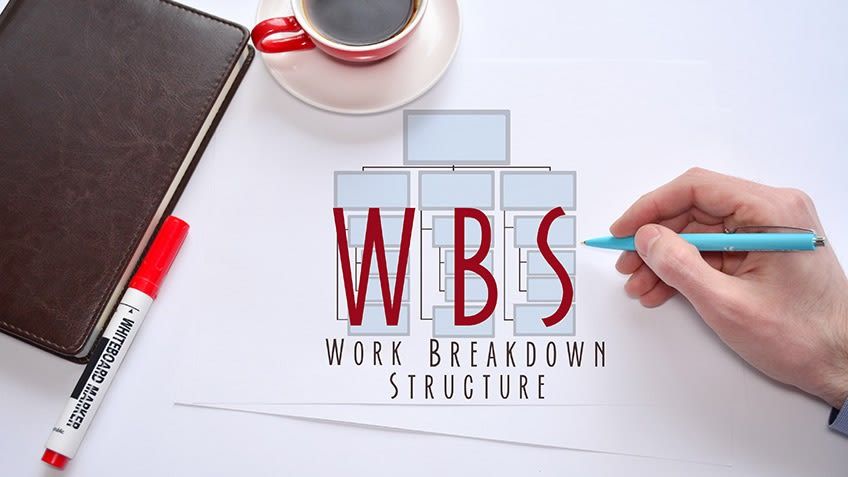

Work Breakdown Structure (WBS): What It Is and How to Create One

Are you confused about what a Work Breakdown Structure is and how it is created? If so, your search ends here. Lagos Data School is Nigeria’s leading live technology and data training centre. Indeed, the Work Breakdown Structure, commonly referred to as the WBS, is one of the most fundamental tools in project management. Every Nigerian project manager who wants to plan a project systematically, control its scope, and communicate its structure to stakeholders must understand how a WBS is built and used.

Therefore, this guide explains what a WBS is, why it is needed, how it is structured, and how each level is created using Nigerian project examples. In addition, the relationship between the WBS and the project schedule is explained. As a result, by the end of this guide, a complete WBS will be understood and ready to be created for any Nigerian project.


What Is a Work Breakdown Structure (WBS)?

A Work Breakdown Structure is a hierarchical decomposition of the total scope of work that must be performed to deliver a project’s objectives and produce its required deliverables. In plain terms, the WBS breaks the project down into smaller, manageable components until each piece of work is small enough to be planned, estimated, assigned, and monitored.

According to the Project Management Institute’s PMBOK® Guide, the WBS is a deliverable-oriented decomposition. This means it is structured around what must be produced, not around who will do the work or when it will be done. Furthermore, every component at the lowest level of the WBS is called a work package. A work package is the smallest unit of work that can be independently planned, costed, and assigned to a responsible party.


Why the WBS Is Essential for Nigerian Project Managers

Many Nigerian projects suffer from scope creep, the gradual, uncontrolled expansion of project work beyond what was originally agreed. Consequently, the WBS is the primary tool used to prevent scope creep by defining the total project scope explicitly at the start. Below are the core benefits of using a WBS on Nigerian projects:

  • Scope clarity: Every deliverable and sub-deliverable is listed, so there is no ambiguity about what is included in the project.
  • Basis for scheduling: Work packages at the lowest WBS level are used as the tasks in the Gantt chart and project schedule.
  • Basis for budgeting: Cost estimates are attached to each work package. Therefore, the total project budget is built from the bottom up.
  • Responsibility assignment: Each work package is assigned to a specific team or individual using a Responsibility Assignment Matrix.
  • Progress measurement: Completion of work packages is tracked to measure overall project progress objectively.


In short, the WBS is the backbone of every well-planned Nigerian project. Everything else- the schedule, the budget, the team assignments is derived from it.


The Three Levels of a WBS

A WBS is structured in levels, with the top level representing the project itself and each lower level representing progressively smaller components. Below are the three standard levels used in most Nigerian projects:

WBS Level What It Represents Nigerian Example
Level 1 The entire project Lagos Affordable Housing Estate — Phase 2
Level 2 Major deliverables or project phases Site Works, Foundation, Superstructure, Finishing
Level 3 (Work Packages) Specific work outputs that can be planned and costed Excavation, Blinding Concrete, Column Reinforcement, Blockwork


In short, the WBS is decomposed until every element at the lowest level can be independently planned, estimated, and assigned. Therefore, work packages are the units from which the schedule and budget are built.


How to Create a WBS: Step by Step

Step 1: Identify the Project’s Major Deliverables

The project charter and scope statement are reviewed to identify the major deliverables. Each major deliverable becomes a Level 2 element of the WBS. For a Nigerian IT project, the major deliverables might be: Requirements Documentation, System Architecture, Software Development, Testing, and Deployment.

Step 2: Decompose Each Deliverable into Sub-Deliverables

Each Level 2 deliverable is broken down into its parts. Decomposition continues until each element is a work package that can be independently planned and costed. Furthermore, the 100 Percent Rule must be applied: the WBS must include 100% of the project scope. Consequently, work that is not in the WBS is not in the project.

Step 3: Assign WBS Codes

Each WBS element is assigned a unique numeric code that reflects its position in the hierarchy. For example, 1.0 is the project summary, 1.1 is the first major deliverable, 1.1.1 is the first work package under that deliverable, and so on. As a result, every work package can be referenced unambiguously in the schedule, budget, and team assignments.

Step 4: Create the WBS Dictionary

A WBS dictionary is created to define each work package in detail. It includes the work package description, deliverable, responsible party, estimated duration, and estimated cost. Additionally, acceptance criteria are noted so that the project manager knows when the work package is considered complete. In short, the WBS dictionary turns the WBS diagram into a fully documented scope baseline.

Step 5: Validate the WBS with Stakeholders

The completed WBS is reviewed with the project sponsor and key stakeholders. Any missing deliverables are added, and any misunderstood elements are clarified. Furthermore, stakeholder sign-off on the WBS is obtained before the project schedule is built. Consequently, the WBS becomes the agreed scope baseline from which all change requests are evaluated.


A Nigerian Analogy: The Suya Seller’s Preparation List

Think of the WBS as the preparation list a professional suya seller uses before a Lagos owambe. Every item that must be produced — skewered beef, spiced offal, fried plantain, pepper sauce, and packaged portions — is listed before the event. Each item is then broken into its ingredients and preparation steps. Nothing is left to memory because the list is the plan.

On the other hand, a caterer who starts cooking without a preparation list will forget items, run out of ingredients, and deliver an incomplete menu. Consequently, Nigerian project managers who build WBS documents before starting work deliver complete projects. Those who do not build WBS documents deliver projects with missing scope.


Free Resource: PMI Practice Standard for Work Breakdown Structures

In addition to Lagos Data School’s live training, Lagos Data School recommends the PMI Practice Standard for Work Breakdown Structures as the definitive free reference for any Nigerian project manager who wants to master WBS creation. This PMI standard defines the WBS in depth, provides industry-specific WBS templates, and explains the 100 Percent Rule in detail. Furthermore, WBS concepts are tested in both the PMP and CAPM exams. As a result, any Nigerian who studies this standard alongside Lagos Data School’s live course will build WBS skills at a professional, certifiable level.


How Lagos Data School Teaches WBS Creation

Lagos Data School’s project management course covers the WBS in a dedicated scope management module with live instruction, Nigerian project case studies, and hands-on WBS building exercises. Students create complete WBS documents for simulated Lagos construction, technology, and events management projects. Additionally, WBS dictionary creation and scope baseline validation are practised in every session. In short, Lagos Data School builds the scope management skills that pass the PMP exam and work in real Nigerian organisations.

To enrol, visit the Lagos Data School training page. See our students’ scope management work at the Lagos Data School student portfolio.


Frequently Asked Questions: Work Breakdown Structure

Q1: What Is the Difference Between a WBS and a Project Schedule?

A WBS defines what must be produced; it is a deliverable-oriented decomposition of scope. On the other hand, a project schedule defines when and in what sequence work will be performed. Furthermore, the WBS provides the tasks that are used to build the schedule. In short, the WBS comes first, and the schedule is derived from it.

Q2: How Many Levels Should a WBS Have?

A WBS should be decomposed until each work package can be independently estimated and assigned. For most Nigerian projects, three to four levels are sufficient. However, large infrastructure projects may require five or more levels. In short, the WBS should be as deep as needed for clear planning, but not so deep that it becomes unmanageable.


WBS Mastered: Now Build Your Career at Lagos Data School

Ultimately, the Work Breakdown Structure is the tool that gives Nigerian project managers control over scope. Every project that runs over budget or misses deliverables can usually trace its problems back to a scope that was never clearly defined. Consequently, Nigerian professionals who build strong WBS documents are the ones whose projects stay on track.

Therefore, take your next step today. Visit Lagos Data School and enrol in the project management course. As a result, WBS creation, scope management, scheduling, and every other project management skill will become clear, certified tools in your Nigerian career toolkit.
Stakeholder Management Strategies: Complete 2026 Guide

Are you struggling with stakeholder management on your Nigerian projects? If so, your search ends here. Lagos Data School is Nigeria’s leading live technology and data training centre. Indeed, stakeholder management is one of the most politically sensitive and most underestimated knowledge areas in project management.  Stakeholder management.

Therefore, this guide explains who stakeholders are, how they are identified and analysed, and which strategies are used to engage them effectively. In addition, Nigerian examples are used throughout.


What Is Stakeholder Management?

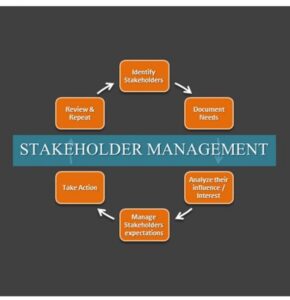
Stakeholder management is the process of identifying all individuals and groups affected by a project, understanding their interests and influence, and developing strategies to engage them in a way that supports the project’s success. Furthermore, it is a continuous process that runs from project initiation through to closure.

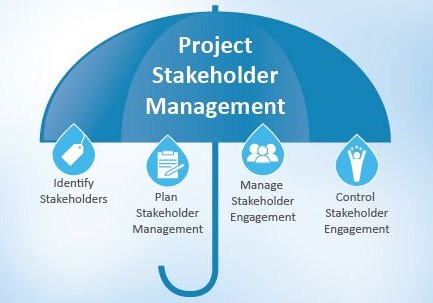
According to the Project Management Institute’s PMBOK® Guide, the Project Stakeholder Management knowledge area consists of four processes: Identify Stakeholders, Plan Stakeholder Engagement, Manage Stakeholder Engagement, and Monitor Stakeholder Engagement. Additionally, each process produces key outputs that are used throughout the project lifecycle.


Why Stakeholder Management Is Uniquely Challenging in Nigeria

Nigerian projects exist within a complex web of formal authority, informal influence, community expectations, and political dynamics. Consequently, Nigerian project managers must navigate stakeholder relationships that are rarely captured in a standard org chart. Below are the key stakeholder challenges that are commonly encountered on Nigerian projects:

  • The powerful informal influencer: A senior executive or traditional ruler who holds no formal project role but whose opinion can stop a project overnight must be identified and engaged proactively.
  • Community resistance: Infrastructure projects in Nigerian states often face community opposition driven by land disputes, employment expectations, or distrust of developers. Therefore, community stakeholders must be engaged before ground is broken.
  • Regulatory bodies: NAFDAC, NESREA, the CBN, NITDA, and other Nigerian regulators are powerful stakeholders whose requirements must be understood and satisfied before project activities can proceed.
  • Funders and development partners: World Bank, AfDB, or USAID-funded projects in Nigeria require regular, structured reporting to international stakeholders who are not physically present on site.
  • Internal politics: Competing departments within Nigerian organisations often have conflicting interests in a shared project. Consequently, the project manager must balance internal stakeholder rivalries without taking sides.


In short, stakeholder management in Nigeria requires cultural intelligence, political awareness, and structured documentation in equal measure.


Step 1: Identify All Stakeholders

Stakeholder identification is conducted during project initiation and is revisited at the start of each major phase. Every individual or group that is affected by the project, or that can affect the project, must be identified and documented in the stakeholder register. Furthermore, both internal and external stakeholders must be included.

Sources of stakeholder identification include: the project charter, the organisational chart, government regulations, community engagement records from similar past projects, and interviews with the project sponsor and functional managers.


Step 2: Analyse Stakeholders Using the Power-Interest Grid

Each identified stakeholder is analysed on two dimensions: their level of power (ability to influence the project) and their level of interest (degree to which they are affected by the project). The Power-Interest Grid categorises stakeholders into four quadrants:

Quadrant Power / Interest Engagement Strategy
Manage Closely High power, high interest Engage actively. Involve in key decisions. Update frequently.
Keep Satisfied High power, low interest Keep informed at a high level. Avoid surprising them.
Keep Informed Low power, high interest Share regular updates. Address their concerns promptly.
Monitor Low power, low interest Monitor passively. Minimal formal engagement required.


In short, not all stakeholders require the same level of engagement.


Step 3: Develop the Stakeholder Engagement Plan

A Stakeholder Engagement Plan is created to document the communication and engagement approach for each stakeholder or stakeholder group. It specifies: what information is communicated, how frequently it is communicated, in what format it is delivered, and who is responsible for the communication. Furthermore, the current engagement level of each stakeholder is assessed and compared with the desired engagement level so that gaps are identified and addressed.

For Nigerian projects, the Stakeholder Engagement Plan must account for local preferences.


Step 4: Manage and Monitor Stakeholder Engagement

Stakeholder engagement is managed throughout the project by implementing the communication plan, hosting stakeholder meetings, resolving concerns, and documenting all significant stakeholder interactions. Additionally, the stakeholder register is updated whenever a stakeholder’s power, interest, or engagement level changes.

Monitoring is conducted at regular intervals. The project manager assesses whether each stakeholder’s current engagement level matches the desired level.


A Nigerian Analogy: The Aso-Ebi List at a Lagos Wedding

Think of stakeholder management as the coordination of a Lagos wedding guest list. Not every guest is treated the same. The parents of the couple sit at the high table (Manage Closely). The influential aunty who is not on the planning committee must still be kept informed and never surprised (Keep Satisfied). Family friends who follow the event on Instagram are monitored but require no direct engagement (Monitor).

On the other hand, a wedding planner who treats all guests equally, sending the same message to everyone, at the same frequency, in the same format will confuse, miss VIP expectations, and create unnecessary drama. Therefore, Nigerian project managers who segment and tailor their stakeholder engagement are the ones whose projects proceed without political disruption.


Free Resource: PMI’s Stakeholder Engagement Assessment Matrix

In addition to Lagos Data School’s live training, Lagos Data School recommends the PMI PMBOK® Guide for the Stakeholder Engagement Assessment Matrix tool, which is used to compare current and desired stakeholder engagement levels across the full stakeholder register. This tool is described in the Project Stakeholder Management knowledge area and is tested in the PMP exam. Furthermore, it is freely accessible to PMI members. As a result, any Nigerian project manager who uses this tool alongside Lagos Data School’s live training will approach every stakeholder conversation with structure and confidence.


How Lagos Data School Teaches Stakeholder Management

Lagos Data School’s project management course covers stakeholder management in a dedicated module with live instruction, Nigerian case studies, and hands-on stakeholder register and engagement plan exercises. Students build stakeholder registers and Power-Interest Grids for simulated Lagos fintech, construction, and government projects. Additionally, stakeholder communication planning is practised using real Nigerian project scenarios. In short, Lagos Data School builds the stakeholder management skills that pass the PMP exam and that every Nigerian project manager needs in the field.

To enroll, visit the Lagos Data School training page. See how our graduates apply stakeholder management across industries in the Lagos Data School student portfolio.


Frequently Asked Questions: Stakeholder Management in Nigeria

Q1: What Is a Stakeholder Register?

A stakeholder register is a document that lists all identified project stakeholders along with their contact details, role, power level, interest level, current engagement level, and desired engagement level.  In short, the stakeholder register is the central reference document for all stakeholder management activities.

Q2: How Often Should Stakeholders Be Engaged on a Nigerian Project?

Engagement frequency is determined by the Stakeholder Engagement Plan. Typically, high-power, high-interest stakeholders are engaged weekly or at every major milestone. On the other hand, low-power, low-interest stakeholders may only receive monthly summary updates. Furthermore, any significant project change or risk event triggers immediate communication to all affected stakeholders regardless of their normal engagement frequency.

Q3: What If a Key Stakeholder Is Resistant to the Project?

Resistance must be addressed proactively rather than ignored. The root cause of the resistance is identified through one-on-one conversation, and the stakeholder’s concerns are formally documented and escalated if needed. Additionally, the project sponsor may be engaged to help resolve conflicts between resistant stakeholders and the project team. In short, unaddressed resistance always escalates. Consequently, it must be managed early.


Stakeholder Management Mastered: Now Build Your Career at Lagos Data School

Ultimately, stakeholder management is the skill that keeps Nigerian projects politically viable. A perfectly scheduled, well-resourced project can still be stopped by a single powerful stakeholder who feels ignored. Consequently, Nigerian project managers who invest in structured stakeholder engagement protect their projects from political disruption at every level.

Therefore, take your next step today. Visit Lagos Data School and enrol in the project management course. As a result, stakeholder registers, engagement plans, Power-Interest Grids, and every other stakeholder management tool will become clear, certified skills in your Nigerian project management career.

How to Become a Project Manager in Nigeria With No Experience: Complete 2026 Guide

Many Nigerians believe project management is only for people with years of experience. That belief is simply not true. Every successful project manager started somewhere; most began with zero experience and basic knowledge. Today, the path into this career is clearer and more accessible than ever before.

Project management is one of the fastest-growing professions in Nigeria. Banks, construction firms, telecoms, and government agencies all need skilled project managers. Furthermore, this career pays well and offers strong job security. Therefore, now is the perfect time to make your move.

Lagos Data School has helped hundreds of Nigerians break into project management with no prior experience.  Consequently, students gain practical skills they can apply to real jobs from day one. This guide walks you through every step of that journey.


What Does a Project Manager Actually Do?

A project manager plans, organizes, and controls work to achieve specific goals. They lead teams, manage budgets, and make sure deadlines are met. Every major company in Nigeria relies on project managers to keep operations running smoothly.

Additionally, project managers serve as the main link between clients, teams, and senior management. They resolve problems quickly and keep everyone focused on the same goal. This role is both challenging and rewarding, which is why so many professionals are eager to step into it.

Moreover, project management skills transfer across industries. A project manager trained in construction can move into IT or finance with ease. This versatility makes it one of the most future-proof careers available in Nigeria today.


Why Nigeria Needs More Project Managers Right Now

Nigeria is growing fast. Infrastructure projects, tech startups, and corporate expansions are happening across the country. As a result, the demand for qualified project managers has never been higher.

According to the Project Management Institute (PMI), millions of project management roles will need to be filled globally by 2030. Nigeria is no exception to this trend. Employers across Lagos, Abuja, and Port Harcourt are actively searching for capable project managers.

Furthermore, many experienced project managers in Nigeria are retiring or moving abroad. This creates a significant gap in the talent pool.  Lagos Data School exists to help you take advantage of this window.


Step-by-Step Guide to Becoming a Project Manager in Nigeria

Step 1: Understand the Core Concepts of Project Management

Start by learning the basics. Project management has five key phases: initiation, planning, execution, monitoring, and closure. These phases are used across every industry and every type of project in Nigeria.

Free resources are available online to help you build this foundation. Websites like the PMI Learning Platform offer introductory content at no cost. However, structured classroom training at Lagos Data School gives you a faster, more focused start.

Step 2: Enroll in a Recognized Training Program

Training is the most important step for anyone starting with no experience. Lagos Data School offers beginner-friendly project management courses in Lagos. These programs cover everything from project planning to risk management and stakeholder communication.

Their instructors bring real-world experience into every lesson. As a result, students learn practical skills, not just theory. Classes are available on weekdays and weekends, making it easy for working adults to attend.

Step 3: Learn Microsoft Project and Other Key Tools

Employers in Nigeria expect project managers to use professional tools. Microsoft Project is the most widely used project scheduling software in the country. Learning it gives you an immediate advantage over other candidates.

Lagos Data School teaches Microsoft Project as part of their core curriculum. Students are trained on Gantt charts, resource allocation, budget tracking, and progress reporting. Additionally, tools like Microsoft Teams and Excel are covered to ensure full workplace readiness. You can learn more about Microsoft Project training at Lagos Data School.

Step 4: Earn a Project Management Certification

Certifications prove your skills to employers. Even without experience, a recognised certificate puts your CV ahead of the competition. Several certifications are well-suited to beginners in Nigeria.

The CAPM (Certified Associate in Project Management) from PMI is ideal for those just starting. It requires no work experience and is globally recognised. Additionally, the PRINCE2 Foundation certificate is popular among Nigerian employers, especially in government and construction. Lagos Data School prepares students for both of these certifications.

Step 5: Build a Portfolio With Real or Practice Projects

Experience does not always have to come from paid employment. You can build a project management portfolio using volunteer work, community projects, or practice simulations. These examples show employers that you can apply your knowledge in real situations.

Lagos Data School incorporates project simulations into their training. Students plan and execute mock projects from start to finish. Consequently, every graduate leaves with practical evidence of their skills, even if they have never held a formal project management role before.

Step 6: Write a Strong Project Management CV

Your CV must highlight your training, certifications, and any relevant experience. Focus on transferable skills from past jobs, such as coordination, budgeting, leadership, or communication. Employers in Nigeria respond well to CVs that are clear, concise, and results-focused.

Lagos Data School offers career support to its graduates. CV reviews, interview preparation, and job placement assistance are all provided. Therefore, students do not have to navigate the job market alone after completing their training.

Step 7: Apply for Entry-Level Project Management Roles

Start your job search by targeting entry-level and junior roles. Titles to look for include Project Coordinator, Project Support Officer, PMO Analyst, and Project Assistant. These roles are designed for candidates who are new to the profession.

Job boards like LinkedIn, Jobberman, and MyJobMag regularly list project management vacancies in Lagos and other cities. Furthermore, networking through professional groups and alumni communities can open doors that job boards cannot. Lagos Data School’s alumni network is a valuable resource in this regard.


Skills You Need to Succeed as a Project Manager in Nigeria

Technical skills matter, but soft skills are equally important. Employers in Nigeria look for a combination of both when hiring project managers. Below are the core skills you need to build:

  • Communication — clearly explain plans, updates, and decisions to your team and clients
  • Time Management — keep tasks on schedule even when challenges arise
  • Problem Solving — identify risks early and respond with practical solutions
  • Leadership — motivate your team and guide them toward shared goals
  • Budgeting — track costs, control spending, and report financial performance
  • Microsoft Project Proficiency — schedule tasks and manage resources using industry-standard software
  • Stakeholder Management — manage expectations and maintain trust with all project parties

Lagos Data School builds all of these skills into its training curriculum. Students practice communication through group exercises, budgeting through case studies, and leadership through project simulations. As a result, graduates are well-rounded professionals ready for the Nigerian job market.


How Lagos Data School Supports Your Project Management Journey

Lagos Data School is the most trusted project management training provider in Lagos. The school was founded to bridge Nigeria’s growing technology and professional skills gap. Since opening, it has trained professionals across data science, digital tools, and project management.

Their project management programs are designed with beginners in mind. No prior experience is needed to enrol. Trainers guide students step by step from foundational concepts to advanced techniques. Moreover, all lessons are grounded in practical, real-world Nigerian business contexts.

Beyond training, Lagos Data School offers post-course support that few other providers match. Career counselling, CV reviews, mock interviews, and alumni networking events are all part of the package. Furthermore, the school’s strong relationships with employers in Lagos help connect graduates with job opportunities directly. Visit Lagos Data School to explore all available programs and enrol today.


Common Mistakes to Avoid When Starting Out

Many aspiring project managers make avoidable mistakes early in their careers. Knowing what to avoid saves time and helps you progress faster. Below are the most common pitfalls to watch out for:

  • Skipping formal training — trying to learn only from YouTube without structured guidance slows your progress significantly
  • Ignoring certifications — employers in Nigeria give preference to candidates with recognised credentials
  • Neglecting soft skills — technical knowledge alone is not enough; communication and leadership are equally valued
  • Failing to build a portfolio — having no practical examples makes it harder to prove your capabilities to employers

Lagos Data School helps students avoid all of these mistakes. Their structured curriculum, certification preparation, and career support services set graduates up for success from the very beginning.


Frequently Asked Questions

Can I become a project manager without a degree in Nigeria?

Yes, you can. Many project managers in Nigeria do not have a degree in project management. What matters most to employers is your certification, your skills, and your ability to deliver results. Lagos Data School’s training programs are open to graduates of any discipline.

How long does it take to become a project manager in Nigeria?

With the right training, most students are job-ready within three to six months. Lagos Data School’s intensive programs are designed to get you qualified quickly. After completing the course, you can begin applying for entry-level roles straight away.

Is project management a good career in Nigeria?

Absolutely. Project management is one of the highest-paying and most stable careers in Nigeria today. Demand is growing across every major industry. Furthermore, certified project managers are consistently among the top earners in their organizations.


Conclusion: Your Project Management Career Starts With Lagos Data School

Becoming a project manager in Nigeria with no experience is entirely possible. Thousands of professionals have done it, and you can too. The key is to start with the right training, earn a recognised certification, and build practical skills that employers value.

Lagos Data School is your ideal partner on this journey. Their beginner-friendly programs, experienced instructors, and strong career support make them the number one choice for aspiring project managers in Lagos and across Nigeria.

Take action today. Visit Lagos Data School and enrol in the next available cohort. Your new career as a project manager in Nigeria begins right now.


For further reading, explore PMI’s career resources and Microsoft’s Project learning platform.

Top Project Management Certifications- Complete 2026 Guide

Every year, thousands of Nigerian professionals set out to earn a project management certification. The challenge is choosing the right one. Each certification makes compelling promises about career advancement and salary growth. However, not all of them deliver equal returns in the Nigerian job market. Some open immediate doors to premium employers and significantly higher salaries. Others look impressive on a CV but carry limited weight in actual hiring decisions across Lagos, Abuja, and Port Harcourt.

Lagos Data School has helped hundreds of Nigerian project management professionals choose and earn the right certifications, and, as a result, build rewarding, well-compensated careers.  So, whether you are choosing your first project management certification or planning your next credential, this comprehensive guide gives you the clear, honest, Nigeria-specific ranking you need to make the smartest decision for your career in 2026.


Why Project Management Certification Matters in Nigeria in 2026

Nigerian employers have become significantly more sophisticated in how they evaluate project management candidates. Hiring managers at top banks, construction firms, IT companies, international NGOs, and oil and gas organizations no longer accept claimed project management experience at face value; they look for verified credentials that signal structured knowledge, professional commitment, and international standards.

Moreover, certification provides a financial advantage that compounds throughout a career. At the entry level, the difference between certified and uncertified candidates may be modest.


Rank 1: PMP (Project Management Professional)

The PMP (Project Management Professional) awarded by the Project Management Institute (PMI) sits at the top of this ranking by a decisive margin. No other project management certification comes close to matching the PMP’s combination of global recognition, employer demand in Nigeria, salary premium, and long-term career value.  Furthermore, PMP holders in Nigeria consistently earn 20 to 35 percent more than non-certified peers at equivalent experience levels.

Earning the PMP requires a minimum of 36 months of project management experience with a four-year degree or 60 months with a secondary school certificate plus 35 hours of formal project management education and a rigorous 180-question exam.

Who Should Pursue the PMP

The PMP is the right choice for Nigerian project managers who have three or more years of documented project leadership experience and want to earn the credential with the strongest possible impact on salary, promotion prospects, and career mobility.


Rank 2: CAPM (Certified Associate in Project Management)

The CAPM (Certified Associate in Project Management), also awarded by PMI, ranks second on this list. It is the entry-level alternative to the PMP and is specifically designed for professionals who want to enter project management but do not yet meet the PMP’s experience requirements. Furthermore, the CAPM requires only a secondary school certificate and 23 hours of project management education to apply, with no prior project management experience necessary.

The CAPM covers the same foundational project management knowledge areas as the PMP, giving candidates a comprehensive grounding in PM principles, process groups, knowledge areas, and tools that employers recognize and value. Moreover, CAPM holders in Nigeria consistently secure interviews and job offers for junior PM, project coordinator, and PMO analyst roles that are closed to uncertified candidates without experience. Consequently, the CAPM is not just a participation certificate; it is a genuine career accelerator for entry-level project management professionals in Nigeria.

Who Should Pursue the CAPM

Fresh graduates who want to enter project management from any academic background, career changers moving from engineering, finance, administration, or IT into PM roles, and early-career professionals with fewer than three years of project management experience are all strong candidates for the CAPM. Furthermore, many successful Nigerian project managers begin their certification journey with the CAPM and progress to the PMP as their experience accumulates, using each credential as a stepping stone to the next level of career achievement and financial reward.

CAPM vs PMP — Which Should You Pursue First?

If you meet the PMP experience requirements, pursue the PMP directly, because the PMP always delivers a larger and more immediate career return than the CAPM. However, if you do not yet meet the experience threshold, the CAPM is the right starting point. As a result, pursuing the CAPM now through Lagos Data School ensures you receive current, exam-aligned preparation that reflects the most up-to-date version of the credential.


Rank 3: PRINCE2 Foundation and Practitioner

PRINCE2 (Projects in Controlled Environments), developed by AXELOS, ranks third for most Nigerian professionals. It is the dominant project management methodology in the United Kingdom, Europe, Australia, and Commonwealth countries, and is valued by Nigerian organizations with strong British ties, including oil and gas majors, international consulting firms, British multinational corporations, and organizations funded by UK government development programs.

PRINCE2 provides a structured, process-driven project management methodology, built around seven principles, seven themes, and seven processes, that is particularly well-suited to organizations requiring formal governance, documented accountability, and structured project oversight.

Who Should Pursue PRINCE2

PRINCE2 is the right choice for Nigerian professionals who work for organizations with strong UK or European ties, who operate in regulated industries requiring structured governance documentation, or who plan to work or study in the UK in the near future. Furthermore, it is particularly valuable for professionals in construction, engineering, and government contracting environments where PRINCE2 is specified as a delivery methodology in contract requirements.


Rank 4: PMI-ACP — Agile Certified Practitioner

The PMI-ACP (Agile Certified Practitioner) awarded by PMI ranks fourth on this list. It is specifically designed for project managers and professionals who work in agile environments and want a comprehensive, framework-agnostic agile credential. Furthermore, the PMI-ACP covers the full range of agile frameworks, including Scrum, Kanban, SAFe, XP, and Lean, and requires 2,000 hours of general project management experience plus 1,500 hours of agile project experience.

The PMI-ACP is particularly valuable for Nigerian IT project managers, fintech product managers, and digital transformation leads whose teams operate within agile frameworks.  Consequently, professionals who earn the PMP first receive significant agile coverage as part of their preparation. Those who want to go deeper into agile practice after earning the PMP can then pursue the PMI-ACP as a specialized credential that signals dedicated expertise in agile project management, specifically giving them a distinct advantage in the increasingly agile-dominant Nigerian technology and product development sectors.

Who Should Pursue the PMI-ACP

IT project managers, product owners, Scrum Masters, and digital transformation leads with substantial agile delivery experience are the strongest candidates for the PMI-ACP. Furthermore, professionals who have already earned the PMP and want to strengthen their agile credentials, particularly those working in fintech, banking technology, or software product development, will find the PMI-ACP adds significant specialized value to their existing certification portfolio. Lagos Data School covers all agile frameworks tested in the PMI-ACP within its comprehensive project management training programs.


Rank 5: Scrum Master Certifications — CSM and PSM

Scrum Master certifications, including the Certified ScrumMaster (CSM) from Scrum Alliance and the Professional Scrum Master (PSM) from Scrum.org, round out the top five.   As a result, Scrum certification has become the most popular entry point into agile project management for Nigerian tech professionals.

Lagos-based software development teams, fintech organizations, and digital product companies actively hire certified Scrum Masters to facilitate their agile delivery processes. Furthermore, Scrum Master certification demonstrates to employers that a candidate understands servant leadership, sprint ceremonies, backlog management, and agile team dynamics at a framework-specific level that is immediately applicable to their daily work. Consequently, most Nigerian professionals treat Scrum certification as a starting point rather than a career destination, using it to enter agile project management and then building toward the PMP or PMI-ACP as their careers advance.

CSM vs PSM — Which Should You Choose

The CSM from Scrum Alliance requires attendance at a two-day training workshop before the exam, making it the more structured and potentially more valuable learning experience for professionals who are new to Scrum. The PSM from Scrum.org is self-study based and widely regarded as the more technically rigorous exam of the two. Moreover, both provide a solid foundation for future PMI-ACP or PMP certification.


Other Certifications Worth Considering for Nigerian Professionals

Beyond the top five, several additional project management certifications offer value in specific Nigerian professional contexts. Furthermore, each one serves a particular career stage, industry, or professional focus that makes it the right choice for a specific subset of Nigerian project management professionals.

CIPM (Chartered Institute of Project Managers)

The CIPM certification offered by the Chartered Institute of Project Managers Nigeria is a domestically recognized credential that carries weight in Nigerian government agencies, domestic contracting organizations, and public sector institutions. Furthermore, it provides a structured path to project management credentials for Nigerian professionals who prefer a locally administered certification process.

Google Project Management Certificate

The Google Project Management Certificate, available through Coursera, is a beginner-friendly, affordable, and flexible credential that provides a solid introduction to project management fundamentals. Furthermore, it covers both traditional and agile project management approaches and requires no prior experience to begin.

SAFe Certifications for Large-Scale Agile

SAFe (Scaled Agile Framework) certifications are increasingly relevant for Nigerian project managers who work in large organizations coordinating Agile across multiple teams simultaneously. Furthermore, Nigerian banks, telecoms companies, and government technology programs that have adopted Agile at scale often require SAFe knowledge from their senior program managers and Agile transformation leads. Moreover, SAFe certifications complement PMP and PMI-ACP credentials by providing a specific framework for managing Agile at enterprise scale.


How to Choose the Right Project Management Certification for Your Career

With multiple viable certification options available, choosing the right one requires honest, systematic assessment of your specific career stage, experience level, target employers, and industry context. Furthermore, the right choice in 2026 may not be the same as the right choice in 2028, because the most effective certification strategy is sequential, building credentials progressively as your experience and career level advance.

Specifically, the following decision framework helps Nigerian professionals identify the right certification to pursue next. If you have fewer than three years of PM experience, start with the CAPM; it provides a recognized PMI credential without the experience barrier, gives you a strong foundational knowledge base, and positions you for PMP certification as your experience grows.

If you already hold the PMP and work in an agile-dominant environment, particularly in IT, fintech, or digital product development, the PMI-ACP adds targeted agile depth that strengthens your position in those sectors specifically, and if you work for a UK-affiliated organization or plan to work in the UK, PRINCE2 Practitioner is a valuable addition to your credential portfolio.


How Lagos Data School Supports Your Certification Journey

Lagos Data School is the most trusted and results-focused project management certification training provider in Lagos, Nigeria. The school’s programs are designed not just to prepare students for exams but to maximize the career and financial outcomes that those certifications deliver in the real Nigerian market. Furthermore, every aspect of the Lagos Data School training experience reflects this commitment, from the depth of exam preparation and the quality of study materials to the level of personal support available throughout the certification process.


Moreover, Lagos Data School offers a comprehensive ecosystem of complementary professional development programs that help certified project managers build the multidisciplinary skill stacks that the highest-paying employers in Nigeria reward. The school’s Business Analysis course is particularly popular among PMP holders, giving project managers the requirements management and stakeholder analysis skills that make them significantly more effective business partners to the organizations they serve. Additionally, the school’s flexible weekday, weekend, and fully online class formats make it possible for every working professional across Nigeria to access certification training without disrupting their existing career commitments.


Building Your Project Management Certification Timeline

A well-designed certification timeline makes the difference between a piecemeal credential collection and a purposeful, progressive career development strategy. Furthermore, the most successful Nigerian project management professionals approach certification sequentially, earning credentials in an order that maximizes both their learning development and their career return at each stage. Lagos Data School recommends the following general certification timeline for Nigerian professionals at different career stages.

For Early-Career Professionals: Years 1 to 3

Begin with foundational training and the CAPM certification as soon as you enter the project management field. Furthermore, use the CAPM period to build documented project leadership experience, seeking out project coordinator, PMO analyst, and junior PM roles that create the experience hours needed for the PMP. As a result, you enter your mid-career phase with a recognized credential, documented experience, and the CAPM behind you, perfectly positioned to pursue the PMP with maximum confidence and impact.

For Mid-Career Professionals: Years 3 to 7

Pursue the PMP certification as soon as you become eligible, because every month of delay is a month of earning less than your certified peers. Furthermore, enroll in Lagos Data School’s PMP training course to receive the most structured, exam-focused, and Nigeria-specific preparation available. Moreover, use the PDU requirement of ongoing PMP maintenance to continue building complementary skills in agile methodology, business analysis, data-driven decision-making, and sector-specific technical knowledge that strengthen your professional profile continuously. As a result, you enter your senior career phase with the PMP, growing sector expertise, and an expanding professional network that positions you for the highest-paying and most prestigious PM roles in Nigeria.

For Senior Professionals: 7 or More Years

Senior project managers should consider adding specialized certifications that deepen their expertise in their primary sector or expand their capabilities into adjacent areas. Furthermore, the PMI-ACP is a strong addition for those working in agile-dominant environments. PRINCE2 Practitioner complements the PMP for those with significant international stakeholder exposure. SAFe certifications add value for those leading enterprise-scale agile transformations in large Nigerian organizations.

Conclusion

Choosing the right project management certification is one of the most important career decisions any Nigerian professional can make. The ranking is clear: the PMP from PMI sits at the top for most Nigerian professionals, followed by the CAPM for those still building experience, PRINCE2 for those with UK or European organizational ties, the PMI-ACP for dedicated agile practitioners, and Scrum Master certification for those entering the agile world. Furthermore, a well-designed sequential certification timeline, starting where you are now and progressing deliberately toward the credentials that match your career aspirations, delivers the greatest total career and financial return over time.

Lagos Data School gives every Nigerian project management professional the training, certification support, career guidance, and professional community needed to earn the right credentials and maximize their impact.

Take action today. Enroll at Lagos Data School and invest in the certification that will define and elevate your project management career in Nigeria in 2026 and beyond. Visit Lagos Data School online or contact the admissions team to register for the next available training cohort.


Visit Lagos Data School online or contact the admissions team directly to register for the next available project management certification training cohort today.

Hi, How Can We Help You?
Welcome To
Lagos Data School

Artificial Intelligence (AI), Machine Learning and Robotics Programmes Are Now Available!!!

Enroll Now!

Thank You
100% secure website.