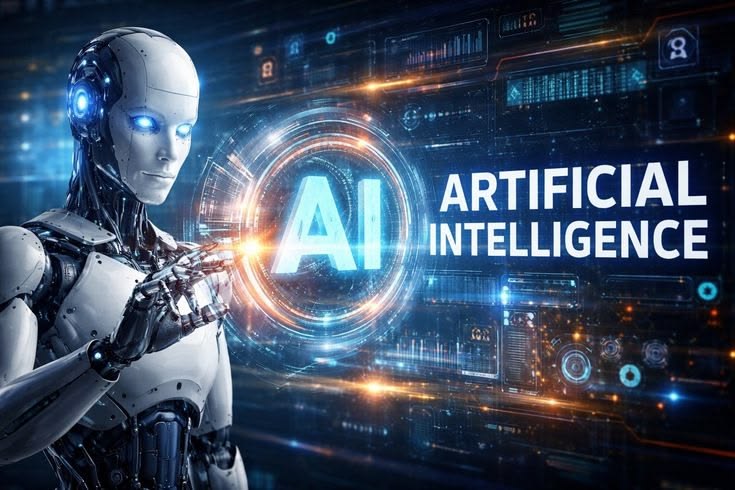
Artificial Intelligence is no longer a concept of the future. Today, it powers the apps on your phone, the recommendations on your streaming platform, and the fraud detection systems in your bank. Businesses across Nigeria and the rest of Africa are now adopting AI at a rapid pace. As a result, the demand for professionals who understand it has never been stronger.
Lagos Data School has positioned itself at the forefront of AI education in Nigeria. Their programs are designed to give total beginners and working professionals alike the knowledge and practical skills needed to thrive in this field. Furthermore, their courses are built around real Nigerian business contexts, making the learning immediately relevant and applicable.
This article introduces the core concepts of AI, explores its most important applications, and maps out the career paths available to those who choose to pursue it. Additionally, practical guidance is provided at every stage so that you leave with a clear picture of where to start. Whether you are a student, a professional, or a business owner, AI is a subject you can no longer afford to ignore.
What Is Artificial Intelligence? A Clear Definition
Artificial Intelligence refers to the simulation of human intelligence by machines. These machines are programmed to think, learn, and solve problems the way humans do. AI systems are built to process large amounts of data, identify patterns, and make decisions based on what they find.

According to IBM’s AI research division, AI is broadly defined as the ability of a machine to mimic human cognitive functions such as learning and problem-solving. This definition covers a wide range of technologies, from simple rule-based systems to highly complex neural networks that power modern voice assistants.
Moreover, AI is not a single technology. It is an umbrella term that covers several related fields. Understanding these sub-fields is the first step toward building a meaningful career in this space. Lagos Data School breaks down each of these areas clearly in their AI training curriculum.
Core Concepts of Artificial Intelligence
Several foundational concepts sit at the heart of AI. Each one builds on the last, and together they form the technical backbone of the entire field. Below is a clear explanation of the most important concepts every beginner must understand.
Machine Learning
Machine learning is the branch of AI in which systems are taught to learn from data rather than being explicitly programmed. Patterns are identified by the algorithm, and predictions are made based on those patterns. Consequently, the more data the system processes, the more accurate its outputs become.
Machine learning is used in spam filters, credit scoring models, and product recommendation engines. In Nigeria, banks and fintech companies are already using it to detect fraud and assess loan risk. Lagos Data School teaches machine learning as a core subject within their AI and data science programs.
Deep Learning
Deep learning is a more advanced form of machine learning. It uses artificial neural networks with many layers to process complex data such as images, audio, and text. These networks are modelled loosely on the structure of the human brain.
Additionally, deep learning powers many of the AI tools people use daily, including facial recognition, voice-to-text conversion, and medical image analysis. Understanding deep learning opens the door to some of the most exciting and highly paid roles in the AI industry.
Natural Language Processing
Natural Language Processing, or NLP, is the branch of AI that enables machines to understand and generate human language. It is the technology behind chatbots, virtual assistants, language translation tools, and sentiment analysis systems.
Furthermore, NLP is being applied in Nigerian businesses to build customer service bots, automate email responses, and analyse customer feedback at scale. This makes it one of the most commercially relevant AI skills in the Nigerian market today.
Computer Vision
Computer vision allows machines to interpret and make decisions based on visual input. Images and videos are processed by the system to identify objects, faces, and patterns. This technology is used in self-driving cars, medical diagnostics, and security surveillance systems.
In Africa, computer vision is being applied to agriculture, healthcare imaging, and retail analytics. Consequently, professionals with computer vision skills are being sought by a growing number of organisations across the continent.
AI Ethics and Responsible AI
As AI systems grow more powerful, the ethical questions surrounding them become more important. Bias in algorithms, data privacy, and the social impact of automation are all areas that must be carefully managed. Responsible AI is now a recognised discipline within the broader AI field.
Lagos Data School includes AI ethics as part of their curriculum. Students are taught to build fair, transparent, and accountable systems. This makes their graduates more attractive to employers who take corporate responsibility seriously.
Real-World Applications of Artificial Intelligence
AI is being applied across virtually every industry. Its impact is already being felt in Nigeria and across West Africa. Below are some of the most significant areas where AI is currently making a difference.
AI in Finance and Banking
Financial institutions in Nigeria are among the earliest adopters of AI. Fraud detection systems are powered by machine learning models that analyse thousands of transactions per second. Additionally, credit risk assessment, customer segmentation, and algorithmic trading are all being done using AI tools.
Banks like GTBank, Access Bank, and Zenith Bank are investing heavily in AI-driven technologies. As a result, the demand for AI-skilled professionals within Nigeria’s financial sector is growing fast. Lagos Data School prepares students specifically for these roles.
AI in Healthcare
Healthcare is one of the most promising areas for AI application in Nigeria. Medical images are being analysed by AI systems to detect diseases such as malaria, tuberculosis, and certain cancers faster than human doctors. Furthermore, patient records are being processed by AI to identify health risks before symptoms appear.
Organisations like the Nigerian Institute of Medical Research are exploring AI-driven diagnostics. Consequently, healthcare professionals with AI knowledge are positioned to play a critical role in transforming Nigeria’s health outcomes.
AI in Agriculture
Nigeria’s agricultural sector employs a significant portion of the population. AI tools are now being used to monitor crop health, predict weather patterns, optimise irrigation, and detect pests before they cause widespread damage. This technology has the potential to significantly increase farm yields across the country.
Moreover, drone technology powered by computer vision is being tested on Nigerian farms to automate crop surveillance. These innovations represent a major opportunity for AI professionals who want to work in a sector with direct social impact.
AI in Education and Training
Educational platforms are using AI to personalise learning for individual students. Adaptive learning systems identify gaps in a student’s knowledge and adjust the content accordingly. As a result, learners progress faster and retain information more effectively.
Lagos Data School itself uses data-driven approaches to track student progress and improve course delivery. Their programs are updated regularly to reflect changes in the AI industry, ensuring that graduates always have current, relevant skills.
AI in E-Commerce and Retail
Retail businesses across Nigeria are using AI to power product recommendations, chatbots, inventory management, and dynamic pricing. Jumia, Konga, and other Nigerian e-commerce platforms rely on AI to personalise the shopping experience for millions of users.
Furthermore, customer service bots built on NLP technology are now handling a significant share of consumer queries. This reduces costs for businesses and improves response times for customers. Consequently, AI professionals with NLP and machine learning skills are being recruited aggressively across the retail sector.
Career Paths in Artificial Intelligence
AI offers a wide range of career options. Some roles are highly technical, while others focus on strategy, ethics, or communication. Below are the most popular and well-paying AI career paths available to trained professionals in Nigeria today.
- Machine Learning Engineer: builds and trains models that power AI-driven products and services
- Data Scientist: analyses large datasets to extract insights and build predictive models
- AI Research Scientist: develops new AI algorithms and advances the theoretical foundations of the field
- NLP Engineer: builds systems that understand, process, and generate human language
- Computer Vision Engineer: creates systems that interpret and act on visual data
- AI Product Manager: leads the development of AI-powered products from concept to launch
- AI Ethics Specialist: ensures that AI systems are fair, transparent, and compliant with regulations
- Business Intelligence Analyst — uses AI tools to turn data into actionable business insights
Each of these roles is in active demand across Lagos, Abuja, and Port Harcourt. Furthermore, remote work opportunities in international AI companies are accessible to Nigerian professionals with the right training and certifications. Lagos Data School’s AI programs are designed to prepare graduates for exactly these kinds of opportunities.
Skills You Need to Start a Career in AI
Breaking into AI requires a combination of technical and analytical skills. Beginners are often overwhelmed by where to start, but the path becomes clear when the right framework is applied. Lagos Data School provides that framework through their structured AI training programs.
Below are the core skills that are needed to build a strong foundation in AI:
- Python programming: the primary language used in AI and machine learning development
- Statistics and mathematics: essential for understanding how models are built and evaluated
- Data wrangling and analysis: the ability to clean, organise, and explore raw datasets
- Machine learning frameworks: tools like TensorFlow, PyTorch, and Scikit-learn are widely used in industry
- Critical thinking and problem-solving: AI projects require creative solutions to complex real-world challenges
- Communication and storytelling: findings must be explained clearly to non-technical stakeholders
All of these skills are taught at Lagos Data School as part of their comprehensive AI and data science programs. Students are guided from the basics of Python all the way through to building and deploying machine learning models. Visit Lagos Data School to explore full course details and upcoming cohort dates.
How Lagos Data School Prepares You for an AI Career
Lagos Data School is the leading technology training institution in Nigeria. Their AI programs are developed in partnership with industry professionals and are regularly updated to reflect the latest developments in the field. Consequently, students always learn skills that are relevant, current, and valued by employers.
Practical, hands-on training is at the heart of every Lagos Data School program. Real datasets are used in all exercises, and students complete end-to-end AI projects before they graduate. Furthermore, each student is mentored by an experienced practitioner who provides feedback, guidance, and career advice throughout the program.
Beyond technical training, Lagos Data School offers career support services that include CV reviews, mock interviews, and direct connections to employer networks across Nigeria. Their alumni community spans hundreds of professionals working in AI, data science, and technology roles across the country. To enrol or learn more, visit Lagos Data School.
How to Get Started With AI in Nigeria Today
Starting your AI journey does not require a computer science degree. Many successful AI professionals in Nigeria came from backgrounds in engineering, finance, healthcare, and business. What matters most is your commitment to learning and your willingness to practise consistently.
First, build a foundation in Python and basic statistics. Free resources from Google’s Machine Learning Crash Course are widely recommended for beginners. However, these self-study resources are most effective when combined with structured, instructor-led training.
Lagos Data School offers the best of both worlds. Their programs combine structured classroom learning with self-paced exercises, live projects, and expert mentorship. Additionally, their flexible scheduling makes it possible for working professionals to train without disrupting their current jobs. As a result, students typically complete the program and become job-ready within three to six months.
Conclusion: Begin Your AI Journey With Lagos Data School
Artificial Intelligence is transforming every industry in Nigeria and across the world. The professionals who understand it today will lead organisations tomorrow. Fortunately, you do not need years of experience or an advanced degree to get started. The right training is all that is required.
Lagos Data School is Nigeria’s most trusted AI training provider. Their practical, beginner-friendly programs are designed to take you from zero to job-ready in the shortest possible time. Furthermore, their strong industry connections and career support services give graduates a real advantage in the Nigerian job market.
Take the first step today. Visit Lagos Data School to explore their AI and data science programs, check upcoming cohort dates, and secure your place. Your AI career in Nigeria starts here.
For further reading, explore IBM’s AI Resource Centre, Google’s Machine Learning Crash Course, and MIT’s Introduction to Deep Learning.