If you have been reading about automation in Nigeria, you have probably come across two terms: RPA and traditional automation. They sound like they do the same thing. And in some ways, they do. Both are about getting machines to do work that humans used to do.
But they are not the same. They work differently. They suit different kinds of problems. They cost different amounts to build. And they require different skills to run.
This guide explains what makes RPA and traditional automation different, when each one is the right choice, and what this means for Nigerian businesses in 2026.
Lagos Data School made this guide as part of our automation training series. We teach Nigerian professionals how to identify, build, and manage automated systems. Understanding the difference between these two approaches is the starting point for that journey.
What Is Traditional Automation
Traditional automation means using technology to do tasks that used to be done by hand. This idea has been around for a very long time. Factory machines that make cars, conveyor belts that move goods, and ATMs that dispense cash are all forms of traditional automation.

In a business context, traditional automation means writing code that connects directly to the systems you want to automate. It uses APIs and custom scripts to move data between systems and trigger actions.
Traditional automation is fast, reliable, and very powerful. But it requires the systems being connected to have been built with automation in mind. It also requires skilled software developers to build and maintain the connections. And when the underlying systems change, the automation code usually has to change too.
A Simple Traditional Automation Example
A Nigerian bank wants to automatically send a text message to a customer every time a transaction happens on their account. The bank’s developers write a piece of code that connects directly to the core banking system’s database. Every time a new transaction record appears, the code reads it and triggers the SMS gateway to send a message.
This works very well. It is fast, reliable, and runs automatically. But it required access to the bank’s internal systems, a developer who could write the integration code, and a long testing period to make sure it worked correctly.
What Is RPA?
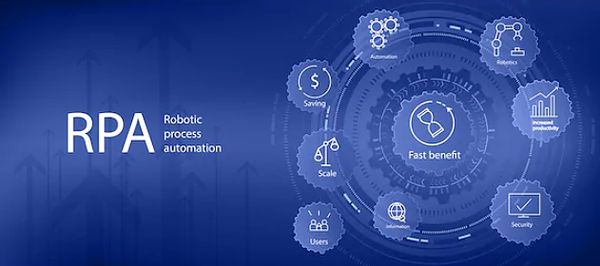
Robotic Process Automation, or RPA, is a newer type of automation. Instead of connecting directly to the systems underneath, RPA works at the surface level, the same level that a human user works at.

An RPA bot sees the screen the same way a person does. It can click buttons, fill in forms, read data from the screen, copy it, and paste it somewhere else. It does not need access to the database or the internal code. It just needs to be able to see and interact with the user interface.
This is the key difference. Traditional automation connects to the system at a deep, technical level. RPA connects to the system at the surface level, through the screen, just like a person would.
A Simple RPA Example
A Lagos logistics firm receives supplier invoices by email every day. A staff member opens each email, downloads the PDF, reads the invoice details, logs into the company’s finance system, and types in the invoice data. This takes about ten minutes per invoice.
An RPA bot can be set up to do all of those steps automatically. It checks the email inbox, downloads the PDF, reads the data, opens the finance system, logs in, and fills in the invoice details. All of this happens through the user interface, exactly as a human would do it, but much faster and without errors.
No API. No database access. No custom code connecting the two systems. Just a bot that uses the software the same way a human does.
The Key Differences
| Factor | Traditional Automation | RPA |
| How it connects | Directly to databases and APIs | Through the user interface (like a human) |
| Technical skill needed | Software developers required | Business users can learn it |
| Setup time | Weeks to months | Days to weeks |
| Cost to build | Higher — custom code required | Lower — visual tools available |
| What it needs | API access or database access | Just a working user interface |
| Best for | High-volume, stable, well-built systems | Legacy systems and manual workflows |
| Maintenance | More stable if systems don’t change | Needs updating when UIs change |
| Speed of execution | Very fast — direct system access | Fast — but slightly slower than direct access |
When to Use Each One
Knowing the difference helps you choose the right tool for the right problem. Here is a simple guide.
Use Traditional Automation When:
- The systems involved have well-documented APIs or database access points
- You have a software development team that can build and maintain the integration
- The process needs to run at very high speed, such as millions of transactions per day
- The underlying systems are stable and unlikely to change often
- You are building a long-term, deeply embedded technical solution
Use RPA When:
- The systems involved do not have APIs or are too old to connect to directly
- You need a solution fast, without waiting for a long development cycle
- The task involves a person switching between multiple different screens or software tools
- Non-technical staff will help build or maintain the automation
- You want to automate a process without touching the underlying systems at all
Why This Matters for Nigeria
Many Nigerian businesses run on older, legacy systems. These systems were built long before modern APIs existed. They do not have easy ways to connect to other software. Traditional automation is very hard to apply to them because there is no clean technical entry point.
RPA was built precisely for this problem. It does not need an entry point into the system’s code. It just needs to be able to see the screen. This makes it extremely well suited to the kinds of mixed, legacy-heavy technology environments that many Nigerian banks, telecoms firms, government agencies, and manufacturing companies operate.
At the same time, many Nigerian fintechs and tech startups have built their systems from the ground up with modern APIs. For these firms, traditional automation or direct API integration is often the better, faster, and more reliable choice.
The right answer depends on the systems you have, the speed you need, the budget you can commit, and the technical resources available to you.
What Is Intelligent Automation?
A third term has become common in recent years: intelligent automation. This combines RPA with artificial intelligence to handle tasks that are more complex than simple rule-based automation can manage.
Standard RPA works well when the process follows clear, fixed rules. But many real-world business tasks involve some degree of judgment. Reading an invoice that is formatted differently from the standard template. Classifying a customer complaint into the right category. Deciding which of several actions to take based on the content of an email.
Intelligent automation layers AI on top of RPA to handle this judgment layer. The AI reads the unstructured content, such as the text of an email or the layout of a PDF, and makes a decision. The RPA bot then carries out the action based on that decision.
For Nigerian professionals building automation skills in 2026, understanding this full spectrum gives you a complete picture of the tools available.
Common Myths
RPA Will Replace Traditional Automation
This is not true. They serve different purposes. RPA is excellent for surface-level, interface-driven automation. Traditional automation is still the right choice for deep, high-speed, API-level integration. Many large firms use both, applying each one where it fits best.
Complex Always Means Better
More technical does not mean better. Better means solving the right problem in the right way. A business that spends six months building a custom API integration when RPA could have solved the same problem in two weeks has not made a better choice. It has made a slower, more expensive one.
RPA Only Works for Small Tasks
Large organisations run hundreds of RPA bots handling millions of transactions per day. Nigerian banks, global insurance companies, and major telecoms firms all run large-scale RPA programs. The scale of what RPA can handle is far larger than most beginners assume.
The Plain Version
Here is the whole comparison in the simplest possible terms.
Traditional automation goes in through the back door. It connects directly to the system’s code, database, or API. It is fast, powerful, and reliable. But it needs a developer to build it, and the system has to have a back door to go through.
RPA goes in through the front door. It uses the screen, just like a person. It clicks, types, reads, and copies. It does not need any special access to the system underneath. It just needs a working screen to look at.
Both get the job done. The question is which door is available, and which one costs less to use.
Lagos Data School trains Nigerian professionals to understand both approaches, to know which one fits which problem, and to build the skills to deliver either solution when the job calls for it.
Why This Matters for Your Career
If you are a Nigerian professional who wants to build automation skills, understanding this distinction gives you a real edge.
Many professionals who learn RPA do not understand where it fits in the wider automation landscape. They cannot explain to a business leader why RPA is the right choice for a specific problem versus a custom integration. That inability to explain the choice clearly limits how far they can progress.
Professionals who can assess a process, pick the right type of automation, explain the trade-offs, and then deliver the solution are far more valuable than those who know only one approach.
Lagos Data School builds this kind of thinking into every automation training program we run. We do not just teach you to build bots. We teach you to think about automation at the level of a business problem, not just a technical task.
The Right First Step
If you are new to automation and you want to start building practical skills in Nigeria right now, here is the most direct advice Lagos Data School can give.
Start with RPA. Specifically, start with UiPath. It has the most in-demand skills in the Nigerian job market. It has a free learning Academy. And the skills you build are directly applicable to real problems in Nigerian banking, telecoms, oil and gas, and logistics firms.
Once you understand RPA well, study traditional automation and API integration as your second skill set. The combination of both puts you in a very small group of Nigerian professionals who can tackle the full range of automation challenges that businesses face.
Lagos Data School runs structured training programs that take you through this path in a practical, hands-on way, with real Nigerian business problems at the centre of every module.
Say It Simply
Here is the whole guide in plain, short sentences.
Traditional automation goes deep into a system. It connects to the database or the API. It is fast and reliable. But it needs a developer and it needs the system to have an open connection.
RPA stays on the surface. It uses the screen. It clicks, types, reads, and copies. It needs no special access. It just needs a working screen.
Both work. Both save time. The difference is which door is available.
If the system has an API and you have a developer, use traditional automation.
If the system is old, or you need a fast solution, or the task is done through a screen, use RPA.
That is it. That is the whole guide.
Lagos Data School teaches Nigerian professionals to understand both and to choose the right one for each problem.
Why This Matters Now
Understanding this difference is not just academic. It helps you do your job better.
If you work in IT, it helps you give the right advice when a business team asks for automation help.
If you work in business operations, it helps you ask the right questions when your IT team proposes a solution.
If you are building an automation career, it helps you explain your choices to clients and managers clearly.
Knowledge of this distinction separates professionals who think about automation strategically from those who only know one approach.
Lagos Data School builds this kind of strategic thinking into every automation training program.
Three Things to Remember
First: RPA and traditional automation are not rivals. They solve different problems. The best Nigerian automation professionals understand both.
Second: The right tool depends on the system. Old system with no API? RPA. Modern system with an open API and a developer available? Traditional automation.
Third: the goal is always the same. Free up human time. Reduce errors. Serve customers faster. The tool is just how you get there.
Lagos Data School teaches Nigerian professionals to think this way. Not as bot builders. As problem solvers.
That is the mindset that builds long, valuable careers in automation.
The Bottom Line
Traditional automation is powerful. RPA is flexible. Both have a place in a modern Nigerian business.
The professionals who understand both will always be in demand. The ones who only know one will be limited.
Build the knowledge. Start with RPA. Then add traditional automation and API skills on top.
That combination is rare in Nigeria right now. It will not stay rare for long.
Get there first.
Lagos Data School can help you do that. Come find us.
Final Thought
The right tool matters. But the right thinking matters more.
Learn both types of automation. Understand both. Use both when needed.
Build that thinking and you build a career that lasts.
Lagos Data School teaches this thinking. Start with us.
Recommended External Resource
For a comprehensive technical comparison of automation approaches from a leading industry analyst, visit Gartner’s automation research hub: https://www.gartner.com/en/information-technology/insights/automation
As Simple as It Gets
Traditional automation: goes through the back door. Connects to the database or API. Fast. Needs a developer. Best for modern systems.
RPA: goes through the front door. Uses the screen. Clicks and types like a person. No developer needed. Best for old systems and quick wins.
Pick the right door for the right problem.
If you need help deciding, that is what Lagos Data School teaches.
Come learn. Build. Work.
Start today.
Go.
Quick Self-Assessment
Use these questions to think about which type of automation fits the problem you are trying to solve.
- Do the systems involved have a modern API or database that developers can access directly?
- Is the process currently done by a person switching between different screens or software?
- Do you need a solution working within weeks rather than months?
- Are the systems involved legacy platforms that were not built for modern integration?
- Does the process require reading PDFs, emails, or other documents from a screen?
If your answers point mostly toward legacy systems, screen-based work, and speed of delivery, RPA is your starting point. If your systems are modern, API-ready, and you have developer resources available, traditional automation may serve you better. Lagos Data School can help you make this assessment for any specific process in your organisation.
About Lagos Data School
Lagos Data School is Nigeria’s top school for cyber security, data science, cloud, and analytics. Every idea in this guide is part of our hands-on course.
Our teachers are real security pros, not just classroom staff. So you learn from people who guard live networks every day.
We run classes on weekdays, weekends, and online. So no matter your time, we have a slot for you. Beyond skills, we also give you a real certificate and links to job partners.
Visit Lagos Data School today to view our courses and join the next class.
Choose the right tool. Build the right skills. Train with Lagos Data School.