Introduction: Great Decisions Are Being Made Differently Now
Every great leader, every successful business, and every thriving organisation has one thing in common: the ability to solve the right problems and make the right decisions at the right time. This has always been true. What has changed, however, is the quality and speed of support now available to those who are willing to embrace it. Artificial intelligence has become the most powerful decision-support tool ever placed in the hands of business leaders and professionals.
Nigerian organisations are facing increasingly complex challenges. Economic pressures, competitive markets, rapidly changing consumer behaviour, and limited resources all demand faster, smarter, and more confident decision-making. Furthermore, the leaders who are navigating these challenges most successfully are the ones who have integrated AI into their thinking process. As a result, better decisions are being made with greater speed, lower risk, and stronger evidence than at any point in history.
Lagos Data School is training Nigerian professionals to lead in exactly this way. Their AI programs are built around practical, real-world application — equipping students with the knowledge, tools, and frameworks needed to use AI for problem-solving and decision-making at the highest level. This article explores every dimension of this topic, from the core frameworks to industry-specific applications, common pitfalls, and the career advantages that AI-enhanced decision-making delivers. Additionally, every concept is grounded in examples that Nigerian professionals will recognise and relate to immediately.
Why AI Fundamentally Transforms How Decisions Are Made
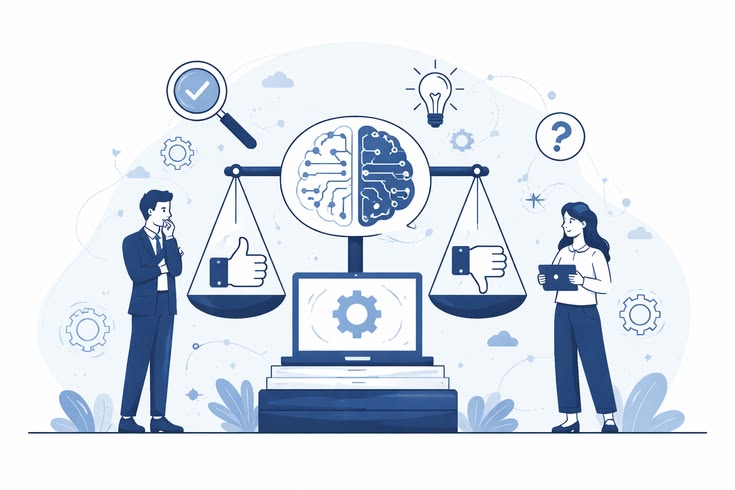
Human decision-making is powerful but imperfect. Cognitive biases distort judgement. Emotional states influence choices. Information overload leads to paralysis. Limited time prevents thorough analysis. These limitations are not signs of weakness; they are features of human psychology that every leader must manage. AI addresses each limitation directly and systematically.
Data is processed by AI at a scale and speed that no human team can match. Patterns are identified across thousands of variables simultaneously. Scenarios are modelled with precision. Historical outcomes are compared against current conditions. Consequently, decisions that once required weeks of analysis can be informed by AI-generated insights in a fraction of the time, without sacrificing rigour or depth.
Moreover, AI does not get tired, emotional, or politically influenced. It analyses information consistently and objectively every time it is used. According to McKinsey’s Global Institute, organisations that have integrated AI into their decision-making processes report significant improvements in speed, accuracy, and confidence across strategic and operational choices. Lagos Data School teaches professionals to capture these benefits through structured, practical AI training grounded in Nigerian business realities.
How AI Is Applied Across the Problem-Solving Process
Effective problem-solving follows a recognised process: define the problem, gather information, generate options, evaluate alternatives, make a decision, and implement and review. AI enhances every one of these stages. Understanding how to apply AI at each point is the foundation of AI-powered problem solving, and it is taught in detail at Lagos Data School.
Stage 1: Defining the Problem Clearly
The most common mistake in problem-solving is addressing the wrong problem. Symptoms are treated rather than root causes. Resources are spent solving surface-level issues while the real driver of the problem goes unaddressed. AI helps professionals frame problems more precisely before any solution is attempted.
ChatGPT and similar tools are used to challenge problem statements, identify underlying assumptions, and suggest alternative framings of an issue. A problem that initially appears to be a sales decline might be reframed through AI-assisted analysis as a customer retention failure or a pricing misalignment. Consequently, the solution space becomes clearer and more targeted from the outset.
Stage 2: Gathering and Synthesising Information
Every decision is only as good as the information behind it. AI dramatically accelerates the information-gathering phase by synthesising data from multiple sources, summarising research, identifying relevant trends, and flagging gaps in the available evidence. What once took a team of analysts several days can be accomplished with AI assistance in hours.
Furthermore, AI is used to process unstructured information like customer feedback, employee surveys, news articles, and competitor reports, and extract the structured insights that inform decisions. As a result, leaders arrive at the decision point with a fuller, more accurate picture of the landscape than was previously possible. Visit Lagos Data School to learn how their programs train professionals to conduct AI-assisted information analysis at a professional standard.
Stage 3: Generating and Evaluating Options
Generating a strong range of options requires creativity, breadth of knowledge, and the ability to think beyond the obvious. AI tools excel at exactly this. When given a clearly defined problem and relevant context, ChatGPT generates a wide range of potential solutions — including unconventional approaches that human teams might not think to explore.
Additionally, each option is evaluated by AI against a defined set of criteria. Cost, feasibility, risk, time to implementation, stakeholder impact, and alignment with strategic objectives can all be scored and compared simultaneously. Consequently, decision-makers arrive at the selection stage with a structured, evidence-based evaluation rather than a collection of gut feelings and competing opinions.
Stage 4: Making and Communicating the Decision
Making the final decision remains a human responsibility. AI informs; it does not decide. The judgement, accountability, and contextual wisdom needed to make a final call still reside with the leader. However, AI ensures that this call is made with the best available information, the clearest range of options, and the most thorough risk assessment possible.
Moreover, AI helps communicate decisions effectively. Briefing documents, stakeholder presentations, implementation plans, and FAQ responses are all drafted by AI in response to a well-crafted prompt. As a result, the gap between deciding and communicating is compressed, and alignment across the organisation is achieved faster.
Powerful AI Tools for Problem Solving and Decision Making
Several AI tools are particularly well-suited to supporting problem-solving and decision-making in professional and transnational contexts. Each one addresses a different dimension of the process. Lagos Data School introduces students to all of these tools as part of their practical AI training curriculum.
- ChatGPT (OpenAI): generates options, evaluates trade-offs, drafts decision briefs, and stress-tests assumptions across almost any problem type
- Google Gemini: integrates with Google Workspace to support collaborative decision-making and document-based analysis
- Microsoft Copilot: embedded in Microsoft 365, it supports data analysis in Excel, presentation building in PowerPoint, and decision documentation in Word
- Tableau with AI features: turns complex datasets into interactive dashboards that reveal patterns and support data-driven decisions
- IBM Watson: provides enterprise-level AI decision support, particularly for risk management, fraud detection, and supply chain optimisation
- Perplexity AI: conducts cited research synthesis in real time, giving decision-makers fast access to verified background information
Furthermore, many Nigerian organisations are building custom AI decision-support tools on top of these platforms, tailored to their specific industry, data environment, and decision types. Consequently, AI fluency is becoming a prerequisite for any professional involved in strategy, operations, or leadership roles across the country.
How AI-Powered Decision Making Is Transforming Nigerian Industries
Across Nigeria’s most active sectors, AI is already being applied to some of the most consequential decisions made by organisations every day. Below are the industries where the impact of AI-powered problem-solving is being felt most strongly.
Banking and Financial Services
Nigerian banks are using AI to make faster, more accurate credit decisions. Loan applications are assessed by AI models that analyse hundreds of variables simultaneously — transaction history, repayment behaviour, income patterns, and market conditions. Consequently, credit decisions that once took days are now being made in minutes, with lower default rates and greater financial inclusion.
Additionally, investment decisions are being supported by AI-generated market analyses, risk assessments, and portfolio optimisation models. Fraud detection systems are flagging suspicious transactions in real time. As a result, Nigerian financial institutions that have embraced AI are operating with greater efficiency, lower risk exposure, and stronger customer outcomes.
Healthcare and Public Health
Healthcare decision-making in Nigeria is being strengthened by AI at multiple levels. Clinical decision support tools are helping doctors identify the most likely diagnoses based on patient symptoms, history, and test results. Resource allocation decisions- where to deploy medical personnel, equipment, and supplies are being optimised by AI models that account for patient demand, geography, and outbreak patterns.
Furthermore, public health agencies are using AI to model the spread of disease, evaluate the impact of policy interventions, and prioritise vaccination campaigns in high-risk areas. Consequently, decisions that once relied heavily on incomplete information and manual analysis are now being made with far greater speed and precision.
Agriculture and Food Security
Agricultural decision-making is being revolutionised across Nigeria by AI tools that process weather data, soil conditions, market prices, and historical yield information. Farmers and agribusinesses are being supported in deciding what to plant, when to plant it, how much to irrigate, and when to harvest for maximum market value.
Moreover, supply chain decisions in the food sector are being optimised by AI to reduce waste, improve logistics, and match supply to demand more accurately. As a result, food security outcomes are improving in regions where AI-informed agricultural decision-making is being adopted. Lagos Data School prepares professionals to contribute to these transformations through their AI and data science programs.
Government and Public Policy
Policy decisions affect millions of lives. Getting them right matters enormously. Nigerian government agencies and policy institutions are beginning to explore how AI can improve the quality of public decisions by processing large volumes of socioeconomic data, modelling the impact of policy options, and identifying unintended consequences before implementation begins.
Additionally, AI is being used to analyse citizen feedback, track service delivery performance, and flag areas where public resources are being misallocated. Consequently, government organisations that adopt AI decision-support tools are becoming more responsive, more accountable, and more effective at achieving their mandated goals.
How AI Helps Leaders Overcome Dangerous Cognitive Biases
One of the most powerful but least discussed benefits of AI in decision-making is its ability to counteract human cognitive bias. Biases are systematic errors in thinking that distort judgement without the decision-maker being aware. Every leader, no matter how experienced, is subject to them. AI provides a consistent, objective counterweight.
Below are the most common biases that AI helps to identify and correct:
- Confirmation bias: the tendency to seek information that confirms existing beliefs; AI surfaces contradictory evidence automatically
- Anchoring bias: over-reliance on the first piece of information received; AI provides a broader range of reference points
- Availability bias: giving excessive weight to recent or memorable events; AI analyses the full historical dataset, not just what comes to mind easily
- Groupthink: suppressing dissenting views in group settings; AI generates alternative perspectives and devil’s advocate positions on demand
- Overconfidence bias: overestimating the accuracy of one’s own judgement; AI provides probabilistic assessments that reveal uncertainty more clearly
Furthermore, AI-generated scenario analyses and sensitivity tests reveal how decisions would play out under a range of different conditions. Consequently, leaders are better equipped to make choices that are robust across multiple possible futures rather than optimised for a single assumed scenario. Lagos Data School teaches professionals to use AI as a bias-correction tool as part of their strategic decision-making curriculum.
The Non-Negotiable Rules of Responsible AI Decision Making
AI-powered decision-making carries significant responsibilities. Used well, it produces faster, fairer, and more accurate decisions. Used carelessly, it amplifies biases, generates false confidence, and produces decisions with serious unintended consequences. Every professional who uses AI in decision-making must operate within a clear ethical framework.
Below are the principles that every responsible AI decision-maker must follow:
- Human oversight is non-negotiable: AI informs decisions; it must never make high-stakes choices autonomously without human review and accountability
- Transparency must be maintained: when AI is used to support a significant decision, relevant stakeholders should be informed of that use
- Data quality must be ensured: AI outputs are only as reliable as the data they are built on; poor data produces poor decisions regardless of the sophistication of the model
- Bias in AI models must be audited: AI systems can inherit and amplify the biases present in their training data; regular audits are required to identify and correct these issues
- Verification is always required: AI-generated analysis must be reviewed critically and cross-checked against other sources before it forms the basis of a significant decision
Moreover, regulatory frameworks governing AI decision-making are being developed in Nigeria and globally. Professionals who understand both the capabilities and the ethical boundaries of AI are best placed to lead organisations responsibly in this new environment. Lagos Data School makes responsible AI decision-making a core component of every training program.
Building Your Personal AI Decision-Making Capability
Becoming an effective AI-powered decision-maker is not a passive process. It requires deliberate practice, structured learning, and ongoing engagement with new tools and frameworks as the AI landscape evolves. Below is a practical roadmap for building this capability.
Start by developing fluency with a core AI tool. ChatGPT is the most accessible and versatile starting point for most professionals. Learn to write effective prompts for problem analysis, option generation, and scenario planning. Practice using it across real decisions in your current role, starting with lower-stakes choices before applying it to strategic decisions.
Subsequently, build your understanding of data and analytical thinking. AI tools amplify the thinking you bring to them. Professionals who understand basic data analysis, logical reasoning, and structured decision frameworks get significantly more value from AI assistance than those who use it without this foundation. Lagos Data School’s programs develop both AI tool fluency and the analytical mindset needed to use these tools with maximum effect. Visit Lagos Data School to explore their full range of AI and data science programs.
How Lagos Data School Builds AI Decision-Making Leaders
Lagos Data School is Nigeria’s premier AI and data science training institution. Their programs are built around one central objective: producing professionals who can use AI to solve real problems and make better decisions in Nigerian transnational contexts. Leadership AI, strategic decision support, and data-driven problem-solving are all core curriculum components.
Students at Lagos Data School do not just learn about AI tools in theory. They apply those tools to real business scenarios, work through structured decision-making exercises, and receive expert feedback on their analytical process and outputs. Furthermore, cognitive bias recognition, responsible AI use, and ethical decision-making are integrated into every session rather than treated as optional add-ons.
Post-training career support is a fundamental part of the Lagos Data School experience. Every graduate receives CV coaching, interview preparation, and introductions to a growing employer network that spans banking, consulting, technology, government, and healthcare across Nigeria. As a result, students leave with not just skills but a genuine professional advantage. Explore all available programs at Lagos Data School and take the first step toward mastering AI-powered decision making today.
Conclusion: The Unstoppable Advantage Belongs to Those Who Act
AI-powered problem-solving and decision-making is not a future aspiration for Nigerian leaders; it is a present-day competitive advantage. Decisions are being made faster, with greater accuracy, lower risk, and stronger stakeholder confidence by those who have integrated AI into their thinking process. Every bold leader who delays engaging with this reality is ceding ground to those who have already embraced it.
Lagos Data School gives you the most direct, practical, and rigorous path to developing this advantage in Nigeria. Their expert-led programs are built for working professionals and aspiring leaders who want to apply AI immediately, not just study it academically. Furthermore, their commitment to career outcomes ensures that every graduate leaves the program with both the skills and the professional positioning to make an immediate impact.
Act now. Visit Lagos Data School today, explore their AI leadership and decision-making programs, and secure your place in the next available cohort. The unstoppable advantage of AI-powered decision-making is available to you, and it starts with a single bold decision to begin.
For further reading, explore McKinsey’s AI and decision-making insights, Harvard Business Review on AI in leadership, and MIT Sloan’s guide to AI-driven strategy.