
How to Run an Agile Retrospective That Actually Improves Your Team

How to Run an Agile Retrospective That Works

Most Nigerian teams hold retrospectives but gain nothing from them. However, a well-run retrospective changes a team every sprint. Lagos Data School teaches Nigerian teams to run retrospectives correctly. Therefore, this guide explains every step of a great retrospective.

Also, it covers the most popular formats and real Nigerian examples. By the end, your next retrospective will produce real results.


What Is an Agile Retrospective?

A retrospective is a team meeting held after every sprint. Furthermore, it focuses on how the team works — not what they built. The team answers three simple questions in every retrospective.

This may contain: a hand is pointing to sticky notes on a whiteboard with words written on it

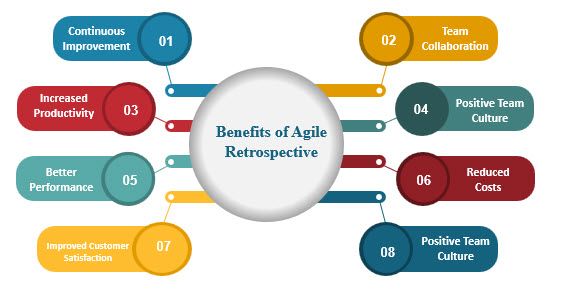
Also, each answer leads to a clear, actionable improvement. Consequently, the team gets better with every single sprint. In short, the retrospective is Agile’s most powerful improvement tool.


The Three Core Retrospective Questions

  • What went well? Celebrate wins so the team repeats what worked.
  • What did not go well? Name problems honestly so they can be fixed.
  • What will we improve? Commit to one or two specific actions for next sprint.


Why Most Nigerian Team Retrospectives Fail

Many Nigerian teams skip the retrospective when they are busy. However, that is exactly when it is needed most.

Also, some teams hold retrospectives but never act on the outputs. Consequently, team members stop engaging and the meeting loses value. Furthermore, some facilitators dominate the discussion rather than listen. Therefore, the retrospective becomes a complaint session instead of a solution session.


The Three Most Common Retrospective Mistakes

Mistake Why It Happens How to Fix It
No action items Team talks but nobody commits to change End every retro with 1–2 written actions
Same problems repeat Actions from last retro are never reviewed Open each retro by reviewing last sprint’s actions
One person dominates Facilitator talks too much Use sticky notes so everyone contributes equally


Step-by-Step: How to Run a Great Retrospective


Step 1: Set the Stage (5 Minutes)

Start by creating a safe space for honest feedback. Furthermore, remind the team that all feedback stays in the room. Also, set a timer so the meeting stays within the agreed time box. In short, a good start leads to better contributions throughout.


Step 2: Review Last Sprint’s Action Items (5 Minutes)

Open the retrospective by checking last sprint’s commitments. Furthermore, mark each action as done, in progress, or dropped.

Also, discuss why any item was not completed. Consequently, the team learns accountability rather than repeating old habits.


Step 3: Gather Data — What Happened This Sprint? (10 Minutes)

Give every team member sticky notes, physical or digital. Furthermore, ask them to write one idea per note.

Also, cover both positive and negative observations from the sprint. In addition, silent writing avoids groupthink and draws out quieter voices. Therefore, every team member’s experience is captured — not just the loudest.


Step 4: Group and Discuss Themes (10 Minutes)

Cluster the sticky notes into common themes on the board. Furthermore, give each cluster a short label.

Also, ask the team to vote on the top two or three themes to discuss. Consequently, the team focuses on what matters most rather than everything at once.


Step 5: Decide on Action Items (10 Minutes)

Pick one or two improvements to implement in the next sprint. Furthermore, write each action as a clear, specific task.

Also, assign each action to a named team member with a due date. In short, vague actions never happen but specific ones do.


Step 6: Close the Retrospective (5 Minutes)

Thank the team for their honesty and engagement. Furthermore, read the action items aloud so everyone hears them.

Also, add the action items to the sprint backlog immediately. Consequently, they will be tracked and reviewed in the next retrospective.


Popular Retrospective Formats for Nigerian Teams


Format 1: Start, Stop, Continue

Each team member writes what to start, stop, and continue doing. Furthermore, this format is simple and works for any team size. Also, it takes less than forty minutes from start to finish. Therefore, it is ideal for busy Nigerian teams with limited time.


Format 2: 4Ls — Liked, Learned, Lacked, Longed For

Teams reflect on four areas: what they liked, learned, lacked, and longed for. Furthermore, this format produces richer insights than the basic three questions.

Also, the 4Ls work well for teams completing a long or complex sprint. Consequently, it reveals deeper team feelings and unspoken needs.


Format 3: Mad, Sad, Glad

Team members write what made them mad, sad, or glad this sprint. Furthermore, this emotional format builds strong team empathy.

Also, it surfaces team morale issues that data alone cannot show. Therefore, use Mad Sad Glad when team motivation seems low.


Nigerian Example: A Lagos Fintech Team Retrospective

A Lagos fintech team ran a retrospective after a difficult sprint. Furthermore, three members felt blocked by unclear requirements. Also, two developers said daily stand-ups were running too long. Consequently, the team committed to two actions for the next sprint.

First, the Product Owner agreed to write clearer acceptance criteria. Second, the Scrum Master set a strict ten-minute stand-up timer. As a result, the next sprint ran more smoothly for everyone.


Free Resource: Retromat

Lagos Data School recommends Retromat as a free retrospective format generator. Furthermore, it offers over a hundred retrospective activities.

Also, filters help you find formats for specific team sizes and maturity levels.


How Lagos Data School Teaches Retrospectives

Lagos Data School runs live retrospective practice sessions in its Agile course. Students facilitate mock retrospectives using real Nigerian team scenarios. Furthermore, they practise all three core formats in group exercises.

Consequently, graduates facilitate effective retrospectives from day one.

Visit the Lagos Data School training page to enrol.

Also, see what graduates have achieved at the Lagos Data School student portfolio.


Frequently Asked Questions

Q1: How long should a retrospective last?

A standard retrospective lasts 45 to 90 minutes. Furthermore, longer sprints need longer retrospectives. Also, keep it within the agreed time box or energy drops fast.


Q2: What if team members are afraid to speak up?

Use anonymous sticky notes to gather honest input. Furthermore, the facilitator must set a safe, blame-free tone at the start. Also, celebrate every piece of feedback — positive or negative.


Q3: How many action items should a retrospective produce?

Commit to one or two action items per retrospective. However, too many actions overwhelm the team and none get done. Therefore, focus on the highest-impact change for the next sprint only.


Run Better Retrospectives with Lagos Data School

A great retrospective makes every sprint better than the last. Furthermore, it builds trust, honesty, and accountability on Nigerian teams.

Lagos Data School teaches you to facilitate retrospectives that drive real change.

Visit Lagos Data School and enrol in the Agile course today.
Scrum Events Explained: Your Complete 2026 Guide

Scrum Events Explained for Nigerian Teams

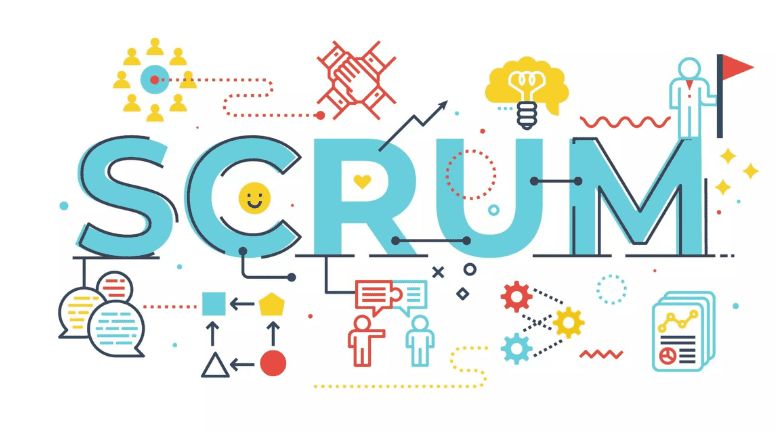
Scrum uses five events to create its delivery rhythm. Furthermore, each event has a strict time box and a clear purpose. Lagos Data School teaches every Scrum event in its live Agile training.

This may contain: a diagram with the words sprint, scrum, and other related items in it

Therefore, this guide explains all five events in plain English. Also, Nigerian work examples are used throughout to make each one practical. By the end, you will know what happens in every Scrum event.


Why Scrum Events Matter for Nigerian Teams

Many Nigerian teams adopt Scrum but skip some of the events. However, skipping even one event breaks the Scrum rhythm. Also, each event feeds directly into the next one. Consequently, the whole delivery cycle breaks down when events are missed. Therefore, run all five events every sprint without exception.


Event 1: The Sprint

The Sprint is the container for all other Scrum events. Furthermore, it is a fixed time box of one to four weeks. Also, a new sprint starts immediately after the previous one ends. Consequently, the team delivers value in a continuous, unbroken rhythm. In short, the Sprint is the heartbeat of every Scrum team.


The Sprint Rules Every Nigerian Team Must Follow

  • Sprint goal is fixed: The sprint goal cannot be changed once the sprint starts.
  • Sprint length is fixed: Two weeks is the most common sprint length in Nigeria.
  • No external interruptions: Unplanned work from outside cannot enter a sprint in progress.
  • Cancel only in extreme cases: Only the Product Owner can cancel a sprint if the goal becomes obsolete.


Choosing a Sprint Length for Nigerian Teams

Sprint Length Best For Nigeria Trade-off
1 week Startups and rapidly changing projects Very fast pace, less time to build
2 weeks Most Nigerian tech and fintech teams Balanced pace — the most common choice
3 weeks Mid-size product teams with complex work More time to build, slower feedback
4 weeks Large enterprise projects in Nigeria Slowest feedback loop — use with caution


Event 2: Sprint Planning

Sprint Planning opens every new sprint. Furthermore, the whole Scrum team attends this meeting together.

Also, it is time-boxed to two hours for every week of sprint length. Consequently, a two-week sprint gets a four-hour planning session. Therefore, a two-week sprint gets exactly four hours of planning time.


What Happens During Sprint Planning?

First, the Product Owner presents the top backlog items. Also, the sprint goal is defined and agreed by the whole team. Furthermore, developers estimate effort using story points.

Next, selected items are broken into daily tasks. Finally, the team confirms it can meet the sprint goal with current capacity.


Nigerian Sprint Planning Example

A Lagos healthtech team runs two-week sprints. Furthermore, their Sprint 8 goal is: ‘Patients can book appointments online.’ Also, the team selects five backlog items totalling 26 story points.

Consequently, the planning meeting finishes in exactly four hours. Therefore, every developer leaves with a clear first task for the next morning.


Event 3: The Daily Scrum (Daily Standup)

The Daily Scrum is a fifteen-minute meeting held every morning. Furthermore, the whole development team attends — but only developers speak.

Also, the Scrum Master facilitates and keeps it strictly to time. Consequently, the team syncs and surfaces blockers before the day starts. In short, the Daily Scrum is the team’s daily heartbeat check.


The Three Daily Scrum Questions

  • What did I complete since the last Daily Scrum?
  • What will I complete before the next Daily Scrum?
  • Is anything blocking my progress right now?


Daily Scrum Tips for Nigerian Teams

Hold the standup standing up — it keeps the meeting short. Also, start at the same time every day without exception. Furthermore, move detailed problem-solving conversations outside the standup. Consequently, the fifteen-minute limit is respected every day. In addition, the Scrum Master removes any blocker raised before the next day.


Event 4: The Sprint Review

The Sprint Review is held at the end of every sprint. Furthermore, the team demos the working increment to stakeholders. Also, the Product Owner formally accepts or rejects each completed item. Consequently, stakeholders see real working software, not just slide decks. Therefore, trust between the team and the client grows every sprint.


What Happens During the Sprint Review?

  • Demo the increment: The team shows what was built this sprint.
  • Gather feedback: Stakeholders ask questions and suggest improvements.
  • Update the backlog: The Product Owner adds feedback as new backlog items.
  • Review the roadmap: The product direction is adjusted based on real sprint outcomes.


Sprint Review in a Nigerian Bank Setting

A Lagos bank’s digital team holds a sprint review every two weeks. Furthermore, the Head of Digital attends every review session. Also, customers are sometimes invited to give direct feedback on new features. Consequently, the team builds exactly what users need rather than what managers assume.


Event 5: The Sprint Retrospective

The Retrospective is the final event of every sprint. Furthermore, it focuses on how the team works — not what they built. Also, it is time-boxed to 45 minutes for every week of sprint length. Consequently, the team improves its process with every single sprint. In short, the Retrospective is Scrum’s most powerful improvement engine.


The Three Retrospective Questions

  • What went well? Celebrate wins so the team repeats what worked.
  • What did not go well? Name problems honestly without blame.
  • What will we improve? Commit to one or two specific actions for the next sprint.


Why Nigerian Teams Skip Retrospectives and Why They Shouldn’t

Many Nigerian teams skip retrospectives when sprints are stressful. However, that is exactly when a retrospective is most needed.

Also, teams that skip retrospectives repeat the same mistakes forever. Consequently, sprint quality never improves without the retrospective. Therefore, protect the retrospective — even if you shorten everything else.


All Five Scrum Events at a Glance

Event When Time Box Who Attends Key Output
Sprint Ongoing 1–4 weeks Whole team Delivered increment
Sprint Planning Start of sprint 2h/sprint week Whole team Sprint goal + backlog
Daily Scrum Every morning 15 minutes Developers Daily sync + blockers
Sprint Review End of sprint 1h/sprint week Team + stakeholders Accepted increment
Retrospective End of sprint 45min/sprint wk Whole team 1–2 improvement actions


Free Resource: The Official Scrum Guide

Lagos Data School recommends the Scrum Guide as the definitive free reference for all Scrum events. Furthermore, it explains the purpose, time box, and outputs of every event. Also, it is available free in over thirty languages online.


How Lagos Data School Teaches Scrum Events

Lagos Data School runs live Scrum event simulations for Nigerian professionals. Students practise all five events in sprint role-play exercises. Furthermore, every exercise uses real Nigerian project scenarios.

Consequently, graduates run Scrum events confidently from their very first sprint. Visit the Lagos Data School training page to enrol.  Also, see our graduates’ Agile work in the Lagos Data School student portfolio.


Frequently Asked Questions

Q1: Can Scrum events be run remotely in Nigeria?

Yes. All five Scrum events work well on Zoom, Google Meet, or Microsoft Teams. Furthermore, tools like Miro and Trello support remote sprint boards and retrospectives. Also, teams in different Nigerian cities run effective remote sprints every day. Therefore, location is never a barrier to running great Scrum events.


Q2: What happens if a Daily Scrum is missed?

Missing one daily standup rarely causes a crisis. However, missing standups regularly breaks team alignment quickly. Also, blockers go unreported, and sprint goals are missed more often. Therefore, protect the Daily Scrum even if it is shortened to five minutes.


Q3: Who should speak at the Sprint Review?

Every developer demos the work they personally completed. Furthermore, the Product Owner provides context before each demo.

Also, stakeholders are encouraged to ask questions and give live feedback. Consequently, the Sprint Review becomes a real conversation — not a presentation.


Master Scrum Events with Lagos Data School

Scrum events create the rhythm that keeps Nigerian teams on track. Furthermore, each event builds on the last to create a full delivery cycle. Lagos Data School trains you to run every Scrum event with skill and confidence.

Visit Lagos Data School and enrol in the Scrum course today.

Hi, How Can We Help You?
Welcome To
Lagos Data School

Artificial Intelligence (AI), Machine Learning and Robotics Programmes Are Now Available!!!

Enroll Now!

Thank You
100% secure website.