
How to Run an Agile Retrospective That Works
Most Nigerian teams hold retrospectives but gain nothing from them. However, a well-run retrospective changes a team every sprint. Lagos Data School teaches Nigerian teams to run retrospectives correctly. Therefore, this guide explains every step of a great retrospective.
Also, it covers the most popular formats and real Nigerian examples. By the end, your next retrospective will produce real results.
What Is an Agile Retrospective?
A retrospective is a team meeting held after every sprint. Furthermore, it focuses on how the team works — not what they built. The team answers three simple questions in every retrospective.

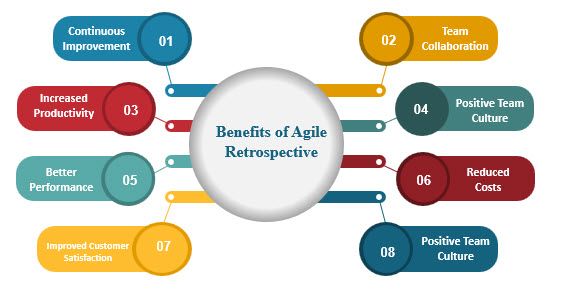
Also, each answer leads to a clear, actionable improvement. Consequently, the team gets better with every single sprint. In short, the retrospective is Agile’s most powerful improvement tool.
The Three Core Retrospective Questions
- What went well? Celebrate wins so the team repeats what worked.
- What did not go well? Name problems honestly so they can be fixed.
- What will we improve? Commit to one or two specific actions for next sprint.
Why Most Nigerian Team Retrospectives Fail
Many Nigerian teams skip the retrospective when they are busy. However, that is exactly when it is needed most.
Also, some teams hold retrospectives but never act on the outputs. Consequently, team members stop engaging and the meeting loses value. Furthermore, some facilitators dominate the discussion rather than listen. Therefore, the retrospective becomes a complaint session instead of a solution session.
The Three Most Common Retrospective Mistakes
| Mistake | Why It Happens | How to Fix It |
| No action items | Team talks but nobody commits to change | End every retro with 1–2 written actions |
| Same problems repeat | Actions from last retro are never reviewed | Open each retro by reviewing last sprint’s actions |
| One person dominates | Facilitator talks too much | Use sticky notes so everyone contributes equally |
Step-by-Step: How to Run a Great Retrospective
Step 1: Set the Stage (5 Minutes)
Start by creating a safe space for honest feedback. Furthermore, remind the team that all feedback stays in the room. Also, set a timer so the meeting stays within the agreed time box. In short, a good start leads to better contributions throughout.
Step 2: Review Last Sprint’s Action Items (5 Minutes)
Open the retrospective by checking last sprint’s commitments. Furthermore, mark each action as done, in progress, or dropped.
Also, discuss why any item was not completed. Consequently, the team learns accountability rather than repeating old habits.
Step 3: Gather Data — What Happened This Sprint? (10 Minutes)
Give every team member sticky notes, physical or digital. Furthermore, ask them to write one idea per note.
Also, cover both positive and negative observations from the sprint. In addition, silent writing avoids groupthink and draws out quieter voices. Therefore, every team member’s experience is captured — not just the loudest.
Step 4: Group and Discuss Themes (10 Minutes)
Cluster the sticky notes into common themes on the board. Furthermore, give each cluster a short label.
Also, ask the team to vote on the top two or three themes to discuss. Consequently, the team focuses on what matters most rather than everything at once.
Step 5: Decide on Action Items (10 Minutes)
Pick one or two improvements to implement in the next sprint. Furthermore, write each action as a clear, specific task.
Also, assign each action to a named team member with a due date. In short, vague actions never happen but specific ones do.
Step 6: Close the Retrospective (5 Minutes)
Thank the team for their honesty and engagement. Furthermore, read the action items aloud so everyone hears them.
Also, add the action items to the sprint backlog immediately. Consequently, they will be tracked and reviewed in the next retrospective.
Popular Retrospective Formats for Nigerian Teams
Format 1: Start, Stop, Continue
Each team member writes what to start, stop, and continue doing. Furthermore, this format is simple and works for any team size. Also, it takes less than forty minutes from start to finish. Therefore, it is ideal for busy Nigerian teams with limited time.
Format 2: 4Ls — Liked, Learned, Lacked, Longed For
Teams reflect on four areas: what they liked, learned, lacked, and longed for. Furthermore, this format produces richer insights than the basic three questions.
Also, the 4Ls work well for teams completing a long or complex sprint. Consequently, it reveals deeper team feelings and unspoken needs.
Format 3: Mad, Sad, Glad
Team members write what made them mad, sad, or glad this sprint. Furthermore, this emotional format builds strong team empathy.
Also, it surfaces team morale issues that data alone cannot show. Therefore, use Mad Sad Glad when team motivation seems low.
Nigerian Example: A Lagos Fintech Team Retrospective
A Lagos fintech team ran a retrospective after a difficult sprint. Furthermore, three members felt blocked by unclear requirements. Also, two developers said daily stand-ups were running too long. Consequently, the team committed to two actions for the next sprint.
First, the Product Owner agreed to write clearer acceptance criteria. Second, the Scrum Master set a strict ten-minute stand-up timer. As a result, the next sprint ran more smoothly for everyone.
Free Resource: Retromat
Lagos Data School recommends Retromat as a free retrospective format generator. Furthermore, it offers over a hundred retrospective activities.
Also, filters help you find formats for specific team sizes and maturity levels.
How Lagos Data School Teaches Retrospectives
Lagos Data School runs live retrospective practice sessions in its Agile course. Students facilitate mock retrospectives using real Nigerian team scenarios. Furthermore, they practise all three core formats in group exercises.
Consequently, graduates facilitate effective retrospectives from day one.
Visit the Lagos Data School training page to enrol.
Also, see what graduates have achieved at the Lagos Data School student portfolio.
Frequently Asked Questions
Q1: How long should a retrospective last?
A standard retrospective lasts 45 to 90 minutes. Furthermore, longer sprints need longer retrospectives. Also, keep it within the agreed time box or energy drops fast.
Q2: What if team members are afraid to speak up?
Use anonymous sticky notes to gather honest input. Furthermore, the facilitator must set a safe, blame-free tone at the start. Also, celebrate every piece of feedback — positive or negative.
Q3: How many action items should a retrospective produce?
Commit to one or two action items per retrospective. However, too many actions overwhelm the team and none get done. Therefore, focus on the highest-impact change for the next sprint only.
Run Better Retrospectives with Lagos Data School
A great retrospective makes every sprint better than the last. Furthermore, it builds trust, honesty, and accountability on Nigerian teams.
Lagos Data School teaches you to facilitate retrospectives that drive real change.
Visit Lagos Data School and enrol in the Agile course today.