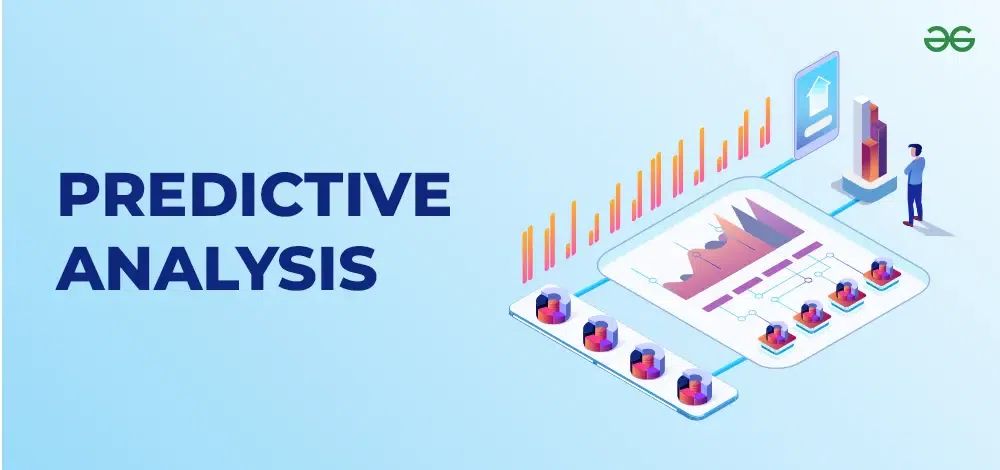
What Is Predictive Analytics? A Beginner’s Guide for Nigerian Businesses

Every day, Nigerian businesses make choices. They decide how much stock to keep, which clients to call, and where to spend their ad money. Most of these choices are based on gut feel or past habit.

Predictive analytics changes this. It uses your own data to show you what is likely to happen next. This guide explains what it is, how it works, and how Nigerian businesses of all sizes can start using it today.

Lagos Data School made this guide as part of our data analytics coursework. We help Nigerian professionals and business owners understand data in plain, clear terms. So let us get started.


What Is Predictive Analytics?

Predictive analytics is the use of data and math to make a smart guess about what will happen in the future. It does not tell you exactly what will happen. But it gives you the best, most informed guess based on the data you already have.

This may contain: a diagram showing the different types of data processing

Think of it like a weather forecast. A weather app looks at past patterns, current temperature, and wind data to say there is a 70% chance of rain tomorrow. It is not always right. But it is far more useful than a random guess.

In a business context, predictive analytics might tell a Lagos supermarket which items will run out this weekend. Or it might tell a Nigerian bank which clients are most likely to miss a loan payment next month.


How Is It Different From Other Types of Analytics?

It helps to see how predictive analytics sits among other types of data work.


Type The Question It Answers Example
Descriptive What happened? Sales were down 20% last month
Diagnostic Why did it happen? Sales dropped due to a price rise
Predictive What will happen? It will drop 15% next quarter.
Prescriptive What should we do? Cut price by 10% to protect sales


Most Nigerian businesses today are still at the descriptive stage. They look at what happened last month or last year. Predictive analytics is the next step. It shifts your thinking from looking back to looking ahead.


How Does Predictive Analytics Work?

The basic process follows a clear set of steps. You do not need to be a maths expert to follow this flow.

Step 1: Collect Your Data

You need data to start. This can be sales records, customer sign-up details, website visit logs, or social media numbers. The more data you have, and the cleaner it is, the better your results will be.

Step 2: Clean the Data

Raw data is often messy. It may have missing values, wrong entries, or duplicate rows. Cleaning means fixing these problems so the data is ready to use. This step takes more time than most beginners expect, but it is truly essential.

Step 3: Choose a Model

A model is a set of math rules that looks for patterns in your data. Common models include decision trees and linear regression. The key idea is that you pick a model that fits the kind of question you are trying to answer.

Step 4: Train the Model

Training means feeding your past data into the model so it can learn from it. The model looks at old events and finds out which factors made certain results more likely.

Step 5: Test and Improve

Once trained, you test the model on new data it has not seen before. This shows you how accurate it truly is. You then adjust it to improve accuracy before you put it into real use.

Step 6: Use the Predictions

The final step is acting on the output. This might mean flagging certain customers for a follow-up call, ordering extra stock before a busy period, or changing a price before a competitor does.


Real Examples for Nigerian Businesses

Predictive analytics is not just for big tech firms. Here are a few real, plain ways Nigerian businesses can use it right now.

Banking and Finance

Nigerian banks use models to spot which loan applicants are likely to miss payments. This saves real money by cutting bad loans. The model looks at income, payment history, and other factors to give each applicant a risk score.

Retail and E-Commerce

A Lagos shop or online store can predict which items will sell out before the next delivery arrives. This means less waste, fewer empty shelves, and happier customers.

Telecoms

Nigerian telecoms firms use predictive analytics to spot customers who are about to switch to a rival network. Once found, the firm can offer a deal to keep them before they leave.

Agriculture

Nigerian farmers and agri-businesses can use models to predict crop yields based on weather and soil data. This helps them plan storage, pricing, and delivery more efficiently.

Healthcare

Clinics and hospitals can predict which patients are at high risk of a condition. This allows early action that saves both lives and treatment costs.


What Skills Do You Need to Get Started?

You do not need a degree in statistics to begin. Many Nigerian pros start with just a few core tools and build from there.

  • Basic Excel or Google Sheets skills for working with data tables
  • An understanding of simple statistics such as averages and percentages
  • Some experience with a tool like Python or R, even at a beginner level
  • A curiosity about patterns in data and what they might mean

Lagos Data School offers structured training that takes complete beginners through each of these skills in a clear, step-by-step way. Every lesson uses Nigerian business examples so the learning feels relevant from day one.


Common Tools Used in Predictive Analytics

Several tools are widely used for this kind of work. Some are free. Some are paid. Here is a quick overview.

  • Python with scikit-learn: the most popular free tool for building predictive models
  • R: a free tool popular among statisticians and data analysts
  • Excel with the Data Analysis Toolpak: a good entry point for beginners
  • Power BI: a Microsoft tool that includes some basic predictive features
  • Google Looker Studio: a free, visual analytics tool with growing prediction support


Challenges Nigerian Businesses Face

Starting with predictive analytics is not without real challenges. Lagos Data School sees these come up often among Nigerian businesses that are just beginning.

Data Quality Problems

Many Nigerian businesses keep poor or incomplete records. Predictive models are only as good as the data fed into them. A business that stores records in paper files or split spreadsheets will need to improve its data habits first.

Lack of Skilled Staff

There is a real shortage of trained data analysts in Nigeria right now. This is also a big opportunity. Nigerian professionals who build these skills today will find strong demand and strong pay waiting for them.

Cost of Tools

Some advanced analytics tools carry a high cost. But many powerful tools are free and open source. A Nigerian business does not need to spend a lot to start. Begin with the right free tools and build from there.


How to Start Using Predictive Analytics in Your Business

You do not need to build a full data team overnight. Here is a simple, three-step plan that Lagos Data School recommends for Nigerian businesses just starting.

Step 1: Pick One Business Question

Start with one specific question you want data to answer. For example: which of our customers is most likely to buy again next month? One clear question leads to one clear start point.

Step 2: Gather and Clean Your Existing Data

Look at what data you already have. Sales records, customer lists, website traffic data. Clean it up, remove duplicates, and fill in missing values where you can. Even a small, clean dataset is enough to start learning from.

Step 3: Use a Simple Tool to Find Patterns

You do not need a complex model on day one. Even basic trend lines in Excel can reveal useful patterns. As your skill grows, you can add more powerful tools over time.


Why Predictive Analytics Matters More Than Ever in Nigeria

Nigeria’s business world moves fast. Fuel prices change. Exchange rates shift. Consumer habits evolve quickly. Businesses that rely on gut feel alone face a growing gap compared to those that use data to guide their choices.

Predictive analytics gives Nigerian businesses a real edge. It helps you prepare for what is coming rather than react after it has already happened. In a tight, competitive market, this kind of foresight can make a genuine difference.

Lagos Data School trains Nigerian professionals to build these skills and apply them to the real business challenges they face every day, not just to problems from textbooks.


The Future of Predictive Analytics in Nigeria

Nigeria’s data economy is growing fast. More firms are hiring data staff, more tools are becoming free and easy to use, and more Nigerian universities are adding data courses. This means the window to get ahead by learning these skills now is wide open.

Two years from now, predictive analytics will not be a rare, special skill in Nigerian business. It will be a normal, expected one. The firms that build this skill into their teams today will be the ones leading their sectors in 2027 and beyond.

Lagos Data School trains you to be part of that future, not to catch up to it later.


Nigerian Business Success Stories With Data

While specific firm names stay private, Lagos Data School has worked with Nigerian businesses across many sectors that have used predictive analytics to solve real problems.

One Nigerian food distribution firm used a simple demand model to cut waste by nearly 25% within three months. They started with just one year of clean sales records and a free Python tool.

A Lagos-based health clinic used patient visit data to predict their busiest days and staff up accordingly. The result was shorter wait times and more revenue per month.

A small e-commerce firm used a basic churn model to find customers who had gone quiet. A targeted discount offer brought many of them back.

None of these required a large budget or a dedicated data science team. They required one person who understood the data, knew a simple tool, and had a clear business question to answer.


Recommended External Resource

For a free introduction to predictive analytics and machine learning, visit Google’s Machine Learning Crash Course: https://developers.google.com/machine-learning/crash-course.


A Quick Self-Check Before You Begin

Before diving in, run through this short check to see how ready your business truly is.

  • Do you collect and store customer or sales data in a digital format?
  • Do you have at least six months of clean records to learn from?
  • Is there one clear business question you want data to help you answer?
  • Do you have the time or a team member willing to invest in short analytics training?

If you said yes to most of these, you are ready to start. If not, Lagos Data School can help you build the right base first, so your analytics work has solid ground to grow from.


About Lagos Data School

Lagos Data School is Nigeria’s top school for cybersecurity, data science, cloud, and analytics. Every idea in this guide is part of our hands-on course.

Our teachers are real security pros, not just classroom staff. So you learn from people who guard live networks every day.

We run classes on weekdays, weekends, and online. So no matter your time, we have a slot for you. Beyond skills, we also give you a real certificate and links to job partners.

Visit Lagos Data School today to view our courses and join the next class.

See what is coming next. Train with Lagos Data School.
How to Get the Best Data Analytics Training in Lagos in 2026

Data is now one of the most sought-after skills in Lagos. Every firm collects it. So, the ones who can read and make sense of it are in very high demand.

Yet, many Lagos workers do not know where to begin. The tools seem hard. Moreover, the career paths feel unclear. That is why Lagos Data School put together this guide.

Furthermore, data analytics training is now more available in Lagos than ever before. Courses are shorter, more practical, and more affordable. As a result, anyone who wants to break into this field can do so in months, not years.

Lagos Data School has trained thousands of data pros across Nigeria. Its 2026 research shows that trained data analysts earn between ₣2.5 million and ₣9 million per year in Lagos. Moreover, over 72% of Lagos tech firms say they plan to hire more data staff this year.

This article is fully written and researched by Lagos Data School. It covers what data analytics is, which tools you will learn, what the jobs pay, and how to pick the right course. Additionally, it gives you a clear step-by-step path from zero to employed.


What Is Data Analytics and Why Does Lagos Need It?

Data analytics is the process of turning raw data into useful insights. You collect data, clean it, and look for patterns. So, the goal is to help a firm make better choices.

Lagos runs on data. Banks track millions of transactions each day. Furthermore, telecoms firms monitor network usage across the whole city. Each of these firms needs people who can turn those numbers into clear reports and charts.

Moreover, data analytics is not just for big firms. Small Lagos businesses use it too. They track sales, stock, and customer trends. As a result, any firm that wants to grow in Lagos now needs data skills in its team.

That is why Lagos Data School sees such strong demand from students and employers alike. In 2026, data skills are no longer a nice-to-have. They are a must-have for any Lagos career in tech, finance, or business.


What Does a Data Analyst Actually Do Each Day?

Most people have a vague idea of what a data analyst does. So, let us make it clear and specific.

On a typical day, a Lagos data analyst pulls data from a database using SQL. Then they clean it in Excel or Python. Furthermore, they build a chart or dashboard to show key findings. Finally, they share those findings with their manager or team.

That is the core loop. However, the exact tools and tasks vary by industry. A data analyst at a Lagos bank might focus on fraud patterns. One at a retail firm might track sales by region. Therefore, the skill set is the same but the context changes with each role.


Data Analytics Tools Lagos Employers Expect You to Know

Knowing which tools to learn is the first real step in any data career. Lagos Data School tracks what employers ask for in job listings across the city. So, the table below shows the most in-demand tools and their use across Lagos industries.


Top Data Tools and Their Lagos Industry Use

Tool What It Does Lagos Industry Use Priority
SQL Pull and filter data from databases Banking, Fintech, Telecoms Must-know
Excel Clean, review, and model data All Lagos industries Must-know
Power BI Build dashboards and reports Finance, HR, Operations Must-know
Python Automate and analyse large data Fintech, E-commerce, Health Very useful
Tableau Create interactive data visuals Marketing, Sales, Consulting Very useful
Google Sheets Share and review data in teams Startups, SMEs, NGOs Good to know
R Run deep stats and build models Research, Health, Academia Specialist

Source: Lagos Data School Employer Survey, Q1 2026


SQL: The Most Important Tool in Lagos Data Jobs

SQL is the number one tool Lagos data employers ask for. It lets you pull, filter, and sort data from large databases. So, if you learn only one tool, make it SQL.

Furthermore, SQL is used across every Lagos data role. Analysts, engineers, and BI developers all use it daily. Moreover, it is one of the fastest tools to learn. Most students write their first useful SQL query within a week of starting. As a result, the return on this skill comes very quickly.

Lagos Data School Tip:  SQL is the one skill that crosses every data role in Lagos. Learn it first and learn it well. Everything else builds on top of it.


Power BI: Lagos’ Favourite Dashboard Tool

Power BI is the most widely used dashboard tool across Lagos firms. Banks, telecoms, and FMCG companies all use it to build reports for their management teams. So, Power BI skills make you very visible to Lagos employers.

Furthermore, Power BI connects to SQL databases, Excel sheets, and online data sources on its own. That means your dashboards stay fresh without manual updates. Moreover, it is part of the Microsoft suite that most Lagos firms already use. Therefore, you do not need any extra software to get started.


Python: The Next Step After SQL and Power BI

Python is not required for every data analyst role in Lagos. However, it makes you far more capable and much more hireable. So, Lagos Data School teaches it as part of its core data analytics programme.

With Python, you can clean large messy data sets in seconds. Furthermore, you can build charts, run stats, and even start building simple machine learning models. Moreover, many Lagos fintech and e-commerce firms now ask for Python in their data job ads. Therefore, adding it to your skill set can push your salary up by 20% to 30%.


What Data Analytics Training in Lagos Covers

Good training goes beyond tool tutorials. It teaches you to think like an analyst and solve real business problems. Lagos Data School builds its data analytics programme around the exact tasks Lagos employers hire for.

Specifically, the course runs across five clear stages. Each stage builds directly on the one before it. Furthermore, every stage uses real Lagos business data. So, students do not practise on made-up examples. They work on real finance, HR, and sales data sets from day one.


Stage 1: Data Foundations and Excel Mastery

Every strong data analyst starts with a clear understanding of how data is structured. So, this stage covers how databases work, what clean data looks like, and how to spot errors.

Furthermore, Excel is taught in full at this stage. Students learn pivot tables, VLOOKUP, XLOOKUP, and data validation. Moreover, they build real reports and dashboards using Excel. As a result, they are already job-ready for junior roles before the course even hits its midpoint.

Stage 2: SQL for Data Pulling and Filtering

This is where the real data work begins. Students learn to write SQL queries that pull data from live databases. So, they go from reading data in Excel to pulling it directly from its source.

Furthermore, they learn to filter, join, and group data across multiple tables. Also, they practise on Lagos business data sets that mirror what they will see in real roles. Consequently, SQL feels natural and familiar long before their first interview.

Stage 3: Power BI Dashboards and Reports

At this stage, students take the data they have cleaned and queried and turn it into clear visual reports. So, they build bar charts, trend lines, KPI cards, and slicers in Power BI.

Furthermore, they learn to connect Power BI to SQL and Excel data sources. Moreover, they build reports that update on their own when new data comes in. Therefore, the dashboards they build during training are ready to be used in a real workplace right away.

Real Project Insight:  Lagos Data School students build a full sales performance dashboard in Power BI during Stage 3. This project goes straight into their portfolio and is regularly cited by students as the piece that won them their first job.


Stage 4: Python for Data Analysis

Python opens up a whole new level of data work. So, students learn to use Pandas for data cleaning and NumPy for calculations. They also learn Matplotlib and Seaborn for building charts in code.

Furthermore, they work through real Lagos data problems. For example, they clean a raw payroll file, spot outliers, and build a chart that flags the issues. Moreover, they learn to automate repeat tasks with Python scripts. As a result, their output speed goes up sharply from this stage onward.

Stage 5: Storytelling, Presentations, and Job Readiness

Data is only useful when the right people understand it. So, this stage focuses on how to present findings clearly to non-tech managers and boards. Students learn to choose the right chart, write a clear headline, and tell a data story.

Furthermore, they build a full portfolio of three to five completed projects. Each project shows a different skill. Moreover, Lagos Data School’s career team reviews every portfolio before graduation. Therefore, students leave with work they are proud to share with employers.


Data Analytics Career Paths and Salaries in Lagos 2026

Completing data analytics training opens several well-paid career paths across Lagos. Specifically, graduates go into roles like data analyst, business analyst, BI developer, data engineer, and analytics manager. So, the options are wide.

Lagos Data School tracks salary data from its employer network every quarter. The table below shows current pay ranges for key data roles in Lagos.


Lagos Data Analytics Salary Guide 2026

Role Entry Level Mid Level Senior Level
Data Analyst ₦2.5M – ₦4M ₦4M – ₦6.5M ₦6.5M – ₦9M
Business Analyst ₦3M – ₦5M ₦5M – ₦7.5M ₦7.5M – ₦11M
BI Developer ₦3.5M – ₦5.5M ₦5.5M – ₦8M ₦8M – ₦12M
Data Engineer ₦4M – ₦6M ₦6M – ₦9M ₦9M – ₦14M
Analytics Manager ₦5M – ₦7M ₦7M – ₦10M ₦10M – ₦15M

Source: Lagos Data School Employer Intelligence Report, Q1 2026


Which Lagos Firms Hire Data Analytics Staff?

Fintech companies lead Lagos hiring across all data roles. Flutterwave, Kuda, Moniepoint, and Paystack all run large data teams. So, these firms are among the best places to land your first data role in the city.

Banks are also active hirers. GTBank, Zenith, Access, and Stanbic IBTC all hire data analysts for risk, fraud, and customer work. Furthermore, telecoms firms like MTN and Airtel use data to manage their networks and customers. Moreover, fast-growing Lagos startups and e-commerce platforms hire data staff at a rapid pace. As a result, the job market for trained data analysts spans every major sector.


Who Should Join Data Analytics Training in Lagos?

This training is open to a wide range of people. You do not need a maths or tech degree to start. So, the most important thing you need is a desire to learn and a willingness to practise.

Specifically, finance and accounts staff are a great fit. They already work with numbers every day. Furthermore, moving into data analytics is a natural next step for anyone who finds themselves spending hours in Excel.

HR staff, operations teams, and marketing pros all benefit too. Moreover, recent graduates who want a fast path into a high-paying tech role are among the most active students at Lagos Data School. Therefore, the programme serves a very wide range of starting points and goals.


Do You Need Technical Experience to Start?

No. Lagos Data School’s data analytics programme starts from zero. The first two weeks cover basics like how data is stored and how Excel works. So, even students who have never written a SQL query before are brought up to speed quickly.

Furthermore, the school provides all course files, data sets, and software access on day one. That means no student needs to buy extra tools or set up complex software on their own. Moreover, instructors are available between sessions for questions and support. As a result, no one falls behind or gets stuck alone.


Real Student Stories from Lagos Data School

Lagos Data School tracks outcomes from every cohort. Here are three real stories that show what this training can open up for Lagos professionals.

Story 1: Admin Officer to Data Analyst in 5 Months

Chioma worked as an admin officer at a Lagos insurance firm. She used Excel for basic tasks but had no SQL or Power BI skills. So, she joined Lagos Data School’s data analytics programme in mid-2025.

Within five months of finishing, she landed a junior data analyst role at a Lagos fintech firm. Furthermore, her starting salary was 70% higher than her previous one. Moreover, she credits the portfolio projects with getting her through the interview stage. Therefore, she now recommends the programme to every colleague who asks about career growth.

Story 2: Fresh Graduate to BI Developer in 7 Months

Emeka graduated with a business degree from a Lagos university in early 2025. Jobs were hard to find. So, he joined Lagos Data School and focused on SQL, Power BI, and Python.

After graduating from the programme, he applied for a BI developer role at a Lagos bank. Furthermore, the interview included a live Power BI task. He completed it in 20 minutes. As a result, he got the offer the same week. His starting salary was ₣4.2 million per year.

Story 3: Finance Manager Gets a Promotion

Tunde worked as a finance manager at a Lagos FMCG firm. He could read reports but could not build them himself. So, he joined Lagos Data School’s evening cohort while still working full time.

After the programme, he built a new budget dashboard for his firm in Power BI. His MD was so impressed that he was given a new title and a 40% pay rise within three months. Furthermore, he now leads the firm’s data team. Therefore, his investment in training paid back many times over in less than a year.


Why Lagos Data School Is the Right Place to Train

Lagos Data School is Nigeria’s top practical tech training school. Based in Ikeja, Lagos, it has trained thousands of data analysts, scientists, and engineers since it opened.

Specifically, the data analytics programme was built with direct input from Lagos employers. Every module reflects what hiring managers ask for in real interviews. Furthermore, all instructors are active data practitioners who use these tools every day in real roles.

Moreover, class sizes are capped at 20 students per cohort. So, every student gets personal feedback on every project they submit. Also, one-on-one support is available between sessions. Therefore, the quality of learning at Lagos Data School is well above what larger, less personal providers offer.

Additionally, career support runs throughout and after the course. Lagos Data School provides CV reviews, mock interviews, portfolio checks, and warm leads to its employer network. Consequently, most graduates receive their first data role within three months of finishing. Furthermore, many see a pay rise within the first year.

Both in-person and online formats are available too. The Ikeja campus has fast internet and full lab access. The online format delivers the same live classes, project feedback, and career support. So, location across Nigeria is no barrier to accessing world-class training.


Start Your Data Analytics Career Today.  Lagos Data School runs Lagos’ best hands-on data analytics course. Visit lagosdataschool.com and enroll today.


How to Enroll in Data Analytics Training at Lagos Data School

Getting started takes less than ten minutes. First, visit lagosdataschool.com and open the Data Analytics Training page. There, you will find upcoming cohort dates, fees, and the full module list.

Next, fill in the short online form. The team reviews all forms within 48 hours. Moreover, they answer every question by phone or email before you commit to a cohort.

Furthermore, flexible pay plans are on offer. You can spread the cost across the course period. Also, group rates apply for firms that send two or more staff at once. Therefore, cost should not be the reason you delay starting.

Finally, on sign-up you get instant access to the pre-course module. It covers data basics and Excel setup so you are ready for day one. As a result, no time is wasted in the early sessions.


Frequently Asked Questions

What is data analytics training in Lagos?

Data analytics training in Lagos teaches you to collect, clean, and visualize data to help businesses make better choices. Lagos Data School’s programme covers SQL, Excel, Power BI, and Python. Furthermore, it is built around real Lagos job requirements so students are ready for work from day one.

How long does data analytics training take at Lagos Data School?

The full programme runs for 12 weeks. Furthermore, a six-week fast-track option is available for those with prior Excel or SQL experience. So, there is a pace that fits most learners.

Do I need a maths or tech background to join?

No. Lagos Data School welcomes students from all backgrounds. The programme starts from zero and builds up gradually. Moreover, the pre-course module ensures every student arrives at the first live session fully prepared.

How much can I earn after data analytics training in Lagos?

Entry-level data analysts in Lagos earn between ₣2.5 million and ₣4 million per year. Mid-level roles pay between ₣4 million and ₣6.5 million. Moreover, senior data roles and analytics managers earn above ₣10 million per year in top Lagos firms.

Which tools will I learn in the data analytics course?

The programme covers SQL, Excel (advanced), Power BI, Python, and data storytelling. Furthermore, students learn Tableau basics as part of the visualization module. So, you leave with a full toolkit that covers every major tool Lagos employers ask for.

Is the data analytics course available online at Lagos Data School?

Yes. Lagos Data School offers both in-person and fully online formats. Both include live classes, real data project work, and full career support. So, you can join from anywhere in Nigeria and still get the same quality of training.


Conclusion

Data analytics is one of the fastest-growing career paths in Lagos. Every firm needs people who can turn raw numbers into clear insights. So, training in this field is one of the smartest moves you can make in 2026.

Yet, not all training is equal. The best results come from a course that uses real data, teaches in-demand tools, and prepares you for real Lagos interviews. That is exactly what Lagos Data School delivers.

Furthermore, the stories of Chioma, Emeka, and Tunde show what is possible in months, not years. Each one started with a gap. Each one filled it with the right training. Moreover, each one saw a career shift that changed their income and their confidence.

Therefore, if you are ready to break into data analytics in Lagos, the next step is clear. Visit Lagos Data School, pick your cohort, and start building the skills that Lagos employers are actively looking for right now.


Enroll today by clicking here.

For more information, kindly visit our website via www.lagosdataschool.com today.


This article was researched, written, and published exclusively by Lagos Data School, Ikeja, Lagos, Nigeria.

Hi, How Can We Help You?
Welcome To
Lagos Data School

Artificial Intelligence (AI), Machine Learning and Robotics Programmes Are Now Available!!!

Enroll Now!

Thank You
100% secure website.