Are you confused about what a Work Breakdown Structure is and how it is created? If so, your search ends here. Lagos Data School is Nigeria’s leading live technology and data training centre. Indeed, the Work Breakdown Structure, commonly referred to as the WBS, is one of the most fundamental tools in project management. Every Nigerian project manager who wants to plan a project systematically, control its scope, and communicate its structure to stakeholders must understand how a WBS is built and used.
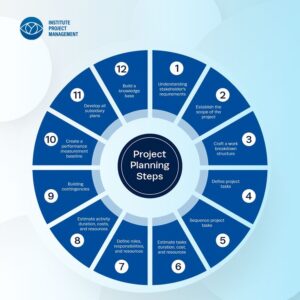
Therefore, this guide explains what a WBS is, why it is needed, how it is structured, and how each level is created using Nigerian project examples. In addition, the relationship between the WBS and the project schedule is explained. As a result, by the end of this guide, a complete WBS will be understood and ready to be created for any Nigerian project.
What Is a Work Breakdown Structure (WBS)?
A Work Breakdown Structure is a hierarchical decomposition of the total scope of work that must be performed to deliver a project’s objectives and produce its required deliverables. In plain terms, the WBS breaks the project down into smaller, manageable components until each piece of work is small enough to be planned, estimated, assigned, and monitored.
According to the Project Management Institute’s PMBOK® Guide, the WBS is a deliverable-oriented decomposition. This means it is structured around what must be produced, not around who will do the work or when it will be done. Furthermore, every component at the lowest level of the WBS is called a work package. A work package is the smallest unit of work that can be independently planned, costed, and assigned to a responsible party.
Why the WBS Is Essential for Nigerian Project Managers
Many Nigerian projects suffer from scope creep, the gradual, uncontrolled expansion of project work beyond what was originally agreed. Consequently, the WBS is the primary tool used to prevent scope creep by defining the total project scope explicitly at the start. Below are the core benefits of using a WBS on Nigerian projects:
Scope clarity: Every deliverable and sub-deliverable is listed, so there is no ambiguity about what is included in the project.
Basis for scheduling: Work packages at the lowest WBS level are used as the tasks in the Gantt chart and project schedule.
Basis for budgeting: Cost estimates are attached to each work package. Therefore, the total project budget is built from the bottom up.
Responsibility assignment: Each work package is assigned to a specific team or individual using a Responsibility Assignment Matrix.
Progress measurement: Completion of work packages is tracked to measure overall project progress objectively.
In short, the WBS is the backbone of every well-planned Nigerian project. Everything else- the schedule, the budget, the team assignments is derived from it.
The Three Levels of a WBS
A WBS is structured in levels, with the top level representing the project itself and each lower level representing progressively smaller components. Below are the three standard levels used in most Nigerian projects:
WBS Level
What It Represents
Nigerian Example
Level 1
The entire project
Lagos Affordable Housing Estate — Phase 2
Level 2
Major deliverables or project phases
Site Works, Foundation, Superstructure, Finishing
Level 3 (Work Packages)
Specific work outputs that can be planned and costed
In short, the WBS is decomposed until every element at the lowest level can be independently planned, estimated, and assigned. Therefore, work packages are the units from which the schedule and budget are built.
How to Create a WBS: Step by Step
Step 1: Identify the Project’s Major Deliverables
The project charter and scope statement are reviewed to identify the major deliverables. Each major deliverable becomes a Level 2 element of the WBS. For a Nigerian IT project, the major deliverables might be: Requirements Documentation, System Architecture, Software Development, Testing, and Deployment.
Step 2: Decompose Each Deliverable into Sub-Deliverables
Each Level 2 deliverable is broken down into its parts. Decomposition continues until each element is a work package that can be independently planned and costed. Furthermore, the 100 Percent Rule must be applied: the WBS must include 100% of the project scope. Consequently, work that is not in the WBS is not in the project.
Step 3: Assign WBS Codes
Each WBS element is assigned a unique numeric code that reflects its position in the hierarchy. For example, 1.0 is the project summary, 1.1 is the first major deliverable, 1.1.1 is the first work package under that deliverable, and so on. As a result, every work package can be referenced unambiguously in the schedule, budget, and team assignments.
Step 4: Create the WBS Dictionary
A WBS dictionary is created to define each work package in detail. It includes the work package description, deliverable, responsible party, estimated duration, and estimated cost. Additionally, acceptance criteria are noted so that the project manager knows when the work package is considered complete. In short, the WBS dictionary turns the WBS diagram into a fully documented scope baseline.
Step 5: Validate the WBS with Stakeholders
The completed WBS is reviewed with the project sponsor and key stakeholders. Any missing deliverables are added, and any misunderstood elements are clarified. Furthermore, stakeholder sign-off on the WBS is obtained before the project schedule is built. Consequently, the WBS becomes the agreed scope baseline from which all change requests are evaluated.
A Nigerian Analogy: The Suya Seller’s Preparation List
Think of the WBS as the preparation list a professional suya seller uses before a Lagos owambe. Every item that must be produced — skewered beef, spiced offal, fried plantain, pepper sauce, and packaged portions — is listed before the event. Each item is then broken into its ingredients and preparation steps. Nothing is left to memory because the list is the plan.
On the other hand, a caterer who starts cooking without a preparation list will forget items, run out of ingredients, and deliver an incomplete menu. Consequently, Nigerian project managers who build WBS documents before starting work deliver complete projects. Those who do not build WBS documents deliver projects with missing scope.
Free Resource: PMI Practice Standard for Work Breakdown Structures
In addition to Lagos Data School’s live training, Lagos Data School recommends the PMI Practice Standard for Work Breakdown Structures as the definitive free reference for any Nigerian project manager who wants to master WBS creation. This PMI standard defines the WBS in depth, provides industry-specific WBS templates, and explains the 100 Percent Rule in detail. Furthermore, WBS concepts are tested in both the PMP and CAPM exams. As a result, any Nigerian who studies this standard alongside Lagos Data School’s live course will build WBS skills at a professional, certifiable level.
How Lagos Data School Teaches WBS Creation
Lagos Data School’s project management course covers the WBS in a dedicated scope management module with live instruction, Nigerian project case studies, and hands-on WBS building exercises. Students create complete WBS documents for simulated Lagos construction, technology, and events management projects. Additionally, WBS dictionary creation and scope baseline validation are practised in every session. In short, Lagos Data School builds the scope management skills that pass the PMP exam and work in real Nigerian organisations.
Frequently Asked Questions: Work Breakdown Structure
Q1: What Is the Difference Between a WBS and a Project Schedule?
A WBS defines what must be produced; it is a deliverable-oriented decomposition of scope. On the other hand, a project schedule defines when and in what sequence work will be performed. Furthermore, the WBS provides the tasks that are used to build the schedule. In short, the WBS comes first, and the schedule is derived from it.
Q2: How Many Levels Should a WBS Have?
A WBS should be decomposed until each work package can be independently estimated and assigned. For most Nigerian projects, three to four levels are sufficient. However, large infrastructure projects may require five or more levels. In short, the WBS should be as deep as needed for clear planning, but not so deep that it becomes unmanageable.
WBS Mastered: Now Build Your Career at Lagos Data School
Ultimately, the Work Breakdown Structure is the tool that gives Nigerian project managers control over scope. Every project that runs over budget or misses deliverables can usually trace its problems back to a scope that was never clearly defined. Consequently, Nigerian professionals who build strong WBS documents are the ones whose projects stay on track.
Therefore, take your next step today. Visit Lagos Data School and enrol in the project management course. As a result, WBS creation, scope management, scheduling, and every other project management skill will become clear, certified tools in your Nigerian career toolkit.
Are you struggling with stakeholder management on your Nigerian projects? If so, your search ends here. Lagos Data School is Nigeria’s leading live technology and data training centre. Indeed, stakeholder management is one of the most politically sensitive and most underestimated knowledge areas in project management. Stakeholder management.
Therefore, this guide explains who stakeholders are, how they are identified and analysed, and which strategies are used to engage them effectively. In addition, Nigerian examples are used throughout.
What Is Stakeholder Management?
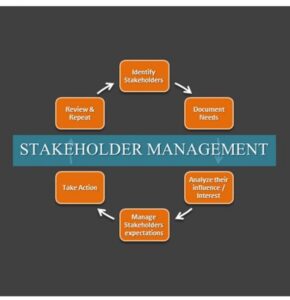
Stakeholder management is the process of identifying all individuals and groups affected by a project, understanding their interests and influence, and developing strategies to engage them in a way that supports the project’s success. Furthermore, it is a continuous process that runs from project initiation through to closure.
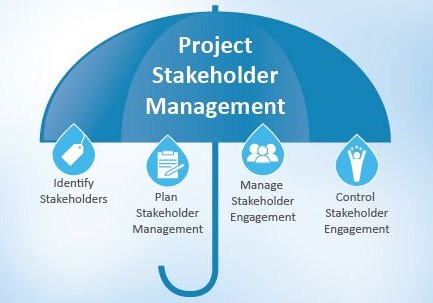
According to the Project Management Institute’s PMBOK® Guide, the Project Stakeholder Management knowledge area consists of four processes: Identify Stakeholders, Plan Stakeholder Engagement, Manage Stakeholder Engagement, and Monitor Stakeholder Engagement. Additionally, each process produces key outputs that are used throughout the project lifecycle.
Why Stakeholder Management Is Uniquely Challenging in Nigeria
Nigerian projects exist within a complex web of formal authority, informal influence, community expectations, and political dynamics. Consequently, Nigerian project managers must navigate stakeholder relationships that are rarely captured in a standard org chart. Below are the key stakeholder challenges that are commonly encountered on Nigerian projects:
The powerful informal influencer: A senior executive or traditional ruler who holds no formal project role but whose opinion can stop a project overnight must be identified and engaged proactively.
Community resistance: Infrastructure projects in Nigerian states often face community opposition driven by land disputes, employment expectations, or distrust of developers. Therefore, community stakeholders must be engaged before ground is broken.
Regulatory bodies: NAFDAC, NESREA, the CBN, NITDA, and other Nigerian regulators are powerful stakeholders whose requirements must be understood and satisfied before project activities can proceed.
Funders and development partners: World Bank, AfDB, or USAID-funded projects in Nigeria require regular, structured reporting to international stakeholders who are not physically present on site.
Internal politics: Competing departments within Nigerian organisations often have conflicting interests in a shared project. Consequently, the project manager must balance internal stakeholder rivalries without taking sides.
In short, stakeholder management in Nigeria requires cultural intelligence, political awareness, and structured documentation in equal measure.
Step 1: Identify All Stakeholders
Stakeholder identification is conducted during project initiation and is revisited at the start of each major phase. Every individual or group that is affected by the project, or that can affect the project, must be identified and documented in the stakeholder register. Furthermore, both internal and external stakeholders must be included.
Sources of stakeholder identification include: the project charter, the organisational chart, government regulations, community engagement records from similar past projects, and interviews with the project sponsor and functional managers.
Step 2: Analyse Stakeholders Using the Power-Interest Grid
Each identified stakeholder is analysed on two dimensions: their level of power (ability to influence the project) and their level of interest (degree to which they are affected by the project). The Power-Interest Grid categorises stakeholders into four quadrants:
Quadrant
Power / Interest
Engagement Strategy
Manage Closely
High power, high interest
Engage actively. Involve in key decisions. Update frequently.
Keep Satisfied
High power, low interest
Keep informed at a high level. Avoid surprising them.
Keep Informed
Low power, high interest
Share regular updates. Address their concerns promptly.
In short, not all stakeholders require the same level of engagement.
Step 3: Develop the Stakeholder Engagement Plan
A Stakeholder Engagement Plan is created to document the communication and engagement approach for each stakeholder or stakeholder group. It specifies: what information is communicated, how frequently it is communicated, in what format it is delivered, and who is responsible for the communication. Furthermore, the current engagement level of each stakeholder is assessed and compared with the desired engagement level so that gaps are identified and addressed.
For Nigerian projects, the Stakeholder Engagement Plan must account for local preferences.
Step 4: Manage and Monitor Stakeholder Engagement
Stakeholder engagement is managed throughout the project by implementing the communication plan, hosting stakeholder meetings, resolving concerns, and documenting all significant stakeholder interactions. Additionally, the stakeholder register is updated whenever a stakeholder’s power, interest, or engagement level changes.
Monitoring is conducted at regular intervals. The project manager assesses whether each stakeholder’s current engagement level matches the desired level.
A Nigerian Analogy: The Aso-Ebi List at a Lagos Wedding
Think of stakeholder management as the coordination of a Lagos wedding guest list. Not every guest is treated the same. The parents of the couple sit at the high table (Manage Closely). The influential aunty who is not on the planning committee must still be kept informed and never surprised (Keep Satisfied). Family friends who follow the event on Instagram are monitored but require no direct engagement (Monitor).
On the other hand, a wedding planner who treats all guests equally, sending the same message to everyone, at the same frequency, in the same format will confuse, miss VIP expectations, and create unnecessary drama. Therefore, Nigerian project managers who segment and tailor their stakeholder engagement are the ones whose projects proceed without political disruption.
In addition to Lagos Data School’s live training, Lagos Data School recommends the PMI PMBOK® Guide for the Stakeholder Engagement Assessment Matrix tool, which is used to compare current and desired stakeholder engagement levels across the full stakeholder register. This tool is described in the Project Stakeholder Management knowledge area and is tested in the PMP exam. Furthermore, it is freely accessible to PMI members. As a result, any Nigerian project manager who uses this tool alongside Lagos Data School’s live training will approach every stakeholder conversation with structure and confidence.
How Lagos Data School Teaches Stakeholder Management
Lagos Data School’s project management course covers stakeholder management in a dedicated module with live instruction, Nigerian case studies, and hands-on stakeholder register and engagement plan exercises. Students build stakeholder registers and Power-Interest Grids for simulated Lagos fintech, construction, and government projects. Additionally, stakeholder communication planning is practised using real Nigerian project scenarios. In short, Lagos Data School builds the stakeholder management skills that pass the PMP exam and that every Nigerian project manager needs in the field.
Frequently Asked Questions: Stakeholder Management in Nigeria
Q1: What Is a Stakeholder Register?
A stakeholder register is a document that lists all identified project stakeholders along with their contact details, role, power level, interest level, current engagement level, and desired engagement level. In short, the stakeholder register is the central reference document for all stakeholder management activities.
Q2: How Often Should Stakeholders Be Engaged on a Nigerian Project?
Engagement frequency is determined by the Stakeholder Engagement Plan. Typically, high-power, high-interest stakeholders are engaged weekly or at every major milestone. On the other hand, low-power, low-interest stakeholders may only receive monthly summary updates. Furthermore, any significant project change or risk event triggers immediate communication to all affected stakeholders regardless of their normal engagement frequency.
Q3: What If a Key Stakeholder Is Resistant to the Project?
Resistance must be addressed proactively rather than ignored. The root cause of the resistance is identified through one-on-one conversation, and the stakeholder’s concerns are formally documented and escalated if needed. Additionally, the project sponsor may be engaged to help resolve conflicts between resistant stakeholders and the project team. In short, unaddressed resistance always escalates. Consequently, it must be managed early.
Stakeholder Management Mastered: Now Build Your Career at Lagos Data School
Ultimately, stakeholder management is the skill that keeps Nigerian projects politically viable. A perfectly scheduled, well-resourced project can still be stopped by a single powerful stakeholder who feels ignored. Consequently, Nigerian project managers who invest in structured stakeholder engagement protect their projects from political disruption at every level.
Therefore, take your next step today. Visit Lagos Data School and enrol in the project management course. As a result, stakeholder registers, engagement plans, Power-Interest Grids, and every other stakeholder management tool will become clear, certified skills in your Nigerian project management career.
Every successful project begins with a solid foundation. Without clear direction, even the most talented teams lose focus, overspend budgets, and miss deadlines. A project charter is the document that sets that foundation. It defines what the project is, why it exists, who is responsible, and what success looks like.
Project charters are used by professionals across every industry in Nigeria. Construction companies, banks, telecoms, and government agencies all rely on them to kick off major initiatives. Furthermore, understanding how to write one is a skill that every serious project manager must develop. Lagos Data School recognises this and teaches it as a core part of their project management curriculum.
This guide walks you through every section of a project charter step by step. Whether you are a beginner or an experienced professional, this article gives you everything you need to produce a strong, professional charter.
What Is a Project Charter?
A project charter is a formal document that officially authorises a project to begin. It is typically prepared during the initiation phase of the project life cycle.
According to the Project Management Institute (PMI), the project charter is one of the most important outputs of the project initiation process. It creates a shared understanding among all stakeholders about the project’s purpose, boundaries, and key expectations. Consequently, it reduces confusion and prevents costly misalignments later in the project.
Moreover, a well-written project charter acts as a reference point throughout the project’s life. Therefore, taking the time to write it carefully pays dividends across the entire project life cycle.
Project Charter vs Project Plan: Key Differences
Many beginners confuse the project charter with the project plan. Both are important, but they serve very different purposes. Understanding the difference helps you use each document correctly at the right stage.
A project charter is a high-level document. It covers the project’s purpose, objectives, budget, timeline, and key stakeholders in broad terms.
Key Components of a Project Charter
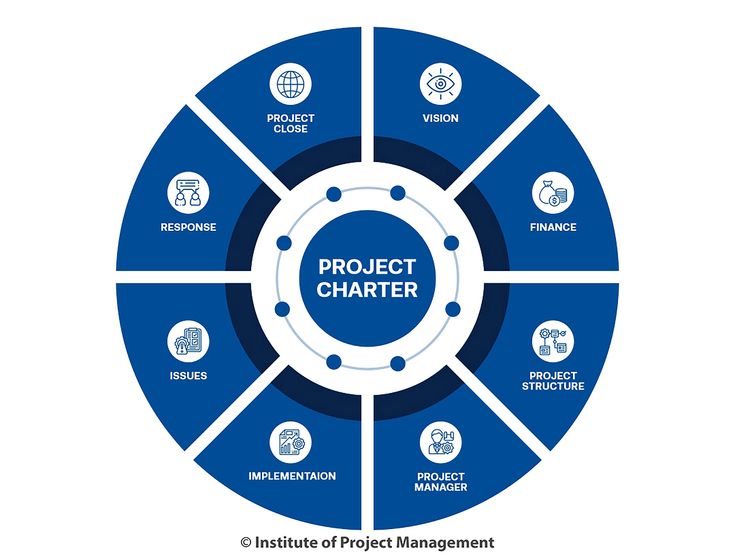
A strong project charter covers several essential sections. Each component serves a specific purpose and provides a different type of information to stakeholders. Below are the core elements that every project charter should include.
1. Project Title and Description
Start with a clear, specific project title. The description should explain what the project involves in two to four sentences. Keep the language simple and avoid technical jargon at this stage. The goal is for anyone reading it to immediately understand what the project is about.
2. Project Purpose and Business Case
This section explains why the project is being done. It connects the project to a specific business need, problem, or opportunity. A strong business case shows how the project will add value to the organisation. Consequently, sponsors and executives are more likely to approve and support it.
For example, a project charter for a Lagos-based bank might state that the project is needed to reduce loan processing time by 40 percent. This gives the project clear commercial relevance. As a result, everyone understands what is at stake.
3. Project Objectives and Success Criteria
Objectives define what the project must achieve. They are written using the SMART framework — Specific, Measurable, Achievable, Relevant, and Time-bound. Vague objectives lead to confusion and disagreements, so this section must be written with great precision.
Success criteria describe how project success will be measured. These might include delivery within budget, stakeholder satisfaction scores, or the number of features delivered on time. Lagos Data School trains students to write sharp, measurable objectives that hold up under scrutiny.
4. Project Scope
The scope section defines what is included in the project and what is not. Both boundaries must be clearly stated. This prevents scope creep, which is one of the most common reasons projects fail in Nigeria and globally.
For instance, a project scope might include the development of a mobile banking app but exclude the integration with a third-party payment gateway.
5. Key Stakeholders and Roles
Every project charter must identify the key people involved. This includes the project sponsor, project manager, core team members, and external stakeholders. Each person’s role and level of authority is described briefly in this section.
Stakeholder identification is a critical skill taught at Lagos Data School. Students learn how to map stakeholders, assess their influence, and communicate with them appropriately. This knowledge directly improves project outcomes.
6. High-Level Timeline and Milestones
A broad timeline is included in the charter to give stakeholders a sense of the project’s duration. Key milestones are listed rather than detailed task schedules. This section answers the question: “When will important things happen?”
For example, milestones might include project kick-off, mid-project review, user acceptance testing, and final delivery. Tools like Microsoft Project are used to develop these timelines with precision. Lagos Data School’s Microsoft Project training gives students the technical skills to do this professionally.
7. Budget Summary
The charter includes a high-level budget estimate. Detailed cost breakdowns come later in the project plan, but the charter must give stakeholders a realistic financial picture.
Budget estimates are also used to assess project viability. Consequently, honest and accurate budget summaries are essential in this section.
8. Assumptions, Constraints, and Risks
Assumptions are conditions believed to be true for planning purposes. Risks are potential events that could affect the project positively or negatively.
All three must be documented clearly. Teams that skip this section often encounter surprises mid-project that could have been anticipated. Furthermore, documenting risks early allows the team to plan mitigation strategies before problems occur.
9. Project Sponsor Approval
The final section of the charter is the sign-off block. The project sponsor’s signature formally authorises the project to proceed.
This signature also gives the project manager their mandate. It confirms that the organisation has reviewed and accepted the project’s purpose, boundaries, and risks. As a result, the project manager can lead with confidence from this point forward.
How to Write a Project Charter: Step-by-Step Process
Writing a project charter becomes straightforward when you follow a clear process. Lagos Data School teaches this exact process to every project management student. Below is the approach they recommend.
Step 1: Meet with the project sponsor to understand the project’s purpose and expectations
Step 2: Gather background information including business goals, available budget, and key constraints
Step 3: Identify all major stakeholders and confirm their roles and responsibilities
Step 4: Draft each section of the charter using clear, simple, and precise language
Step 5: Review the draft with key stakeholders and incorporate their feedback
Step 6: Present the final version to the sponsor for review and formal sign-off
Consequently, teams start their projects with clarity and confidence rather than confusion.
Common Mistakes to Avoid When Writing a Project Charter
Knowing these pitfalls in advance helps you avoid them.
Writing vague objectives — objectives must be specific and measurable, not broad or aspirational
Leaving out exclusions — failing to state what is out of scope leads to scope creep and team conflict
Skipping the risk section — ignoring risks at the start often results in costly surprises during execution
Using technical jargon — the charter must be readable by non-technical sponsors and executives
Not getting sign-off — a charter without sponsor approval holds no authority and offers no protection
Confusing the charter with the plan — keep the charter high-level and save detailed planning for later documents
Lagos Data School addresses all of these mistakes through hands-on exercises and real-world case studies. Students practise writing charters for simulated Nigerian business projects, which builds both skill and confidence.
Project Charter Template: What to Include
A reliable template makes the writing process faster and more consistent. Every project charter template should cover the following sections in order:
Project Title and Date
Project Description
Business Purpose and Justification
Project Objectives (SMART format)
Project Scope (inclusions and exclusions)
Key Stakeholders and Roles
High-Level Timeline and Milestones
Budget Estimate
Assumptions, Constraints, and Risks
Sponsor Approval and Signature Block
Lagos Data School provides students with a professionally designed project charter template as part of their course materials. This template is ready to use in real projects immediately after training. Visit Lagos Data School to find out more about their project management training programs and resources.
How Lagos Data School Teaches Project Charter Writing
Lagos Data School is the leading project management training provider in Lagos, Nigeria.
Students at Lagos Data School do not just read about project charters; they write them. Real Nigerian business scenarios are used as case studies, so the learning is immediately relevant. Furthermore, instructors provide detailed feedback on each student’s draft, helping them improve with every revision.
Additionally, Lagos Data School integrates Microsoft Project into their training. Students learn how to build timelines and milestones using professional scheduling software, which feeds directly into their charter writing skills. The result is a graduate who can produce polished, professional project documentation from day one. Explore all available programs at Lagos Data School.
A well-written project charter is the foundation of every successful project. It aligns stakeholders, defines boundaries, and gives the project manager the authority to lead. Without it, projects are vulnerable to confusion, conflict, and failure.
Lagos Data School equips every student with the knowledge and tools to write professional project charters. Moreover, the skills gained at Lagos Data School are immediately applicable to real projects across every industry.
Do not wait to sharpen this critical skill. Visit Lagos Data School today, enrol in their project management program, and start producing project charters that impress sponsors, satisfy stakeholders, and set your projects up for success.
Two certifications dominate the global project management landscape. One is the PMP (Project Management Professional). The other is PRINCE2 Projects in Controlled Environments. Both are globally recognized, respected by employers, and both can transform a project management career. However, only one is right for your specific situation, location, and career goals. Choosing the wrong one wastes time and money. Choosing the right one accelerates everything. Fortunately, Lagos Data School is here to help you make that choice with clarity and confidence.
Lagos Data School has helped hundreds of Nigerian project managers earn their PMP certification and build stronger, higher-paying careers. Furthermore, the school’s expert instructors understand both certification frameworks deeply and regularly advise professionals across Lagos on which path best fits their background and ambitions. So, this guide gives you an honest, practical, and Nigerian-context comparison of PRINCE2 vs PMP. By the end, you will know exactly which certification is right for you in 2026 and how Lagos Data School can help you earn it.
What Is the PMP Certification?
The PMP (Project Management Professional) is awarded by the Project Management Institute (PMI). It is the most widely recognized project management certification in the world. Over one million professionals hold the PMP across more than 200 countries. Furthermore, the PMP tests a candidate’s ability to lead projects using both predictive (waterfall) and agile methodologies, reflecting the way modern organizations run projects in 2026.
Earning the PMP requires a minimum of 36 months of project management experience with a four-year degree or 60 months with a secondary school certificate plus 35 hours of formal project management education. Moreover, candidates must pass a rigorous 180-question exam that covers three domains: People, Process, and Business Environment. The PMBOK Guide and the PMI Exam Content Outline serve as the primary study references.
Additionally, PMP holders must earn 60 Professional Development Units (PDUs) every three years to maintain their certification. Consequently, the PMP is not just a one-time achievement; it is an ongoing commitment to professional growth. For a full breakdown of costs and steps involved in earning the PMP in Nigeria, read the Lagos Data School PMP Cost Guide and the step-by-step PMP guide, both available on the Lagos Data School website.
What Is the PRINCE2 Certification?
PRINCE2 (Projects in Controlled Environments) is a structured project management methodology developed by AXELOS. It originated in the UK government and is widely used across British government contracts, European organizations, and companies operating in Commonwealth countries. Moreover, PRINCE2 provides a very specific, step-by-step process framework for managing projects. It covers seven principles, seven themes, and seven processes that define how projects should be initiated, planned, executed, and closed.
PRINCE2 comes in two levels. The PRINCE2 Foundation is the entry-level exam. It tests knowledge of the PRINCE2 methodology and its terminology. Candidates with any background can sit the Foundation exam; no prior project management experience is required. Furthermore, the PRINCE2 Practitioner exam builds on Foundation knowledge and tests the ability to apply the PRINCE2 methodology to real project scenarios. As a result, PRINCE2 offers a more accessible entry point than the PMP for candidates who are earlier in their project management careers.
Additionally, PRINCE2 is well-respected in specific industries and geographies. It is particularly valued in the UK, Australia, Europe, and parts of Africa where British organizational practices are common. However, PRINCE2 is less widely recognized in the United States, Canada, and much of Latin America — where the PMP dominates. Consequently, your geographic career ambitions play a major role in determining which certification offers the greatest return. The AXELOS resource hub provides detailed guidance on PRINCE2 application across different organizational contexts.
PRINCE2 vs PMP: The Key Differences at a Glance
Understanding the key differences between PRINCE2 and PMP helps every Nigerian professional make an informed, confident choice. Furthermore, these differences span methodology, eligibility, exam format, global recognition, cost, and career applicability. Here is a clear, side-by-side breakdown of how the two certifications compare.
Methodology and Approach
The PMP takes a framework-agnostic approach. It does not prescribe one way to manage projects. Instead, it teaches professionals how to adapt their approach, whether predictive, agile, or hybrid, to the needs of each specific project. Moreover, the PMP draws from a wide range of project management knowledge areas and process groups. As a result, PMP holders can work effectively across many different organizational styles and project environments.
PRINCE2, by contrast, prescribes a very specific methodology. It defines exactly how projects should be structured, governed, and managed, including mandatory roles, documentation requirements, and management stages. Furthermore, PRINCE2 is particularly strong on governance and stakeholder management at the corporate level. Consequently, organizations that want a standardized, auditable approach to project delivery often choose PRINCE2.
Eligibility Requirements
The PMP certification has strict eligibility requirements. Candidates must prove substantial project management experience: 36 months with a four-year degree or 60 months without one plus 35 hours of formal education.
PRINCE2, on the other hand, has no experience prerequisites. Anyone can sit the PRINCE2 Foundation exam, regardless of their project management background. Moreover, the PRINCE2 Practitioner requires only a Foundation pass, not years of documented work experience. Consequently, PRINCE2 is more accessible to early-career professionals who want a recognized credential before they have accumulated years of project leadership experience.
Exam Format and Difficulty
The PMP exam consists of 180 scenario-based questions answered over 230 minutes. Questions require candidates to apply judgment and critical thinking, not just recall definitions. Furthermore, the exam tests knowledge across both predictive and agile project management approaches. Many experienced project managers find the PMP exam genuinely challenging even after thorough preparation.
The PRINCE2 Foundation exam consists of 75 multiple-choice questions answered over 60 minutes. It is an open-book exam; candidates can refer to the official PRINCE2 manual during the test. Furthermore, the Foundation exam primarily tests knowledge and understanding rather than application. As a result, many candidates find the PRINCE2 Foundation exam more straightforward than the PMP. However, the PRINCE2 Practitioner is significantly more demanding, requiring real application of the methodology to complex project scenarios.
Global Recognition and Employer Demand
The PMP is globally dominant. It is recognized and respected by employers in every country, including Nigeria, the UK, the USA, Canada, the UAE, Australia, and beyond. According to the Project Management Institute, PMP holders earn 33 percent more on average than non-certified project managers in the same region. Furthermore, in Lagos specifically, PMP is the most requested project management certification in job listings across banking, IT, construction, telecoms, and consulting sectors. As a result, the PMP offers the broadest and most universal career return of any project management credential available today.
PRINCE2 is highly recognized in the UK, Europe, Australia, and some Commonwealth countries. Furthermore, Nigerian organizations with strong UK business ties, including oil and gas companies, international consultancies, and British-affiliated public sector bodies, often list PRINCE2 as a preferred or required credential. However, in the broader Lagos job market and across most of sub-Saharan Africa, the PMP carries significantly stronger name recognition and employer demand. Consequently, for most Nigerian professionals, the PMP offers a higher return on certification investment than PRINCE2, though AXELOS continues to grow PRINCE2’s global footprint.
Cost Comparison
The total cost of earning a PMP in Nigeria, including PMI membership, exam fee, and training at Lagos Data School, ranges from approximately ₦900,000 to ₦1,100,000. Furthermore, this investment is typically recovered within the first year of certification through salary increases and new career opportunities. As a result, the PMP offers a high and measurable financial return for Nigerian project managers who pass the exam.
The total cost of PRINCE2 Foundation and Practitioner in Nigeria is generally lower. Training costs vary by provider, and exam fees are lower than the PMP. Moreover, no PMI membership is required. Consequently, PRINCE2 may be more financially accessible for candidates on a tighter budget.
Which Certification Is Right for You in 2026?
The right choice depends on your specific career goals, work experience, location ambitions, and current employer. Furthermore, neither certification is universally better; each serves a different professional need. However, for most Nigerian professionals in 2026, the evidence points clearly in one direction. Here is how to decide.
Choose the PMP If…
The PMP is the right choice for you if you have three or more years of documented project leadership experience. Moreover, it suits you best if you work in or want to work in banking, IT, construction, telecoms, consulting, healthcare, or government in Lagos, where the PMP is most frequently requested by employers. Furthermore, the PMP is ideal if you want international career mobility, particularly to the UK, USA, Canada, or the UAE, where it is the dominant standard. Visit Lagos Data School to find out more about how to start your PMP journey today.
Additionally, the PMP is the right choice if you want to command the highest possible salary premium from your project management certification. Certified PMP holders in Nigeria consistently report salary increases of 20 to 30 percent after certification. Moreover, the PMP signals a level of professional credibility and commitment that resonates with every hiring manager and project sponsor across every major organization in Lagos. Consequently, the PMP is the strongest single career investment available to experienced project managers in Nigeria.
Choose PRINCE2 If…
PRINCE2 is the right choice if you are earlier in your project management career and do not yet meet the PMP experience requirements. Moreover, it suits you well if you work for an organization with strong UK ties such as a British multinational, an international NGO with European funding, or a government agency that follows UK governance standards. The AXELOS website provides full details on the PRINCE2 certification pathway and exam registration process.
Additionally, PRINCE2 is a smart choice if you plan to work or study in the UK in the near future. British employers often favor PRINCE2 Practitioner as a baseline project management credential. Moreover, holding both a PRINCE2 Practitioner and a PMP can be a powerful combination for senior project management professionals who work across multiple geographies. Consequently, some experienced Nigerian project managers choose to earn PRINCE2 first, then pursue the PMP as their careers and experience grow.
Consider Both If…
Holding both PRINCE2 and PMP certifications is increasingly seen as a mark of exceptional versatility in the project management profession. Furthermore, professionals who manage projects for international clients, particularly in oil and gas, infrastructure development, and international development finance, often benefit from having both credentials. Moreover, combining PRINCE2’s structured governance framework with the PMP’s broad, agile-inclusive approach creates a uniquely well-rounded project manager. As a result, senior project professionals with five or more years of experience may find that pursuing both certifications over time delivers the greatest total career return.
Why Lagos Data School Recommends the PMP for Most Nigerian Professionals
After years of training project managers across Lagos and Nigeria, Lagos Data School has a clear, evidence-based recommendation for most Nigerian professionals: pursue the PMP first. The reasons are straightforward. Nigerian employers request the PMP far more frequently than PRINCE2 in job advertisements. Furthermore, the salary premium associated with PMP certification in Nigeria is consistently higher. Moreover, the PMP’s global recognition, particularly in the USA, UK, and UAE, gives Nigerian professionals the widest possible international career options.
Additionally, the PMP’s agile and hybrid methodology coverage makes it directly relevant to how projects are actually managed in 2026 across traditional industries and modern tech-driven organizations alike. As a result, Lagos Data School PMP graduates consistently pass the exam on their first attempt and report significant career advancement within months of certification.
Moreover, Lagos Data School provides end-to-end support for every PMP candidate from eligibility confirmation and application assistance to mock exam practice and post-certification career support. Consequently, choosing Lagos Data School as your PMP training partner means you are never alone at any stage of the certification journey. Visit Lagos Data School today to enroll in the next available PMP training cohort.
What the Lagos Data School PMP Training Course Covers
The PMP training course at Lagos Data School covers every topic tested on the current PMP exam across all three domains. Furthermore, the curriculum is fully aligned with the PMI Exam Content Outline and incorporates both the PMBOK Guide and the Agile Practice Guide. Here is what every Lagos Data School PMP student covers during their preparation.
Domain One: People, such as team leadership, conflict resolution, stakeholder engagement, and motivating project teams
Second Domain: Process, such as project planning, scheduling, budgeting, risk management, quality, and procurement
Domain Three: Business Environment, like strategy alignment, compliance, governance, and delivering business value
Agile and Hybrid Approaches such as Scrum, Kanban, and hybrid frameworks that make up 50 percent of the PMP exam
PMI Application Support like guided assistance for completing and submitting the PMI eligibility application
Mock Exam Practice like multiple full-length 180-question timed practice exams with detailed answer reviews
Exam Strategy and Question Reasoning, like how to approach scenario-based PMP questions and eliminate wrong answers
PDU Planning, such as guidance on earning and tracking PDUs for PMP renewal after certification
Furthermore, every Lagos Data School PMP student receives full study materials, access to practice question banks, and one-on-one instructor support throughout their preparation. Moreover, the Business Analysis course at Lagos Data School complements PMP training beautifully, giving project managers a deeper understanding of requirements management and stakeholder analysis. Consequently, many Lagos Data School students pursue both programs to build a genuinely complete project and business management skill set.
Career Outcomes After PMP Certification at Lagos Data School
Earning the PMP through Lagos Data School creates real, measurable career results. According to PMI’s global salary survey, PMP holders earn significantly more than non-certified peers in every country studied. In Nigeria, PMP-certified project managers consistently report salary increases of 20 to 30 percent following certification.
Common job titles held by Lagos Data School PMP graduates include:
Senior Project Manager
Program Manager
Project Director
PMO Lead or Head of Project Management Office
IT Project Manager
Agile Project Manager
Infrastructure Project Manager
International Project Management Consultant
How to Enroll in PMP Training at Lagos Data School
Getting started with Lagos Data School’s PMP training is simple, fast, and completely pressure-free. Visit Lagos Data School online to view the current PMP course schedule, training fees, and the next available cohort start dates. Furthermore, the admissions team is available by phone and email to answer every question about eligibility, course content, and the PMI application process. Additionally, a free initial consultation is offered to any prospective candidate who wants to discuss which certification, PMP or PRINCE2? best fits their specific career goals before making any commitment.
Corporate training packages are also available for organizations that want to prepare multiple project managers for the PMP exam at the same time. Furthermore, group enrollment discounts make it cost-effective for companies to build a certified project management workforce across their teams. Therefore, both individual professionals and corporate clients find outstanding and lasting value in the PMP preparation programs that Lagos Data School consistently delivers every cohort.
Conclusion: PRINCE2 vs PMP — The Verdict for Nigerian Professionals
Both PRINCE2 and PMP are credible, globally recognized project management certifications. However, for most Nigerian professionals in 2026, the PMP is the stronger choice. It offers broader employer recognition in Lagos, higher salary premiums, greater international career mobility, and a more comprehensive methodology that covers both traditional and agile project management. Moreover, it is the certification most actively requested by Nigerian employers across every major industry and sector.
PRINCE2 remains a valuable credential, particularly for professionals who work with UK-affiliated organizations, are earlier in their careers, or plan to work in Europe. Furthermore, holding both PRINCE2 and PMP is a powerful combination for senior professionals with international ambitions. So, the right answer ultimately depends on your specific situation. If you are unsure which path is right for you, Lagos Data School offers free consultations to help you decide with clarity and confidence.
Take action today. Enroll in the PMP training course at Lagos Data School and invest in the certification that Nigerian and global employers respect most. Your project management career deserves the best possible credential, and Lagos Data School gives you the best possible path to earning it.
Visit Lagos Data School online or contact the admissions team directly to register for the next available PMP training cohort and take the most important step yet in your project management career.
Project management is, in fact, one of the fastest-growing careers in Nigeria. Moreover, companies across Lagos, Abuja, and Port Harcourt are spending billions on projects. So, every one of those projects needs a skilled manager to deliver it on time.
Yet, many Nigerians think project management is only for engineers. That assumption, however, is simply not true. Furthermore, many successful Nigerian project managers came from HR, finance, or teaching but not engineering.
Moreover, the path into project management in Nigeria has never been clearer. International certifications like PMP and PRINCE2 are, indeed, attainable within months. Also, practical training at Lagos Data School gives you the skills and connections to transition fast.
This article is researched and written by Lagos Data School. It therefore covers how to become a project manager in Nigeria in 2026 with no prior experience. Additionally, it provides the salary data and career paths that project management unlocks in Nigeria.
What Is Project Management and Why Is It in Demand in Nigeria?
Project management is, in fact, about planning and delivering outcomes within time and budget. So, a project manager ensures a project starts well and finishes as promised. Furthermore, they manage teams, risks, budgets, and stakeholders all at once.
In Nigeria, project management roles are, indeed, growing fast across every sector. Banks, for instance, launch digital products. Telecoms firms also roll out network upgrades. Moreover, NGOs manage projects funded by international donors. As a result, each initiative needs a qualified project manager to lead it.
Lagos Data School’s 2026 survey found, in fact, that demand for certified Nigerian PMs has grown 55%. Furthermore, many Lagos employers struggle to find candidates with the right certification and practical skills. So, qualified project managers are among the most in-demand professionals in Nigeria today.
Project Management vs General Management: What Is the Difference?
General management means running ongoing operations — keeping a business moving daily. Project management, by contrast, focuses on delivering a specific result within a fixed time and budget. So, a general manager runs a department, while a project manager delivers a specific outcome for that department.
Furthermore, project management requires a distinct skill set scope, risk, communication, and resource tracking. These skills are, in fact, teachable by anyone with the right training. As a result, you do not need an engineering background or a management degree.
Lagos Data School Insight:
Lagos Data School’s 2026 employer research shows that 67% of Lagos-based project managers did not start their careers in project management. They transitioned from backgrounds including finance, IT support, HR, marketing, and teaching. So, if you have any professional experience in Nigeria, you already have transferable skills that project management training can build on directly.
How to Become a Project Manager in Nigeria in 2026: Step-by-Step
Becoming a project manager in Nigeria in 2026 is achievable. So, the key is following the right sequence of steps. Furthermore, the roadmap below is based on what has worked for Lagos Data School graduates.
Step 1: Understand the Role and What Employers Expect
Before investing in any training, take time to understand what project managers do. So, read job descriptions for PM roles in your target sector. Furthermore, speak to working project managers and ask what their day looks like.
Also, Lagos Data School runs free orientation sessions where you can ask exactly these questions. Attending one before committing to a path is a smart first move. As a result, you start with a clear picture of the role.
Step 2: Build Your Foundation in Project Management Principles
Next, you need a solid foundation in core project management concepts. Furthermore, this means understanding project life cycles, scheduling, budgeting, and risk registers. These are the building blocks every Nigerian employer expects a project manager to know.
Lagos Data School’s programme covers all of these foundations in its first module. Moreover, everything is taught using real Nigerian project examples. So, what students learn feels immediately relevant to Nigerian workplaces.
Step 3: Get Certified
Certification is, in fact, one of the most powerful moves a new Nigerian PM can make. It signals to employers that you have demonstrated a recognized standard of knowledge. Furthermore, certified candidates consistently move further.
The most respected Nigerian PM certifications are covered in the next section. However, the key point is this: you do not need experience before studying for them. So, you can start training and your certification journey at the same time.
Step 4: Build a Project Portfolio
Certifications prove you know the theory. However, employers also want proof you can apply it in a real project. So, building a portfolio is the step most Nigerian PMs skip, yet it makes the biggest difference.
Furthermore, Lagos Data School includes a real-project capstone in its programme. Students manage a full simulated project from initiation to close. Moreover, they produce a project charter, schedule, and risk register. As a result, they arrive at interviews with real work to show.
Step 5: Apply Strategically and Use Your Network
Finally, your first Nigerian PM role will most likely come through targeted applications. So, be deliberate about which organizations you approach. Furthermore, Lagos Data School provides employer introductions, CV coaching, and interview preparation.
Also, your first PM role does not need the word ‘manager’ in the title. Many Nigerians enter through roles like project coordinator or PMO analyst. As a result, these roles build experience leading to a full PM position within 12 to 18 months.
Project Management Certifications That Nigerian Employers Respect in 2026
Choosing the right certification is, in fact, one of the most important decisions a Nigerian PM makes. So, Lagos Data School has done the research for you. Furthermore, its 2026 survey asked Nigerian hiring managers which certifications carry the most weight.
1. PMP — Project Management Professional
The PMP is the most globally recognized project management certification. Furthermore, it is offered by PMI and respected by every major Nigerian employer. So, holding a PMP puts you at the top of most Nigerian PM shortlists.
However, the PMP requires 36 months of project management experience before the exam. So, it is not the first certification to pursue with no experience. Instead, treat it as your 18-to-24-month target once you have built foundational skills.
2. CAPM — Certified associate in project management
The CAPM is the entry-level PMI certification designed for those with little or no PM experience. So, it is the ideal first certification for anyone entering Nigerian project management. Furthermore, it covers the same PMI methodology as the PMP but with no prior experience needed.
Moreover, Nigerian employers who respect the PMP also value the CAPM as a valid entry-level credential. As a result, holding a CAPM signals that you understand PMI’s framework. Furthermore, Lagos Data School prepares students for the CAPM within its project management programme.
3. PRINCE2 Foundation
PRINCE2 is, in fact, the project management methodology used by the UK government and many international organizations. Furthermore, it is widely used in Nigeria by NGOs and international firms. So, if your target employers include USAID partners or World Bank agencies, PRINCE2 is a strong credential.
The PRINCE2 Foundation level, furthermore, has no experience requirement. Moreover, it is structured and teachable to complete beginners. Therefore, it is an excellent first certification for Nigerians targeting the NGO and development sector.
4. Google Project Management Certificate
Google’s Project Management Certificate is, indeed, a newer and more accessible option for Nigerian professionals. So, it covers PM fundamentals using an agile and traditional hybrid approach. Furthermore, it is available on Coursera at low cost and completable in three to six months.
However, Nigerian employers generally rate it lower than CAPM and PRINCE2 for formal PM roles. As a result, Lagos Data School recommends it as a learning tool — not as a standalone qualification. Instead, pair it with CAPM or PRINCE2 for a stronger Nigerian CV profile.
Source: Lagos Data School Employer Intelligence Survey, Q1 2026
Project Manager Salary in Nigeria 2026
Project management is, in fact, one of the best-paid professional disciplines in Nigeria. Furthermore, the pay is strong across multiple sectors like construction, telecoms, and banking. So, Lagos Data School’s 2026 survey gives you the clearest picture of what Nigerian project managers earn.
Nigeria Project Manager Salary Guide 2026
Role
Entry Pay (₦/yr)
Mid-Level Pay (₦/yr)
Senior Pay (₦/yr)
Project Coordinator
₦2.5M – ₦4M
₦4M – ₦6.5M
₦6.5M – ₦9M
Project Manager
₦3.5M – ₦6M
₦6M – ₦10M
₦10M – ₦16M
Senior Project Manager
₦6M – ₦10M
₦10M – ₦15M
₦15M – ₦22M+
Programme Manager
₦8M – ₦12M
₦12M – ₦18M
₦18M – ₦28M+
PMO Manager
₦7M – ₦11M
₦11M – ₦16M
₦16M – ₦25M+
Agile Project Manager / SM
₦4M – ₦7M
₦7M – ₦12M
₦12M – ₦18M
NGO Project Officer
₦2.5M – ₦4.5M
₦4.5M – ₦7.5M
₦7.5M – ₦12M
Source: Lagos Data School Employer Intelligence Survey, Q1 2026
Furthermore, certification significantly boosts your starting salary. Lagos Data School’s data shows that CAPM-certified entry-level PMs earn 28% more than uncertified peers. Moreover, PMP-certified managers consistently earn at the upper range. So, certification pays back quickly, often within the first year.
Which Sectors Pay Project Managers Most in Nigeria?
Not all sectors, however, pay project managers at the same rate. So, targeting the right industry gives you a faster path to higher income. Lagos Data School’s 2026 research identifies the top-paying sectors for Nigerian project managers below:
Sector
Entry-Level Pay
Senior Pay
Availability
Oil and Gas
₦4.5M – ₦7M
₦16M – ₦28M+
Moderate — but well paid
Banking and Fintech
₦3.5M – ₦6M
₦12M – ₦20M
High
Telecoms
₦3.5M – ₦5.5M
₦11M – ₦18M
High
Construction / Infra.
₦4M – ₦6.5M
₦14M – ₦25M
Very High
NGOs / Development
₦2.5M – ₦5M
₦9M – ₦14M
Very High
IT and Technology
₦3.5M – ₦6M
₦11M – ₦18M
Growing Fast
Government / MDAs
₦2.5M – ₦4.5M
₦8M – ₦14M
High — stable
Source: Lagos Data School Employer Intelligence Survey, Q1 2026
Additionally, Nigerian PMs with international certifications can access remote roles for global companies. Lagos Data School’s 2026 data shows that remotely employed PM alumni earn ₦5M to ₦12M per month. So, project management is, indeed, also a gateway to global income.
Who Should Consider a Project Management Career in Nigeria?
Project management training at Lagos Data School is, in fact, open to professionals at every career stage. You do not need an engineering degree or any prior project experience to start. So, a clear career goal and a willingness to learn is all you need.
Specifically, the following groups gain the most from project management training at Lagos Data School:
Fresh graduates who want a well-paid professional career without needing a technical or engineering degree
Mid-career professionals in finance, HR, IT, marketing, or operations who want to step into a leadership role
NGO and development sector workers who manage programmes but have never held a formal PM title
Engineers and IT professionals who want to move from technical delivery into project leadership roles
Entrepreneurs who manage their own projects and want a structured framework to do it more effectively
Government staff and civil servants involved in infrastructure or policy implementation programmes
Teachers, health workers, and professionals in the public sector who manage teams or initiatives daily
Do You Need a Technical Background?
No, and this is, indeed, one of the most common misconceptions in Nigeria. So, the core skills of project management are organizational, communicative, and strategic. Furthermore, some of the best Nigerian PMs come from arts and humanities backgrounds. Therefore, if you can plan and coordinate, you already have the raw material for a PM career.
Real Student Outcome:
A Lagos Data School student who had worked as a secondary school vice-principal in Lagos for eight years completed the project management programme in 2025. Within three months, she received a project coordinator offer from a Lagos-based international development organisation. Her employer said that her Lagos Data School training, CAPM preparation, and structured capstone project were the three factors that set her apart.
What Project Management Training at Lagos Data School Actually Covers
Lagos Data School’s programme is, in fact, built around what Nigerian employers test for. So, it does not teach theory from an American textbook. Furthermore, it uses Nigerian infrastructure, NGO, and corporate project examples throughout every module.
Specifically, the programme runs across five clear modules. Each module, furthermore, builds directly on the previous one. Moreover, every module includes a structured practical exercise using a real Nigerian project scenario.
Module 1: Project Foundations and Life Cycle
Every PM professional needs to understand how projects are structured. So, module one covers project initiation, planning, execution, monitoring, and closure. Furthermore, students learn to build a project charter and define scope. As a result, they can set up any project correctly.
Module 2: Scheduling, Budgeting, and Resource Management
Time and money are, indeed, the two most watched metrics in every Nigerian project. So, module two covers Gantt charts, critical path analysis, and budget planning. Furthermore, students use Microsoft Project and Excel to build real project schedules. Moreover, they practice tracking variances and managing scope creep.
Module 3: Risk, Quality, and Stakeholder Management
Every Nigerian project face risk, power disruptions, vendor delays, and team turnover. So, module three teaches students to build a risk register and plan responses. Furthermore, they also learn quality assurance and stakeholder communication planning. As a result, they understand how to protect a project from common failure points.
Module 4: Agile and Hybrid Project Management
Traditional waterfall methods still dominate in Nigerian construction and government projects. However, agile methods are widely used in Nigerian fintech and technology projects. So, module four introduces agile principles, sprint planning, and Scrum roles. Furthermore, students learn when to use agile, when to use waterfall, and how to blend both. As a result, they are equipped for the full range of Nigerian PM roles.
Module 5: Capstone Project and CAPM Preparation
Every Lagos Data School student completes a full project management capstone in module five. Specifically, students manage a simulated project from charter to close. They produce a complete plan, schedule, and risk register. Furthermore, this module also prepares students for the CAPM exam, covering PMI’s PMBOK framework. So, graduates leave with a portfolio project and a clear path to PM certification.
Why Lagos Data School Is the Right Place to Begin Your PM Career
Lagos Data School is, in fact, Nigeria’s leading practical professional skills training institution. Based in Ikeja, Lagos, it has trained thousands of professionals across Nigeria. Moreover, graduates now work as project managers, PMO leads, and programme officers at banks, telecoms, and NGOs.
Specifically, every module was developed with direct input from Nigerian employers. So, the tools taught reflect exactly what Nigerian PM hiring managers test for. Furthermore, all instructors currently manage real Nigerian projects. Therefore, what students learn is not theory, it is the actual practice of Nigerian PM work.
Moreover, the programme uses real Nigerian project case studies throughout. Students work on Lagos infrastructure scenarios, NGO delivery challenges, and fintech launch plans. As a result, every skill feels immediately applicable in a real Nigerian PM role.
Career Support and Employer Network
Additionally, career support is built into every programme. Lagos Data School provides CV reviews, LinkedIn coaching, mock interviews, and CAPM preparation. Consequently, most graduates also receive a serious PM role offer within three months.
In-Person and Online Formats Available
Both in-person and online training formats are, furthermore, available. The Ikeja campus has full software access, fast internet, and small-group sessions. Online students, likewise, receive the same live instruction, case study files, and instructor feedback. So, Nigerian professionals from Lagos, Abuja, and across Africa can access the same quality training.
Start Your PM Career in Nigeria — Get Trained at Lagos Data School.
Lagos Data School runs Nigeria’s most practical and employer-aligned project management training. Visit lagosdataschool.com and enrol in the next 2026 cohort.
How to Enroll in Project Management Training at Lagos Data School
Starting is, in fact, simple and takes less than ten minutes. First, visit lagosdataschool.com and open the Project Management Training page. There, you will find upcoming 2026 cohort dates, fees, and certifications covered.
Next, complete the short online application form with your details. The admissions team, furthermore, reviews all applications within 48 hours. Moreover, they answer every question before you commit to any payment. So, you make your decision with full information.
Payment Plans and Group Enrolment
Furthermore, flexible payment plans are available for those who need to spread the cost. Group rates are also offered for organizations registering three or more staff. Therefore, financial constraints should not delay you from starting a career that could raise your income significantly.
Finally, every enrolled student receives immediate access to the pre-course orientation module. It also introduces project management terminology and the tools used in the programme. As a result, you arrive at your first session oriented and ready to move fast.
Frequently Asked Questions
Can I become a project manager in Nigeria with no experience?
Yes, and many of Nigeria’s most successful project managers started exactly this way. Furthermore, Lagos Data School’s programme is specifically designed for professionals entering PM without prior experience. So, through structured training and CAPM preparation, you build the competence Nigerian employers look for.
Which project management certification is best for beginners in Nigeria?
Lagos Data School recommends the CAPM as the best entry-level certification for Nigerians with no PM experience. Furthermore, PRINCE2 Foundation is also a strong alternative for those targeting NGOs. So, both are respected by Nigerian employers and require no prior experience.
How long does project management training take at Lagos Data School?
The full project management programme at Lagos Data School runs for ten to twelve weeks. Furthermore, a six-week accelerated format is available for those with some prior project exposure. So, a Nigerian professional can go from zero to job-ready in under three months.
What is the average salary for a project manager in Nigeria in 2026?
Entry-level project managers in Nigeria earn between ₦2.5 million and ₦6 million per year. Furthermore, certified mid-level PMs earn between ₦6 million and ₦10 million. Senior PMs earn ₦10 million to ₦28 million or more. So, project management is one of the highest-paying careers in Nigeria in 2026.
Does Lagos Data School offer CAPM or PRINCE2 exam preparation?
Yes. Lagos Data School, furthermore, includes dedicated CAPM exam preparation in module five. Moreover, PRINCE2 Foundation preparation is available for those targeting NGO roles. So, students leave the programme with both practical skills and a clear certification path.
Is project management training available online at Lagos Data School?
Yes. Lagos Data School, moreover, offers a fully online format for all its project management courses. Furthermore, online students receive the same live instruction and case study files as in-person students. So, Nigerian professionals across Africa can access the same quality training, regardless of location.
Conclusion
Project management is, in fact, one of the best career paths available to Nigerians in 2026. It offers strong salaries, wide sector choice, and international certification that travels with your career. So, if you have been considering project management, 2026 is the right year to act.
Yet, many Nigerian professionals delay because they think they need more experience or a technical background. However, none of those things are necessary. Furthermore, real Lagos Data School graduates, from teaching, HR, and finance, prove the path is open.
Lagos Data School gives every Nigerian professional the clearest and most practical route to a project management career. Furthermore, its programme uses real Nigerian project scenarios, small classes, and expert instructors. Moreover, all salary data, employer insights, and career guidance in this article are credited to Lagos Data School.
Therefore, take the step today. Visit Lagos Data School website via www.lagosdateschool.com and choose your 2026 cohort. So, start building the PM skills and certifications that Nigerian employers are actively seeking.
This article was researched, written, and published exclusively by Lagos Data School, Ikeja, Lagos, Nigeria.