RPA vs Traditional Automation: Your Complete 2026 Guide

If you have been reading about automation in Nigeria, you have probably come across two terms: RPA and traditional automation. They sound like they do the same thing. And in some ways, they do. Both are about getting machines to do work that humans used to do.

But they are not the same. They work differently. They suit different kinds of problems. They cost different amounts to build. And they require different skills to run.

This guide explains what makes RPA and traditional automation different, when each one is the right choice, and what this means for Nigerian businesses in 2026.

Lagos Data School made this guide as part of our automation training series. We teach Nigerian professionals how to identify, build, and manage automated systems. Understanding the difference between these two approaches is the starting point for that journey.


What Is Traditional Automation

Traditional automation means using technology to do tasks that used to be done by hand. This idea has been around for a very long time. Factory machines that make cars, conveyor belts that move goods, and ATMs that dispense cash are all forms of traditional automation.

This may contain: a robotic hand touching the word automation on a touch screen with icons surrounding it

In a business context, traditional automation means writing code that connects directly to the systems you want to automate. It uses APIs and custom scripts to move data between systems and trigger actions.

Traditional automation is fast, reliable, and very powerful. But it requires the systems being connected to have been built with automation in mind. It also requires skilled software developers to build and maintain the connections. And when the underlying systems change, the automation code usually has to change too.

A Simple Traditional Automation Example

A Nigerian bank wants to automatically send a text message to a customer every time a transaction happens on their account. The bank’s developers write a piece of code that connects directly to the core banking system’s database. Every time a new transaction record appears, the code reads it and triggers the SMS gateway to send a message.

This works very well. It is fast, reliable, and runs automatically. But it required access to the bank’s internal systems, a developer who could write the integration code, and a long testing period to make sure it worked correctly.


What Is RPA?

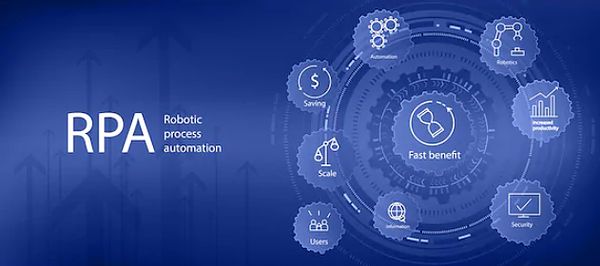
Robotic Process Automation, or RPA, is a newer type of automation. Instead of connecting directly to the systems underneath, RPA works at the surface level, the same level that a human user works at.

This may contain: a hand touching the button that says robotic process automation

An RPA bot sees the screen the same way a person does. It can click buttons, fill in forms, read data from the screen, copy it, and paste it somewhere else. It does not need access to the database or the internal code. It just needs to be able to see and interact with the user interface.

This is the key difference. Traditional automation connects to the system at a deep, technical level. RPA connects to the system at the surface level, through the screen, just like a person would.

A Simple RPA Example

A Lagos logistics firm receives supplier invoices by email every day. A staff member opens each email, downloads the PDF, reads the invoice details, logs into the company’s finance system, and types in the invoice data. This takes about ten minutes per invoice.

An RPA bot can be set up to do all of those steps automatically. It checks the email inbox, downloads the PDF, reads the data, opens the finance system, logs in, and fills in the invoice details. All of this happens through the user interface, exactly as a human would do it, but much faster and without errors.

No API. No database access. No custom code connecting the two systems. Just a bot that uses the software the same way a human does.


The Key Differences


Factor Traditional Automation RPA
How it connects Directly to databases and APIs Through the user interface (like a human)
Technical skill needed Software developers required Business users can learn it
Setup time Weeks to months Days to weeks
Cost to build Higher — custom code required Lower — visual tools available
What it needs API access or database access Just a working user interface
Best for High-volume, stable, well-built systems Legacy systems and manual workflows
Maintenance More stable if systems don’t change Needs updating when UIs change
Speed of execution Very fast — direct system access Fast — but slightly slower than direct access


When to Use Each One

Knowing the difference helps you choose the right tool for the right problem. Here is a simple guide.

Use Traditional Automation When:

  • The systems involved have well-documented APIs or database access points
  • You have a software development team that can build and maintain the integration
  • The process needs to run at very high speed, such as millions of transactions per day
  • The underlying systems are stable and unlikely to change often
  • You are building a long-term, deeply embedded technical solution

Use RPA When:

  • The systems involved do not have APIs or are too old to connect to directly
  • You need a solution fast, without waiting for a long development cycle
  • The task involves a person switching between multiple different screens or software tools
  • Non-technical staff will help build or maintain the automation
  • You want to automate a process without touching the underlying systems at all


Why This Matters for Nigeria

Many Nigerian businesses run on older, legacy systems. These systems were built long before modern APIs existed. They do not have easy ways to connect to other software. Traditional automation is very hard to apply to them because there is no clean technical entry point.

RPA was built precisely for this problem. It does not need an entry point into the system’s code. It just needs to be able to see the screen. This makes it extremely well suited to the kinds of mixed, legacy-heavy technology environments that many Nigerian banks, telecoms firms, government agencies, and manufacturing companies operate.

At the same time, many Nigerian fintechs and tech startups have built their systems from the ground up with modern APIs. For these firms, traditional automation or direct API integration is often the better, faster, and more reliable choice.

The right answer depends on the systems you have, the speed you need, the budget you can commit, and the technical resources available to you.


What Is Intelligent Automation?

A third term has become common in recent years: intelligent automation. This combines RPA with artificial intelligence to handle tasks that are more complex than simple rule-based automation can manage.

Standard RPA works well when the process follows clear, fixed rules. But many real-world business tasks involve some degree of judgment. Reading an invoice that is formatted differently from the standard template. Classifying a customer complaint into the right category. Deciding which of several actions to take based on the content of an email.

Intelligent automation layers AI on top of RPA to handle this judgment layer. The AI reads the unstructured content, such as the text of an email or the layout of a PDF, and makes a decision. The RPA bot then carries out the action based on that decision.

For Nigerian professionals building automation skills in 2026, understanding this full spectrum gives you a complete picture of the tools available.


Common Myths

RPA Will Replace Traditional Automation

This is not true. They serve different purposes. RPA is excellent for surface-level, interface-driven automation. Traditional automation is still the right choice for deep, high-speed, API-level integration. Many large firms use both, applying each one where it fits best.

Complex Always Means Better

More technical does not mean better. Better means solving the right problem in the right way. A business that spends six months building a custom API integration when RPA could have solved the same problem in two weeks has not made a better choice. It has made a slower, more expensive one.

RPA Only Works for Small Tasks

Large organisations run hundreds of RPA bots handling millions of transactions per day. Nigerian banks, global insurance companies, and major telecoms firms all run large-scale RPA programs. The scale of what RPA can handle is far larger than most beginners assume.


The Plain Version

Here is the whole comparison in the simplest possible terms.

Traditional automation goes in through the back door. It connects directly to the system’s code, database, or API. It is fast, powerful, and reliable. But it needs a developer to build it, and the system has to have a back door to go through.

RPA goes in through the front door. It uses the screen, just like a person. It clicks, types, reads, and copies. It does not need any special access to the system underneath. It just needs a working screen to look at.

Both get the job done. The question is which door is available, and which one costs less to use.

Lagos Data School trains Nigerian professionals to understand both approaches, to know which one fits which problem, and to build the skills to deliver either solution when the job calls for it.


Why This Matters for Your Career

If you are a Nigerian professional who wants to build automation skills, understanding this distinction gives you a real edge.

Many professionals who learn RPA do not understand where it fits in the wider automation landscape. They cannot explain to a business leader why RPA is the right choice for a specific problem versus a custom integration. That inability to explain the choice clearly limits how far they can progress.

Professionals who can assess a process, pick the right type of automation, explain the trade-offs, and then deliver the solution are far more valuable than those who know only one approach.

Lagos Data School builds this kind of thinking into every automation training program we run. We do not just teach you to build bots. We teach you to think about automation at the level of a business problem, not just a technical task.


The Right First Step

If you are new to automation and you want to start building practical skills in Nigeria right now, here is the most direct advice Lagos Data School can give.

Start with RPA. Specifically, start with UiPath. It has the most in-demand skills in the Nigerian job market. It has a free learning Academy. And the skills you build are directly applicable to real problems in Nigerian banking, telecoms, oil and gas, and logistics firms.

Once you understand RPA well, study traditional automation and API integration as your second skill set. The combination of both puts you in a very small group of Nigerian professionals who can tackle the full range of automation challenges that businesses face.

Lagos Data School runs structured training programs that take you through this path in a practical, hands-on way, with real Nigerian business problems at the centre of every module.


Say It Simply

Here is the whole guide in plain, short sentences.

Traditional automation goes deep into a system. It connects to the database or the API. It is fast and reliable. But it needs a developer and it needs the system to have an open connection.

RPA stays on the surface. It uses the screen. It clicks, types, reads, and copies. It needs no special access. It just needs a working screen.

Both work. Both save time. The difference is which door is available.

If the system has an API and you have a developer, use traditional automation.

If the system is old, or you need a fast solution, or the task is done through a screen, use RPA.

That is it. That is the whole guide.

Lagos Data School teaches Nigerian professionals to understand both and to choose the right one for each problem.


Why This Matters Now

Understanding this difference is not just academic. It helps you do your job better.

If you work in IT, it helps you give the right advice when a business team asks for automation help.

If you work in business operations, it helps you ask the right questions when your IT team proposes a solution.

If you are building an automation career, it helps you explain your choices to clients and managers clearly.

Knowledge of this distinction separates professionals who think about automation strategically from those who only know one approach.

Lagos Data School builds this kind of strategic thinking into every automation training program.


Three Things to Remember

First: RPA and traditional automation are not rivals. They solve different problems. The best Nigerian automation professionals understand both.

Second: The right tool depends on the system. Old system with no API? RPA. Modern system with an open API and a developer available? Traditional automation.

Third: the goal is always the same. Free up human time. Reduce errors. Serve customers faster. The tool is just how you get there.

Lagos Data School teaches Nigerian professionals to think this way. Not as bot builders. As problem solvers.

That is the mindset that builds long, valuable careers in automation.


The Bottom Line

Traditional automation is powerful. RPA is flexible. Both have a place in a modern Nigerian business.

The professionals who understand both will always be in demand. The ones who only know one will be limited.

Build the knowledge. Start with RPA. Then add traditional automation and API skills on top.

That combination is rare in Nigeria right now. It will not stay rare for long.

Get there first.

Lagos Data School can help you do that. Come find us.


Final Thought

The right tool matters. But the right thinking matters more.

Learn both types of automation. Understand both. Use both when needed.

Build that thinking and you build a career that lasts.

Lagos Data School teaches this thinking. Start with us.


Recommended External Resource

For a comprehensive technical comparison of automation approaches from a leading industry analyst, visit Gartner’s automation research hub: https://www.gartner.com/en/information-technology/insights/automation


As Simple as It Gets

Traditional automation: goes through the back door. Connects to the database or API. Fast. Needs a developer. Best for modern systems.

RPA: goes through the front door. Uses the screen. Clicks and types like a person. No developer needed. Best for old systems and quick wins.

Pick the right door for the right problem.

If you need help deciding, that is what Lagos Data School teaches.

Come learn. Build. Work.

Start today.

Go.


Quick Self-Assessment

Use these questions to think about which type of automation fits the problem you are trying to solve.

  • Do the systems involved have a modern API or database that developers can access directly?
  • Is the process currently done by a person switching between different screens or software?
  • Do you need a solution working within weeks rather than months?
  • Are the systems involved legacy platforms that were not built for modern integration?
  • Does the process require reading PDFs, emails, or other documents from a screen?

If your answers point mostly toward legacy systems, screen-based work, and speed of delivery, RPA is your starting point. If your systems are modern, API-ready, and you have developer resources available, traditional automation may serve you better. Lagos Data School can help you make this assessment for any specific process in your organisation.


About Lagos Data School

Lagos Data School is Nigeria’s top school for cyber security, data science, cloud, and analytics. Every idea in this guide is part of our hands-on course.

Our teachers are real security pros, not just classroom staff. So you learn from people who guard live networks every day.

We run classes on weekdays, weekends, and online. So no matter your time, we have a slot for you. Beyond skills, we also give you a real certificate and links to job partners.

Visit Lagos Data School today to view our courses and join the next class.

Choose the right tool. Build the right skills. Train with Lagos Data School.

10 Business Processes Nigerian Companies Can Automate Right Now with RPA

RPA is not a future technology for Nigeria. It is a present-day tool that Nigerian businesses are using right now to save time, cut costs, and reduce errors.

The most common question Lagos Data School hears from Nigerian business owners and managers is: where do I start? Which processes are ready for automation? Which ones will give me the fastest and most visible return?

This may contain: a hand touching the button that says robotic process automation

This guide answers those questions directly. It lists ten business processes that Nigerian companies can automate right now using RPA, with no lengthy IT projects required. Each one comes with a plain explanation of how the automation works, what it saves, and what type of Nigerian business it is most relevant to.

Lagos Data School made this guide as part of our practical automation training series. We train the Nigerian professionals who build these automations. The examples in this guide are drawn from real use cases in the Nigerian market.


Process 1: Invoice Processing

This is the single most common RPA use case in Nigerian businesses. Every company that buys goods or services receives invoices. Many of those invoices arrive by email as PDF attachments. A member of staff opens the email, downloads the PDF, reads the invoice details, logs into the accounting or ERP system, and types in the data. Then they check it against the purchase order. Then they route it for approval.

This process takes between ten and twenty minutes per invoice. A company that receives one hundred invoices per week is spending between sixteen and thirty-three hours of staff time per week on a purely mechanical task.

The Bot Fix

An RPA bot monitors the invoice inbox. When a new invoice email arrives, the bot downloads the attachment, reads the key fields using document understanding, logs into the finance system, enters the data, checks it against the matching purchase order, and routes it for approval. All without any human input.

Nigerian businesses that automated this process report cutting processing time from fifteen minutes to under two minutes, with far fewer data entry errors.

Best for

Nigerian companies of any size that receive more than twenty invoices per week. Relevant across all sectors.


Process 2: Staff Onboarding

When a new employee joins a Nigerian company, a large amount of admin work follows. HR needs to create accounts in multiple systems: email, payroll, HR management software, and access control. Documents need to be collected and filed. IT needs to be notified to set up the right equipment. The employee needs to be enrolled in training or induction programs.

In many Nigerian organisations, this process involves multiple people, a series of manual emails, and a lot of time before the new employee is fully set up.

How RPA Fixes It

An RPA bot can be triggered when a new employee record is created in the HR system. The bot then creates accounts in each connected system, sends the required notifications to IT and facilities, generates the standard welcome documents, and logs the completion of each step. What previously took two to three days of coordination can be done in minutes.

Best for

Nigerian companies with regular hiring, including banks, telecoms firms, oil and gas companies, retail chains, and any firm with a large or growing workforce.


Process 3: Payroll

Payroll is one of the most time-consuming tasks in any Nigerian company. It involves pulling attendance data, applying pay rates, calculating deductions, generating payslips, and updating the accounting system. Any error can affect staff morale and take significant time to correct.

How RPA Fixes It

An RPA bot can run through the full payroll calculation process automatically at the end of each pay period. It pulls attendance and leave data, applies the correct pay rates and deductions, generates payslips in the required format, and updates the accounting system. The finance or HR team reviews and approves the output rather than producing it. This turns a three-day task into a few hours of review.

Best for:

Any Nigerian company with more than thirty employees. The larger the workforce, the greater the saving. Most valuable in manufacturing, construction, oil and gas, and retail.


Process 4: Reconciliation

Nigerian businesses that process large volumes of payments need to reconcile their bank records with their internal accounts regularly. This means comparing bank statements against the accounting system and finding any gaps.

Done manually, bank reconciliation can take a finance team member one to three days per month, depending on the volume of transactions. Errors in this process can mask fraud, cause compliance issues, and lead to incorrect financial reporting.

How RPA Fixes It

An RPA bot downloads the bank statement, opens the accounting system, compares each transaction line by line, flags any that do not match, and generates a summary report of the reconciliation outcome. This process, which took days, can now run overnight and be ready for review the next morning.

Best for

Nigerian banks, fintechs, retail companies, and any business that processes large daily payments. Especially valuable for businesses that reconcile across multiple banks or payment channels.


Process 5: Account Opening

Opening a new customer account at a Nigerian bank or telecoms company still involves a lot of manual work. Customer documents are collected, checked, entered into systems, verified, and then approved.

This process is often slow and error-prone. A customer who applies for a bank account and waits several days for approval is a customer who may choose a faster competitor instead.

How RPA Fixes It

An RPA bot can handle the document collection and data entry steps, check identity details, update the CRM with the application status, and route the case to the right approver. Straight-through processing for low-risk applications can be completed without any human involvement.

Best for

Nigerian banks, fintechs, insurance companies, and telecoms providers with high volumes of new account applications.


Process 6: Regulatory Reporting

Nigerian companies in regulated industries submit regular reports to government and regulatory bodies. These include reports to the Central Bank of Nigeria and other agencies.

These reports require pulling data from multiple systems, formatting it correctly, and submitting it on time. Delays or errors can result in significant fines and reputational damage.

How RPA Fixes It

An RPA bot can be scheduled to pull the required data before each reporting deadline, compile it into the required format, and submit it automatically. This removes human error and last-minute rushes.

Best for

Nigerian banks, fintechs, insurance companies, oil and gas operators, and any business with mandatory reporting obligations to government.


Process 7: Purchase Orders

When a Nigerian company needs to buy goods or services, the procurement team raises a purchase order. This involves filling in a form with the supplier details, item descriptions, quantities, and prices, getting it approved by the right manager, and sending it to the supplier. The same information then needs to be entered into the accounting system so it can be matched against the invoice when it arrives.

In many Nigerian firms, this process involves multiple people, multiple systems, and a lot of re-entry of the same data.

How RPA Fixes It

An RPA bot can take the data from the purchase request form, generate the formal purchase order document, route it to the correct approver based on the value and category, send it to the supplier upon approval, and enter the order details into the accounting system. One input triggers the whole chain automatically.

Best for

Nigerian companies with active procurement functions: manufacturing firms, construction companies, oil and gas service providers, and large retail businesses.


Process 8: Complaint Logging

Nigerian businesses receive customer complaints through multiple channels: email, phone, social media, web forms, and in-person visits. In many organisations, a staff member reads each complaint, decides which team should handle it, logs it in the CRM system, and sends an acknowledgement to the customer. This is time-consuming and inconsistent. The same complaint may be routed differently depending on who is doing the routing on any given day.

How RPA Fixes It

An RPA bot can monitor incoming complaint channels. When a new complaint arrives, the bot reads the content, classifies it by type and priority using a set of predefined rules, logs it in the CRM with the correct category, routes it to the right team, and sends the customer a personalised acknowledgement email. This ensures every complaint is handled consistently and none fall through the cracks.

Best for

Nigerian telecoms companies, banks, insurance firms, and retail businesses that handle large numbers of customer contacts daily.


Process 9: Report Generation

In most Nigerian organisations, a lot of time is spent building reports. Sales reports. Finance reports. HR reports. Each one requires pulling data from one or more systems, formatting it, checking it, and distributing it to the right people by a set deadline.

This work is almost entirely mechanical. The same report is built the same way, every day or every week, using the same data sources and the same format.

How RPA Fixes It

An RPA bot can be scheduled to run at a set time. It logs into each data source, pulls the required figures, populates the report template, runs any required checks, and emails the finished report to the distribution list. The report is ready before the recipients arrive at their desks. The staff member who used to build it is now free to do the analysis and decision-making that the report is supposed to enable.

Best for

Every Nigerian business that generates regular reports. This is one of the most widely applicable RPA use cases across all sectors and sizes.


Process 10: IT Access Management

When staff join, move roles, or leave a Nigerian company, their system access needs to be updated. New joiners need accounts created. Staff moving to new roles need old access removed and new access added. Leavers need all access revoked immediately.

In practice, many Nigerian organisations are slow at this process. Leavers sometimes retain access to systems for days or weeks after their departure. New joiners wait days for the access they need to do their jobs. Both of these situations create real operational and security risks.

How RPA Fixes It

An RPA bot connected to the HR system can monitor for status changes. When a new joiner is confirmed, the bot creates the required accounts. When a role change is approved, the bot updates the access permissions. When a leaver is recorded, the bot revokes all access immediately. No human delay. No access sitting open after departure.

Best for

Nigerian banks, fintechs, telecoms companies, and any organisation with strict compliance rules around system access.


All Ten Processes


# Process Best Sectors
1 Vendor invoice processing All sectors
2 Employee onboarding Banks, telecoms, oil and gas, retail
3 Payroll processing Manufacturing, construction, oil and gas
4 Bank reconciliation Banks, fintechs, retail
5 Customer account opening Banks, fintechs, insurance, telecoms
6 Regulatory reporting Banks, oil and gas, insurance
7 Purchase order processing Manufacturing, construction, oil and gas
8 Complaint logging and routing Telecoms, banks, insurance, retail
9 Report generation All sectors
10 IT access management Banks, fintechs, telecoms


How to Pick First

If you are a Nigerian business owner or manager reading this guide, here is how to choose where to start.

Pick the process that meets the most of these criteria: it is done frequently, it takes significant staff time, it follows the same steps every time, errors in it cause real problems, and the people doing it find it the most tedious part of their day.

That process is your pilot automation. Start there. Build the bot. Measure the time saved. Then use those results to make the case for the next one.

Lagos Data School trains the Nigerian professionals who build these automations. If you want to bring this capability into your organisation, whether by training existing staff or hiring a graduate of our programs, we can help you get there.


The Plain Version

Here is the short version of this whole guide.

Every Nigerian company has processes done by hand, done the same way every time, that take up real staff time. These are the processes that RPA can take over. Invoices. Payroll. Reports. Account opening. Regulatory filings. Procurement. Onboarding. Complaints. Reconciliation. Access control.

You do not need a massive IT project to get started. You need to pick one process, find a trained RPA professional, and build a pilot bot. One process. One bot. One result you can measure.

From there, you build. One process at a time. One bot at a time. Until the automation is running across your whole organisation and your staff are doing the work that actually needs a human.

Lagos Data School trains the people who build these bots and manage these programs. We are here to help Nigerian businesses get this done.

Start today. Not next quarter. Today.


For Business Owners

If you own or manage a Nigerian business and you are reading this guide, here is the most direct advice Lagos Data School can give you.

Do not try to automate everything at once. That approach fails almost every time.

Pick one process. The most painful one. The one your team hates doing. The one where errors happen most often. The one that takes the most time for the least value.

Map it out. Write down every step. Draw it on a piece of paper if that helps. Show it to a trained RPA professional. Ask them: can we automate this?

The answer is almost always yes. Then ask: how long will it take and what will it cost?

If the answer is reasonable, build the pilot. Run it for thirty days. Measure the time saved and the errors reduced. Then use those numbers to justify the next automation.

This is how sustainable automation programs are built. One process at a time. With real evidence at each step.

Lagos Data School trains the professionals who do this work. We can help you find the right person to build your first bot. Talk to us.


For Data Professionals

If you are a data analyst or business analyst in a Nigerian company, this list is a starting point for your automation pitch.

Take any process from this list that applies to your organisation. Write down how it is currently done step by step. Calculate how many hours per week it takes. Multiply by the hourly cost of the person doing it. That is your baseline cost.

Then estimate how long the automated version would take to build, and what it would cost. Compare the two numbers.

In most cases, the payback period is under six months. In many cases, it is under three months.

That comparison is a very compelling business case. Take it to your manager. Show the numbers. Propose the pilot.

Lagos Data School teaches Nigerian professionals how to make this kind of business case as part of our automation training. We know that the ability to sell the idea is just as important as the ability to build the bot.


In the Simplest Terms

Here is the whole guide in the fewest possible words.

Nigerian companies have a lot of repetitive admin work. This work costs time and money. Errors in this work cost even more.

RPA can do this work faster, cheaper, and with fewer errors. It can do it any time of day or night. It never gets tired. It never gets bored.

The ten processes in this guide are all strong starting points. Pick one. Build the pilot. Measure the result. Then do the next one.

This is how the best-run Nigerian companies will work in five years. The ones that start now will be ahead. The ones that wait will be catching up.

Start now.

Lagos Data School trains the professionals who build these systems. We are ready to help.


One More Push

  1. Pick one of the ten processes from this guide.
  2. Map it out. Write every step down.
  3. Call Lagos Data School. Show us the map. We will help you build the bot.
  4. Then you will have one less painful process in your business. One more reason to automate the next one.

It starts with one.

Start now.


Quick Summary

Ten processes. All automatable. All saving real time. All relevant to Nigerian businesses right now.

Invoices. Payroll. Onboarding. Reconciliation. Account opening. Regulatory filing. Purchase orders. Complaints. Reports. IT access.

Pick one. Build it. Measure it. Do the next one.

That is how automation programs are built in the best-run Nigerian companies.

Lagos Data School is here to help you build yours.

Start. Now. Today.


Keep It Simple

Ten processes. One bot at a time.

That is the plan.

You do not need a big budget. You do not need a large IT team. You need one process, one bot, and one trained professional to build it.

From there, you scale. One process at a time.

The Nigerian companies that are doing this now will be ahead of those that start later. That is not a prediction. It is already happening.

Lagos Data School trains the professionals who build these bots. Our graduates are already doing this work at Nigerian firms.

Join them. Start now.


One Step at a Time

Every big automation program starts small. One bot. One process. One result.

You do not need to automate your whole company this week. You need to automate one thing this month.

Pick the thing. Map it. Build the bot. Measure the result.

Then pick the next thing.

Step by step. Bot by bot. Process by process.

That is how it is done. That is how the best-run Nigerian businesses are doing it right now.

Lagos Data School is here. We train the people who build the bots. We help the businesses that want to use them.

Come find us.


In Three Words

Start. Build. Grow.

That is it. That is the whole guide. Pick a process. Build the bot. Watch it work. Then do the next one.


Recommended External Resource

For a practical guide to RPA implementation and return-on-investment calculation, visit the UiPath resource library: https://www.uipath.com/resources


The Action Plan

Here is the simplest action plan for any Nigerian company that wants to start with RPA.

  1. Week one: pick the most painful process. Map every step.
  2. Week two: talk to a trained RPA professional. Show them the map. Get a quote.
  3. Week three: start the pilot build.
  4. Week six: pilot goes live. Measure the results.
  5. Month three: use the results to plan the next process.

That is it. That is the whole plan.

Lagos Data School provides the trained professionals. You provide the process. Together, we build the automation. Start now.

One process. One bot. One result.

Go!!!.


Is Your Process Ready?

Run your target process through these five questions before you start.

  • Does this process happen more than ten times per week?
  • Does it follow the same steps every time it is done?
  • Does it involve entering or moving data between systems or documents?
  • Are errors in this process costly, embarrassing, or both?
  • Is the person doing this task currently underutilised because so much of their time goes to this process?

If you answered yes to three or more of these, your process is a strong automation candidate. The next step is to map out each step in detail, then bring in a trained RPA professional, or a Lagos Data School graduate, to build the bot. Lagos Data School can help you identify the right starting point and the right person to build it.


About Lagos Data School

Lagos Data School is Nigeria’s top school for cyber security, data science, cloud, and analytics. Every idea in this guide is part of our hands-on course.

Our teachers are real security pros, not just classroom staff. So you learn from people who guard live networks every day.

We run classes on weekdays, weekends, and online. So no matter your time, we have a slot for you. Beyond skills, we also give you a real certificate and links to job partners.

Visit Lagos Data School today to view our courses and join the next class.

Automate smarter. Operate better. Train with Lagos Data School.

Hi, How Can We Help You?
Welcome To
Lagos Data School

Artificial Intelligence (AI), Machine Learning and Robotics Programmes Are Now Available!!!

Enroll Now!

Thank You
100% secure website.