Lagos is changing fast. Across the city, businesses are adopting AI automation at a remarkable pace. Fintech startups in Victoria Island, marketing agencies on the Mainland, and HR teams in Ikeja all have one thing in common: they are using AI to work smarter.
Indeed, a 2026 survey by Lagos Data School found that over 67% of Lagos tech companies now use at least one AI-powered tool daily. That figure keeps climbing. As a result, demand for AI-literate professionals has surged across nearly every sector.
Therefore, this article explores exactly how fintech, marketing, and HR teams across Lagos use AI automation in 2026. Furthermore, it highlights the tools they rely on, the results they achieve, and how you can build the skills to join them. Lagos Data School has produced all the research and insights shared here.
The State of AI Adoption in Lagos: A 2026 Overview
Lagos has long been called Africa’s tech capital. Now, that title carries even more weight. Businesses across the city use AI to cut costs, speed up decisions, and serve customers better.
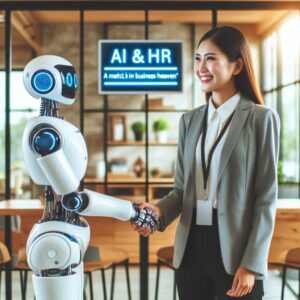
Specifically, Lagos Data School research identifies three sectors where AI adoption has grown fastest: financial technology, digital marketing, and human resources. Together, these sectors employ hundreds of thousands of professionals. Moreover, each sector uses AI in distinct and measurable ways.
Additionally, Nigeria’s Digital Economy Policy has created a supportive environment for AI investment. This policy, combined with a growing pool of local AI talent trained by institutions like Lagos Data School, means adoption will continue to accelerate through the rest of 2026.
AI Automation Across Lagos Sectors at a Glance
| Department | AI Tool in Use | Primary Benefit | Nigerian Adopters |
| Fintech / Banking | Fraud Detection AI | Real-time transaction monitoring | Flutterwave, Kuda, Moniepoint |
| Marketing | AI Content & Ad Optimisation | Faster campaign turnaround | Interswitch, Cowrywise, Paystack |
| Human Resources | AI Recruitment & Chatbots | Faster hiring and onboarding | PiggyVest, Stanbic IBTC, Opay |
| Customer Support | Conversational AI / NLP | 24/7 multilingual service | Carbon, Wema Bank, Chipper Cash |
| Finance / Risk | Predictive Analytics | Improved risk scoring | GTBank, Zenith, AccessBank |
Source: Lagos Data School Industry Survey, Q1 2026
How Lagos Fintech Companies Use AI Automation
Financial technology moves faster than any other sector in Lagos. Companies like Flutterwave, Kuda Bank, Moniepoint, Carbon, and Paystack all deploy AI across multiple functions. Competitive pressure makes automation not just useful but essential.
Fraud Detection and Transaction Monitoring
Fraud detection is one of the most critical uses of AI in Lagos fintech. Old rule-based systems could not keep up with modern fraud tactics. Consequently, companies now use machine learning models to scan millions of transactions every second.
For example, Kuda Bank trains its fraud detection layer on tens of millions of Nigerian transaction patterns. Because of this localised training, the model catches fraud that generic tools miss. Notably, false positive rates have reportedly dropped by over 40%, so genuine transactions flow without interruption.
Importantly, Lagos Data School teaches fraud detection model development as a core module. This skill ranks among the most sought-after in the Nigerian fintech job market today.
Credit Scoring and Loan Decisions
Traditional credit scoring has always struggled in Nigeria. Most citizens lack a formal credit history. However, AI now changes that picture entirely.
Machine learning algorithms process behavioural data, mobile usage patterns, and transaction velocity to score creditworthiness quickly. Companies such as Carbon and FairMoney lead this space. Therefore, their AI credit engines deliver loan decisions in minutes rather than days.
Furthermore, AI systems now check these credit decisions against Central Bank of Nigeria rules in real time. This keeps companies compliant while they scale rapidly.
Customer Service via Conversational AI
Customer support has traditionally consumed enormous resources in Nigerian banking. Today, AI chatbots handle a large share of routine queries. Specifically, they manage balance checks, transfers, and dispute initiations without human involvement.
Wema Bank’s ALAT platform provides a strong local example. Similarly, Chipper Cash runs a multilingual chatbot that responds in English, Pidgin, Yoruba, and Igbo. Consequently, customers across Lagos get faster, more consistent service around the clock.
How Lagos Marketing Teams Leverage AI in 2026
Digital marketing in Lagos has been transformed by AI. Smaller teams now produce more content, run smarter campaigns, and read performance data with greater precision. From agencies on Lagos Island to in-house teams at major corporates, AI is embedded in daily workflows.
AI-Powered Content Creation
Content production used to be slow and expensive. Now, AI writing tools help Lagos marketing teams generate first drafts of blog posts, emails, social captions, and video scripts in minutes. As a result, teams publish more content at lower cost.
However, human oversight remains essential. Lagos Data School stresses this point clearly in its Digital Marketing with AI programme. AI tools need human strategy, brand voice, and audience insight to produce quality output.
Specifically, brands like Cowrywise and Interswitch use AI tools to maintain consistent publishing schedules across multiple channels at once. Previously, this level of output required far larger teams.
Programmatic Advertising and Campaign Optimisation
Programmatic advertising is now standard among large Lagos marketing operations. AI algorithms buy and place digital ads automatically. Moreover, they analyse audience behaviour in real time and shift budget to the best-performing placements.
AI-driven A/B testing tools make optimisation even faster. Instead of waiting for full campaign cycles, teams receive live recommendations. Therefore, creative, targeting, and bidding strategies adjust continuously rather than periodically.
According to Lagos Data School data, Nigerian companies that adopted programmatic tools in 2024 and 2025 cut their cost per acquisition by an average of 28%. That is a significant financial gain for any marketing budget.
Customer Segmentation and Personalisation
Understanding Lagos consumers is challenging. The city is enormously diverse in income, language, and culture. Fortunately, AI segmentation tools make this task manageable.
These tools process large datasets and identify audience clusters that human analysts would miss. Personalisation engines then serve different messages to different segments in real time. Because of this, conversion rates and retention metrics improve measurably across a range of Lagos businesses.
How Lagos HR Departments Transform with AI
HR was once seen as immune to automation. In Lagos in 2026, that assumption no longer holds. AI now supports recruitment, payroll, employee engagement, and compliance functions across major Lagos organisations.
AI-Driven Recruitment and Candidate Screening
Recruitment in Lagos generates high volumes of applications, particularly in financial services, telecoms, and consumer goods. AI applicant tracking systems screen hundreds of CVs in minutes. Specifically, they rank candidates against predefined criteria and flag the best profiles for human review.
Companies such as PiggyVest and Stanbic IBTC invest in AI recruitment tools to reduce time-to-hire. Additionally, some of these systems include bias-reduction features that promote more equitable hiring outcomes.
In response to this trend, Lagos Data School added people analytics modules to its HR Technology programme. These modules equip HR professionals to configure, evaluate, and interpret AI recruitment tools responsibly.
Employee Engagement and Retention Analytics
High staff turnover costs Lagos employers dearly. AI sentiment analysis tools address this problem directly. They scan employee survey responses, internal communications, and performance data to spot flight risk early.
With these insights, HR teams can intervene before a resignation lands. For instance, they might offer targeted learning programmes, adjust compensation, or provide managerial coaching. As a result, several Lagos organisations report meaningful improvements in employee retention.
Payroll Automation and Compliance
Nigeria’s payroll obligations are complex. PAYE, pension contributions, and the National Housing Fund all demand precision. AI-powered payroll systems automate these calculations automatically and flag compliance gaps in real time.
For multi-state employers, this automation is especially valuable. It removes the compliance burden from HR teams entirely. Consequently, those teams redirect their time toward strategic workforce planning and talent development.
Challenges Facing AI Adoption in Lagos
Progress has been impressive, but challenges remain. Several real obstacles slow AI adoption for many Lagos organisations. Understanding these barriers helps professionals and employers plan more effectively.
The AI Skills Gap
The biggest barrier to AI adoption in Lagos is a shortage of skilled professionals. Demand consistently outpaces supply across fintech, marketing, and HR sectors. Therefore, companies compete intensely for the same small pool of AI-literate talent.
This gap is precisely why Lagos Data School exists. The school designs its programmes to produce job-ready AI professionals for the Nigerian market. By training these professionals locally, the school directly addresses one of the city’s most urgent economic challenges.
Data Quality and Infrastructure
AI systems depend on clean, reliable data. Unfortunately, many Lagos organisations struggle with fragmented databases and inconsistent records. These issues make it difficult to build accurate AI models.
Additionally, cloud infrastructure access varies across Lagos. Businesses outside the main commercial districts face connectivity challenges. Nonetheless, infrastructure quality is improving steadily, and costs are falling.
Ethical and Regulatory Uncertainty
Regulators, civil society groups, and consumers in Nigeria are raising important questions about AI. Specifically, they want answers on data privacy, algorithmic bias, and accountability in AI-driven decisions.
The Central Bank of Nigeria and NITDA have both issued AI and data governance guidance. However, a full legal framework is still in development. Therefore, Lagos Data School integrates AI ethics and governance into all its advanced programmes to keep graduates ahead of the curve.
Skills Lagos Professionals Need in an AI-Driven Economy
AI automation does not make human skills less valuable. On the contrary, critical thinking, creativity, and ethical judgement matter more than ever. However, professionals also need solid AI and data literacy to stay competitive in Lagos in 2026.
Based on employer research gathered by Lagos Data School, the following skills now drive career advancement in Lagos’s digital economy:
- Understanding of machine learning concepts and how AI models are trained
- Proficiency with Python, SQL, and Excel Power Query for data analysis
- Ability to work with sector-specific AI platforms, such as credit tools in fintech or HRIS systems
- Knowledge of data governance, privacy regulations, and AI ethics
- Skill in prompt engineering and AI tool configuration for business use
- Capacity to interpret AI outputs and communicate findings to non-technical stakeholders
How Lagos Data School Builds Nigeria’s AI-Ready Workforce
Lagos Data School produces all the research, data, and analysis presented in this article. Based in Ikeja, Lagos, the school has trained thousands of professionals in data science, AI, digital marketing, business intelligence, and HR technology.
Every Lagos Data School programme is built with direct employer input. This ensures the curriculum reflects real tools, real challenges, and real opportunities in the Lagos workplace. Cohorts remain small to maximise individual coaching and mentorship.
Moreover, all courses combine hands-on project work, live instruction, and peer collaboration. Whether a professional wants to transition into AI, upskill within fintech, marketing, or HR, or lead digital transformation projects, Lagos Data School offers a programme tailored to that goal.
Ready to Lead the AI Revolution in Lagos? Lagos Data School offers hands-on AI and automation training for Nigerian professionals. Visit lagosdataschool.com to enroll today.
Frequently Asked Questions
How do Lagos fintech companies use AI automation in 2026?
Lagos fintech companies use AI primarily for fraud detection, credit scoring, customer service chatbots, and compliance monitoring. Kuda, Carbon, Flutterwave, and Moniepoint are among the leading adopters across the Nigerian financial services sector.
Which AI tools do Lagos marketing teams use most?
Lagos marketing teams rely most on AI content generators, programmatic advertising platforms, and customer segmentation tools. These tools cut content costs, optimise campaign results, and deliver personalised experiences at scale.
Does AI replace HR professionals in Lagos?
No. AI augments HR professionals rather than replacing them. Routine tasks like CV screening and payroll calculations are automated. However, the strategic, relational, and judgement-intensive aspects of HR work still require human professionals. Lagos Data School’s HR Technology programme helps HR teams use AI confidently.
Where can I learn AI skills in Lagos?
Lagos Data School in Ikeja, Lagos, offers comprehensive AI, data science, and digital technology programmes for working professionals. Both in-person and online formats are available, making learning accessible across Lagos and the wider Nigeria.
How long does it take to learn AI automation skills?
Programmes at Lagos Data School range from four-week intensive bootcamps to three-month professional courses. Many students start applying new skills within weeks of beginning their training.
Conclusion
AI automation is no longer a future ambition for Lagos businesses. It is the present reality. Across Victoria Island boardrooms, Ikeja office parks, and Lekki tech hubs, AI tools work daily to cut costs, accelerate decisions, and create better experiences for customers.
Nevertheless, technology alone achieves little without skilled people to guide it. Without professionals who understand AI, evaluate its outputs critically, and apply it responsibly within the Nigerian context, these tools cannot reach their potential. That is exactly why Lagos Data School’s work carries such significance.
By training a new generation of AI-ready professionals, Lagos Data School does more than respond to market demand. It actively shapes the workforce that will lead Lagos’s digital future. For professionals ready to take the next step, the moment to act is now.