
How Nigerian SMEs Can Use Project Management to Scale Faster: Complete 2026 Guide

Why Nigerian SMEs Struggle to Scale

Most Nigerian SMEs start strong. The founder has a great idea, a hungry market, and enough energy to run three businesses at once.

Then growth stalls. Orders increase, but deliveries become unreliable. Staff grows in number but accountability shrinks. Revenue rises, but profit falls.

The root cause is almost always the same: no project management structure. Lagos Data School helps Nigerian SMEs fix this problem through practical, live project management training.


What Project Management Means for a Nigerian SME

Project management is not just for big corporates. Every Nigerian SME runs projects daily, whether they recognise them or not.

Launching a new product is a project. Opening a new branch in Abuja is a project. Running a product promotional campaign is a project. Hiring and onboarding five new staff is a project.

The difference between SMEs that scale and those that plateau is whether those projects are managed with structure or with hope.


Benefit 1: Project Management Creates Accountability

Accountability is the biggest challenge in most Nigerian SMEs. Everyone is busy, but nobody owns the outcome. Deadlines are set, but nobody tracks them.

Project management assigns a task to a named person with a named deadline. Every team member knows what they own and when it is due.

This simple change transforms team culture. People stop waiting for the founder to chase them. They start managing their own deliverables proactively.


Use a Task Tracker, Not a WhatsApp Group

WhatsApp groups bury decisions in chat history. Tasks get forgotten within hours. Use a proper task tracker instead.

Free tools like Trello or Asana give every SME team member a clear board of tasks, deadlines, and owners. Setup takes 30 minutes. The clarity it creates lasts for years.


Benefit 2: Project Management Reduces Wasted Money

Nigerian SMEs lose money on rework, duplicate effort, and rushed purchases. These problems trace back to poor planning.

Project management builds a budget plan before money is spent. It identifies what is needed, when it is needed, and how much it costs. As a result, spending becomes predictable.

The table below shows how project management reduces SME cost waste:


SME Problem Without Project Management With Project Management
Budget overruns Costs discovered after money is spent Budget planned and approved upfront
Rework Tasks redone because requirements were unclear Scope defined before work starts
Late delivery No timeline set, so no deadline respected Milestones tracked weekly
Staff confusion Everyone working on different priorities RACI matrix assigns clear ownership
Supplier delays No lead time planned for procurement Procurement scheduled in advance


Benefit 3: Project Management Helps SMEs Win Bigger Clients

Large Nigerian corporates and international partners hesitate to work with unstructured SMEs. They want to see project plans, timelines, and status reports.

An SME that presents a professional project charter and a Gantt chart wins contracts over competitors who pitch verbally. Structure signals competence.

The Project Management Institute reports that organisations with structured project management waste 28 times less money than those without it. This applies directly to Nigerian SMEs competing for corporate contracts.


Create a Simple Project Template for Repeat Work

Most Nigerian SMEs repeat the same types of projects. A catering business runs events. A logistics firm manages delivery routes. A construction SME builds residential units.

Create a project template for your most common project type. Include the standard tasks, durations, and roles. Reuse the template every time. This reduces planning time by up to 70%.


Benefit 4: Project Management Frees the Founder

Most Nigerian SME founders are the project manager, the accountant, the HR manager, and the salesperson all at once. This is not sustainable.

Project management creates documented processes that other team members can follow. Tasks are assigned, tracked, and escalated through a system, not through the founder’s phone.

When the system works, the founder focuses on strategy instead of daily firefighting. This is how Nigerian SMEs move from survival mode to growth mode.


Benefit 5: Project Management Supports Investor Readiness

Nigerian investors and development finance institutions want to see that a business can execute. A pitch deck is not enough.

An SME that presents a structured implementation plan, a risk register, and a milestone tracker signals that the team can deliver. This builds investor confidence faster than a polished presentation alone.


A Nigerian Analogy: The Buka That Became a Restaurant Chain

Think of a popular Lagos buka that grows into a chain. The owner cooks brilliantly. But as branches multiply, the food quality drops and orders get mixed up.

The solution is not more cooks. It is a structured operations system: standardised recipes, assigned roles, and a daily checklist for each branch. This is project management applied to food service.

Therefore, Nigerian SMEs that build project management into their operations scale faster and with fewer growing pains.


How Lagos Data School Trains SME Leaders

Lagos Data School offers practical project management training built for Nigerian SME owners, team leads, and operations managers. The curriculum covers project charters, task tracking, budgeting, risk management, and team accountability. All sessions use Nigerian SME case studies.

Participants leave with ready-to-use templates, tools, and the confidence to manage growth projects independently.

Enrol today at Lagos Data School. See what our graduates achieve at the Lagos Data School student portfolio.


Frequently Asked Questions

Q1: Does a Small Nigerian Business Need a Dedicated Project Manager?

Not necessarily. Many Nigerian SMEs assign project management responsibilities to an existing operations lead or team lead. The important thing is that someone owns the planning and tracking function. Leaving it to chance means no one does it.

Q2: What Is the Easiest Project Management Tool for a Nigerian SME?

Trello is the easiest starting point. It uses a simple card-and-board system that any team can learn in one hour. It is free for small teams and works on mobile, which matters in a Nigerian business environment.

Q3: How Long Does It Take to See Results from Project Management?

Most Nigerian SMEs see measurable improvements within 30 days of applying basic project management. Task completion rates go up, meeting time goes down, and founder stress decreases significantly.


Scale Your Nigerian SME Faster Starting Today

Project management is the missing system in most Nigerian SMEs. It creates accountability, reduces waste, attracts bigger clients, frees the founder, and builds investor confidence.

Start today. Visit Lagos Data School and enrol in the project management course built for Nigerian entrepreneurs and SME teams.


© 2025 Lagos Data School | www.lagosdataschool.com
Work Breakdown Structure (WBS): What It Is and How to Create One

Are you confused about what a Work Breakdown Structure is and how it is created? If so, your search ends here. Lagos Data School is Nigeria’s leading live technology and data training centre. Indeed, the Work Breakdown Structure, commonly referred to as the WBS, is one of the most fundamental tools in project management. Every Nigerian project manager who wants to plan a project systematically, control its scope, and communicate its structure to stakeholders must understand how a WBS is built and used.

Therefore, this guide explains what a WBS is, why it is needed, how it is structured, and how each level is created using Nigerian project examples. In addition, the relationship between the WBS and the project schedule is explained. As a result, by the end of this guide, a complete WBS will be understood and ready to be created for any Nigerian project.


What Is a Work Breakdown Structure (WBS)?

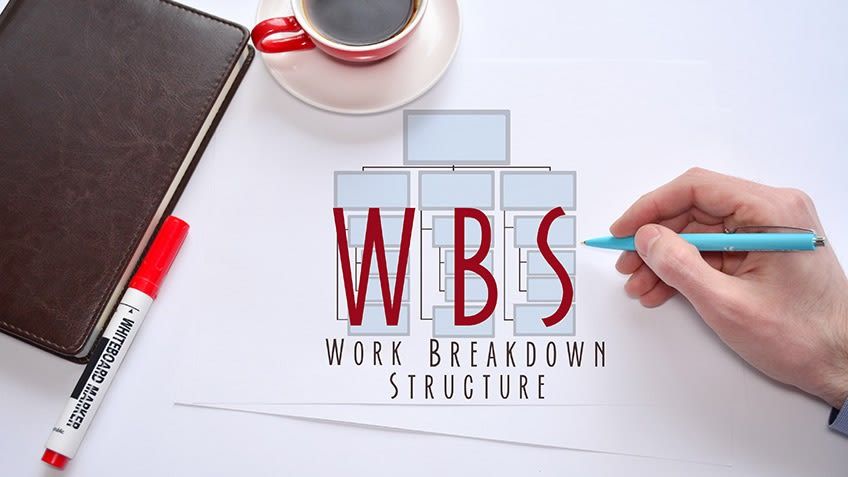
A Work Breakdown Structure is a hierarchical decomposition of the total scope of work that must be performed to deliver a project’s objectives and produce its required deliverables. In plain terms, the WBS breaks the project down into smaller, manageable components until each piece of work is small enough to be planned, estimated, assigned, and monitored.

According to the Project Management Institute’s PMBOK® Guide, the WBS is a deliverable-oriented decomposition. This means it is structured around what must be produced, not around who will do the work or when it will be done. Furthermore, every component at the lowest level of the WBS is called a work package. A work package is the smallest unit of work that can be independently planned, costed, and assigned to a responsible party.


Why the WBS Is Essential for Nigerian Project Managers

Many Nigerian projects suffer from scope creep, the gradual, uncontrolled expansion of project work beyond what was originally agreed. Consequently, the WBS is the primary tool used to prevent scope creep by defining the total project scope explicitly at the start. Below are the core benefits of using a WBS on Nigerian projects:

  • Scope clarity: Every deliverable and sub-deliverable is listed, so there is no ambiguity about what is included in the project.
  • Basis for scheduling: Work packages at the lowest WBS level are used as the tasks in the Gantt chart and project schedule.
  • Basis for budgeting: Cost estimates are attached to each work package. Therefore, the total project budget is built from the bottom up.
  • Responsibility assignment: Each work package is assigned to a specific team or individual using a Responsibility Assignment Matrix.
  • Progress measurement: Completion of work packages is tracked to measure overall project progress objectively.


In short, the WBS is the backbone of every well-planned Nigerian project. Everything else- the schedule, the budget, the team assignments is derived from it.


The Three Levels of a WBS

A WBS is structured in levels, with the top level representing the project itself and each lower level representing progressively smaller components. Below are the three standard levels used in most Nigerian projects:

WBS Level What It Represents Nigerian Example
Level 1 The entire project Lagos Affordable Housing Estate — Phase 2
Level 2 Major deliverables or project phases Site Works, Foundation, Superstructure, Finishing
Level 3 (Work Packages) Specific work outputs that can be planned and costed Excavation, Blinding Concrete, Column Reinforcement, Blockwork


In short, the WBS is decomposed until every element at the lowest level can be independently planned, estimated, and assigned. Therefore, work packages are the units from which the schedule and budget are built.


How to Create a WBS: Step by Step

Step 1: Identify the Project’s Major Deliverables

The project charter and scope statement are reviewed to identify the major deliverables. Each major deliverable becomes a Level 2 element of the WBS. For a Nigerian IT project, the major deliverables might be: Requirements Documentation, System Architecture, Software Development, Testing, and Deployment.

Step 2: Decompose Each Deliverable into Sub-Deliverables

Each Level 2 deliverable is broken down into its parts. Decomposition continues until each element is a work package that can be independently planned and costed. Furthermore, the 100 Percent Rule must be applied: the WBS must include 100% of the project scope. Consequently, work that is not in the WBS is not in the project.

Step 3: Assign WBS Codes

Each WBS element is assigned a unique numeric code that reflects its position in the hierarchy. For example, 1.0 is the project summary, 1.1 is the first major deliverable, 1.1.1 is the first work package under that deliverable, and so on. As a result, every work package can be referenced unambiguously in the schedule, budget, and team assignments.

Step 4: Create the WBS Dictionary

A WBS dictionary is created to define each work package in detail. It includes the work package description, deliverable, responsible party, estimated duration, and estimated cost. Additionally, acceptance criteria are noted so that the project manager knows when the work package is considered complete. In short, the WBS dictionary turns the WBS diagram into a fully documented scope baseline.

Step 5: Validate the WBS with Stakeholders

The completed WBS is reviewed with the project sponsor and key stakeholders. Any missing deliverables are added, and any misunderstood elements are clarified. Furthermore, stakeholder sign-off on the WBS is obtained before the project schedule is built. Consequently, the WBS becomes the agreed scope baseline from which all change requests are evaluated.


A Nigerian Analogy: The Suya Seller’s Preparation List

Think of the WBS as the preparation list a professional suya seller uses before a Lagos owambe. Every item that must be produced — skewered beef, spiced offal, fried plantain, pepper sauce, and packaged portions — is listed before the event. Each item is then broken into its ingredients and preparation steps. Nothing is left to memory because the list is the plan.

On the other hand, a caterer who starts cooking without a preparation list will forget items, run out of ingredients, and deliver an incomplete menu. Consequently, Nigerian project managers who build WBS documents before starting work deliver complete projects. Those who do not build WBS documents deliver projects with missing scope.


Free Resource: PMI Practice Standard for Work Breakdown Structures

In addition to Lagos Data School’s live training, Lagos Data School recommends the PMI Practice Standard for Work Breakdown Structures as the definitive free reference for any Nigerian project manager who wants to master WBS creation. This PMI standard defines the WBS in depth, provides industry-specific WBS templates, and explains the 100 Percent Rule in detail. Furthermore, WBS concepts are tested in both the PMP and CAPM exams. As a result, any Nigerian who studies this standard alongside Lagos Data School’s live course will build WBS skills at a professional, certifiable level.


How Lagos Data School Teaches WBS Creation

Lagos Data School’s project management course covers the WBS in a dedicated scope management module with live instruction, Nigerian project case studies, and hands-on WBS building exercises. Students create complete WBS documents for simulated Lagos construction, technology, and events management projects. Additionally, WBS dictionary creation and scope baseline validation are practised in every session. In short, Lagos Data School builds the scope management skills that pass the PMP exam and work in real Nigerian organisations.

To enrol, visit the Lagos Data School training page. See our students’ scope management work at the Lagos Data School student portfolio.


Frequently Asked Questions: Work Breakdown Structure

Q1: What Is the Difference Between a WBS and a Project Schedule?

A WBS defines what must be produced; it is a deliverable-oriented decomposition of scope. On the other hand, a project schedule defines when and in what sequence work will be performed. Furthermore, the WBS provides the tasks that are used to build the schedule. In short, the WBS comes first, and the schedule is derived from it.

Q2: How Many Levels Should a WBS Have?

A WBS should be decomposed until each work package can be independently estimated and assigned. For most Nigerian projects, three to four levels are sufficient. However, large infrastructure projects may require five or more levels. In short, the WBS should be as deep as needed for clear planning, but not so deep that it becomes unmanageable.


WBS Mastered: Now Build Your Career at Lagos Data School

Ultimately, the Work Breakdown Structure is the tool that gives Nigerian project managers control over scope. Every project that runs over budget or misses deliverables can usually trace its problems back to a scope that was never clearly defined. Consequently, Nigerian professionals who build strong WBS documents are the ones whose projects stay on track.

Therefore, take your next step today. Visit Lagos Data School and enrol in the project management course. As a result, WBS creation, scope management, scheduling, and every other project management skill will become clear, certified tools in your Nigerian career toolkit.

Hi, How Can We Help You?
Welcome To
Lagos Data School

Artificial Intelligence (AI), Machine Learning and Robotics Programmes Are Now Available!!!

Enroll Now!

Thank You
100% secure website.