Scrum Events Explained for Nigerian Teams
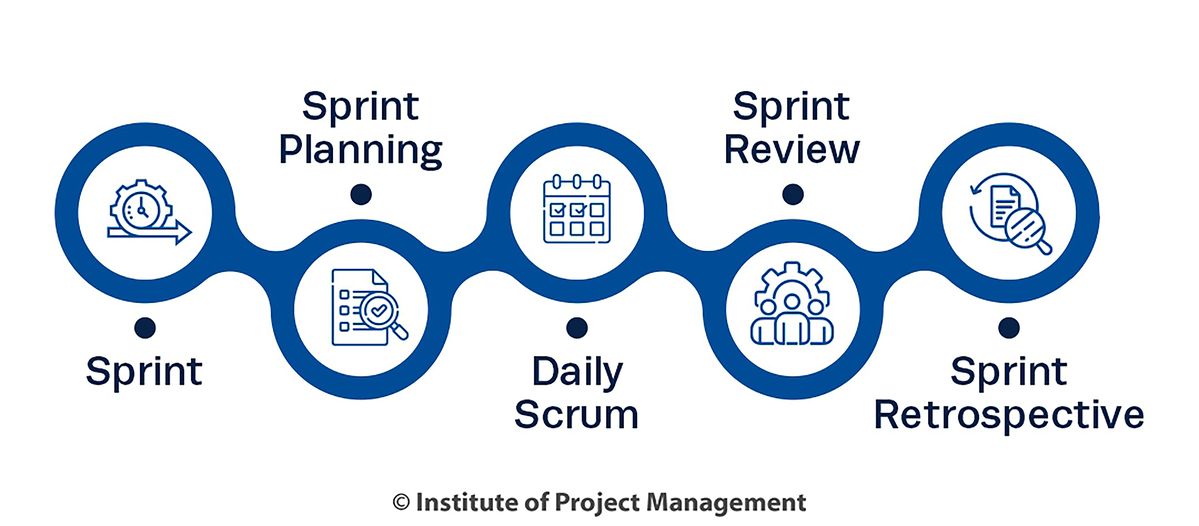
Scrum uses five events to create its delivery rhythm. Furthermore, each event has a strict time box and a clear purpose. Lagos Data School teaches every Scrum event in its live Agile training.

Therefore, this guide explains all five events in plain English. Also, Nigerian work examples are used throughout to make each one practical. By the end, you will know what happens in every Scrum event.
Why Scrum Events Matter for Nigerian Teams
Many Nigerian teams adopt Scrum but skip some of the events. However, skipping even one event breaks the Scrum rhythm. Also, each event feeds directly into the next one. Consequently, the whole delivery cycle breaks down when events are missed. Therefore, run all five events every sprint without exception.
Event 1: The Sprint
The Sprint is the container for all other Scrum events. Furthermore, it is a fixed time box of one to four weeks. Also, a new sprint starts immediately after the previous one ends. Consequently, the team delivers value in a continuous, unbroken rhythm. In short, the Sprint is the heartbeat of every Scrum team.
The Sprint Rules Every Nigerian Team Must Follow
- Sprint goal is fixed: The sprint goal cannot be changed once the sprint starts.
- Sprint length is fixed: Two weeks is the most common sprint length in Nigeria.
- No external interruptions: Unplanned work from outside cannot enter a sprint in progress.
- Cancel only in extreme cases: Only the Product Owner can cancel a sprint if the goal becomes obsolete.
Choosing a Sprint Length for Nigerian Teams
| Sprint Length | Best For Nigeria | Trade-off |
| 1 week | Startups and rapidly changing projects | Very fast pace, less time to build |
| 2 weeks | Most Nigerian tech and fintech teams | Balanced pace — the most common choice |
| 3 weeks | Mid-size product teams with complex work | More time to build, slower feedback |
| 4 weeks | Large enterprise projects in Nigeria | Slowest feedback loop — use with caution |
Event 2: Sprint Planning
Sprint Planning opens every new sprint. Furthermore, the whole Scrum team attends this meeting together.
Also, it is time-boxed to two hours for every week of sprint length. Consequently, a two-week sprint gets a four-hour planning session. Therefore, a two-week sprint gets exactly four hours of planning time.
What Happens During Sprint Planning?
First, the Product Owner presents the top backlog items. Also, the sprint goal is defined and agreed by the whole team. Furthermore, developers estimate effort using story points.
Next, selected items are broken into daily tasks. Finally, the team confirms it can meet the sprint goal with current capacity.
Nigerian Sprint Planning Example
A Lagos healthtech team runs two-week sprints. Furthermore, their Sprint 8 goal is: ‘Patients can book appointments online.’ Also, the team selects five backlog items totalling 26 story points.
Consequently, the planning meeting finishes in exactly four hours. Therefore, every developer leaves with a clear first task for the next morning.
Event 3: The Daily Scrum (Daily Standup)
The Daily Scrum is a fifteen-minute meeting held every morning. Furthermore, the whole development team attends — but only developers speak.
Also, the Scrum Master facilitates and keeps it strictly to time. Consequently, the team syncs and surfaces blockers before the day starts. In short, the Daily Scrum is the team’s daily heartbeat check.
The Three Daily Scrum Questions
- What did I complete since the last Daily Scrum?
- What will I complete before the next Daily Scrum?
- Is anything blocking my progress right now?
Daily Scrum Tips for Nigerian Teams
Hold the standup standing up — it keeps the meeting short. Also, start at the same time every day without exception. Furthermore, move detailed problem-solving conversations outside the standup. Consequently, the fifteen-minute limit is respected every day. In addition, the Scrum Master removes any blocker raised before the next day.
Event 4: The Sprint Review
The Sprint Review is held at the end of every sprint. Furthermore, the team demos the working increment to stakeholders. Also, the Product Owner formally accepts or rejects each completed item. Consequently, stakeholders see real working software, not just slide decks. Therefore, trust between the team and the client grows every sprint.
What Happens During the Sprint Review?
- Demo the increment: The team shows what was built this sprint.
- Gather feedback: Stakeholders ask questions and suggest improvements.
- Update the backlog: The Product Owner adds feedback as new backlog items.
- Review the roadmap: The product direction is adjusted based on real sprint outcomes.
Sprint Review in a Nigerian Bank Setting
A Lagos bank’s digital team holds a sprint review every two weeks. Furthermore, the Head of Digital attends every review session. Also, customers are sometimes invited to give direct feedback on new features. Consequently, the team builds exactly what users need rather than what managers assume.
Event 5: The Sprint Retrospective
The Retrospective is the final event of every sprint. Furthermore, it focuses on how the team works — not what they built. Also, it is time-boxed to 45 minutes for every week of sprint length. Consequently, the team improves its process with every single sprint. In short, the Retrospective is Scrum’s most powerful improvement engine.
The Three Retrospective Questions
- What went well? Celebrate wins so the team repeats what worked.
- What did not go well? Name problems honestly without blame.
- What will we improve? Commit to one or two specific actions for the next sprint.
Why Nigerian Teams Skip Retrospectives and Why They Shouldn’t
Many Nigerian teams skip retrospectives when sprints are stressful. However, that is exactly when a retrospective is most needed.
Also, teams that skip retrospectives repeat the same mistakes forever. Consequently, sprint quality never improves without the retrospective. Therefore, protect the retrospective — even if you shorten everything else.
All Five Scrum Events at a Glance
| Event | When | Time Box | Who Attends | Key Output |
| Sprint | Ongoing | 1–4 weeks | Whole team | Delivered increment |
| Sprint Planning | Start of sprint | 2h/sprint week | Whole team | Sprint goal + backlog |
| Daily Scrum | Every morning | 15 minutes | Developers | Daily sync + blockers |
| Sprint Review | End of sprint | 1h/sprint week | Team + stakeholders | Accepted increment |
| Retrospective | End of sprint | 45min/sprint wk | Whole team | 1–2 improvement actions |
Free Resource: The Official Scrum Guide
Lagos Data School recommends the Scrum Guide as the definitive free reference for all Scrum events. Furthermore, it explains the purpose, time box, and outputs of every event. Also, it is available free in over thirty languages online.
How Lagos Data School Teaches Scrum Events
Lagos Data School runs live Scrum event simulations for Nigerian professionals. Students practise all five events in sprint role-play exercises. Furthermore, every exercise uses real Nigerian project scenarios.
Consequently, graduates run Scrum events confidently from their very first sprint. Visit the Lagos Data School training page to enrol. Also, see our graduates’ Agile work in the Lagos Data School student portfolio.
Frequently Asked Questions
Q1: Can Scrum events be run remotely in Nigeria?
Yes. All five Scrum events work well on Zoom, Google Meet, or Microsoft Teams. Furthermore, tools like Miro and Trello support remote sprint boards and retrospectives. Also, teams in different Nigerian cities run effective remote sprints every day. Therefore, location is never a barrier to running great Scrum events.
Q2: What happens if a Daily Scrum is missed?
Missing one daily standup rarely causes a crisis. However, missing standups regularly breaks team alignment quickly. Also, blockers go unreported, and sprint goals are missed more often. Therefore, protect the Daily Scrum even if it is shortened to five minutes.
Q3: Who should speak at the Sprint Review?
Every developer demos the work they personally completed. Furthermore, the Product Owner provides context before each demo.
Also, stakeholders are encouraged to ask questions and give live feedback. Consequently, the Sprint Review becomes a real conversation — not a presentation.
Master Scrum Events with Lagos Data School
Scrum events create the rhythm that keeps Nigerian teams on track. Furthermore, each event builds on the last to create a full delivery cycle. Lagos Data School trains you to run every Scrum event with skill and confidence.
Visit Lagos Data School and enrol in the Scrum course today.