
What Is a Sprint in Scrum? A Clear Guide for Nigerian Teams
A sprint is the most important concept in Scrum. However, many Nigerian beginners misunderstand what a sprint really is.

Lagos Data School explains sprints in plain, simple English. Therefore, this guide covers everything you need to know about sprints. Also, Nigerian project examples are used throughout. By the end, you will know how to plan, run, and close a sprint.
The One-Sentence Definition of a Sprint
A sprint is a short, fixed time box for delivering valuable work.
Furthermore, it lasts between one and four weeks. Also, the team commits to a specific goal at the start of every sprint.
Consequently, the entire team works toward that one goal until the sprint ends. In short, a sprint turns a plan into a working product — every time.
Why Sprints Are the Engine of Every Scrum Team
Sprints create a delivery rhythm that Nigerian teams can rely on. Furthermore, clients see real working results every two weeks.
Also, problems are caught in sprint one, not months later. Consequently, Nigerian projects stay on track far better than with long plans. Therefore, the sprint is the single reason Scrum works so well in practice.
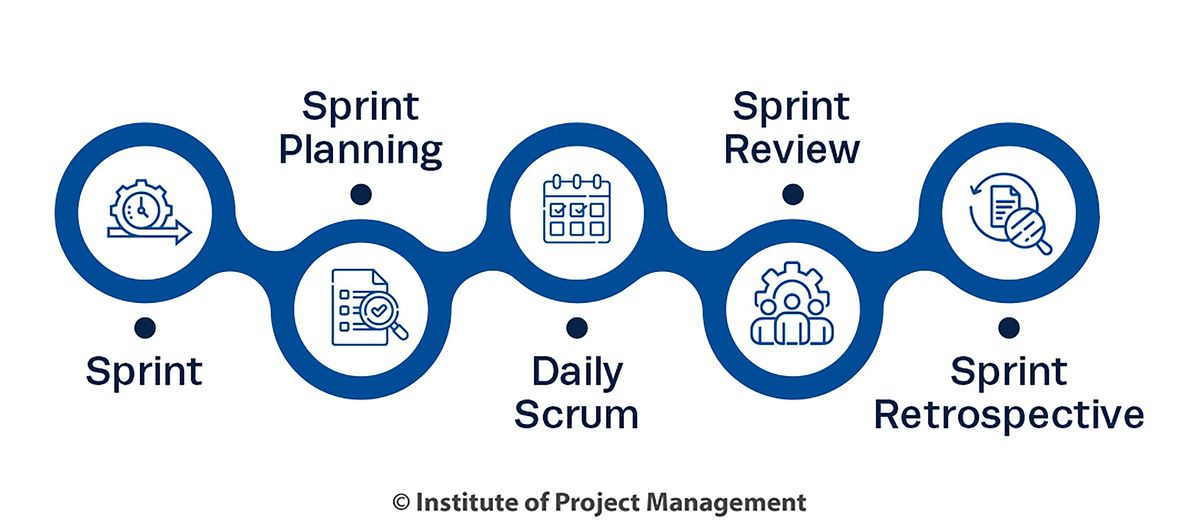
What Happens Inside a Sprint?
| Sprint Phase | What Happens | Who Is Involved |
| Sprint Planning | Sprint goal set. Backlog items selected. Tasks created. | Whole team |
| Daily Scrum | 15-minute sync every morning. Blockers surfaced. | Developers + SM |
| Sprint Work | Developers build, test, and complete backlog items daily. | Developers |
| Sprint Review | Working increment is demoed to stakeholders. | Whole team + stakeholders |
| Retrospective | Team reviews process and commits to one improvement. | Whole team |
How Long Should a Nigerian Sprint Be?
Two weeks is the most popular sprint length in Nigerian tech teams. Furthermore, it gives enough time to build meaningful features. Also, two weeks is short enough to get regular client feedback.
Consequently, most Nigerian fintech and software teams choose two-week sprints.
Choosing the Right Sprint Length
- 1-week sprint: Best for startups with fast-changing requirements in Nigeria.
- 2-week sprint: The most common choice for Nigerian product and tech teams.
- 3-week sprint: Suits Nigerian teams with complex, multi-layered features.
- 4-week sprint: Reserved for large enterprise projects in Nigerian banks or telecoms.
The Sprint Goal: The Most Important Sprint Element
Every sprint must start with a clear, one-sentence sprint goal. Furthermore, the sprint goal describes the business outcome for this sprint. Also, it helps the team make trade-off decisions mid-sprint.
Consequently, when a blocker appears, the team asks: ‘Does this serve the goal?’ Therefore, a strong sprint goal keeps the team focused when problems arise.
Nigerian Sprint Goal Examples
- Lagos fintech: ‘Users can register and verify their BVN in under two minutes.’
- Abuja e-commerce: ‘Customers can add items to a cart and check out with Paystack.’
- Nigerian HR platform: ‘Recruiters can post a job and receive applications in one flow.’
Sprint Rules Every Nigerian Team Must Follow
First, the sprint goal cannot change once the sprint starts. Also, no new work can be added to the sprint backlog mid-sprint. Furthermore, the sprint length must remain consistent every sprint. Consequently, the team develops a reliable delivery rhythm over time.
However, only the Product Owner can cancel a sprint if the goal becomes invalid. Therefore, sprint rules protect the team from constant disruption.
What Is the Definition of Done in a Sprint?
The Definition of Done is a shared checklist for completed work. Furthermore, every sprint item must pass this checklist to count as done. Also, partial or untested work is never included in the sprint total.
Consequently, quality stays consistent across every Nigerian sprint. In short, the Definition of Done protects the integrity of every sprint.
Sample Definition of Done for a Nigerian Dev Team
- Code reviewed: A peer has reviewed and approved the code.
- Tests passing: All automated tests pass with no errors.
- PO accepted: The Product Owner has reviewed and signed off the item.
- Deployed to staging: The feature is live on the staging server.
Common Sprint Mistakes Nigerian Teams Make
| Mistake | What Goes Wrong | Fix |
| No sprint goal | Team works without direction | Always define one goal before planning |
| Overcommitting | Sprint goal is missed every time | Use velocity to set a realistic commitment |
| Mid-sprint scope creep | Sprint plan is disrupted constantly | Log new requests in the backlog only |
| Skipping retrospective | Same problems repeat every sprint | Protect the retro even if shortened |
| No Definition of Done | Quality varies every sprint | Write and agree the DoD before sprint one |
The Sprint vs the Iteration: Are They the Same?
Yes. A sprint and an iteration mean the same thing. Furthermore, ‘iteration’ is a general Agile term. Also, ‘sprint’ is the specific Scrum term for the same concept.
Therefore, use ‘sprint’ when your team follows the Scrum framework.
Free Resource: The Official Scrum Guide on Sprints
Lagos Data School recommends the free Scrum Guide for the official sprint definition. Furthermore, it explains sprint planning, sprint cancellation, and sprint goals.
Also, it is available free in many languages and works on Nigerian mobile devices.
How Lagos Data School Teaches Sprints
Lagos Data School runs live sprint simulations in every Agile course session. Students set sprint goals, select backlog items, and run mock stand-ups. Furthermore, every exercise uses real Nigerian project scenarios. Consequently, graduates run their first real sprint with confidence.
Visit the Lagos Data School training page to enrol. Also, see graduates’ Scrum work at the Lagos Data School student portfolio.
Frequently Asked Questions
Q1: Can a sprint be extended in Nigeria?
No. A sprint ends on its agreed end date — always. Furthermore, extending a sprint destroys the team’s delivery rhythm.
Also, incomplete items return to the backlog and re-enter a future sprint. Therefore, never extend a sprint — even when work is almost done.
Q2: What is the minimum team size for a sprint?
A Scrum team needs at least three people to run a sprint. Furthermore, the Scrum Guide recommends three to nine developers.
Also, smaller teams carry more risk when a member is absent. Therefore, aim for at least five team members for a stable Nigerian sprint team.
Q3: How many sprints does a typical Nigerian project run?
Most Nigerian product builds run between six and twenty sprints. Furthermore, a minimum viable product typically takes four to eight sprints.
Also, ongoing products run unlimited sprints as long as the team is active. Therefore, think of sprints as a continuous delivery engine — not a countdown.
Run Confident Sprints with Lagos Data School
Sprints are the heartbeat of every successful Agile team. Furthermore, teams that master sprints deliver faster and more reliably.
Lagos Data School gives you the live practice to run great sprints from day one. Visit Lagos Data School and enrol in the Scrum course today.