What Is Agile Methodology?
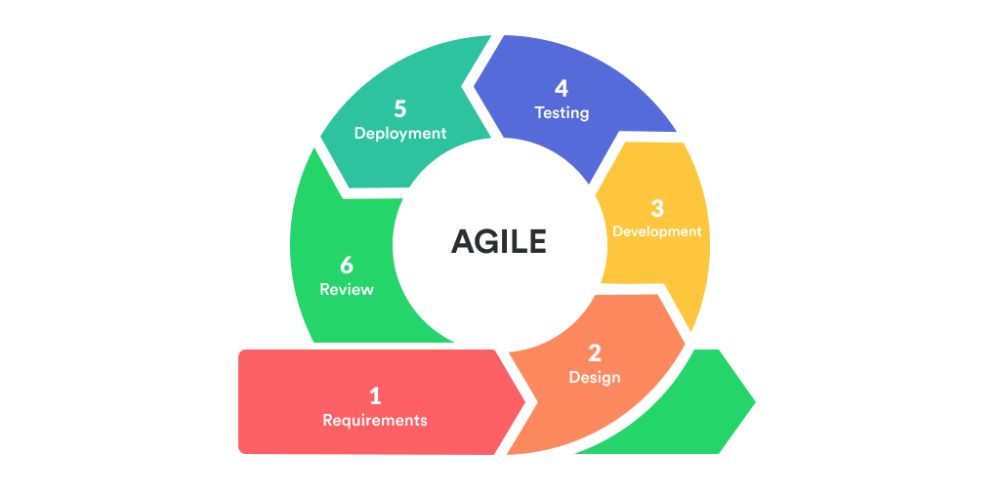
Agile is a way of managing projects by breaking work into small, fast cycles called sprints or iterations. Instead of planning the entire project upfront, Agile teams plan a little, build a little, review a little, and then repeat.
Each cycle produces a working result. The team shows that result to the client. The client gives feedback. The team improves and moves to the next cycle.
Lagos Data School teaches Agile methodology to Nigerian professionals across IT, finance, healthcare, and government. This guide covers everything a beginner needs to know.
Where Did Agile Come From?
In 2001, seventeen software developers met in Utah, USA. They were frustrated with slow, rigid project management methods. Together, they wrote the Agile Manifesto. It defined four core values and twelve principles for building software better.
The Agile Manifesto valued working software over comprehensive documentation. It prioritised customer collaboration over contract negotiation.
These ideas quickly spread beyond software. Today, Nigerian teams in banking, healthcare, construction, and government use Agile principles to manage projects.
The Four Core Agile Values
| Agile Value | What It Means for Nigerian Project Teams |
| Individuals and interactions over processes and tools | People and conversations matter more than rigid systems. |
| Working software over comprehensive documentation | Deliver results quickly rather than writing endless reports. |
| Customer collaboration over contract negotiation | Work closely with your client instead of hiding behind a contract. |
| Responding to change over following a plan | Adapt quickly when requirements change instead of resisting it. |
Agile vs Waterfall: What Is the Difference?
Many Nigerians who learn Agile for the first time ask how it differs from traditional project management.
| Feature | Waterfall | Agile |
| Planning style | All planning done upfront | Planning done sprint by sprint |
| Delivery | One final delivery at the end | Working output after every sprint |
| Change handling | Changes are costly and slow | Changes welcomed at any sprint |
| Client involvement | Client sees result at the end | The clients leave reviews after every sprint |
| Best for | Fixed scope, stable requirements | Changing requirements, digital products |
| Nigerian example | Road construction, government tenders | Mobile apps, fintech platforms |
Neither method is universally better. Choose Agile when requirements will change.
The Most Popular Agile Framework: Scrum
Scrum is the most widely used Agile framework in Nigeria. It organises work into sprints, assigns three core roles, and uses four ceremonies to keep the team aligned.
The Three Scrum Roles
- Product Owner: Defines what the team builds. Owns and prioritises the product backlog. Represents the client’s interests.
- Scrum Master: Facilitates the Scrum process. Removes blockers. Coaches the team on Agile principles.
- Development Team: Builds the product. Self-organises. Commits to sprint deliverables at planning.
The Four Scrum Ceremonies
- Sprint Planning: The team selects tasks from the backlog and plans the sprint. Happens at the start of every sprint.
- Daily Stand-up: A 15-minute daily meeting. Each member shares progress, plans, and blockers.
- Sprint Review: The team demos the completed sprint work to stakeholders.
- Sprint Retrospective: The team reflects on how to improve the process. Happens after every sprint review.
Kanban: The Other Popular Agile Approach
Kanban is simpler than Scrum. It uses a visual board with three columns: To Do, In Progress, and Done. Every task moves from left to right as work progresses.
Kanban is ideal for Nigerian teams doing ongoing, flow-based work like customer support, content production, or IT maintenance. It has no sprints and no fixed roles. Work simply flows through the board.
How Nigerian Teams Apply Agile in Real Projects
A Lagos fintech startup uses Scrum to build its mobile banking app. They run two-week sprints. User feedback shapes the next sprint.
An Abuja government agency uses Kanban to manage internal communications requests. Each request moves through the board from submission to approval to publication.
A Port Harcourt hospital uses Agile principles to manage its digital records rollout. Monthly reviews with doctors and nurses replace quarterly status meetings.
A Nigerian Analogy: The Batcher vs the Full Pot
Waterfall is like cooking a full pot of soup for 50 guests before anyone tastes it. If the seasoning is wrong, the entire pot is wasted.
Agile is like cooking in small test batches. Each batch is tasted and adjusted before the next one begins. By the time the 50th portion is served, the recipe is perfect.
Agile Certifications for Nigerian Professionals
| Certification | Issuing Body | Best For |
| Certified Scrum Master (CSM) | Scrum Alliance | Nigerian professionals leading Scrum teams |
| Professional Scrum Master (PSM) | Scrum.org | Rigorous, lower-cost Scrum certification |
| PMI-ACP (Agile Certified Practitioner) | PMI | Broad Agile certification for experienced PMs |
| SAFe Agilist | Scaled Agile Inc. | Enterprise Agile in large Nigerian organisations |
| Kanban Management Professional | Kanban University | Nigerian teams managing flow-based work |
How Lagos Data School Teaches Agile
Lagos Data School delivers live Agile training for Nigerian professionals across all industries. The curriculum covers Scrum, Kanban, sprint planning, retrospectives, and Agile product management. Sessions use Nigerian project scenarios from fintech, healthcare, construction, and government.
Students leave with the knowledge to pass Agile certification exams and the skills to run Agile teams in any Nigerian organisation.
Enrol today at Lagos Data School. See what our graduates achieve in the Lagos Data School student portfolio.
Frequently Asked Questions
Q1: Can Agile Be Used Outside Software Development in Nigeria?
Yes. Nigerian marketing teams use Agile to manage campaign sprints. Health teams use it for programme rollouts. Government agencies use it for policy implementation projects. Agile principles apply wherever work is complex, iterative, and subject to change.
Q2: How Long Is a Sprint?
Sprints typically last one to four weeks. Most Nigerian tech teams use two-week sprints. Shorter sprints give faster feedback. Longer sprints allow more complex work to be completed. Choose the sprint length that matches your team’s pace and delivery needs.
Q3: Do I Need to Know Coding to Work in Agile Project Management?
No. Many Agile project managers and Scrum Masters in Nigeria come from non-technical backgrounds. What matters is understanding Agile principles, facilitating team ceremonies, removing blockers, and communicating clearly with stakeholders. Technical knowledge is a bonus, not a requirement.
Start Your Agile Journey at Lagos Data School
Agile is not just a method. It is a mindset that helps Nigerian teams deliver better results, faster, with less waste. Every Nigerian professional who learns Agile becomes more valuable to their team and their organisation.
Start today. Visit Lagos Data School and enrol in the Agile project management course. Your career will thank you for it.
© 2026 Lagos Data School | www.lagosdataschool.com