Predictive analytics is one of the most in-demand skills in Lagos right now. Nigerian banks, fintechs, telecoms firms, and retail shops all need people who can look at data and say what is likely to happen next.
But what does the career path actually look like? What skills do you need? What roles exist, and what do they pay? How long does it take to get there from where you are now?
This guide answers all of these questions honestly. It draws on Lagos Data School’s direct work training and placing Nigerian data professionals in real roles across the country.
If you are thinking about a career in predictive analytics and you want a clear, grounded view of what the path actually looks like in the Lagos job market, this guide is for you.
What Is a Predictive Analytics Specialist?
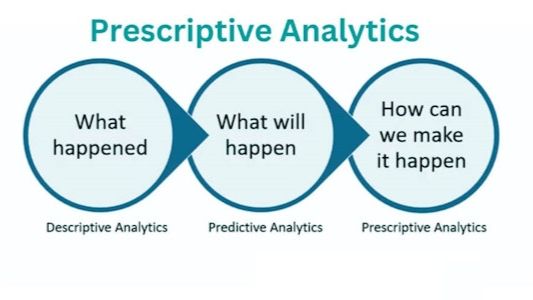
A predictive analytics specialist is a data professional who uses past data to build models that predict what will happen next. They work in many forms across many sectors.

In a Nigerian bank, they might build a model that predicts which loan applicants are likely to default, while a Lagos retailer might build a demand forecast that guides stock ordering decisions. In a telecoms firm, they might build a churn model that identifies customers who are about to leave.
The common thread is this: they use data, statistics, and programming tools to help a business make better, more informed decisions about the future rather than relying on gut feel or experience alone.
Is Predictive Analytics the Same as Data Science?
Not exactly. Data science is a wider term. It covers the full range of work done with data, from data building to machine learning research to text analysis, and much more.
Predictive analytics sits within data science but has a tighter focus. A predictive analytics specialist builds models that predict specific business outcomes. They care less about the cutting edge of research and more about applying proven methods to real business problems.
In practice, the line is blurry. Many Lagos data job ads use both terms for the same thing. But knowing the difference helps you focus your learning on the skills that matter most for the roles you truly want.
The Nigerian Market for Predictive Analytics Roles
The demand for predictive analytics skills in Lagos has grown significantly over the past three years. Lagos Data School tracks the skills listed in Nigerian data job ads each year, and the shift is clear.
Three years ago, most data job ads in Nigeria asked for Excel and basic SQL. Today, a growing proportion ask for Python, machine learning experience, and familiarity with forecasting or modelling work. This shift is most visible in banking, fintech, FMCG, and logistics sectors.
But be realistic. The Nigerian market for senior predictive analytics specialists is still small compared to the global one. Entry-level roles are more common and far easier to access. Senior roles exist but are fewer, and the competition for them is growing as more people build these skills.
This means the path to a senior predictive analytics career in Lagos takes real, sustained effort over several years. One short course and a batch of job applications will not get you there on its own.
The Career Stages: From Beginner to Specialist
Lagos Data School maps the predictive analytics career path in Lagos across four clear stages.
Stage 1: Data Foundation (0 to 12 Months)
At this stage, your goal is to build the core data skills every analyst needs before any focus area makes sense. This means Excel, SQL, and basic Python, plus a grasp of base stats like averages, spreads, and how variables relate to each other.
You may not yet be doing any predictive modelling at this stage. You are cleaning data, building reports, and learning to work with data in a structured, reliable way. This groundwork is essential. Analysts who skip it and jump straight to modelling almost always come unstuck when they encounter messy, real-world data.
Stage 2: Junior Analyst (1 to 3 Years)
At this stage, you are in your first or second data role. You are starting to apply analytics to real business questions. You might build basic demand forecasts, track KPIs, or help a senior analyst keep an existing model running.
Your focus at this stage should be on learning how the business uses data, not just on technical skill. Understanding what decisions your models need to support, and how to communicate your findings to people who are not data professionals, is just as important as being able to build the model itself.
Stage 3: Mid-Level Analytics Professional (3 to 6 Years)
At this stage, you build and own your own models rather than just supporting others. You can take a business question, pick the right approach, gather and clean the data, build a model, test it well, and present the results in a way that leads to a real decision.
You are also starting to build a focus area. Perhaps you zoom in on customer data, on supply chain forecasting, or on risk modelling. This focus is what makes you hard to replace, rather than one of many general analysts who all look the same to a hiring team.
Stage 4: Predictive Analytics Specialist (6 or More Years)
At this stage, you are one of a small group in your sector who are truly trusted to lead the analytical approach to hard business prediction problems. You may lead a small team or work as a lone expert that many teams rely on.
You are consulted when something goes wrong with a model, when a new forecasting challenge appears, or when the business needs to understand why a prediction turned out to be wrong. Your value comes from the combination of great technical skill and real business understanding that only comes with years of genuine, applied experience.
The Skills You Need at Each Stage
| Stage | Core Skills Needed | Key Tools |
| Foundation | Excel, SQL, basic Python, stats basics | Excel, MySQL, Python |
| Junior Analyst | Python, simple models, data visualisation | Python, Power BI, pandas |
| Mid-Level Professional | Forecasting models, model evaluation, storytelling | Python, scikit-learn, Prophet |
| Specialist | Advanced models, ML pipelines, leadership | Python, SQL, cloud platforms |
Certifications Worth Pursuing in Lagos
Certifications do not replace real experience. But they do signal set, structured knowledge to Nigerian employers who may not be able to test your technical skill directly in an interview.
Lagos Data School suggests these certifications for analysts on the predictive analytics career path.
- Google Data Analytics Certificate: a good starting credential for complete beginners
- IBM Data Science Certificate: takes you through Python, machine learning tools, and base data science concepts
- Microsoft Power BI Data Analyst Associate: good for roles where you build business data reports
- Python Institute PCEP or PCAP: demonstrates Python coding skill to employers who are not data specialists themselves
None of these replaces the skills built through actual, applied work on real Nigerian business data. But they help signal your commitment and your organised approach to learning, especially at the early career stage when you have limited real-world experience to point to.
Where Predictive Analytics Specialists Work in Lagos
Lagos Data School tracks which Nigerian organisations are building predictive analytics teams. Here is where the roles are growing right now.
Nigerian Banks and Fintechs
This is the deepest talent market for predictive analytics in Lagos right now. Banks need models for credit risk, fraud checks, customer churn, and cross-sell. Fintechs need models for loan scoring, transaction watch, and product fit. Both sectors pay well and are hiring.
Telecoms Companies
Major Nigerian telecoms firms have been building data teams for years. They use predictive analytics heavily for customer churn work, network planning, and marketing. These roles are stable and pay well.
Retail and FMCG
The growing Nigerian e-commerce and goods sector is using predictive analytics more and more for demand forecasting, pricing, and customer grouping. These roles are growing as firms invest more in data.
Consulting Firms
Local and global consulting firms with Lagos offices hire data professionals who can run analytics projects for varied clients. These roles offer wide experience and often build skills faster than a single-sector job.
Startups
Lagos’s tech startup ecosystem creates a steady stream of roles for analysts who can work with imperfect data and build quick, useful models in fast-moving environments. Pay may be lower than banks, but the learning curve is often steeper and faster.
Salary Expectations for Predictive Analytics Roles in Lagos
Exact salary figures shift with market conditions, so Lagos Data School presents ranges rather than fixed numbers. These ranges reflect what our graduates and hiring network report across different career stages.
At the early stages, data role salaries in Lagos sit above the Nigerian office average but not by a huge gap. The real jump in pay comes at the mid level, where true Python and modelling skill combined with sector know-how starts to set candidates clearly apart.
At the specialist stage, predictive analytics professionals in Lagos earn among the highest salaries in the local tech and finance labour market. Those who take on remote or hybrid roles for international firms can earn considerably more in dollar or sterling terms while remaining based in Lagos.
The path from foundation to specialist most often takes five to eight years for a focused, motivated person. The salary growth over that time is among the steepest of any Nigerian career path available today.
Building Your Portfolio as a Nigerian Analytics Professional
A portfolio is a set of real work that shows your skill to potential employers. In the Nigerian analytics job field, a strong portfolio can matter more than a certification, most of all for mid-level roles.
Lagos Data School asks every student to build their portfolio from real Nigerian data where they can. The National Bureau of Statistics, the Central Bank of Nigeria, and other bodies all publish open datasets. Use these to build projects that are both technically sound and directly tied to Nigerian business.
Good portfolio projects for Lagos analytics specialists include a demand forecast for a Lagos retail business, a churn model on a telecoms dataset, and a credit risk model using open loan data.
Publish your work on GitHub and, where appropriate, write it up clearly enough that a non-technical hiring manager can understand what you did, why you did it, and what the business insight was. The ability to explain your technical work in plain language is a crucial differentiator in the Nigerian market.
The Role of Lagos Data School in This Career Path
Lagos Data School is here to support Nigerian professionals on this exact career path. Our courses use Nigerian business data, real local industry cases, and the true skill expectations of Nigerian employers.
We do not just teach tools. We teach how to apply those tools to the kinds of problems a Nigerian analyst actually faces at work. The difference between a course that uses international examples and one that works through Nigerian banking data or Lagos retail demand patterns is significant for how quickly the learning transfers to real work.
We also help students with the non-tech side of career building. This covers writing a data-focused CV, getting ready for tech interviews at Nigerian banks and fintechs, building a strong portfolio, and linking up with our alumni network of working Nigerian data professionals.
Honest Advice: What This Path Actually Requires
Lagos Data School wants to be straight about what it takes to build this career successfully. It takes real, sustained effort over multiple years.
You will have periods of confusion. Every analyst hits a point where the statistical concepts feel impenetrable, and the code will not run as expected. This is normal. It is not a sign that the career is not for you. It is a sign that you are at a genuine learning edge.
The analysts who succeed are not those who find it easy. They are those who push through the hard parts, find the right support, and keep applying what they learn to real problems rather than just reading about it.
If you put in the honest work, the Nigerian analytics market will reward you. The demand for this skill is real, the pay is strong, and the work itself is genuinely interesting. Lagos Data School has seen hundreds of Nigerian professionals make this transition successfully. With the right structure, support, and sustained effort, you can too.
Straight Talk From Lagos Data School
We talk to hundreds of Nigerians each year who want to break into data analytics. Some of them are fresh out of university, some are professionals mid-career who want a change, while some are business owners who want to understand their own data better.
What they all share is this: they want to know if it is really possible for them, here in Lagos, in the current Nigerian job market.
The honest answer is yes. But not because it is easy. Because the demand is real and the supply of skilled people is still relatively low. That gap is your opportunity.
Every year that gap closes a little more. More Nigerians are learning data skills while more training options exist and more employers know what to look for. So the window of advantage for those who learn now is wide, but it will not stay wide forever.
Lagos Data School’s job is to help you use that window well. We give you the skills, the structure, and the support to make the most of the real opportunity that exists in the Nigerian analytics job market right now.
Do not wait until you feel fully ready. You never will. Start with what you know. Build from there. Keep going even when it gets hard. That is the whole plan. And it is a plan that works.
One More Thing Worth Saying About This Career
Lagos Data School hears a lot of fears from Nigerian professionals who are thinking about making this career move. Here are the most common ones, and the honest response to each.
I am not a maths person. Most working data analysts are not pure maths people either. The maths involved in day-to-day analytics work is mostly statistics at a practical level: averages, rates, and correlation. You do not need to be a mathematician. You need to be comfortable with numbers and willing to learn the specific statistical ideas that your work requires.
I am too old to start over. Lagos Data School has helped career changers in their 30s, 40s, and older successfully transition into data roles. What matters is the skill you bring, not your age. In fact, people who come to data analytics from other careers often have a significant advantage: they understand how businesses work, which many younger analysts lack.
The market is too competitive now. The market is growing faster than the talent pool. There are more open data roles in Nigeria today than there are qualified people to fill them. Yes, there is more competition than three years ago. But there is also much more demand. The net result is still strongly in your favour if you build real, demonstrable skill.
I do not have a technical background. Neither did many of Lagos Data School’s most successful graduates. A background in business, finance, science, or even the social sciences all transfer surprisingly well to analytics work. The technical skills are learnable. The business sense and the problem-solving mindset are often harder to develop from scratch.
The Week You Start Is the Week That Matters
Lagos Data School has noticed one thing above all else in the students who go on to build strong data careers in Lagos. It is not the ones who had the best starting knowledge or the ones who came from the best university, but the ones who simply started. And then kept going.
The week you decide to start learning is the most important week. Not because of what you will know by the end of that first week. But because of what starting sets in motion.
You begin to see the world differently, start to notice data everywhere, start to ask questions about numbers you used to just accept, and start to build the mental habit of thinking in patterns and predictions. That habit, once built, never leaves you.
By the end of your first month, you will know more than most people around you; by the end of your first year, you will have skills that are genuinely rare in the Nigerian job market; and by the end of your third year, you will be in a position most Nigerian office workers will never reach.
All of that starts with the first week. With one decision to begin.
Lagos Data School is ready to help you make the most of that decision from day one.
The Short Version of This Career Guide
Here is the plain, short version of everything in this guide.
The career is real. The demand is real. The pay is real. It takes years of honest work. But the path is clear, and it is doable for a motivated Nigerian professional.
Start with Excel and SQL. These are the base. Without them, nothing else works well.
Add Python. Learn to use it with real data. Build things. Show your work.
Pick a sector you care about. Banking, telecoms, retail, or health. Learn how data is used there. Build projects in that context. Get a job in that sector.
Keep learning. The field moves. You must move with it.
Do not wait for the perfect moment to start. That moment will not come. Start now, with what you have. The path unfolds as you walk it.
Lagos Data School will be walking it with you.
Take the first step today. One course. One hour. That is all you need to begin.
Start now. Lagos Data School is here. The path is clear.
Recommended External Resource
For free, structured data science learning that builds toward a predictive analytics career, visit Google’s free Advanced Data Analytics Certificate on Coursera: https://www.coursera.org/professional-certificates/google-advanced-data-analytics.
A Career Readiness Self-Check
Before committing to this path, run through this short check to gauge where you stand today.
- Do you have at least basic comfort with Excel for data tasks?
- Are you willing to commit three to four months to structured Python learning?
- Can you name at least one Nigerian industry or sector you genuinely want to work in?
- Can you commit to building a portfolio of real analytics projects while you learn?
If you said yes to all four, you are ready to start. Lagos Data School has a structured course path that takes you from where you are now to a job-ready predictive analytics skill set in a realistic, supported, and Nigeria-specific way. This career is achievable. The demand is real. The pay is real. The path is clear. And you can walk it.
About Lagos Data School
Lagos Data School is Nigeria’s top school for cybersecurity, data science, cloud, and analytics. Every idea in this guide is part of our hands-on course.
Our teachers are real security pros, not just classroom staff. So you learn from people who guard live networks every day.
We run classes on weekdays, weekends, and online. So no matter your time, we have a slot for you. Beyond skills, we also give you a real certificate and links to job partners.
Visit Lagos Data School today to view our courses and join the next class.
Build your analytics career. Train with Lagos Data School.