JavaScript runs the web. It powers frontend interfaces, mobile apps, and now backend servers too. Node.js makes this possible. It lets developers use JavaScript on the server side. Consequently, one language handles both frontend and backend work.
Lagos tech firms have embraced Node.js fully. Startups love its speed. Fintech platforms rely on their real-time capabilities. E-commerce sites use it for payment processing. Moreover, Node.js ranks among the top three backend technologies in Lagos job listings today.
Lagos Data School has closely tracked this trend. Our 2026 employer survey reveals that Node. JS-related roles in Lagos grew by 55% in the past 18 months. Furthermore, entry-level Node.js backend developers now earn between ₦3 million and ₦5 million per year. These figures come directly from our employer network, not estimates.
This guide comes from Lagos Data School, Nigeria’s leading practical tech training institution in Ikeja, Lagos. We built it using our live job market data, graduate success stories, and direct employer partnerships. Whether you are a beginner, a frontend developer seeking backend skills, or a career changer, this path works. Our graduates prove it daily.
What Is Node.js and Why Does Lagos Love It?
Node.js is a runtime environment. Ryan Dahl created it in 2009. It lets developers run JavaScript outside the browser. This means you can build servers, APIs, and command-line tools using JavaScript.
Node.js uses an event-driven, non-blocking model. This makes it fast and efficient. It handles many connections simultaneously without slowing down. Netflix, LinkedIn, Uber, and PayPal all use Node.js at scale.
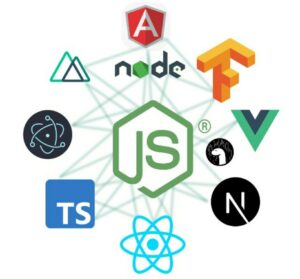
Lagos employers love Node.js for four reasons. First, it uses JavaScript. Frontend developers can transition to backend work easily. Second, it is fast. Startups need quick product launches. Node.js delivers. Third, it has a massive package ecosystem. NPM offers over two million ready-made packages. Fourth, it supports real-time features. Chat apps, live notifications, and streaming services all benefit.
The Stack Overflow Developer Survey 2024 ranks Node.js among the most wanted technologies globally. Additionally, the Node.js Foundation reports that Node.js usage continues to grow across Africa. Lagos mirrors this trend closely. Local employers now list Node.js in over 60% of backend job postings.
Node.js Career Paths Available in Lagos
Node.js opens multiple career doors in Lagos. Each path offers high income and growth potential. Here are the main routes Lagos Data School graduates pursue.
Backend API Developer
API developers build the interfaces that connect frontend apps to databases. They create RESTful endpoints, handle authentication, and manage data flow. Express.js is the main Node.js framework for this work. Lagos fintech and e-commerce firms hire API developers constantly.
This path suits people who enjoy system design and problem-solving.
Full-Stack JavaScript Developer
Full-stack developers handle both frontend and backend using JavaScript. React, or Vue.js, powers the frontend. Node.js and Express handle the backend. This single-language approach speeds up development. Lagos startups especially value this versatility.
This path suits people who want to build complete products.
Real-Time Application Developer
Real-time developers build chat apps, live dashboards, and notification systems. Socket.io and WebSockets make this possible with Node.js. Lagos fintech firms use these tools for transaction alerts. E-commerce platforms use them for order tracking.
This path requires deeper knowledge of event-driven architecture. However, it offers unique specialization value. Few developers master real-time systems. Those who do command premium salaries.
Microservices and Cloud Engineer
Node.js works well in microservice architectures. Developers break large apps into small, independent services. Docker containers deploy these services. Kubernetes manages them at scale. This approach dominates modern cloud infrastructure.
DevOps engineers and cloud architects use Node.js for service mesh, API gateways, and serverless functions. This path builds on backend skills and adds infrastructure expertise. It offers the highest salaries in the Node.js ecosystem.
Node.js Skills Lagos Employers Want in 2026
Lagos Data School tracks live job listings every quarter. We identify exactly which Node.js skills employers test in interviews. The table below shows Q1 2026 demand data. We use this data to shape our Node.js training curriculum.
| Skill | Career Path | Lagos Demand | Time to Learn |
| JavaScript ES6+ | All paths | Very High | 4 to 6 weeks |
| Node.js Core | All paths | Very High | 3 to 5 weeks |
| Express.js | Backend dev | Very High | 3 to 5 weeks |
| REST API Design | Backend dev | Very High | 2 to 4 weeks |
| MongoDB + Mongoose | Backend dev | High | 3 to 4 weeks |
| SQL + PostgreSQL | Backend dev | High | 3 to 4 weeks |
| Authentication (JWT/OAuth) | Backend dev | High | 2 to 3 weeks |
| Git + GitHub | All paths | Very High | 1 to 2 weeks |
| Docker | DevOps + backend | Growing | 3 to 4 weeks |
| AWS / Cloud Basics | DevOps + backend | Growing Fast | 6 to 8 weeks |
Source: Lagos Data School Employer Skills Research, Q1 2026
JavaScript ES6+ tops the list. Modern syntax like async/await, arrow functions, and destructuring form the foundation. Every Node.js skill builds on this base. Lagos Data School dedicates the first four weeks of training to mastering these fundamentals.
Express.js follows closely. This lightweight framework powers most Node.js APIs in Lagos. REST API design appears in almost every backend job listing. Employers expect developers to create clean, documented endpoints. MongoDB and SQL both matter. Lagos firms use both document and relational databases, depending on the project.
What Lagos Data School Node.js Training Covers
Lagos Data School offers a comprehensive Node.js backend development track. We built it using direct employer feedback. Every skill we teach appears in live Lagos job listings. The programme runs for 16 weeks. It includes a pre-course module at no extra cost.
Stage 1: JavaScript Foundations for Node.js
Every student starts here. You will master modern JavaScript. Variables, functions, loops, and objects get thorough coverage. ES6+ features like promises, async/await, and modules receive special attention. These concepts power every Node.js application.
We use real Lagos business scenarios to teach these concepts. For example, you might build a script that processes payment transactions for a Lagos fintech startup. By the end of Stage 1, you will have built five JavaScript projects. Your GitHub profile will already show working code.
Stage 2: Node.js Core and Express.js
Stage 2 introduces the Node.js runtime. You will learn the event loop, streams, buffers, and file system operations. Then Express.js enters. This framework simplifies API creation. You will build routes, handle requests, and manage middleware.
Error handling and validation receive full coverage. Lagos employers test these skills in every technical interview. You will also learn to structure projects professionally. Folder organization, environment variables, and configuration management all matter in production.
Stage 3: Databases, APIs, and Authentication
Stage 3 targets data persistence. MongoDB and Mongoose handle document storage. PostgreSQL and Sequelize manage relational data. You will learn when to use each. You will also design complex queries and optimize database performance.
Authentication comes next. JWT tokens secure API endpoints. OAuth integrates third-party logins. Password hashing with bcrypt protects user data. These security skills separate junior developers from job-ready engineers. By the end of this stage, you will have built a complete API with user management.
Stage 4: Testing, Deployment, and Real-Time Features
The final stage covers production-ready skills. Jest and Mocha handle unit and integration testing. You will write tests for every endpoint. This practice impresses Lagos employers. It shows professional maturity.
Deployment comes next. You will push apps to Render, Railway, and AWS. Docker ensures consistent environments. Socket.io adds real-time features. By graduation, you will have built and deployed a complete backend system. It will sit live on the internet for employers to see.
Portfolio Tip: Lagos employers check GitHub before they check CVs. Every Lagos Data School student graduates with at least four deployed Node.js projects. Each repo includes a clear README and API documentation. Employers can assess your thinking, not just your code.
Industries That Hire Node.js Developers in Lagos
Node.js developers find work across every major sector in Lagos. The industries below pay the most and hire the most frequently.
Fintech
Africa’s largest fintech hub sits in Lagos. Flutterwave, Paystack, Kuda, and Moniepoint all run Node.js backend systems. Payment processing APIs, transaction notifications, and real-time balance updates all use Node.js. New fintech startups launch monthly. This sector offers the highest Node.js salaries and the fastest career growth.
For more fintech career guidance, read our guide: How to Get a Tech Job at a Lagos Fintech Firm.
E-Commerce and Retail Tech
Jumia, Konga, and many Lagos D2C brands hire Node.js developers. They need backend systems for storefronts, inventory management, and payment processing. Order tracking and live stock updates use real-time Node.js features. The pace of feature development stays fast. Developers grow their skills quickly in this sector.
Telecoms and Enterprise
MTN, Airtel, and large enterprise firms hire Node.js developers for internal systems, customer portals, and API gateways. These roles tend to be structured. They offer strong job security. Enterprise Node.js roles often include training budgets and clear promotion paths.
Startups and Remote Work
Lagos startups move quickly. They hire Node.js developers who can build and ship products fast. These environments suit junior developers who want to gain experience quickly. Remote roles at global firms are now open to Lagos Node.js developers through platforms like Upwork, Toptal, and LinkedIn.
Lagos Data School’s career team helps every graduate build a remote-ready profile. You get direct support, not just links.
Who Should Join Node.js Training in Lagos?
This training suits anyone who wants to build real backend systems and earn well. You do not need a computer science degree. The main requirements are a laptop, a strong drive to learn, and daily practice.
Frontend developers make up a large group of enrollees. They already know JavaScript. Adding Node.js lets them become full-stack engineers. This transition often doubles their income potential. Many frontend developers land backend roles within three to four months.
Fresh graduates and career changers also do very well. JavaScript is easier to learn than many backend languages. Node.js offers a gentle entry into server-side programming. Diverse backgrounds are a strength, not a weakness, in backend development.
IT support workers and system admins often join to advance their careers. Adding Node.js skills to an IT background is one of the fastest paths to a senior tech role in Lagos. Entrepreneurs who want to build their own API-driven products without hiring agencies also benefit greatly.
Real Graduate Outcomes from Lagos Data School
The stories below come directly from Lagos Data School graduate records. They demonstrate what students achieve after completing our Node.js backend development track.
Case Study 1: Frontend Developer to Full-Stack Engineer in 4 Months
Kemi built websites with HTML and CSS for a Lagos agency. She wanted to handle backend work too. She researched Node.js training options in Lagos. After comparing schools, she chose Lagos Data School’s backend track.
Her frontend JavaScript knowledge gave her a head start. Express.js and MongoDB felt like natural extensions. By Stage 3, she built a complete e-commerce API with authentication and payment integration. After graduation, Lagos Data School introduced her to a Lagos fintech team. She got hired within two weeks. Her full-stack salary was 80% higher than her frontend pay.
Case Study 2: Accountant to Node.js Backend Developer
Emmanuel processed invoices at a Lagos logistics firm. He loved solving problems but felt limited in his role. He discovered Node.js through online tutorials. After hitting tutorial limits, he enrolled in Lagos Data School’s structured programme.
API design clicked for him quickly. By Stage 4, he built a shipment tracking system that his former firm adopted for testing. A Lagos e-commerce startup spotted his work on GitHub. They hired him as a junior backend developer within one month of graduation. He moved from accounting to tech in under six months.
Case Study 3: Unemployed Graduate to Remote API Engineer
Amina finished university with a degree in business administration. She struggled to find relevant work for ten months before she discovered software development as a career option through a Lagos Data School webinar. She joined the Node.js track shortly after.
Her business background helped her understand API documentation and client requirements. By graduation, she had four deployed APIs on GitHub. Lagos Data School’s career team helped her build a remote-ready profile. Within six weeks, she landed a remote backend role with a German startup. She now earns in euros while living in Lagos.
Why Train at Lagos Data School?
Lagos Data School stands as Nigeria’s top practical tech training institution. We are based in Ikeja, Lagos. We have trained hundreds of Node.js developers, backend engineers, and full-stack builders since opening.
Our Node.js programme gets reviewed every quarter using direct employer feedback. Every tool and framework we teach maps to a live Lagos job listing. All our instructors are active developers. They work on real products outside the classroom. So our curriculum stays current and practical.
Class sizes never exceed 20 students. Each student gets personal code reviews on every project. Our career team provides CV coaching, mock interviews, and direct employer introductions. Support continues until every graduate lands their first Node.js role.
Learn more about our approach on the About Lagos Data School page. Check our student outcomes page for verified graduate data.
Flexible payment plans spread the course fee over time. Both in-person training in Ikeja and fully online formats are available at the same price. You can join from anywhere in Nigeria.
How to Enroll and Start Building Backend Apps Today
Getting started is quick and simple. First, visit lagosdataschool.com and open the Node.js Backend Development page. You will find cohort dates, fees, and the full stage-by-stage outline there.
Next, pick your focus: backend API development, full-stack JavaScript, or real-time systems. Not sure which to choose? Our admissions team will guide you. They answer every question about format and fees before you commit.
Flexible payment plans are available. The cost can be spread over time. Group rates apply for firms or friends who enrol together. Cost should never stop you from starting your Node.js career.
After enrolment, you get instant access to the pre-course JavaScript setup module. You arrive at session one already coding. No time gets wasted from day one.
Frequently Asked Questions
How long does Node.js training take at Lagos Data School?
The Node.js backend track runs for 16 weeks. A pre-course module comes at no extra cost. You start learning before the main cohort begins. Most graduates land their first role within 4-6 months of starting.
Do I need coding experience to join?
No. All tracks start from zero. The pre-course module introduces JavaScript basics before the main cohort starts. Early sessions are designed for complete beginners. Many of our best graduates started with zero coding background.
Which frameworks will I learn?
The programme covers Express.js for API development. MongoDB and Mongoose for document databases. PostgreSQL and Sequelize for relational data. JWT and OAuth for authentication. Jest and Mocha for testing. Docker and AWS for deployment. Socket.io for real-time features. Git and GitHub for version control.
Is the Node.js course available online?
Yes. Both in-person and fully online formats are offered. Both include live sessions, real project builds, personal code reviews, and career support. You get the same quality of training regardless of location.
Conclusion: Build Backend Apps Fast with Node.js
Node.js backend development is one of the most in-demand and best-paid tech skills in Lagos in 2026. Every fintech startup needs API developers, while an e-commerce platform needs backend engineers. Every enterprise needs system architects. The talent gap remains wide. Trained Node.js developers have a real edge in the Lagos job market.
The training you choose determines how fast you build real apps and how well you perform. Real projects, active instructors, small classes, and career support that continues until you land a role—these mark a programme worth your investment.
Lagos Data School delivers all of this for every cohort. Our graduates work at top Lagos firms and international companies across every major Node.js career track. The outcomes are proven. The path is clear.
Visit Lagos Data School today. Pick your Node.js path. Take the first step into one of the strongest tech careers in Nigeria in 2026.
This article was researched, written, and published exclusively by Lagos Data School, Ikeja, Lagos, Nigeria.