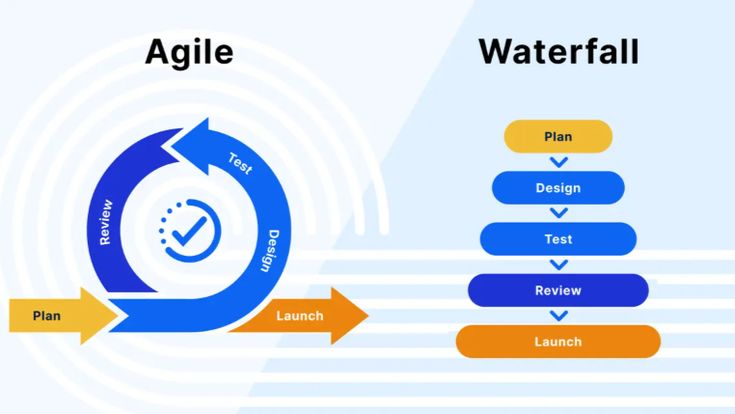
Agile vs Waterfall: The Ultimate Project Management Comparison in 2026

Agile vs Waterfall: The Choice Every Nigerian Project Manager Must Make

Every Nigerian project manager faces this choice at some point. Should you use Agile or Waterfall on your next project?

Both methods work well. However, each one fits a different type of project. Lagos Data School helps you make this choice with confidence. Therefore, this guide explains both methods clearly. In addition, it compares them side by side using Nigerian examples. By the end, you will know exactly which approach to use and why.


What Is the Waterfall Method?

This may contain: the waterfall model is shown with several steps labeled in different colors and font on it

Waterfall is a step-by-step project management approach. Each phase must finish before the next one starts. For example, you complete planning before you start design. Furthermore, you complete design before you write a single line of code. Think of it as a staircase. You move forward and never go back up. Therefore, all requirements must be known before work begins. The typical Waterfall phases are Requirements, Design, Development, Testing, and Deployment.


Where Waterfall Works Best in Nigeria

Waterfall works best when requirements are fixed and clear. For example, construction projects in Nigeria suit Waterfall perfectly. Also, government contracts in Abuja often require Waterfall by default. Regulatory projects with fixed compliance deadlines are another strong fit. However, Waterfall struggles when the client changes their mind midway. Any late change can trigger costly rework across multiple phases. Therefore, use Waterfall only when your scope is stable from day one.


Key Advantages of Waterfall for Nigerian Teams

  • Clear structure: Every team member knows what to do and when.
  • Easy to document: All requirements are written down before work begins.
  • Client-friendly: Clients agree to a fixed scope and budget upfront.
  • Audit-ready: Nigerian regulators prefer the formal paper trail Waterfall produces.
  • Simple to manage: Progress is easy to measure at each phase gate.


Common Weaknesses of Waterfall

Waterfall does not handle change well. In fact, changes discovered late in the project are very expensive to fix. Also, clients see no working product until the very end. Consequently, surprises at delivery can damage trust and project outcomes. For this reason, Waterfall is a poor fit for fast-moving digital projects.


What Is the Agile Method?

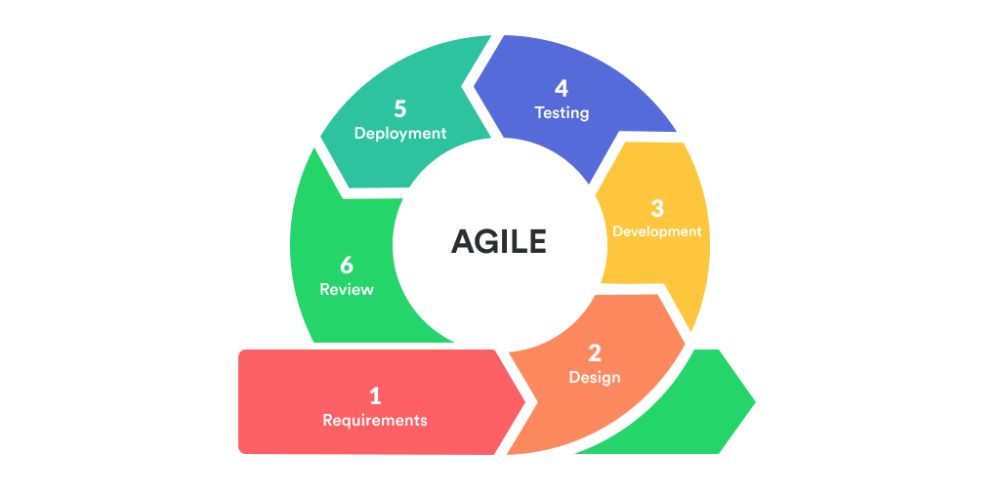
This may contain: a circular diagram with the words metaologa agile in spanish and english on it

Agile is a flexible, cyclical project management approach. Work is delivered in short cycles called sprints. Each sprint lasts between one and four weeks. Moreover, the team reviews progress at the end of every sprint. Therefore, the plan is adjusted regularly based on real results. Agile teams welcome change rather than avoid it. In short, Agile is built for projects where requirements will evolve.


Where Agile Works Best in Nigeria

Agile works best when requirements are unclear or likely to change. Software development is the most common example in Nigeria. For example, Nigerian fintech companies like Flutterwave use Agile daily. Also, digital marketing teams across Lagos run campaigns in sprint cycles. Furthermore, product teams at Nigerian startups use Agile to ship features fast. As a result, they respond to user feedback in days rather than months. However, Agile requires a disciplined and communicative team to work well.


Key Advantages of Agile for Nigerian Teams

  • Fast delivery: Useful features reach users at the end of every sprint.
  • Easy to adapt: Scope changes are welcomed rather than resisted.
  • Strong teamwork: Daily stand-up meetings keep everyone aligned.
  • Client involvement: Clients review work every sprint and give direct feedback.
  • Early risk detection: Problems appear in sprint one, not at the final deadline.


Common Weaknesses of Agile

Agile can feel chaotic without a skilled Scrum Master. Also, scope creep is a real risk if the product backlog is not managed well. Furthermore, fixed-price contracts are hard to write for Agile projects. Consequently, Nigerian clients who expect a fixed cost upfront may push back on Agile. In addition, Agile requires daily team discipline that some Nigerian teams need time to build.


Agile vs Waterfall: A Direct Comparison for Nigerian Projects

Use this table to compare both approaches across factors that matter most.


Factor Agile Waterfall
Planning style Continuous and adaptive All upfront before work starts
Delivery style Working product every sprint One delivery at the project end
Flexibility High — changes are welcomed Low — changes are expensive
Client involvement Every sprint review At start and end only
Documentation Lightweight and timely Heavy and formal
Best Nigerian use Tech, fintech, digital, startups Construction, government, compliance
Risk detection Early — caught in sprint one Late — found during testing
Team structure Self-organising and cross-functional Hierarchical with defined roles
Contract type Time and materials preferred Fixed price works well
Nigerian example Lagos fintech mobile app build Abuja federal road construction


How to Choose the Right Method for Your Nigerian Project

Ask yourself these three simple questions. First, are your requirements fixed and agreed by all stakeholders? If yes, then Waterfall is likely your best choice. However, if requirements may change, choose Agile instead.


Question 2: How Long Is Your Project?

Short projects under three months often suit Waterfall well. Also, the overhead of sprint ceremonies is not always worth it for a small scope. On the other hand, longer projects over six months benefit greatly from Agile. Therefore, regular sprint reviews catch drift and scope creep early. As a result, long Agile projects stay on track far better than long Waterfall ones.


Question 3: How Experienced Is Your Team?

Agile needs a disciplined and self-managing team. Therefore, if your team is new to project management, start with Waterfall. Also, Agile requires strong daily communication habits. Consequently, invest in team training before using Agile on a high-stakes project. In short, match the method to the maturity of your team first.


The Hybrid Approach: Using Agile and Waterfall Together

Many Nigerian organisations use a mix of both methods. For example, they plan the overall project using a Waterfall structure. Then, they deliver each phase using Agile sprints. Consequently, teams get stability where they need it most. Also, they get flexibility where that adds the most value. In fact, most advanced Nigerian project teams move toward a hybrid model over time. Therefore, learning both methods gives you the widest range of career options.


What Nigerian Employers Expect from Project Managers Today

Nigerian employers now expect project managers to know both Agile and Waterfall. Moreover, many job posts in Lagos and Abuja now ask for Agile experience specifically. For example, fintech firms, banks, and tech startups all list Agile skills in their job descriptions. Furthermore, government and construction firms still require Waterfall knowledge for bids and tenders. Therefore, a project manager who knows both methods earns more and gets hired faster. In addition, PMP certification now covers both approaches in equal depth. As a result, Lagos Data School prepares every student for both methods in one course.


Free Resources to Learn More

Lagos Data School recommends the Agile Manifesto as a free starting point. It is short, clear, and written by the founders of the movement. Also, the Project Management Institute offers free resources on both methods. In addition, the PMI website covers PMP and PMI-ACP certification paths for Nigerian professionals.


How Lagos Data School Teaches Agile and Waterfall

Lagos Data School covers both Agile and Waterfall in its live project management course. Students compare both methods using real Nigerian case studies. Moreover, every student practises choosing the right approach for different project scenarios. Furthermore, the course covers hybrid project management, sprint planning, and Waterfall documentation. Therefore, Lagos Data School graduates are ready for any project environment in Nigeria. To enrol, visit the Lagos Data School training page. Also, explore our graduates’ project work at the Lagos Data School student portfolio.


Frequently Asked Questions: Agile vs Waterfall Nigeria

Q1: Can a Nigerian construction project use Agile?

Construction projects can adopt Agile principles for planning and team communication. However, the physical build still follows a sequential Waterfall order. Therefore, a hybrid approach works best for Nigerian construction projects.


Q2: Which method do Nigerian banks prefer?

Most Nigerian banks use Waterfall for regulatory and compliance projects. However, they increasingly use Agile for digital product development. Consequently, knowing both methods makes a Nigerian banker far more valuable. In addition, many Nigerian banks now run dedicated Agile squads for their tech teams.


Q3: Does the PMP exam cover both methods?

Yes. The PMP exam now covers both predictive (Waterfall) and adaptive (Agile) approaches equally. Therefore, Lagos Data School prepares every student for both sections of the exam. In fact, approximately half of PMP exam questions now focus on Agile and hybrid approaches.


Q4: Is Agile harder to learn than Waterfall?

Agile has fewer formal steps than Waterfall. However, Agile requires stronger team communication and daily discipline. Therefore, many Nigerian professionals find Waterfall easier to start with. In short, both methods are learnable. Lagos Data School makes both approachable for every student.


Q5: Which method pays more in Nigeria?

Agile skills are in higher demand in the Nigerian tech and fintech sectors right now. Moreover, Agile-certified project managers in Lagos typically earn more than those without Agile knowledge. However, Waterfall expertise is still essential for government and infrastructure projects. Consequently, professionals who know both methods command the highest salaries in Nigeria.


Make Your Choice and Build Your Career at Lagos Data School

Agile and Waterfall are both powerful tools. However, the right one depends on your project, your client, and your team. Lagos Data School teaches you both methods so you can make the right call every time. Furthermore, every student leaves with practical skills and a professional certification path. Therefore, your next project deserves a trained, confident, and certified project manager.

Visit Lagos Data School and enrol in the project management course today.
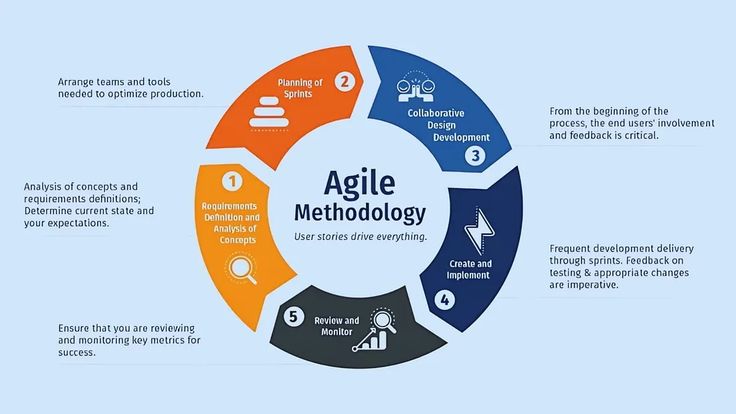
How Agile Methodology Is Transforming Nigerian Tech Companies

How Agile Is Changing the Nigerian Tech Industry

Nigerian tech companies are growing faster than ever. However, old project management methods are slowing many of them down.

This may contain: the agile method for business development is shown in this graphic style, with arrows pointing to different

Lagos Data School trains Nigerian tech professionals to use Agile and stay competitive. Therefore, this article shows how Agile is transforming Nigerian tech companies right now.

In addition, it shares real examples, key benefits, and career advice. By the end, you will understand why Agile has become the go-to method in Nigerian tech.


What Agile Means for a Nigerian Tech Company

Agile is a way of delivering tech products in short, focused cycles. Each cycle, called a sprint lasts one to four weeks.

Furthermore, the team reviews results at the end of every sprint. Therefore, the product improves with every single cycle. In short, Agile replaces long, rigid plans with fast, flexible delivery. As a result, Nigerian tech companies ship better products in less time.


Why Nigerian Tech Companies Are Adopting Agile

The Nigerian tech market changes very fast. For example, customer needs in Lagos fintech shift monthly.

Also, competition from new startups forces companies to move quickly. Therefore, long twelve-month project cycles no longer work in this environment. Agile solves this by delivering value every two weeks instead. Consequently, companies respond to market changes before they lose customers.


The Role of Funding and Investor Pressure

Nigerian startups now raise funds from international venture capital firms. Furthermore, these investors expect fast, measurable delivery from day one. Agile gives teams a clear sprint-by-sprint delivery record to show investors.

Therefore, Agile is not just a development choice — it is a business requirement. In fact, many Lagos investors now ask whether a startup uses Agile before funding it.


Real Nigerian Tech Companies Using Agile Today

Many top Nigerian tech firms have already adopted Agile. For example, fintech companies run two-week sprint cycles for product releases.

Also, Nigerian healthtech startups use Agile to build and test medical apps quickly. Furthermore, edtech platforms across Lagos use Agile to update course content regularly. Consequently, their users always get fresh, relevant learning experiences.


Agile in Nigerian Banks and Financial Services

Nigerian banks are also embracing Agile in their tech teams. For example, several tier-one Lagos banks now run dedicated Agile squads.

Moreover, these squads release new digital banking features every sprint. Therefore, Nigerian banking apps are improving at a pace customers can notice. In addition, Agile helps these banks reduce the cost of failed digital projects.


Agile in Lagos Software Development Agencies

Software agencies in Lagos now sell Agile delivery as a core service. In fact, clients pay a premium for sprint-based development over fixed-plan projects. Also, agencies report fewer client disputes when sprints are used. Consequently, client satisfaction scores improve from the very first sprint. Therefore, Agile has become a key differentiator for competitive Lagos agencies.


Key Benefits of Agile for Nigerian Tech Teams

  • Faster releases: Working features ship every sprint rather than every six months.
  • Lower failure risk: Problems are caught in sprint one rather than at the final deadline.
  • Happier clients: Clients review real work every sprint and give direct feedback.
  • Better teamwork: Daily stand-ups keep every team member aligned and accountable.
  • Stronger products: Continuous feedback from users shapes every sprint.


Challenges Nigerian Tech Companies Face with Agile

Agile adoption is not always smooth in Nigeria. However, most challenges are manageable with the right training.


Challenge 1: Top-Down Management Culture

Many Nigerian tech firms have strong top-down leadership styles. However, Agile requires self-organising teams that plan their own sprints. Therefore, management must trust teams to make decisions during sprints. In fact, companies that make this shift consistently see faster delivery.


Challenge 2: Inconsistent Internet and Power

Daily stand-ups and sprint tools need reliable internet access. Furthermore, power outages in Lagos can disrupt remote Agile ceremonies. Therefore, smart Nigerian teams use mobile hotspots and async stand-up tools as backups. As a result, the sprint rhythm is maintained even during outages.


Challenge 3: Lack of Trained Scrum Masters

Many Nigerian companies adopt Agile without a trained Scrum Master. Consequently, the process breaks down within the first few sprints. Therefore, investing in Scrum Master training is essential before adopting Agile at scale.

Lagos Data School provides this training for Nigerian tech professionals.


Agile Adoption: Before and After in Nigerian Tech Companies

This table shows the real difference Agile makes for Nigerian tech teams.


Area Before Agile After Agile
Release frequency Every 6–12 months Every 1–4 weeks
Client feedback Only at project end Every sprint review
Problem detection Late in testing phase Sprint one or two
Team communication Weekly email updates Daily 10-minute stand-up
Product quality One shot to get it right Improved every sprint
Budget control Overruns common Costs tracked per sprint
Nigerian example Lagos app delayed 18 months Same app shipped in 8 sprints


Free Resource: The Agile Manifesto

Lagos Data School recommends the Agile Manifesto as a free first read. It explains the four Agile values and twelve principles that every Nigerian tech professional needs.

Also, the Scrum Guide is a free, official reference for Nigerian Scrum teams.


How Lagos Data School Prepares Nigerian Tech Professionals for Agile

Lagos Data School delivers live Agile training for Nigerian tech teams. Students learn sprint planning, daily stand-ups, backlog management, and retrospectives. Moreover, every session uses real Nigerian tech company case studies. Furthermore, graduates leave ready to lead Agile teams on day one.

Visit the Lagos Data School training page to enrol today.

Also, explore what our graduates have built at the Lagos Data School student portfolio.


Frequently Asked Questions

Q1: Which Nigerian tech companies use Agile?

Most Nigerian fintech, edtech, and healthtech companies use Agile today. Furthermore, tier-one banks like GTBank and Access Bank run Agile squads internally. Therefore, Agile skills are in high demand across the Nigerian tech ecosystem.


Q2: How long does Agile adoption take for a Nigerian team?

Basic Agile adoption takes two to four weeks with proper training. However, full cultural adoption across a whole company can take three to six months. Therefore, start with one team and expand Agile gradually across the organisation.


Q3: Do I need a certification to work on an Agile Nigerian tech team?

No certification is required to join an Agile team. However, a certification like PSM or PMI-ACP significantly improves your job prospects. Consequently, Lagos Data School prepares students for both certifications in its live course.


Build Your Agile Career with Lagos Data School

Nigerian tech is moving fast. Furthermore, Agile-trained professionals are the ones leading that movement.

Lagos Data School gives you the practical skills to lead Agile teams in Nigeria.

Visit Lagos Data School and enrol in the project management course today.


Agile Frameworks Compared: Complete 2026 Guide

Agile Has Many Frameworks. Which One Is Right for Your Nigerian Team?

Agile is not a single method. In fact, it is an umbrella of several different frameworks. Lagos Data School helps Nigerian project managers choose the right one. Therefore, this guide compares the four most popular Agile frameworks.

In addition, each framework is explained with a Nigerian use case. By the end, you will know which framework fits your team, project, and industry.


Framework 1: Scrum

Scrum is the most popular Agile framework in the world. Furthermore, it is the most widely used framework in Nigerian tech companies today. Scrum organises work into sprints of one to four weeks. In addition, it defines three clear roles: Product Owner, Scrum Master, and Development Team.

This may contain: the word scrum surrounded by icons and symbols in blue, orange, yellow and white


How Scrum Works in Nigeria

The Product Owner manages and prioritises the product backlog. Therefore, the team always works on the most valuable tasks first. Moreover, the Scrum Master facilitates the process and removes blockers.

The team delivers a working product at the end of every sprint. Consequently, Nigerian clients see real results every two weeks rather than months later.


Best Nigerian Use Cases for Scrum

  • Fintech apps: Lagos fintech teams use Scrum to release payment features in fortnightly sprints.
  • E-commerce platforms: Nigerian online stores use Scrum to add new features based on customer feedback.
  • Software agencies: Lagos development agencies use Scrum to manage client projects transparently.


Scrum Strengths and Weaknesses

Scrum gives teams a clear, predictable structure. However, it requires daily discipline and a dedicated Scrum Master to work well.

Also, Scrum can feel too rigid for teams that receive work unpredictably. In short, Scrum is best for teams building a defined product over several months.


Framework 2: Kanban

Kanban is a visual, flow-based Agile framework. Work items are placed on a board with columns: To Do, In Progress, and Done. Furthermore, there are no fixed sprints in Kanban. Instead, new work enters the board continuously as items are completed.

Consequently, teams handle unpredictable work streams far better than Scrum allows.

This may contain: the words kanban to do, doing and one written on sticky notes


How Kanban Works in Nigeria

Each task card moves across the board from left to right. Therefore, every team member sees the status of every task at a glance. Moreover, Kanban sets Work-in-Progress (WIP) limits for each column.

These limits stop the team from starting too many tasks at once. As a result, focus improves, and tasks get completed faster.


Best Nigerian Use Cases for Kanban

  • IT support teams: Lagos IT helpdesks use Kanban to manage tickets as they arrive.
  • HR and recruitment: Abuja HR teams use Kanban boards to track candidates through hiring stages.
  • Marketing teams: Nigerian marketing agencies use Kanban for continuous content publishing workflows.


Kanban Strengths and Weaknesses

Kanban is highly flexible and needs no fixed roles or ceremonies. However, without WIP limits, the board can become overloaded quickly.

Also, Kanban lacks the structured feedback loops that Scrum provides. Therefore, Kanban is best for operational, support, or continuous delivery teams.


Framework 3: SAFe (Scaled Agile Framework)

SAFe is an Agile framework designed for large organisations. Furthermore, it coordinates multiple Agile teams working on the same product. SAFe organises teams into Agile Release Trains (ARTs) with a shared delivery schedule. Therefore, hundreds of people can work in an Agile way without losing alignment.

This may contain: safe certified logo on a white background


How SAFe Is Used in Nigeria

SAFe is used by Nigerian banks, telecoms, and large government agencies. For example, a Nigerian bank running fifteen development teams uses SAFe to keep them aligned. Moreover, SAFe introduces a Program Increment (PI) — a ten-to-twelve-week planning cycle. Consequently, all teams plan together and commit to shared quarterly goals. In addition, SAFe includes roles like Release Train Engineer and Product Management.


SAFe Strengths and Weaknesses

SAFe scales Agile across large Nigerian organisations effectively. However, it is complex and requires significant training to implement correctly. Also, small Nigerian teams do not need SAFe — it is designed for enterprise scale.

Therefore, SAFe is only suitable when more than fifty people are working on one product.


Framework 4: XP (Extreme Programming)

XP is an Agile framework built specifically for software engineering teams. In fact, it focuses on technical practices that improve code quality and delivery speed.

Furthermore, XP introduced popular practices like Test-Driven Development (TDD) and Pair Programming. Therefore, Nigerian developers who master XP consistently produce better software.

This may contain: the logo for an extreme programming program


How XP Is Used in Nigerian Tech Teams

XP requires developers to write tests before writing any code. Consequently, bugs are caught at the moment they are introduced rather than later. Also, Pair Programming means two developers write code together on one computer.

Therefore, knowledge is shared constantly, and code quality improves with every session. Moreover, XP uses very short release cycles — sometimes daily delivery.


XP Strengths and Weaknesses

XP produces some of the highest-quality code of any Agile framework. However, it requires highly skilled developers and strong team discipline.

Also, not all Nigerian tech companies have the engineering culture XP demands. Therefore, XP works best inside mature Nigerian tech teams that prioritise code quality.


Scrum vs Kanban vs SAFe vs XP: Side-by-Side Comparison

Use this table to choose the right Agile framework for your Nigerian team.


Factor Scrum Kanban SAFe XP
Team size 3–9 people Any size 50+ people 3–12 devs
Work style Sprints Continuous flow Programme Increments Short releases
Key roles PO, SM, Team Team only RTE, PM, Team Coach, Customer
Ceremonies 4 per sprint None required PI Planning, ART Daily, Weekly
Best for Product dev Ops, support Enterprise Engineering
Nigerian fit Fintech, agencies HR, marketing, IT Banks, telecoms Senior dev teams
Complexity Medium Low High Medium-high


How to Choose the Right Framework for Your Nigerian Team

Start with the simplest framework that fits your context. For example, if you are a small Lagos startup, start with Scrum.

However, if your work arrives unpredictably, Kanban is a better fit. Also, if you are in a large Nigerian bank with multiple dev teams, consider SAFe.

Finally, if your team consists of experienced developers, explore XP practices. Therefore, let your team size, work type, and industry guide your choice.


Free Resources for Nigerian Agile Teams

Lagos Data School recommends the Scrum Guide as the official free Scrum reference. Furthermore, the Kanban Guide is a free, concise reference for Kanban teams.

Also, the Scaled Agile website offers free SAFe overview articles.


How Lagos Data School Teaches Agile Frameworks

Lagos Data School covers Scrum, Kanban, SAFe, and XP in its live Agile training. Students compare all four frameworks using real Nigerian project scenarios.

Moreover, practical sprint exercises are run for Scrum and Kanban in every session. Therefore, graduates confidently choose and apply the right framework on any Nigerian project.

Visit the Lagos Data School training page to enrol. Also, see our graduates’ work at the Lagos Data School student portfolio.


Frequently Asked Questions

Q1: Which Agile framework is most popular in Nigeria?

Scrum is the most widely used Agile framework in Nigerian tech companies today. However, Kanban is growing fast in Nigerian support, HR, and marketing teams.

Therefore, learning Scrum first gives you the widest range of job opportunities in Nigeria.


Q2: Can a team mix Scrum and Kanban?

Yes. This combination is called Scrumban. Furthermore, Scrumban is popular in Nigerian teams that have both sprint work and continuous tasks.

Therefore, mixing the two is perfectly valid as long as the team agrees on a clear process.


Q3: Is SAFe too complex for Nigerian companies?

SAFe can be overwhelming without proper training. However, it is the right choice for large Nigerian organisations coordinating multiple teams.

Consequently, Lagos Data School teaches SAFe awareness to students at the advanced level.


Learn All Four Frameworks at Lagos Data School

Scrum, Kanban, SAFe, and XP are all valuable tools for Nigerian project managers. Furthermore, the best professionals know when to use each one.

Lagos Data School teaches you all four in its live, practical Agile course.

Visit Lagos Data School and enrol today.

What Is Agile Methodology? A Complete Beginner’s Guide

What Is Agile Methodology?

Agile is a way of managing projects by breaking work into small, fast cycles called sprints or iterations. Instead of planning the entire project upfront, Agile teams plan a little, build a little, review a little, and then repeat.

Each cycle produces a working result. The team shows that result to the client. The client gives feedback. The team improves and moves to the next cycle.

Lagos Data School teaches Agile methodology to Nigerian professionals across IT, finance, healthcare, and government. This guide covers everything a beginner needs to know.


Where Did Agile Come From?

In 2001, seventeen software developers met in Utah, USA. They were frustrated with slow, rigid project management methods. Together, they wrote the Agile Manifesto. It defined four core values and twelve principles for building software better.

The Agile Manifesto valued working software over comprehensive documentation. It prioritised customer collaboration over contract negotiation.

These ideas quickly spread beyond software. Today, Nigerian teams in banking, healthcare, construction, and government use Agile principles to manage projects.


The Four Core Agile Values

Agile Value What It Means for Nigerian Project Teams
Individuals and interactions over processes and tools People and conversations matter more than rigid systems.
Working software over comprehensive documentation Deliver results quickly rather than writing endless reports.
Customer collaboration over contract negotiation Work closely with your client instead of hiding behind a contract.
Responding to change over following a plan Adapt quickly when requirements change instead of resisting it.


Agile vs Waterfall: What Is the Difference?

Many Nigerians who learn Agile for the first time ask how it differs from traditional project management.

Feature Waterfall Agile
Planning style All planning done upfront Planning done sprint by sprint
Delivery One final delivery at the end Working output after every sprint
Change handling Changes are costly and slow Changes welcomed at any sprint
Client involvement Client sees result at the end The clients leave reviews after every sprint
Best for Fixed scope, stable requirements Changing requirements, digital products
Nigerian example Road construction, government tenders Mobile apps, fintech platforms


Neither method is universally better. Choose Agile when requirements will change.


The Most Popular Agile Framework: Scrum

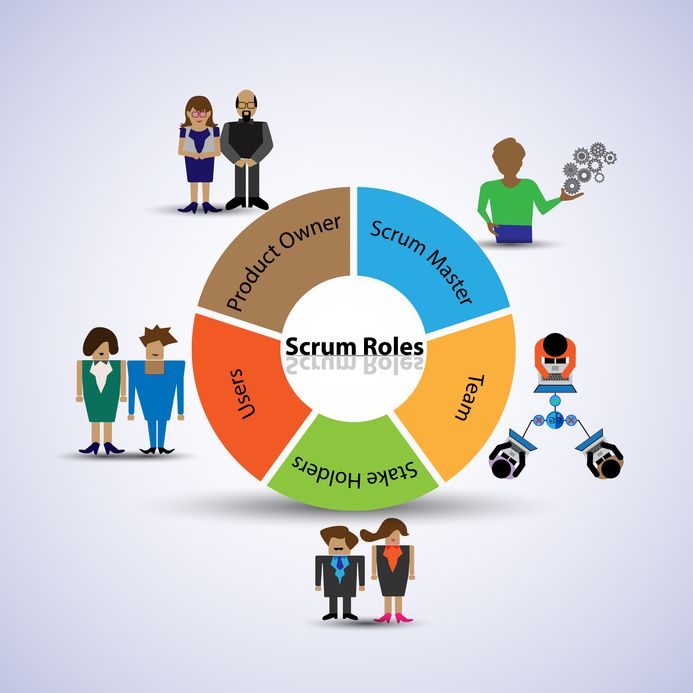
Scrum is the most widely used Agile framework in Nigeria. It organises work into sprints, assigns three core roles, and uses four ceremonies to keep the team aligned.


The Three Scrum Roles

  • Product Owner: Defines what the team builds. Owns and prioritises the product backlog. Represents the client’s interests.
  • Scrum Master: Facilitates the Scrum process. Removes blockers. Coaches the team on Agile principles.
  • Development Team: Builds the product. Self-organises. Commits to sprint deliverables at planning.


The Four Scrum Ceremonies

  • Sprint Planning: The team selects tasks from the backlog and plans the sprint. Happens at the start of every sprint.
  • Daily Stand-up: A 15-minute daily meeting. Each member shares progress, plans, and blockers.
  • Sprint Review: The team demos the completed sprint work to stakeholders.
  • Sprint Retrospective: The team reflects on how to improve the process. Happens after every sprint review.


Kanban: The Other Popular Agile Approach

Kanban is simpler than Scrum. It uses a visual board with three columns: To Do, In Progress, and Done. Every task moves from left to right as work progresses.

Kanban is ideal for Nigerian teams doing ongoing, flow-based work like customer support, content production, or IT maintenance. It has no sprints and no fixed roles. Work simply flows through the board.


How Nigerian Teams Apply Agile in Real Projects

A Lagos fintech startup uses Scrum to build its mobile banking app. They run two-week sprints. User feedback shapes the next sprint.

An Abuja government agency uses Kanban to manage internal communications requests. Each request moves through the board from submission to approval to publication.

A Port Harcourt hospital uses Agile principles to manage its digital records rollout. Monthly reviews with doctors and nurses replace quarterly status meetings.


A Nigerian Analogy: The Batcher vs the Full Pot

Waterfall is like cooking a full pot of soup for 50 guests before anyone tastes it. If the seasoning is wrong, the entire pot is wasted.

Agile is like cooking in small test batches. Each batch is tasted and adjusted before the next one begins. By the time the 50th portion is served, the recipe is perfect.


Agile Certifications for Nigerian Professionals

Certification Issuing Body Best For
Certified Scrum Master (CSM) Scrum Alliance Nigerian professionals leading Scrum teams
Professional Scrum Master (PSM) Scrum.org Rigorous, lower-cost Scrum certification
PMI-ACP (Agile Certified Practitioner) PMI Broad Agile certification for experienced PMs
SAFe Agilist Scaled Agile Inc. Enterprise Agile in large Nigerian organisations
Kanban Management Professional Kanban University Nigerian teams managing flow-based work


How Lagos Data School Teaches Agile

Lagos Data School delivers live Agile training for Nigerian professionals across all industries. The curriculum covers Scrum, Kanban, sprint planning, retrospectives, and Agile product management. Sessions use Nigerian project scenarios from fintech, healthcare, construction, and government.

Students leave with the knowledge to pass Agile certification exams and the skills to run Agile teams in any Nigerian organisation.

Enrol today at Lagos Data School. See what our graduates achieve in the Lagos Data School student portfolio.


Frequently Asked Questions

Q1: Can Agile Be Used Outside Software Development in Nigeria?

Yes. Nigerian marketing teams use Agile to manage campaign sprints. Health teams use it for programme rollouts. Government agencies use it for policy implementation projects. Agile principles apply wherever work is complex, iterative, and subject to change.

Q2: How Long Is a Sprint?

Sprints typically last one to four weeks. Most Nigerian tech teams use two-week sprints. Shorter sprints give faster feedback. Longer sprints allow more complex work to be completed. Choose the sprint length that matches your team’s pace and delivery needs.

Q3: Do I Need to Know Coding to Work in Agile Project Management?

No. Many Agile project managers and Scrum Masters in Nigeria come from non-technical backgrounds. What matters is understanding Agile principles, facilitating team ceremonies, removing blockers, and communicating clearly with stakeholders. Technical knowledge is a bonus, not a requirement.


Start Your Agile Journey at Lagos Data School

Agile is not just a method. It is a mindset that helps Nigerian teams deliver better results, faster, with less waste. Every Nigerian professional who learns Agile becomes more valuable to their team and their organisation.

Start today. Visit Lagos Data School and enrol in the Agile project management course. Your career will thank you for it.


© 2026 Lagos Data School | www.lagosdataschool.com

Hi, How Can We Help You?
Welcome To
Lagos Data School

Artificial Intelligence (AI), Machine Learning and Robotics Programmes Are Now Available!!!

Enroll Now!

Thank You
100% secure website.