Agile vs Waterfall: The Choice Every Nigerian Project Manager Must Make
Every Nigerian project manager faces this choice at some point. Should you use Agile or Waterfall on your next project?
Both methods work well. However, each one fits a different type of project. Lagos Data School helps you make this choice with confidence. Therefore, this guide explains both methods clearly. In addition, it compares them side by side using Nigerian examples. By the end, you will know exactly which approach to use and why.
What Is the Waterfall Method?

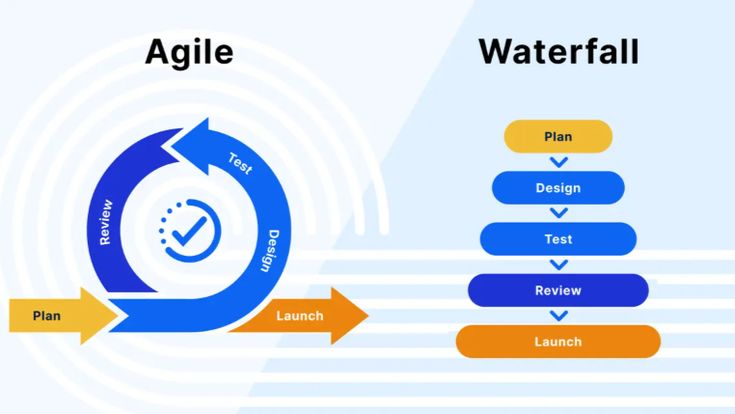
Waterfall is a step-by-step project management approach. Each phase must finish before the next one starts. For example, you complete planning before you start design. Furthermore, you complete design before you write a single line of code. Think of it as a staircase. You move forward and never go back up. Therefore, all requirements must be known before work begins. The typical Waterfall phases are Requirements, Design, Development, Testing, and Deployment.
Where Waterfall Works Best in Nigeria
Waterfall works best when requirements are fixed and clear. For example, construction projects in Nigeria suit Waterfall perfectly. Also, government contracts in Abuja often require Waterfall by default. Regulatory projects with fixed compliance deadlines are another strong fit. However, Waterfall struggles when the client changes their mind midway. Any late change can trigger costly rework across multiple phases. Therefore, use Waterfall only when your scope is stable from day one.
Key Advantages of Waterfall for Nigerian Teams
- Clear structure: Every team member knows what to do and when.
- Easy to document: All requirements are written down before work begins.
- Client-friendly: Clients agree to a fixed scope and budget upfront.
- Audit-ready: Nigerian regulators prefer the formal paper trail Waterfall produces.
- Simple to manage: Progress is easy to measure at each phase gate.
Common Weaknesses of Waterfall
Waterfall does not handle change well. In fact, changes discovered late in the project are very expensive to fix. Also, clients see no working product until the very end. Consequently, surprises at delivery can damage trust and project outcomes. For this reason, Waterfall is a poor fit for fast-moving digital projects.
What Is the Agile Method?

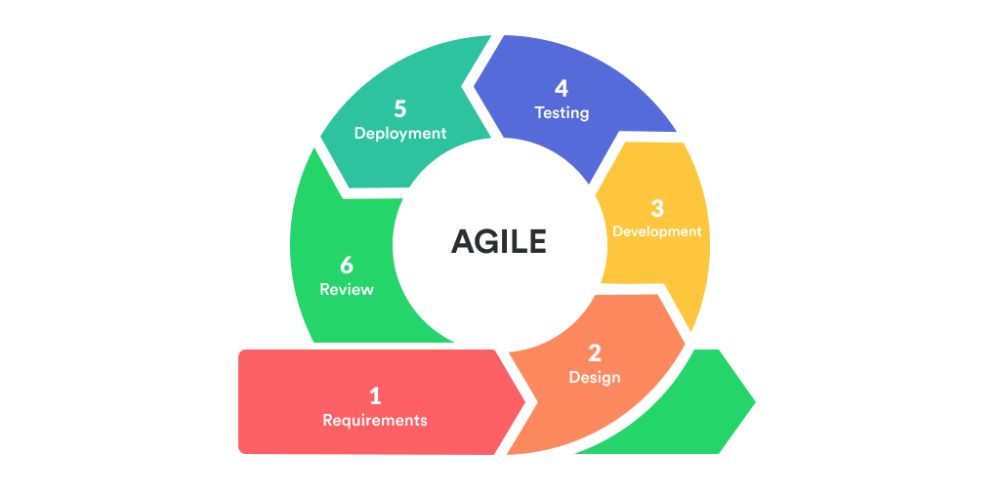
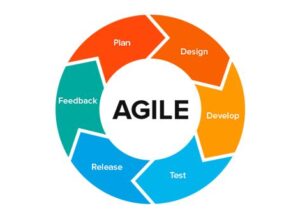
Agile is a flexible, cyclical project management approach. Work is delivered in short cycles called sprints. Each sprint lasts between one and four weeks. Moreover, the team reviews progress at the end of every sprint. Therefore, the plan is adjusted regularly based on real results. Agile teams welcome change rather than avoid it. In short, Agile is built for projects where requirements will evolve.
Where Agile Works Best in Nigeria
Agile works best when requirements are unclear or likely to change. Software development is the most common example in Nigeria. For example, Nigerian fintech companies like Flutterwave use Agile daily. Also, digital marketing teams across Lagos run campaigns in sprint cycles. Furthermore, product teams at Nigerian startups use Agile to ship features fast. As a result, they respond to user feedback in days rather than months. However, Agile requires a disciplined and communicative team to work well.
Key Advantages of Agile for Nigerian Teams
- Fast delivery: Useful features reach users at the end of every sprint.
- Easy to adapt: Scope changes are welcomed rather than resisted.
- Strong teamwork: Daily stand-up meetings keep everyone aligned.
- Client involvement: Clients review work every sprint and give direct feedback.
- Early risk detection: Problems appear in sprint one, not at the final deadline.
Common Weaknesses of Agile
Agile can feel chaotic without a skilled Scrum Master. Also, scope creep is a real risk if the product backlog is not managed well. Furthermore, fixed-price contracts are hard to write for Agile projects. Consequently, Nigerian clients who expect a fixed cost upfront may push back on Agile. In addition, Agile requires daily team discipline that some Nigerian teams need time to build.
Agile vs Waterfall: A Direct Comparison for Nigerian Projects
Use this table to compare both approaches across factors that matter most.
| Factor | Agile | Waterfall |
| Planning style | Continuous and adaptive | All upfront before work starts |
| Delivery style | Working product every sprint | One delivery at the project end |
| Flexibility | High — changes are welcomed | Low — changes are expensive |
| Client involvement | Every sprint review | At start and end only |
| Documentation | Lightweight and timely | Heavy and formal |
| Best Nigerian use | Tech, fintech, digital, startups | Construction, government, compliance |
| Risk detection | Early — caught in sprint one | Late — found during testing |
| Team structure | Self-organising and cross-functional | Hierarchical with defined roles |
| Contract type | Time and materials preferred | Fixed price works well |
| Nigerian example | Lagos fintech mobile app build | Abuja federal road construction |
How to Choose the Right Method for Your Nigerian Project
Ask yourself these three simple questions. First, are your requirements fixed and agreed by all stakeholders? If yes, then Waterfall is likely your best choice. However, if requirements may change, choose Agile instead.
Question 2: How Long Is Your Project?
Short projects under three months often suit Waterfall well. Also, the overhead of sprint ceremonies is not always worth it for a small scope. On the other hand, longer projects over six months benefit greatly from Agile. Therefore, regular sprint reviews catch drift and scope creep early. As a result, long Agile projects stay on track far better than long Waterfall ones.
Question 3: How Experienced Is Your Team?
Agile needs a disciplined and self-managing team. Therefore, if your team is new to project management, start with Waterfall. Also, Agile requires strong daily communication habits. Consequently, invest in team training before using Agile on a high-stakes project. In short, match the method to the maturity of your team first.
The Hybrid Approach: Using Agile and Waterfall Together
Many Nigerian organisations use a mix of both methods. For example, they plan the overall project using a Waterfall structure. Then, they deliver each phase using Agile sprints. Consequently, teams get stability where they need it most. Also, they get flexibility where that adds the most value. In fact, most advanced Nigerian project teams move toward a hybrid model over time. Therefore, learning both methods gives you the widest range of career options.
What Nigerian Employers Expect from Project Managers Today
Nigerian employers now expect project managers to know both Agile and Waterfall. Moreover, many job posts in Lagos and Abuja now ask for Agile experience specifically. For example, fintech firms, banks, and tech startups all list Agile skills in their job descriptions. Furthermore, government and construction firms still require Waterfall knowledge for bids and tenders. Therefore, a project manager who knows both methods earns more and gets hired faster. In addition, PMP certification now covers both approaches in equal depth. As a result, Lagos Data School prepares every student for both methods in one course.
Free Resources to Learn More
Lagos Data School recommends the Agile Manifesto as a free starting point. It is short, clear, and written by the founders of the movement. Also, the Project Management Institute offers free resources on both methods. In addition, the PMI website covers PMP and PMI-ACP certification paths for Nigerian professionals.
How Lagos Data School Teaches Agile and Waterfall
Lagos Data School covers both Agile and Waterfall in its live project management course. Students compare both methods using real Nigerian case studies. Moreover, every student practises choosing the right approach for different project scenarios. Furthermore, the course covers hybrid project management, sprint planning, and Waterfall documentation. Therefore, Lagos Data School graduates are ready for any project environment in Nigeria. To enrol, visit the Lagos Data School training page. Also, explore our graduates’ project work at the Lagos Data School student portfolio.
Frequently Asked Questions: Agile vs Waterfall Nigeria
Q1: Can a Nigerian construction project use Agile?
Construction projects can adopt Agile principles for planning and team communication. However, the physical build still follows a sequential Waterfall order. Therefore, a hybrid approach works best for Nigerian construction projects.
Q2: Which method do Nigerian banks prefer?
Most Nigerian banks use Waterfall for regulatory and compliance projects. However, they increasingly use Agile for digital product development. Consequently, knowing both methods makes a Nigerian banker far more valuable. In addition, many Nigerian banks now run dedicated Agile squads for their tech teams.
Q3: Does the PMP exam cover both methods?
Yes. The PMP exam now covers both predictive (Waterfall) and adaptive (Agile) approaches equally. Therefore, Lagos Data School prepares every student for both sections of the exam. In fact, approximately half of PMP exam questions now focus on Agile and hybrid approaches.
Q4: Is Agile harder to learn than Waterfall?
Agile has fewer formal steps than Waterfall. However, Agile requires stronger team communication and daily discipline. Therefore, many Nigerian professionals find Waterfall easier to start with. In short, both methods are learnable. Lagos Data School makes both approachable for every student.
Q5: Which method pays more in Nigeria?
Agile skills are in higher demand in the Nigerian tech and fintech sectors right now. Moreover, Agile-certified project managers in Lagos typically earn more than those without Agile knowledge. However, Waterfall expertise is still essential for government and infrastructure projects. Consequently, professionals who know both methods command the highest salaries in Nigeria.
Make Your Choice and Build Your Career at Lagos Data School
Agile and Waterfall are both powerful tools. However, the right one depends on your project, your client, and your team. Lagos Data School teaches you both methods so you can make the right call every time. Furthermore, every student leaves with practical skills and a professional certification path. Therefore, your next project deserves a trained, confident, and certified project manager.
Visit Lagos Data School and enrol in the project management course today.