Agile Project Management for Non-Tech Teams: Complete 2026 Guide

Agile for Non-Tech Nigerian Teams: The Short Answer Is Yes
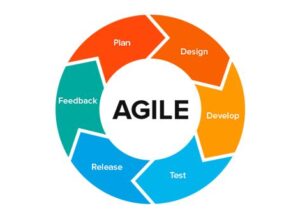
Agile was born in the software world. However, it has spread far beyond tech teams. Lagos Data School teaches Agile to marketing, HR, finance, and operations professionals across Nigeria. Furthermore, all of them apply it successfully in their daily work. Therefore, this guide answers the question directly: can non-tech Nigerian teams use Agile? In short, yes, and this guide shows you exactly how.


Why Non-Tech Teams Think Agile Is Not for Them

Many Nigerian professionals assume Agile is only for software developers. However, this is a common and understandable mistake. In fact, the confusion comes from Agile language. Words like sprint, backlog, and velocity sound very technical. Consequently, non-tech professionals often assume the method is too complex for them. However, the core idea of Agile is simple: plan in short cycles, deliver quickly, and improve regularly. Therefore, any team that does work can use Agile regardless of their industry.


The Core Agile Concepts Translated for Non-Tech Teams

Non-tech teams do not need to use software language to run Agile. Instead, they simply use business equivalents for each Agile term. Furthermore, the structure stays exactly the same.


The Sprint Becomes a Work Cycle

Instead of calling it a sprint, non-tech teams call it a work cycle. For example, a Lagos marketing team runs a two-week campaign cycle. Moreover, each cycle ends with a review of results and a plan for the next one. Consequently, the team improves its campaigns every two weeks rather than once a quarter.


The Product Backlog Becomes a Work List

The backlog simply becomes a prioritised list of tasks or deliverables. Therefore, the team tackles the most important items first in each work cycle. For example, an Abuja HR team keeps a list of recruitment tasks and policy reviews. In addition, they pick the top five items to complete each sprint. As a result, the most valuable HR work always gets done first.


The Daily Stand-Up Stays the Same

The daily stand-up needs no translation at all. Teams meet for ten minutes each morning and answer three questions. First: what did I do yesterday? Second: what will I do today? Third: what is blocking me? Furthermore, Nigerian marketing teams in Lagos already run morning check-ins. Therefore, Agile simply gives that habit a structure and a clear purpose.


The Retrospective Becomes a Team Review

At the end of each work cycle, the team reviews what went well and what to improve. For example, a Port Harcourt logistics team meets every Friday afternoon. They discuss three wins, three challenges, and three actions for next week. As a result, the team improves every single week rather than staying stuck in old habits.


Real Nigerian Non-Tech Teams Using Agile Right Now

Agile is not just a theory for non-tech teams in Nigeria. In fact, these real-world examples prove it works across many industries.


Marketing Teams in Lagos

Lagos marketing agencies now run campaigns in two-week sprint cycles. Social media content, paid ads, and email campaigns are all planned and reviewed in sprints. Consequently, Nigerian marketing directors report faster results and fewer wasted budgets. Furthermore, Agile makes it easy to cut what is not working after just two weeks. Therefore, marketing teams spend money where it delivers real results.


HR Teams in Abuja

Government and private sector HR teams in Abuja use Kanban boards for recruitment. Each candidate moves through columns: Applied, Screened, Interviewed, Offered, and Hired. Consequently, hiring managers see the status of every candidate at a single glance. Moreover, bottlenecks are spotted immediately before they delay onboarding. Therefore, recruitment moves faster and candidate experience improves as a result.


Event Management Teams Across Nigeria

Nigerian event planners use Agile sprint cycles for large conferences and owambes. For example, each sprint covers a different phase: venue, vendors, guests, and rehearsal. Moreover, the daily stand-up keeps vendors, clients, and logistics teams aligned. Consequently, surprises drop sharply because everyone checks in every day. Therefore, the event delivers on time and within budget far more often.


Finance and Operations Teams in Nigerian Banks

Nigerian banks and insurance firms now run Agile pilots in their operations teams. For example, monthly reporting cycles are broken into weekly sprints. Reports are reviewed iteratively rather than submitted once at month-end. As a result, errors are caught in week one rather than discovered after submission. Furthermore, clients and auditors receive cleaner and faster reports every time.


Agile vs Traditional for Nigerian Non-Tech Teams

Here is a direct comparison showing what changes when a non-tech team adopts Agile.


Area Traditional Approach Agile Approach
Planning frequency Once per quarter or project Every 1–2 week sprint
Review frequency Monthly or at project end End of every sprint
Scope flexibility Fixed — changes need approval Flexible — changes are welcomed
Team communication Weekly email updates Daily 10-minute stand-up
Progress visibility Status reports and slides Kanban board updated daily
Problem detection Late — often at deadline Early — caught in sprint one
Nigerian example Quarterly Lagos ad campaign Two-week campaign sprint cycle


Simple Agile Tools for Nigerian Non-Tech Teams

Non-tech Nigerian teams do not need expensive software to run Agile. In fact, these simple tools work well from day one.


Trello, Free Kanban Board

Trello is a free visual task management tool. Visit Trello to create a free account. Nigerian teams use it for content calendars, HR pipelines, and event planning boards. Furthermore, Trello works on both mobile and desktop — ideal for teams across Nigeria.


Notion, Free Project Wiki and Sprint Board

Notion combines a task board, a document wiki, and a database in one place. Moreover, Nigerian marketing and HR teams use it to track sprint tasks and store team knowledge. In addition, Notion has a free plan that is more than enough for most Nigerian non-tech teams.


Physical Kanban Boards

A whiteboard with sticky notes works just as well as any software tool. In fact, many Nigerian teams in areas with unreliable internet use physical boards effectively. Therefore, a physical board is always a valid option — especially in shared Lagos office spaces.


How to Start Using Agile as a Non-Tech Nigerian Team This Week

Starting Agile does not require a big project or a full team rollout. Instead, follow these four simple steps to begin this week.


  • Step 1 — Write your work list: List every task your team needs to complete this month. Rank them by priority.
  • Step 2 — Choose your first sprint: Pick the top five to ten tasks to complete in the next two weeks.
  • Step 3 — Start daily stand-ups: Meet for ten minutes each morning. Keep it short, standing, and structured.
  • Step 4 — Hold a retrospective: At the end of week two, discuss three wins and three improvements.


Repeat this cycle every two weeks. Moreover, Agile becomes a natural habit quickly. In fact, most Nigerian non-tech teams see clear results within the first month.


What to Expect in the First Three Sprints

Sprint 1: Expect Some Confusion

The first sprint is always the hardest. However, this is normal for every new team. Team members may not know how to estimate task sizes correctly. In addition, the stand-up may run longer than ten minutes at first. Therefore, be patient and focus on the process rather than the output.


Sprint 2: Expect Improvement

The second sprint always runs smoother than the first. As a result of the first retrospective, the team fixes at least one problem. Furthermore, task estimation becomes more accurate. Consequently, the team finishes closer to its sprint goal.


Sprint 3: Expect Results

By sprint three, the team has a working rhythm. Moreover, stakeholders start to see consistent, predictable delivery. In addition, team morale improves because everyone can see progress. Therefore, by week six, Agile is no longer an experiment, it is the team’s normal way of working.


Free Resources for Non-Tech Agile Adoption

Lagos Data School recommends the Kanban Guide as a free starting point. It is short, practical, and perfect for non-tech Nigerian teams. Also, the Scrum Guide is the official free reference for teams adopting full Scrum. Furthermore, both guides are available in digital formats that work on Nigerian mobile devices.


How Lagos Data School Teaches Agile for Non-Tech Teams

Lagos Data School runs Agile training for professionals from marketing, HR, finance, and operations backgrounds. Furthermore, live sessions use Nigerian non-tech examples throughout every module. Students practice sprint planning, Kanban board management, and retrospectives in group exercises. Moreover, they use real Nigerian business scenarios, not generic textbook examples. Consequently, graduates apply Agile on their teams from the very first week after training.

Visit the Lagos Data School training page to enrol. Also, see our graduates’ real-world Agile projects at the Lagos Data School student portfolio.


Frequently Asked Questions: Agile for Non-Tech Teams Nigeria

Q1: Do I need a certification to use Agile as a non-tech professional?

No certification is needed to start using Agile today. However, a certification such as PMI-ACP or CSM shows your expertise to Nigerian employers.

Furthermore, Lagos Data School prepares students for both exams in its live course. Therefore, getting certified is a smart investment for any non-tech Nigerian professional.


Q2: How long does it take to see results with Agile?

Most Nigerian non-tech teams see improved communication within the first sprint. Furthermore, faster delivery typically appears by sprint two or three.

Consequently, the full payoff is visible within four to eight weeks. Therefore, the return on investment from Agile training is very fast.


Q3: What if my manager does not support Agile?

Start small with your immediate team first. In fact, run one two-week sprint without calling it Agile. Then, present the results to your manager at the end of week two.

Consequently, most Nigerian managers respond to results rather than methodology names. Therefore, let the outcomes make the argument for you.


Q4: Is Agile suitable for Lagos event management businesses?

Yes. Event management is one of the best fits for Agile in Nigeria. In fact, events have clear deliverables, tight deadlines, and many moving parts.

Furthermore, the Kanban board works perfectly for vendor tracking and task management. Therefore, every Lagos event management professional should learn Agile basics.


Q5: Can a Nigerian government team use Agile?

Yes. Several Nigerian federal and state agencies are piloting Agile in their project management offices. However, government projects often require formal documentation as well.

Consequently, a hybrid of Agile sprints and Waterfall documentation works best for government teams. Therefore, Lagos Data School teaches both approaches to every student.


Non-Tech Teams: Agile Works for You Too

Agile is not a software tool. In fact, it is a mindset and a set of practical habits. Any Nigerian team that plans, delivers, and reviews work can benefit from Agile.

Moreover, the results appear faster than most teams expect. Lagos Data School teaches Agile to professionals from every sector in Nigeria. Therefore, your team deserves a smarter, faster, and more structured way to work.

Visit Lagos Data School and enrol in the Agile project management course today.


Scrum vs Kanban: Complete Guide

Scrum vs Kanban: Which One Is Right for Your Nigerian Team?

Scrum and Kanban are both popular Agile frameworks. However, they work very differently from each other.

Lagos Data School helps Nigerian teams choose the right framework. Therefore, this guide compares both in plain, simple English. Also, Nigerian work examples are used throughout. By the end, you will know exactly which one to use.


What Is Scrum?

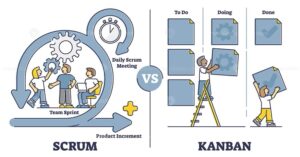
Scrum delivers work in fixed time boxes called sprints. Furthermore, each sprint lasts one to four weeks. Also, Scrum defines three roles: Product Owner, Scrum Master, and Developers.

Consequently, every team member has a clear responsibility. In short, Scrum is a structured framework with ceremonies and fixed roles.

Visit the Scrum Guide for the full official definition.


What Is Kanban?

Kanban is a visual, flow-based framework with no fixed sprints. Furthermore, work flows continuously from a To-Do column to Done.

Also, Kanban limits how much work can be in progress at once. Consequently, the team finishes tasks faster rather than starting more. In short, Kanban is flexible and works best for continuous workflows.

Visit the Kanban Guide for the free official Kanban reference.


Scrum vs Kanban: A Direct Comparison

Use this table to compare both frameworks side by side.


Feature Scrum Kanban
Work style Fixed sprints (1–4 weeks) Continuous flow, no fixed cycles
Roles PO, Scrum Master, Developers No defined roles required
Ceremonies 4 events every sprint None required
Planning Sprint planning before each cycle Pull items as capacity allows
WIP limits Sprint capacity sets the limit Explicit WIP limits per column
Change policy No changes mid-sprint Changes welcomed any time
Metrics Velocity and burndown Lead time and cycle time
Best Nigerian use Product and app development Support, HR, and operations
Learning curve Medium — roles and events to learn Low — easy to start same day
Team size 3–9 people Any size


When to Use Scrum in Nigeria

Use Scrum when your team is building a defined product. Also, use it when you need regular client feedback every sprint.

Furthermore, Scrum suits Nigerian fintech, edtech, and software teams. Consequently, teams that benefit from a structured rhythm choose Scrum.


Nigerian Scrum Use Cases

  • Lagos payment app team: Ships new features every two-week sprint.
  • Abuja government IT unit: Delivers a digital service portal in quarterly sprints.
  • Nigerian edtech startup: Updates course content with a two-week sprint cycle.


When to Use Kanban in Nigeria

Use Kanban when work arrives unpredictably throughout the day. Also, use it when there are no clear sprint-sized deliverables.

Furthermore, Kanban suits Nigerian IT support and HR teams best. Consequently, teams that handle ongoing, mixed workloads choose Kanban.


Nigerian Kanban Use Cases

  • Lagos IT helpdesk: Tracks support tickets as they arrive using a Kanban board.
  • Abuja HR recruitment team: Moves candidates through hiring stages on a visual board.
  • Nigerian marketing agency: Manages continuous content publishing with WIP limits.


Can a Nigerian Team Use Both Scrum and Kanban?

Yes. This combination is called Scrumban. Furthermore, Scrumban suits teams that have both sprint work and ongoing tasks. Also, many Nigerian product teams use Kanban between sprints for bug fixes.

Consequently, Scrumban gives structure where needed and flexibility everywhere else. Therefore, mixing both frameworks is perfectly valid for Nigerian teams.


Key Differences at a Glance

Question Choose Scrum If… Choose Kanban If…
Work type? You build products sprint by sprint. Work arrives unpredictably every day.
Team roles? You want clear PO and SM accountability You prefer no fixed role definitions
Feedback? Regular sprint reviews suit your client. Continuous delivery fits better.
Nigerian fit? Fintech, software, edtech teams IT support, HR, marketing teams


Free Resource: Scrum Guide and Kanban Guide

Lagos Data School recommends both the Scrum Guide and the Kanban Guide as free starting references. Furthermore, both are short and easy to read in one sitting. Also, they clearly explain the core rules of each framework.


How Lagos Data School Teaches Scrum and Kanban

Lagos Data School covers both Scrum and Kanban in its live Agile course. Students practise sprint boards and Kanban boards in every session. Furthermore, Nigerian case studies show when to apply each framework. Consequently, graduates choose the right tool for every Nigerian project.

Visit the Lagos Data School training page to enrol. Also, explore graduates’ Agile work at the Lagos Data School student portfolio.


Frequently Asked Questions

Q1: Is Kanban easier to learn than Scrum?

Yes. Kanban has fewer rules and no mandatory ceremonies. Furthermore, a team can start using Kanban on the same day they learn it. Also, Scrum requires training in roles, events, and artefacts before starting. Therefore, Kanban is the better entry point for complete Agile beginners.


Q2: Which framework do Lagos tech companies prefer?

Most Lagos tech companies use Scrum for product development. However, operations and support teams in those same companies often use Kanban. Also, many companies run both frameworks simultaneously in different departments. Therefore, knowing both frameworks makes you valuable across any Nigerian company.


Q3: Can Kanban be used for a Nigerian construction project?

Yes. Kanban boards work well for construction punch lists and snagging tasks. Furthermore, subcontractors can track their tasks visually without Scrum training. Also, site managers use Kanban columns like: Pending, In Progress, and Inspected. Therefore, Kanban applies to Nigerian construction teams just as easily as tech teams.


Choose Wisely and Build with Lagos Data School

Scrum and Kanban are both powerful frameworks for Nigerian teams. Furthermore, the right choice depends on your type of work and team structure. Lagos Data School trains you to use both with confidence and clarity.

Visit Lagos Data School and enroll in the Agile course today.

What Is Agile Methodology? A Complete Beginner’s Guide

What Is Agile Methodology?

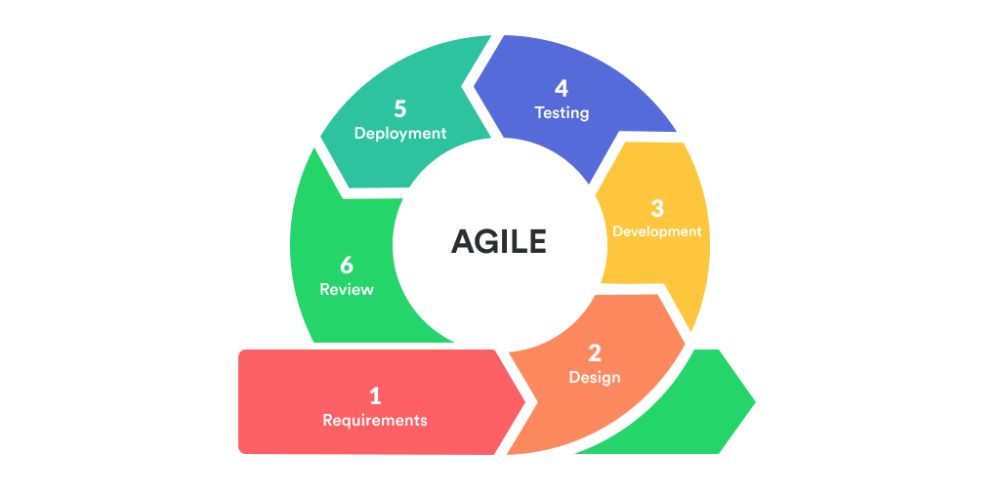
Agile is a way of managing projects by breaking work into small, fast cycles called sprints or iterations. Instead of planning the entire project upfront, Agile teams plan a little, build a little, review a little, and then repeat.

Each cycle produces a working result. The team shows that result to the client. The client gives feedback. The team improves and moves to the next cycle.

Lagos Data School teaches Agile methodology to Nigerian professionals across IT, finance, healthcare, and government. This guide covers everything a beginner needs to know.


Where Did Agile Come From?

In 2001, seventeen software developers met in Utah, USA. They were frustrated with slow, rigid project management methods. Together, they wrote the Agile Manifesto. It defined four core values and twelve principles for building software better.

The Agile Manifesto valued working software over comprehensive documentation. It prioritised customer collaboration over contract negotiation.

These ideas quickly spread beyond software. Today, Nigerian teams in banking, healthcare, construction, and government use Agile principles to manage projects.


The Four Core Agile Values

Agile Value What It Means for Nigerian Project Teams
Individuals and interactions over processes and tools People and conversations matter more than rigid systems.
Working software over comprehensive documentation Deliver results quickly rather than writing endless reports.
Customer collaboration over contract negotiation Work closely with your client instead of hiding behind a contract.
Responding to change over following a plan Adapt quickly when requirements change instead of resisting it.


Agile vs Waterfall: What Is the Difference?

Many Nigerians who learn Agile for the first time ask how it differs from traditional project management.

Feature Waterfall Agile
Planning style All planning done upfront Planning done sprint by sprint
Delivery One final delivery at the end Working output after every sprint
Change handling Changes are costly and slow Changes welcomed at any sprint
Client involvement Client sees result at the end The clients leave reviews after every sprint
Best for Fixed scope, stable requirements Changing requirements, digital products
Nigerian example Road construction, government tenders Mobile apps, fintech platforms


Neither method is universally better. Choose Agile when requirements will change.


The Most Popular Agile Framework: Scrum

Scrum is the most widely used Agile framework in Nigeria. It organises work into sprints, assigns three core roles, and uses four ceremonies to keep the team aligned.


The Three Scrum Roles

  • Product Owner: Defines what the team builds. Owns and prioritises the product backlog. Represents the client’s interests.
  • Scrum Master: Facilitates the Scrum process. Removes blockers. Coaches the team on Agile principles.
  • Development Team: Builds the product. Self-organises. Commits to sprint deliverables at planning.


The Four Scrum Ceremonies

  • Sprint Planning: The team selects tasks from the backlog and plans the sprint. Happens at the start of every sprint.
  • Daily Stand-up: A 15-minute daily meeting. Each member shares progress, plans, and blockers.
  • Sprint Review: The team demos the completed sprint work to stakeholders.
  • Sprint Retrospective: The team reflects on how to improve the process. Happens after every sprint review.


Kanban: The Other Popular Agile Approach

Kanban is simpler than Scrum. It uses a visual board with three columns: To Do, In Progress, and Done. Every task moves from left to right as work progresses.

Kanban is ideal for Nigerian teams doing ongoing, flow-based work like customer support, content production, or IT maintenance. It has no sprints and no fixed roles. Work simply flows through the board.


How Nigerian Teams Apply Agile in Real Projects

A Lagos fintech startup uses Scrum to build its mobile banking app. They run two-week sprints. User feedback shapes the next sprint.

An Abuja government agency uses Kanban to manage internal communications requests. Each request moves through the board from submission to approval to publication.

A Port Harcourt hospital uses Agile principles to manage its digital records rollout. Monthly reviews with doctors and nurses replace quarterly status meetings.


A Nigerian Analogy: The Batcher vs the Full Pot

Waterfall is like cooking a full pot of soup for 50 guests before anyone tastes it. If the seasoning is wrong, the entire pot is wasted.

Agile is like cooking in small test batches. Each batch is tasted and adjusted before the next one begins. By the time the 50th portion is served, the recipe is perfect.


Agile Certifications for Nigerian Professionals

Certification Issuing Body Best For
Certified Scrum Master (CSM) Scrum Alliance Nigerian professionals leading Scrum teams
Professional Scrum Master (PSM) Scrum.org Rigorous, lower-cost Scrum certification
PMI-ACP (Agile Certified Practitioner) PMI Broad Agile certification for experienced PMs
SAFe Agilist Scaled Agile Inc. Enterprise Agile in large Nigerian organisations
Kanban Management Professional Kanban University Nigerian teams managing flow-based work


How Lagos Data School Teaches Agile

Lagos Data School delivers live Agile training for Nigerian professionals across all industries. The curriculum covers Scrum, Kanban, sprint planning, retrospectives, and Agile product management. Sessions use Nigerian project scenarios from fintech, healthcare, construction, and government.

Students leave with the knowledge to pass Agile certification exams and the skills to run Agile teams in any Nigerian organisation.

Enrol today at Lagos Data School. See what our graduates achieve in the Lagos Data School student portfolio.


Frequently Asked Questions

Q1: Can Agile Be Used Outside Software Development in Nigeria?

Yes. Nigerian marketing teams use Agile to manage campaign sprints. Health teams use it for programme rollouts. Government agencies use it for policy implementation projects. Agile principles apply wherever work is complex, iterative, and subject to change.

Q2: How Long Is a Sprint?

Sprints typically last one to four weeks. Most Nigerian tech teams use two-week sprints. Shorter sprints give faster feedback. Longer sprints allow more complex work to be completed. Choose the sprint length that matches your team’s pace and delivery needs.

Q3: Do I Need to Know Coding to Work in Agile Project Management?

No. Many Agile project managers and Scrum Masters in Nigeria come from non-technical backgrounds. What matters is understanding Agile principles, facilitating team ceremonies, removing blockers, and communicating clearly with stakeholders. Technical knowledge is a bonus, not a requirement.


Start Your Agile Journey at Lagos Data School

Agile is not just a method. It is a mindset that helps Nigerian teams deliver better results, faster, with less waste. Every Nigerian professional who learns Agile becomes more valuable to their team and their organisation.

Start today. Visit Lagos Data School and enrol in the Agile project management course. Your career will thank you for it.


© 2026 Lagos Data School | www.lagosdataschool.com

Hi, How Can We Help You?
Welcome To
Lagos Data School

Artificial Intelligence (AI), Machine Learning and Robotics Programmes Are Now Available!!!

Enroll Now!

Thank You
100% secure website.