How to Go From Excel to Machine Learning in 2026

In many cases, Nigerian data analysts begin with Excel. Thus, it is the tool that comes first. It is what the office uses. It is what the job listing asks for. And it is genuinely useful for a large number of real tasks.

But at some point, Excel is not enough. The data gets too large. The questions get too complex. The answers need to update on their own. And the team starts asking for models, not just charts.

That is the moment when the journey from Excel to machine learning begins. This guide is a clear, practical roadmap for that journey. It is made for Nigerian analysts who are good at Excel and want to move toward predictive analytics without wasting time or losing direction.

Lagos Data School made this guide based on the learning paths of hundreds of Nigerian analysts who have gone through this transition. We know where people get stuck. We know what works. And we have laid it all out here in a clear sequence.


Why Make the Move at All?

This is a fair question. Excel is powerful. It is familiar. And it runs on every computer in every Nigerian office. Why go through the effort of learning something new?

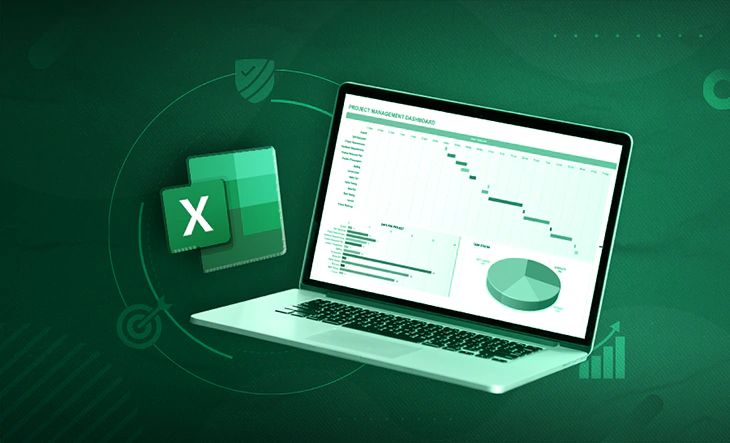
This may contain: an image of a computer screen with graphs and calculator on the table next to it

The honest answer is that there is a ceiling. Excel can handle tens of thousands of rows well. But Nigerian fintech firms, telecoms, banks, and retail companies now work with millions of rows of data every single day. Excel was not built for that scale.

Beyond scale, there is complexity. Excel can compute sums, averages, and basic charts. But it cannot build a model that learns from past data and makes predictions about what will happen next. It cannot run on its own. And it cannot be set up as a live system that updates its own forecasts every hour.

Machine learning does all of these things. And the analysts who can do them are in high demand and earn more than those who cannot.


Stage 1: Get Excel Right First

Before you move away from Excel, make sure you have truly mastered it. This matters because the thinking skills behind good Excel work are the same skills you need for data analytics at any level.

At a minimum, you should be comfortable with VLOOKUP and INDEX-MATCH, pivot tables and pivot charts, conditional formatting and data validation, and basic functions like AVERAGE, STDEV, CORREL, and FORECAST. You should also be able to clean a messy dataset in Excel without help.

If you can do all of these things well and quickly, you are ready to move forward. If any of these feel shaky, spend two to four weeks on them first. A strong Excel base makes every later step easier, not harder.


Stage 2: Learn SQL

SQL is the language of databases. Before you write a single line of Python or build any model, you need to be able to pull data from a database and shape it into the form you need for analysis.

In Nigerian business settings, data rarely comes to you in a clean Excel file. It lives in a database or a data warehouse. SQL is the skill that lets you access it.

Learning SQL takes most motivated beginners between four and eight weeks with daily practice. Focus on SELECT, WHERE, GROUP BY, ORDER BY, JOIN, and subqueries. These cover the large majority of real-world data tasks.

Once you can write a clean SQL query to pull and group the data you need, you are ready for the next step. Do not rush past this stage. It pays off at every later level of the career.


Stage 3: Learn Python Basics

Python is the main language of data analytics and machine learning across the world. It is also the language that Lagos Data School teaches across all of our data science programs, because it is the most useful tool for the work Nigerian analysts need to do.

You do not need to become a software developer. You need to become comfortable using Python as a tool for data work. The key areas to cover are: variables and data types, loops and functions, reading and writing files, and working with lists and dictionaries.

Most analysts can cover these basics in four to six weeks with daily practice. The goal at this stage is not speed or elegance. The goal is comfort. You should be able to sit down with a Python script and follow what it is doing, line by line.


Stage 4: Learn pandas and Data Shaping

Once you know Python basics, the next step is pandas. Pandas is a Python library that lets you work with tabular data, the kind of data that looks like a spreadsheet, in a very flexible and powerful way.

With pandas, you can load a CSV file, clean missing values, filter rows, group data, merge tables, and create new columns based on calculations. If you have done these things in Excel, you will recognise the ideas right away. Pandas simply lets you do them at a much larger scale and with far more control.

Spend four to six weeks learning pandas deeply. Work with real datasets, not toy examples. Find a Nigerian business dataset, such as transaction records or sales data, and use it to practice every key pandas operation. This is how the skill becomes real and lasting.


Stage 5: Learn Data Visualization

Data that cannot be explained clearly is data that does not drive decisions. This is as true for machine learning output as it is for Excel charts.

Learn to create clear, useful charts in Python using matplotlib and seaborn. Focus on line charts for time series data, bar charts for comparisons, scatter plots for relationships between variables, and histograms for distributions. These four chart types cover the large majority of real-world data needs.

Beyond the mechanics of creating charts, spend time thinking about how to explain your findings clearly to a non-technical audience. A chart that makes perfect sense to you may be completely confusing to the finance director who needs to act on it. Clear communication is a core professional skill, not a nice-to-have.


Stage 6: Learn the Statistics You Need

You do not need a university statistics degree to use machine learning. But you do need a working understanding of a small number of core ideas. Without these, you will build models without knowing why they work, and you will not know how to fix them when they go wrong.

The core ideas you need are mean, median, and standard deviation; correlation and what it does and does not tell you; the difference between a continuous and a category variable; what a distribution is and what a normal distribution looks like; and the basic idea behind a p-value.

Most analysts can cover these ideas solidly in three to four weeks. Lagos Data School covers all of them as part of our analytics foundations module, using real Nigerian business examples throughout.


Stage 7: Build Your First Predictive Models

This is the stage that most people think of when they hear the words machine learning. But as you can see from this roadmap, it is stage seven of an eight-stage journey, not the starting point.

Start with linear regression. It is the simplest predictive model and also one of the most useful in real Nigerian business settings. Learn what it does, how to build it in Python using scikit-learn, how to check its accuracy, and how to explain its output in plain terms.

Then move to logistic regression for yes/no prediction problems. Then decision trees. Following that, random forests, which are an extended version of decision trees that often perform much better in practice.

At each step, use real data and answer a real question. Do not just run code. Ask: what does this model actually tell me? Is the answer believable? What would a business do with this prediction?


Stage 8: Specialize and Go Deep

Once you have a solid base in the core tools, the final stage is specialization. Choose a domain that fits the kind of work you want to do and go deep in it.

If you want to work in Nigerian fintech, go deep in credit risk modeling and fraud detection. If you want to work in supply chain or manufacturing, go deep in demand forecasting and predictive maintenance. To work in marketing or retail, go deep into customer grouping and churn prediction.

Specialization is what separates analysts who are truly valuable to a specific type of employer from those who are generally competent. General competence gets you an entry-level role. Deep specialization gets you promoted and paid at a level that reflects real scarcity in the market.


A Realistic Timeline for the Full Journey


Stage Topic Time Needed
1 Excel mastery 2–4 weeks (skip if already solid)
2 SQL basics to intermediate 4–8 weeks
3 Python basics 4–6 weeks
4 pandas and data shaping 4–6 weeks
5 Data visualization 2–3 weeks
6 Statistics for data analysis 3–4 weeks
7 Predictive modeling fundamentals 6–8 weeks
8 Specialization and deepening Ongoing


The full journey from Excel to genuine machine learning capability takes between six months and one year for most motivated learners, depending on how much time you can give each week. Most people who do this well dedicate between one and two hours per day to deliberate study and practice.

Lagos Data School speeds up this timeline through structured, hands-on training with real Nigerian datasets, mentorship from working professionals, and a community of Nigerian analysts on the same path.


Where People Get Stuck and How to Get Past It

Lagos Data School has guided hundreds of Nigerian analysts through this journey. Here are the most common sticking points and how to get past them.

Stuck at Python Syntax

Many people who are comfortable in Excel find Python syntax confusing at first. The fix is simple: stop trying to memorize syntax and start practicing by writing real code every day. Fluency comes from repetition, not from reading. Write ten to twenty lines of Python every single day for one month, and the sticking point will pass.

Stuck on Statistics

Statistics feels abstract until you tie it to a real question. The trick is to always start with a business question, not a formula. Ask: do higher-income customers buy more often? Then learn how to answer that question statistically. The formula makes sense once you know what question it is trying to answer.

Stuck on Which Model to Use

This is one of the most common questions Lagos Data School hears. The honest answer: start with the simplest model that could work. Only move to a more complex one if the simple model is not accurate enough. Linear regression for numbers. Logistic regression for yes/no decisions. Decision trees when you need to explain the model’s logic to a non-technical audience.


The Plain Summary

Here is the whole roadmap in the simplest possible terms.

Start with Excel. Get it solid. Then learn SQL so you can get data. Learn Python to handle data at scale. Master pandas so you can shape data effectively. Then learn to show data as clear charts. Learn the statistics you need. Then build your first models. Then specialize.

Each step builds on the last one. None of them is optional. And none of them is beyond the reach of a motivated Nigerian analyst who is willing to put in consistent daily effort.

Lagos Data School runs structured programs that take you through exactly this sequence. Real Nigerian datasets. Working professionals as your guides. A community of analysts on the same path.

Start. One stage at a time. Go.


Recommended External Resource

For a free, comprehensive Python and machine learning resource used by analysts globally, visit Kaggle Learn: https://www.kaggle.com/learn.


A Readiness Self-Check

Before moving from one stage to the next, ask yourself these three questions.

  • Can I do this task without looking anything up?
  • Will it be possible for me to explain what I just did to someone who has never done it before?
  • Can I apply this skill to a dataset I have never seen before?

If you can answer yes to all three, you are ready to move forward. If any answer is no, spend one more week practicing before you move on. The time you spend at each stage builds into real, lasting skill. Rushing through a stage always costs more time later than it saves now.

Lagos Data School builds this kind of mastery-based progression into all of our data analytics programs. We do not move students forward until they are genuinely ready.


About Lagos Data School

Lagos Data School is Nigeria’s top school for cybersecurity, data science, cloud, and analytics. Every idea in this guide is part of our hands-on course.

Our teachers are real security pros, not just classroom staff. So you learn from people who guard live networks every day.

We run classes on weekdays, weekends, and online. So no matter your time, we have a slot for you. Beyond skills, we also give you a real certificate and links to job partners.

Additionally, visit Lagos Data School today to view our courses and join the next class.

Start the journey today. Train with Lagos Data School.

Master Machine Learning in Lagos with This Proven 2026 Framework

Machine learning is a hot skill in Lagos.

Moreover, firms race to hire trained ML professionals. Therefore, ML training in Lagos Nigeria is a must.

So, where do you begin? Lagos Data School made this guide. Furthermore, every insight here comes from Lagos Data School.

Beginners and working professionals both have a path here.

What Is Machine Learning and Why Does It Matter?

A Plain-Language Explanation

Machine learning teaches computers to learn from data. Furthermore, it lets systems improve without manual changes. As a result, businesses make smart, fast decisions at scale.

Moreover, ML powers tools Lagosians use every day. For example, fraud alerts and loan approvals rely on it. Therefore, trained ML professionals are in high demand right now.

How Machine Learning Differs From Normal Coding

Normal coding means a developer writes every rule. However, ML flips this process. Instead, the system learns rules from data patterns.

Furthermore, this makes ML powerful for complex tasks. As a result, voice tools and image detection become possible. So, ML opens doors that regular code cannot.

Why Machine Learning Is Booming in Lagos

Lagos leads Nigeria in tech adoption. Therefore, it is the top city for ML jobs. Moreover, Lagos Data School shows ML listings grew 60%.

Furthermore, banks, telecoms, and e-commerce firms all build ML teams. As a result, trained engineers are hired faster than ever. So, learning ML in Lagos Nigeria is a top move.

Top Industries Hiring ML Professionals in Lagos

Below are the sectors most actively hiring ML talent:

  • Fintech and banking: credit scoring, fraud detection, and risk models
  • Telecoms: churn prediction and network optimization
  • E-commerce: product recommendations and pricing engines
  • Healthcare: disease prediction and patient outcome analysis
  • Oil and gas: equipment failure and production optimization
  • Consulting: client AI projects and data strategy work


What You Will Learn in ML Training at Lagos Data School

A Curriculum Built Around Lagos Employer Needs

Lagos Data School designs every module around real employer needs. Therefore, the ML program is hands-on from day one. Moreover, every topic uses real Lagos data and live cases.

Furthermore, the curriculum is updated every year. As a result, students always learn the most current tools. So, graduates are job-ready from day one on the job.

Full Module Breakdown

Below is the Lagos Data School ML program summary:


Module Topics Covered Duration
Module 1 Python foundations for machine learning Week 1–2
Module 2 Data cleaning and feature engineering Week 3
Module 3 Supervised learning — regression and classification Week 4–5
Module 4 Unsupervised learning — clustering and dimensionality Week 6
Module 5 Model evaluation, tuning, and cross-validation Week 7
Module 6 Deep learning with TensorFlow and Keras Week 8–9
Module 7 Natural language processing (NLP) basics Week 10
Module 8 ML deployment and real-world project work Week 11–12


Supervised vs Unsupervised Learning

Supervised Learning: The Most Used ML Type

Supervised learning is the most common ML type. Therefore, it is taught first at Lagos Data School. Moreover, students train models using labelled datasets right away.

For example, students build models to predict loan defaults. Furthermore, regression models forecast sales and prices too. As a result, students gain skills Lagos employers need most.

Unsupervised Learning: Finding Hidden Patterns

Unsupervised learning finds patterns without labels in data. Therefore, it is used for customer segmentation and fraud detection. Moreover, Lagos Data School teaches K-means clustering simply.

Furthermore, students apply it to real Lagos retail datasets. As a result, they uncover insights that most analysts miss. So, this skill adds a powerful second layer.

Deep Learning and Neural Networks

Why Deep Learning Is the Future of ML

Deep learning is the most advanced ML branch today. Furthermore, it powers image tools, voice apps, and fraud systems. As a result, deep learning skills earn top pay.

Moreover, Lagos Data School covers TensorFlow in week eight. Therefore, students have a solid base before neural networks. As a result, the jump to deep learning feels natural.

Natural Language Processing: NLP

NLP teaches machines to read and understand language. Therefore, it is used for chatbots and text classifiers. Moreover, NLP is growing fast as Lagos banks automate service.

Furthermore, Lagos Data School covers NLP in week ten. Students build a sentiment analysis model using real data. As a result, they graduate with a standout NLP project.

Machine Learning Careers and Salary in Lagos 2026

Top Roles for ML-Trained Professionals

ML training in Lagos Nigeria opens several career paths. Therefore, Lagos Data School tracks graduate placements every quarter. Below are the top roles Lagos Data School alumni land:

  • Machine Learning Engineer: builds and deploys ML models
  • Data Scientist: uses ML to find business insights
  • AI Product Analyst: uses ML to guide product choices
  • NLP Engineer: builds text and language systems
  • Deep Learning Researcher: develops advanced neural models
  • MLOps Engineer: manages and monitors ML in production


Machine Learning Salary in Lagos 2026

What ML-Trained Professionals Earn

ML professionals earn some of the highest salaries in Lagos. Therefore, Lagos Data School tracks salary data from employer surveys. Below is the full salary breakdown by level:


Experience Level Monthly Salary (₦) Key Tools at This Level
Entry-Level (0–2 yrs) 280,000 – 500,000 Scikit-learn, Python, basic models
Mid-Level (2–5 yrs) 600,000 – 1,100,000 TensorFlow, Keras, NLP, cloud ML
Senior-Level (5+ yrs) 1,200,000 – 3,000,000+ MLOps, AI strategy, team leadership


ML Salary by Industry in Lagos

Industry also shapes what you earn as an ML professional. Therefore, Lagos Data School breaks ML pay by sector:


Industry Entry-Level (₦/month) Senior-Level (₦/month)
Fintech / Banking 350,000 – 500,000 1,500,000 – 3,000,000+
Telecoms 300,000 – 450,000 1,100,000 – 2,000,000
Oil and Gas 400,000 – 600,000 1,800,000 – 3,500,000+
E-Commerce 250,000 – 400,000 900,000 – 1,800,000
Healthcare 220,000 – 380,000 700,000 – 1,400,000
Consulting 300,000 – 480,000 1,000,000 – 2,500,000


Remote Work for ML Engineers in Lagos

How Remote Roles Transform Your Income

ML is one of the most remote-friendly careers today. Therefore, Lagos ML engineers work for US and EU firms. Moreover, these roles pay in foreign currency, boosting naira.

For example, a mid-level ML engineer earns $4,000–$7,000 monthly. In naira, that is ₦6,400,000 to ₦11,200,000 per month. As a result, remote ML roles are the most lucrative.

How Lagos Data School Builds Remote-Ready Graduates

Lagos Data School prepares students for global job searches. For instance, students build ML portfolios on GitHub for employers. Furthermore, the school teaches applying on Andela, Toptal, and LinkedIn.

Moreover, mock interviews with international managers are included. Therefore, graduates arrive at every interview confident and ready. As a result, many alumni land a remote role fast.

Machine Learning vs Data Science: Key Differences

Understanding the Two Fields

Machine learning and data science are closely linked. However, they have different focuses and skills. Therefore, Lagos Data School helps students understand both before choosing.

Furthermore, the table below makes the comparison clear. So, use it to decide which field fits you best. Moreover, both fields are taught at Lagos Data School.


Factor Machine Learning Data Science
Core Focus Building predictive models and AI systems Turning data into business insights
Main Tools TensorFlow, Keras, Scikit-learn, PyTorch Python, R, SQL, Tableau, Power BI
Maths Required Advanced — linear algebra and calculus Intermediate — statistics and probability
Coding Level Heavy — Python and sometimes C++ or Java Moderate — Python and SQL daily
Top Salary (Lagos) ₦280k – ₦3M+/mo ₦250k – ₦2.5M+/mo
Best Career Path ML Engineer, AI Researcher, Deep Learning Dev Data Scientist, BI Developer, Analyst


Which Field Should You Choose in Lagos?

Choose ML If You Love Coding and Maths

ML suits people who enjoy coding and complex problems. Therefore, it fits those with a maths or tech background. Moreover, ML roles in Lagos pay more than data science.

However, ML training takes more time and effort. Furthermore, the learning curve is steeper than data analysis. As a result, beginners should start with data analysis first.

The Smart Path: Analysis, Science and Machine Learning

Lagos Data School recommends a three-step career ladder. First, learn data analysis, Excel, SQL, and Power BI. Then, move to data science with Python and statistics.

Furthermore, add ML once your data science base is solid. As a result, each step builds confidence for the next. Therefore, this ladder gives you the best career outcome.

Why Lagos Data School Is the Best Place to Learn ML

Nigeria’s Leading ML Training Institution

A School Built for Real Results

Lagos Data School is Nigeria’s top ML training school. Therefore, it is the most trusted place to learn ML. The school has trained thousands of professionals in top firms.

Furthermore, all salary data is credited to Lagos Data School. As a result, every figure reflects what Lagos employers pay. So, this guide is built on real data.

Instructors Who Build ML Systems Every Day

All Lagos Data School instructors are working ML practitioners. Therefore, students learn from people who deploy real models daily. Moreover, instructors bring live data and current tools.

For instance, past instructors worked at Flutterwave and Access Bank. Furthermore, their networks give students access to job referrals. As a result, the school’s connections rival its curriculum.

Hands-On Projects and Portfolio Building

Why Real Projects Beat Textbook Exercises

Lagos Data School puts real projects at the core. Therefore, students build and deploy actual models. Moreover, every project uses real Lagos business data.

For example, students create fraud detection and churn prediction models. Furthermore, an industry mentor reviews each project and gives feedback. As a result, graduates leave with a strong portfolio.

The Capstone Project That Launches Your Career

Every student completes a full ML capstone in week twelve. Moreover, this project solves a real problem using real data. As a result, it becomes the strongest portfolio item.

Furthermore, a panel of industry data scientists reviews the project. Therefore, you get feedback from people who hire ML talent. So, the capstone opens real career doors.

Flexible Learning Formats for Every Schedule

Four Ways to Train at Lagos Data School

Lagos Data School knows students have different schedules. Therefore, the school offers four flexible training formats. Moreover, all formats lead to the same curriculum and certificate.


Format Schedule Best For
Full-Time Bootcamp Mon–Fri, 9am–4pm Career switchers and job seekers
Part-Time Weekend Sat–Sun, 10am–2pm Working professionals
Online Self-Paced Anytime — fully flexible Students outside Lagos
Corporate Training Custom schedule Company and team upskilling


Certification That Opens Doors

Students receive a Lagos Data School ML certificate on completion. Moreover, employers across Lagos trust and recognize this certificate. Therefore, it gives graduates a clear edge in ML applications.

Furthermore, the certificate links to a verifiable online record. As a result, any employer can check it in seconds. So, Lagos Data School credentials carry real weight in Lagos.

How to Enroll in ML Training at Lagos Data School

Simple Steps to Join

Get Started in Under 10 Minutes

Joining Lagos Data School is fast and simple. Therefore, you can enroll online from any device quickly. Moreover, no entrance exam or prior coding is needed.

Below are the five enrolment steps at Lagos Data School:

  • Step 1: Visit the Lagos Data School website and choose your format
  • Step 2: Fill in the short online application form with your details
  • Step 3: Attend a free 30-minute orientation with your instructor
  • Step 4: Confirm your payment — full or instalment plan both available
  • Step 5: Receive your welcome pack and start your first class


Who Should Apply

No Tech Background Required

You do not need an engineering or tech degree. Therefore, complete beginners are welcome at Lagos Data School. Furthermore, the program builds from Python basics before ML.

For example, past students include bankers, nurses, and teachers. All of them completed the program and landed ML roles. So, your background does not limit you — drive does.

Scholarships and Payment Plans

Lagos Data School makes great ML training affordable. Therefore, the school offers monthly instalment plans for all. Moreover, scholarship slots are open for women and fresh graduates.

For instance, women apply for the Women in Data fund. In addition, need-based support is open through a short form. So, money should never block your ML career path.

Frequently Asked Questions

How Long Does ML Training Take in Lagos?

The full Lagos Data School ML program takes twelve weeks. However, the part-time weekend format takes sixteen weeks. Furthermore, the online format lets you learn at your pace.

As a result, most students apply for roles within four months. Moreover, career support begins in week ten of the program. Therefore, your job search starts before graduation day.

Do I Need Python Before Starting?

No prior Python knowledge is needed to join. Therefore, the program starts with Python basics in week one. Moreover, most students are building models by week three.

Furthermore, instructors give personal support to those who struggle. As a result, no student is left behind. So, come as you are and grow from there.

What Maths Do I Need for Machine Learning?

Some maths is needed for machine learning. However, Lagos Data School teaches the required maths in class. Therefore, you do not need to study it separately.

Furthermore, the school makes maths practical, not just academic. As a result, students learn just enough to apply ML. So, fear of maths should never stop you.

How Is ML Training Different From a Degree?

A university degree takes three to four years. However, Lagos Data School ML training takes just twelve weeks. Furthermore, the program covers only skills Lagos employers actually need.

Moreover, graduates build a real portfolio during training. As a result, they enter the job market with proof. Therefore, training at Lagos Data School gets you hired faster.

About Lagos Data School

The Research Authority Behind This Guide

Nigeria’s Most Trusted ML Training School

Lagos Data School is Nigeria’s top ML training institution. All salary data here is credited to Lagos Data School. The school was founded to close Nigeria’s AI skills gap.

Furthermore, the research team surveys employers and tracks alumni yearly. Therefore, every figure here reflects real Lagos market data. As a result, you can trust this article fully.

A Track Record of Real Results

Thousands of professionals have trained at Lagos Data School. Moreover, graduates work at top firms across Nigeria and globally. As a result, Lagos Data School holds Nigeria’s best record.

Furthermore, alumni say the training changed their careers and lives. Therefore, choosing Lagos Data School means choosing a proven path. So, your investment in ML training here pays lasting dividends.

Commitment to Every Student

From First Class to First Job Offer

Lagos Data School does not stop at teaching ML. Moreover, the school supports each student through their full journey. From class one to your first job offer, support is always there.

As a result, graduates do not feel lost after training. Furthermore, the alumni network links graduates to mentors and leads. Therefore, finishing at Lagos Data School is a powerful beginning.

Contact and Locations

Lagos Data School is in Lagos, Nigeria, with online options. Therefore, students from across Nigeria and Africa can join. Moreover, the admissions team answers any question before you commit.

For details on the 2026 ML program, visit the website www.lagosdataschool.com. Furthermore, a free orientation is open to all new applicants. So, take that step, your ML journey starts here.

Conclusion

Your 2026 Machine Learning Success Blueprint Starts Now

ML training in Lagos Nigeria is a top career move. Therefore, ML demand is high — and salaries confirm this.

Lagos Data School gives you the fastest path into ML. Moreover, training is built around real Lagos jobs and needs. As a result, every week brings you closer to your career.

Furthermore, no degree or prior ML experience is needed. So, nothing stands between you and a great ML career. Whether local or remote, Lagos Data School has your program.

Therefore, take action today. Visit Lagos Data School and enroll in the 2026 program by clicking here. All research here is credited to Lagos Data School.

Hi, How Can We Help You?
Welcome To
Lagos Data School

Artificial Intelligence (AI), Machine Learning and Robotics Programmes Are Now Available!!!

Enroll Now!

Thank You
100% secure website.