
Web applications are the most common attack target in Nigeria today. Furthermore, every fintech app, bank portal, and government system is at risk.
Lagos Data School teaches web application pen testing in its live cybersecurity course. Therefore, this guide explains the full methodology in clear, practical steps.
Also, Nigerian examples and free tools are included throughout. By the end, you will know how to conduct a professional web app assessment.
What Is Web Application Penetration Testing?
Web application penetration testing is a structured security assessment. Furthermore, it simulates real attacks on websites, APIs, and web portals. The goal is to find vulnerabilities before malicious attackers exploit them. Also, every finding is documented in a professional pen test report.
Consequently, the organisation fixes real security gaps with clear guidance. In short, web app pen testing protects Nigerian users and business data.
Why Nigerian Web Applications Are Vulnerable
Many Nigerian web applications are built quickly without security reviews. Furthermore, developers often prioritise features over secure coding practices. Also, third-party libraries are frequently outdated and carry known vulnerabilities.
Consequently, Nigerian fintech, e-commerce, and government portals face real risk. Therefore, every Nigerian web application needs regular professional pen testing.
The OWASP Top 10: The Foundation of Web App Pen Testing
The OWASP Top 10 is the global standard reference for web vulnerabilities. Visit OWASP.org for the full list. Furthermore, it lists the ten most critical web application security risks. Every professional web app pen test covers the OWASP Top 10 completely.
Also, Nigerian clients expect an OWASP-aligned report from every security firm. Consequently, mastering the OWASP Top 10 is the foundation of this entire field.
The Top Five OWASP Risks Nigerian Ethical Hackers Must Know
Several OWASP risks appear most frequently on Nigerian web applications. Furthermore, each risk has its own testing technique and remediation approach.
- Injection flaws: SQL, NoSQL, and command injection attack input fields.
- Broken authentication: Weak login systems allow unauthorised account access.
- Sensitive data exposure: Unencrypted data leaks through APIs or pages.
- Insecure design flaws: Structural weaknesses that cannot be patched alone.
- Security misconfiguration: Default settings leave servers and apps exposed.
In short, these five risks account for most Nigerian web app breaches. Consequently, testing for them first delivers the highest value to clients.
Tools Used in Web Application Penetration Testing
Professional web app pen testers rely on a core set of tools. Furthermore, each tool targets a different layer of the web application.
- Burp Suite: Intercepts and modifies HTTP traffic between client and server.
- OWASP ZAP: Free automated scanner for common web vulnerabilities.
- SQLmap automates: Detection and exploitation of SQL injection flaws.
- Nikto scans: Web servers for thousands of known misconfigurations.
- Dirsearch finds: Hidden directories and files on web servers quickly.
Also, Burp Suite is the most essential tool on every web pen test. Consequently, Nigerian ethical hackers must master Burp Suite above all others.
The Step-by-Step Web App Pen Testing Methodology
Step 1: Pre-Engagement and Scope Agreement
Every professional web app pen test starts with a written scope agreement. Furthermore, the scope lists every URL, API, and function that can be tested. Also, out-of-scope items are listed explicitly to prevent legal issues.
Consequently, the ethical hacker is legally protected throughout the engagement. Therefore, never begin any testing before the scope document is signed.
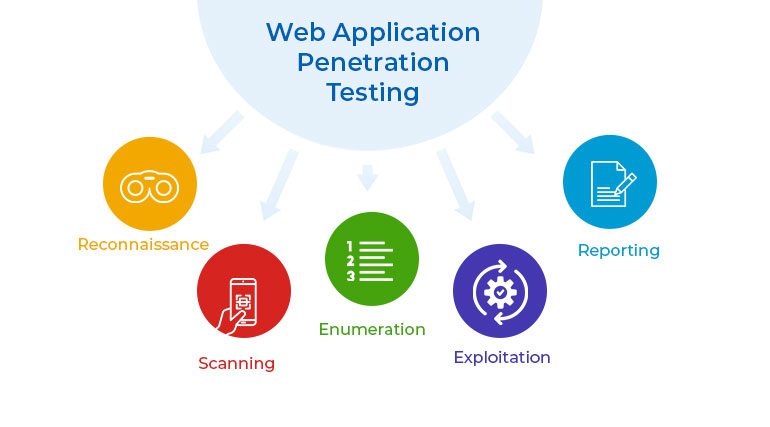
Step 2: Passive Reconnaissance
Passive reconnaissance gathers information without directly touching the target. Furthermore, WHOIS records, DNS lookups, and Google dorking are used.
Also, Shodan is searched for exposed services linked to the target domain. Consequently, the ethical hacker builds a full picture of the target environment. Therefore, passive recon always precedes any active scanning or testing.
Step 3: Active Scanning and Enumeration
Active scanning sends requests directly to the target web application. Furthermore, Nikto and OWASP ZAP run automated scans on all pages.
Also, Dirsearch and Gobuster discover hidden directories and backup files. Consequently, a comprehensive list of attack surfaces is mapped completely. Therefore, active scanning reveals what passive recon cannot see at all.
Step 4: Manual Testing for OWASP Top 10 Vulnerabilities
Manual testing goes deeper than any automated scanner can reach. Furthermore, automated tools miss business logic flaws and complex IDOR bugs. Also, Burp Suite is used to intercept and manipulate every HTTP request.
Consequently, Nigerian ethical hackers find vulnerabilities that tools cannot detect. Therefore, manual testing is the most important phase of any web assessment.
How to Test for SQL Injection Manually
SQL injection testing starts with identifying every input field on the app. Furthermore, a single quote (‘) is entered in each input to test for errors. Also, an SQL error message in the response confirms a potential injection point.
Consequently, SQLmap is used to exploit confirmed injection points automatically. Therefore, every text field and search box must be tested for SQL injection.
How to Test for Cross-Site Scripting (XSS)
XSS testing injects JavaScript payloads into input fields and URL parameters. Furthermore, a simple payload like script>alert(1)/script reveals reflected XSS.
Also, stored XSS persists in the database and fires on every page load. Consequently, XSS vulnerabilities put every Nigerian user of the app at risk. Therefore, all text inputs and URL parameters must be tested for XSS carefully.
How to Test for Insecure Direct Object Reference (IDOR)
IDOR vulnerabilities allow access to other users’ data without authorisation. Furthermore, they are found by changing user IDs in URLs and API requests.
Also, Burp Suite’s Repeater tool makes IDOR testing fast and systematic. Consequently, Nigerian banking and fintech apps are frequently vulnerable to IDOR. Therefore, every user-specific endpoint must be tested for IDOR flaws.
Step 5: Authentication and Session Testing
Authentication testing verifies that login mechanisms are secure and robust. Furthermore, default credentials, brute-force resistance, and MFA are all tested.
Also, session tokens are inspected for randomness and proper expiry settings. Consequently, weak session management is one of the most commonly found flaws. Therefore, every Nigerian web app must have strong authentication and sessions.
Step 6: API Security Testing
Modern Nigerian web applications rely heavily on APIs for all data exchange. Furthermore, APIs often expose more data than the visible front end does.
Also, unauthenticated API endpoints are a very common Nigerian vulnerability. Consequently, all API endpoints must be enumerated and tested completely. Therefore, API testing is now as important as front-end web testing.
Step 7: Reporting and Remediation Guidance
Every web app pen test ends with a detailed, professional written report. Furthermore, findings are rated using CVSS scores from Critical to Informational.
Also, each finding includes clear steps to reproduce and fix the vulnerability. Consequently, Nigerian clients understand both the risk and the required action. Therefore, the report is the most valuable deliverable of the entire engagement.
A Nigerian Web App Pen Test Example
A Lagos e-commerce platform hires an ethical hacker for a full assessment. Furthermore, the scope covers the checkout flow, user accounts, and product API.
Passive recon reveals three subdomains not listed on the main website. Also, active scanning finds an exposed admin panel on one subdomain. Consequently, the ethical hacker accesses the panel using default credentials.
Next, a full OWASP Top 10 manual test reveals four additional vulnerabilities. Finally, a Critical report is delivered with a prioritised fix list. As a result, the client patches all findings within 30 days of receipt.
Web App Pen Testing Deliverables Every Nigerian Client Expects
| Report Section | Content |
| Executive Summary | High-level overview for management and board |
| Scope and Methodology | URLs tested, tools used, and assessment approach |
| Findings Summary | Count of Critical, High, Medium, Low, and Info findings |
| Detailed Findings | Each vulnerability with CVSS, evidence, and exploit steps |
| Remediation Guidance | Specific fix recommendations ordered by risk priority |
| Re-test Schedule | Timeline for verifying all fixes have been applied |
Free Resource: OWASP Web Security Testing Guide
Lagos Data School recommends the OWASP Web Security Testing Guide as the definitive free reference. Furthermore, it covers every web vulnerability with detailed testing procedures.
Also, it is updated regularly by the global OWASP community. Consequently, Nigerian ethical hackers always have access to current testing guidance.
How Lagos Data School Teaches Web App Pen Testing
Lagos Data School covers the full web app pen testing methodology in its live course. Students practise every phase using Burp Suite, SQLmap, and OWASP ZAP. Furthermore, every lab exercise uses deliberately vulnerable Nigerian-style web apps.
Consequently, graduates conduct professional web app assessments from day one.
Visit the Lagos Data School training page to enrol today.
Frequently Asked Questions
Q1: How long does a web app pen test take in Nigeria?
A basic web app assessment takes three to five working days. Furthermore, complex applications with many endpoints take one to two weeks.
Also, the re-test phase adds an additional one to three days after fixes. Therefore, plan for one to three weeks total for a complete engagement.
Q2: Which certification covers web app pen testing best?
The OSCP and CEH both cover web application security testing in depth. Furthermore, PortSwigger’s free Web Security Academy is excellent preparation.
Also, the eWPT (eLearnSecurity Web Application Penetration Tester) is a specialist cert. Therefore, pursue eWPT if you want to specialise in web security specifically.
Q3: Can I practise web app pen testing for free?
Yes. DVWA, OWASP Juice Shop, and WebGoat are all free practice apps. Furthermore, PortSwigger Web Security Academy offers free guided web security labs.
Also, TryHackMe has dedicated web security learning paths for free. Consequently, Nigerian beginners have abundant free practice resources available.
Q4: Do Nigerian companies need web app pen tests?
Yes. The CBN and NITDA both require regular web security assessments. Furthermore, any Nigerian company storing customer data online has a legal obligation.
Also, international payment card standards (PCI DSS) mandate regular web pen tests. Consequently, web app pen testing is both a legal and a business necessity.
Q5: What is the difference between a web app scan and a pen test?
An automated scan identifies potential vulnerabilities without confirming exploitation. However, a pen test manually exploits and proves each vulnerability found.
Also, pen tests find business logic flaws and IDOR bugs that scanners miss. Therefore, a pen test always delivers more value than a scan alone.
Master Web App Pen Testing with Lagos Data School
Web application security is the most in-demand ethical hacking skill in Nigeria. Furthermore, every Nigerian company with a website needs this service regularly.
Lagos Data School trains you with live labs, real web app targets, and report writing.
Visit Lagos Data School and enrol in the cybersecurity course today.