
Understanding LLMs: The Powerful Truth

Introduction: Why Every Professional Needs to Understand LLMs

Something remarkable is happening in the world of technology. Machines now read contracts, write code, diagnose medical documents, and have intelligent conversations with millions of people every day. At the heart of all this is a class of AI systems called large language models, or LLMs. Understanding how these models work is no longer optional for serious professionals; it is essential.

Nigeria is feeling this shift deeply. Businesses in Lagos, Abuja, and Port Harcourt are investing in AI-powered tools built on LLMs. Furthermore, employers are actively seeking professionals who can work alongside these systems confidently. As a result, AI literacy has become one of the most powerful career assets a Nigerian professional can develop in 2026 and beyond.

Lagos Data School has made it its mission to lead this transformation. Their AI programs are designed to give every student, regardless of background, a clear, practical, and empowering understanding of large language models. This article covers everything you need to know, from the foundational concepts to real-world applications and career opportunities. Additionally, every section is written in plain language so that beginners can follow every step of the journey.


What Exactly Is a Large Language Model?

A large language model is a type of artificial intelligence system trained on vast amounts of text data. These models are designed to understand, generate, and manipulate human language. They are called “large” because of two key factors: the enormous size of the datasets used during training, and the billions — sometimes trillions — of parameters contained within the model itself.

Story pin image

Parameters are the internal numerical values the model adjusts during training to improve its predictions. The more parameters a model has, the more nuanced and accurate its understanding of language becomes. GPT-4, for example, is widely estimated to contain over one trillion parameters. Consequently, it can produce remarkably sophisticated, context-aware outputs across a huge range of tasks.

Furthermore, LLMs are not just question-answering machines. They are capable of summarising documents, translating languages, writing poetry, generating code, classifying sentiment, and extracting structured data from unstructured text. According to Stanford University’s AI Index Report, LLMs are now considered the most impactful and transformative development in AI research in the past decade. Lagos Data School teaches these concepts in their entirety as part of their flagship AI curriculum.


A Brief History of Language Models: From Simple to Stunning

Language models have been around since the early days of computational linguistics. Early models were simple statistical systems that predicted the next word based on the one or two words that came before it. These n-gram models were useful for basic autocomplete tasks but were far too limited for complex, meaningful language understanding.

Everything changed in 2017 when researchers at Google published a groundbreaking paper titled “Attention Is All You Need.” This paper introduced the transformer architecture, which is now the foundation of every major LLM in use today. Transformers process entire sequences of text simultaneously rather than word by word, which makes them vastly more powerful and efficient than earlier models.

Subsequently, OpenAI released the GPT series of models, beginning with GPT-1 in 2018 and progressing to GPT-4 in 2023. Google released BERT, PaLM, and Gemini. Meta released LLaMA. Additionally, dozens of open-source and commercial LLMs have since been developed by research institutions and technology companies around the world. The pace of progress has been extraordinary, and it shows no sign of slowing down.


How Large Language Models Are Built: The Training Process

Building a large language model involves several distinct stages. Each stage is critical to producing a model that is capable, safe, and useful. Lagos Data School breaks this process down for students in a way that is accessible to beginners while remaining technically accurate.

Pre-Training: Learning From the World’s Text

The first stage is pre-training. During this phase, the model is exposed to an enormous corpus of text drawn from books, websites, academic journals, code repositories, and other written sources. The model is then trained to predict the next token — usually a word or part of a word — in a sequence.

This process is repeated billions of times. With each iteration, the model’s parameters are adjusted to reduce prediction errors. Consequently, the model gradually develops a rich internal representation of language, grammar, facts, reasoning patterns, and even stylistic conventions. Pre-training is computationally intensive and is carried out using thousands of specialised processors over weeks or months.

Fine-Tuning: Sharpening the Model for Specific Uses

After pre-training, the model is fine-tuned on a smaller, more focused dataset. This stage teaches the model how to behave in specific contexts, such as answering questions accurately, following user instructions, or generating professional business content. Fine-tuning requires far fewer resources than pre-training and can be done by organisations with more modest computing infrastructure.

Furthermore, fine-tuning is what allows a single base model to be adapted into dozens of different products. The same foundational model can be fine-tuned to serve as a legal research assistant, a medical documentation tool, a software coding helper, or a creative writing partner. This versatility is one of the most exciting characteristics of large language models.

Reinforcement Learning From Human Feedback (RLHF)

The final major training stage is known as Reinforcement Learning from Human Feedback, or RLHF. In this process, human reviewers are shown pairs of model outputs and asked to rate which one is better. These ratings are used to train a separate “reward model” that scores the LLM’s responses. The LLM is then updated to produce outputs that score highly according to this reward model.

RLHF is widely credited as the breakthrough that made tools like ChatGPT feel genuinely useful and aligned with human expectations. Before RLHF, models often produced outputs that were technically fluent but unhelpful, inappropriate, or factually wrong. As a result of this training stage, modern LLMs are far better at following instructions, maintaining appropriate tone, and avoiding harmful content.

The Transformer and the Attention Mechanism

Every major LLM is built on the transformer architecture. The key innovation of the transformer is its attention mechanism. This mechanism allows the model to weigh the importance of every word in a sentence relative to every other word, regardless of how far apart they are. Consequently, the model builds a rich, context-sensitive understanding of meaning that earlier architectures simply could not achieve.

For instance, in the sentence “The engineer fixed the bug after the client reported it,” the attention mechanism links “it” correctly to “bug” rather than “client.” This kind of long-range contextual understanding is what makes LLMs so remarkably good at producing coherent, accurate, and contextually appropriate language.


Types of Large Language Models You Need to Know

Several distinct categories of LLMs are in active use today. Understanding the differences between them helps professionals choose the right tool for the right task. Lagos Data School covers all of these categories as part of their comprehensive AI training.

  • General-purpose LLMs — models like GPT-4 and Google Gemini that are trained to perform a wide range of language tasks without specialisation
  • Domain-specific LLMs — models fine-tuned for specific fields such as law, medicine, finance, or software development
  • Open-source LLMs — models like Meta’s LLaMA and Mistral that are publicly available and can be modified and deployed by anyone
  • Multimodal LLMs — models such as GPT-4o that can process and generate both text and images, making them even more versatile
  • Instruction-tuned LLMs — models specifically fine-tuned to follow user instructions precisely, making them ideal for professional and business applications

Moreover, new types of LLMs are being developed continuously. The field is evolving so rapidly that staying current requires ongoing learning and engagement with the latest research. Lagos Data School ensures that its curriculum is updated regularly to reflect the state of the art.


Powerful Real-World Applications of LLMs in Nigeria

Large language models are being applied across virtually every industry in Nigeria. Their ability to process and generate language at scale makes them uniquely valuable in a country with a large, diverse, and rapidly growing digital economy.

Financial Services and Banking

Nigerian banks and fintech companies are deploying LLMs to automate customer service, generate financial reports, assess loan applications, and detect fraudulent activity. Tools built on LLMs are processing thousands of customer queries per day without human intervention. Furthermore, these models are being trained on Nigerian-specific financial data to ensure that outputs are locally relevant and accurate.

Legal and Compliance

Law firms and corporate legal teams in Nigeria are using LLMs to review contracts, summarise case law, draft standard legal documents, and flag compliance risks. Tasks that previously required hours of senior lawyer time are now being completed in minutes. Consequently, legal professionals are freed up to focus on higher-value advisory work.

Healthcare and Medical Documentation

Hospitals and clinics across Nigeria are exploring LLM-powered tools for patient record summarisation, diagnostic support, and medical transcription. Additionally, public health organisations are using language models to process and analyse large volumes of community health data. This application has significant potential to improve healthcare outcomes in underserved regions.

Education and E-Learning

Educational institutions and training providers are using LLMs to personalise learning content, generate assessment questions, provide instant feedback, and support teachers in curriculum development. Lagos Data School integrates AI tools into its own teaching methodology, ensuring that students experience the technology first-hand. As a result, graduates are not just educated about AI — they are practised in using it.

Media and Content Production

Media companies, marketing agencies, and content creators across Nigeria are using LLMs to scale their output without proportionally scaling their teams. Blog posts, press releases, social media content, product descriptions, and email campaigns are being drafted with AI assistance. Consequently, content teams are working faster and more efficiently than ever before.


Critical Limitations Every LLM User Must Understand

Large language models are genuinely powerful, but they are not infallible. Several important limitations must be understood by every professional who uses these tools. Lagos Data School addresses these risks directly and teaches students to work with AI responsibly.

  • Hallucinations: LLMs sometimes generate confident-sounding but entirely false information; all outputs must be critically verified
  • Training data bias: biases present in the training data are absorbed and reproduced by the model in its outputs
  • Knowledge cut-off: LLMs do not have access to real-time information and may be unaware of very recent events
  • Context window limits: models can only process a certain amount of text at one time, which limits their ability to handle very long documents
  • Privacy and data security: sensitive information entered into public LLM tools may be used in future model training, raising serious confidentiality concerns
  • Inconsistency: the same prompt can produce different outputs each time it is run, which makes quality control challenging in high-stakes settings

Furthermore, the ethical implications of LLMs are significant. Questions about intellectual property, misinformation, labour displacement, and algorithmic accountability are all being actively debated by governments, researchers, and businesses globally. Lagos Data School ensures that every graduate understands these issues and is equipped to navigate them responsibly.


Brilliant Career Paths in the World of Large Language Models

The rise of LLMs is creating a generation of entirely new career opportunities. These roles are being filled right now across Nigeria and internationally. Professionals who develop expertise in this space are positioning themselves at the front of the most significant technological shift of our lifetime.

Below are the most exciting and well-compensated career paths linked to large language models:

  • Prompt Engineer: designs precise, optimised prompts that extract maximum value from LLM systems
  • LLM Fine-Tuning Specialist: adapts base models for specific industries, domains, or business use cases
  • AI Product Manager- leads the strategy and development of products powered by large language models
  • Conversational AI Designer- builds and refines chatbot and virtual assistant experiences using LLM technology
  • NLP Engineer: develops and deploys natural language processing pipelines for enterprise applications
  • AI Ethics and Governance Analyst: evaluates the social, legal, and regulatory implications of deploying AI systems
  • AI Content Strategist- builds scalable content production workflows using LLM-powered writing tools

Additionally, professionals in traditional fields like law, finance, medicine, education, and marketing — who develop LLM fluency are seeing their market value increase rapidly. Lagos Data School is producing graduates ready for all of these roles. Explore their programs at Lagos Data School.


How Lagos Data School Builds Genuine LLM Expertise

Lagos Data School is Nigeria’s most trusted AI and data science training institution. Their programs are developed with direct input from industry professionals and are updated continuously to reflect the latest advances in the field. Large language models sit at the heart of their modern AI curriculum because they sit at the heart of the future of work.

Students at Lagos Data School learn how LLMs are built, trained, fine-tuned, and deployed. Hands-on projects are completed using real datasets and real AI tools, so that technical knowledge is always grounded in practical experience. Furthermore, prompt engineering, responsible AI use, and ethical deployment are all taught as core competencies, not optional extras.

Career support is built into every Lagos Data School program. CV reviews, mock interviews, portfolio development, and direct introductions to employer networks across Nigeria are all provided as part of the package. As a result, graduates leave with not just knowledge but the professional credibility and connections needed to land their first AI role. Visit Lagos Data School to explore all available programs and enrol in the next cohort.


Conclusion: The AI Revolution Rewards Those Who Act Now

Large language models are reshaping every industry, every profession, and every corner of the global economy. Nigeria is no exception. The professionals who take the time to truly understand LLMs — how they are built, what they can do, and where they fall short — will be the ones who lead organisations, build products, and define careers over the next decade.

Lagos Data School gives you the clearest, most practical path to that understanding. Their world-class AI programs, experienced instructors, and relentless focus on real-world skills make them the undisputed leader in AI training in Nigeria. Furthermore, their commitment to career outcomes means that learning at Lagos Data School does not just build knowledge — it builds futures.

Now is the time to act. Visit Lagos Data School today, browse their AI and data science programs, and secure your place in the next cohort. The powerful truth about large language models is this: those who understand them will shape the future. Make sure you are one of them.


For further reading, explore Stanford’s AI Index Report, OpenAI’s model research, and the landmark “Attention Is All You Need” paper.
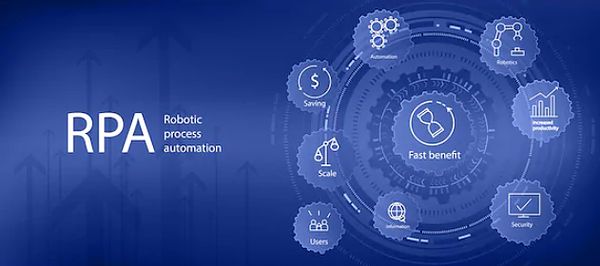
RPA vs Traditional Automation: Your Complete 2026 Guide

If you have been reading about automation in Nigeria, you have probably come across two terms: RPA and traditional automation. They sound like they do the same thing. And in some ways, they do. Both are about getting machines to do work that humans used to do.

But they are not the same. They work differently. They suit different kinds of problems. They cost different amounts to build. And they require different skills to run.

This guide explains what makes RPA and traditional automation different, when each one is the right choice, and what this means for Nigerian businesses in 2026.

Lagos Data School made this guide as part of our automation training series. We teach Nigerian professionals how to identify, build, and manage automated systems. Understanding the difference between these two approaches is the starting point for that journey.


What Is Traditional Automation

Traditional automation means using technology to do tasks that used to be done by hand. This idea has been around for a very long time. Factory machines that make cars, conveyor belts that move goods, and ATMs that dispense cash are all forms of traditional automation.

This may contain: a robotic hand touching the word automation on a touch screen with icons surrounding it

In a business context, traditional automation means writing code that connects directly to the systems you want to automate. It uses APIs and custom scripts to move data between systems and trigger actions.

Traditional automation is fast, reliable, and very powerful. But it requires the systems being connected to have been built with automation in mind. It also requires skilled software developers to build and maintain the connections. And when the underlying systems change, the automation code usually has to change too.

A Simple Traditional Automation Example

A Nigerian bank wants to automatically send a text message to a customer every time a transaction happens on their account. The bank’s developers write a piece of code that connects directly to the core banking system’s database. Every time a new transaction record appears, the code reads it and triggers the SMS gateway to send a message.

This works very well. It is fast, reliable, and runs automatically. But it required access to the bank’s internal systems, a developer who could write the integration code, and a long testing period to make sure it worked correctly.


What Is RPA?

Robotic Process Automation, or RPA, is a newer type of automation. Instead of connecting directly to the systems underneath, RPA works at the surface level, the same level that a human user works at.

This may contain: a hand touching the button that says robotic process automation

An RPA bot sees the screen the same way a person does. It can click buttons, fill in forms, read data from the screen, copy it, and paste it somewhere else. It does not need access to the database or the internal code. It just needs to be able to see and interact with the user interface.

This is the key difference. Traditional automation connects to the system at a deep, technical level. RPA connects to the system at the surface level, through the screen, just like a person would.

A Simple RPA Example

A Lagos logistics firm receives supplier invoices by email every day. A staff member opens each email, downloads the PDF, reads the invoice details, logs into the company’s finance system, and types in the invoice data. This takes about ten minutes per invoice.

An RPA bot can be set up to do all of those steps automatically. It checks the email inbox, downloads the PDF, reads the data, opens the finance system, logs in, and fills in the invoice details. All of this happens through the user interface, exactly as a human would do it, but much faster and without errors.

No API. No database access. No custom code connecting the two systems. Just a bot that uses the software the same way a human does.


The Key Differences


Factor Traditional Automation RPA
How it connects Directly to databases and APIs Through the user interface (like a human)
Technical skill needed Software developers required Business users can learn it
Setup time Weeks to months Days to weeks
Cost to build Higher — custom code required Lower — visual tools available
What it needs API access or database access Just a working user interface
Best for High-volume, stable, well-built systems Legacy systems and manual workflows
Maintenance More stable if systems don’t change Needs updating when UIs change
Speed of execution Very fast — direct system access Fast — but slightly slower than direct access


When to Use Each One

Knowing the difference helps you choose the right tool for the right problem. Here is a simple guide.

Use Traditional Automation When:

  • The systems involved have well-documented APIs or database access points
  • You have a software development team that can build and maintain the integration
  • The process needs to run at very high speed, such as millions of transactions per day
  • The underlying systems are stable and unlikely to change often
  • You are building a long-term, deeply embedded technical solution

Use RPA When:

  • The systems involved do not have APIs or are too old to connect to directly
  • You need a solution fast, without waiting for a long development cycle
  • The task involves a person switching between multiple different screens or software tools
  • Non-technical staff will help build or maintain the automation
  • You want to automate a process without touching the underlying systems at all


Why This Matters for Nigeria

Many Nigerian businesses run on older, legacy systems. These systems were built long before modern APIs existed. They do not have easy ways to connect to other software. Traditional automation is very hard to apply to them because there is no clean technical entry point.

RPA was built precisely for this problem. It does not need an entry point into the system’s code. It just needs to be able to see the screen. This makes it extremely well suited to the kinds of mixed, legacy-heavy technology environments that many Nigerian banks, telecoms firms, government agencies, and manufacturing companies operate.

At the same time, many Nigerian fintechs and tech startups have built their systems from the ground up with modern APIs. For these firms, traditional automation or direct API integration is often the better, faster, and more reliable choice.

The right answer depends on the systems you have, the speed you need, the budget you can commit, and the technical resources available to you.


What Is Intelligent Automation?

A third term has become common in recent years: intelligent automation. This combines RPA with artificial intelligence to handle tasks that are more complex than simple rule-based automation can manage.

Standard RPA works well when the process follows clear, fixed rules. But many real-world business tasks involve some degree of judgment. Reading an invoice that is formatted differently from the standard template. Classifying a customer complaint into the right category. Deciding which of several actions to take based on the content of an email.

Intelligent automation layers AI on top of RPA to handle this judgment layer. The AI reads the unstructured content, such as the text of an email or the layout of a PDF, and makes a decision. The RPA bot then carries out the action based on that decision.

For Nigerian professionals building automation skills in 2026, understanding this full spectrum gives you a complete picture of the tools available.


Common Myths

RPA Will Replace Traditional Automation

This is not true. They serve different purposes. RPA is excellent for surface-level, interface-driven automation. Traditional automation is still the right choice for deep, high-speed, API-level integration. Many large firms use both, applying each one where it fits best.

Complex Always Means Better

More technical does not mean better. Better means solving the right problem in the right way. A business that spends six months building a custom API integration when RPA could have solved the same problem in two weeks has not made a better choice. It has made a slower, more expensive one.

RPA Only Works for Small Tasks

Large organisations run hundreds of RPA bots handling millions of transactions per day. Nigerian banks, global insurance companies, and major telecoms firms all run large-scale RPA programs. The scale of what RPA can handle is far larger than most beginners assume.


The Plain Version

Here is the whole comparison in the simplest possible terms.

Traditional automation goes in through the back door. It connects directly to the system’s code, database, or API. It is fast, powerful, and reliable. But it needs a developer to build it, and the system has to have a back door to go through.

RPA goes in through the front door. It uses the screen, just like a person. It clicks, types, reads, and copies. It does not need any special access to the system underneath. It just needs a working screen to look at.

Both get the job done. The question is which door is available, and which one costs less to use.

Lagos Data School trains Nigerian professionals to understand both approaches, to know which one fits which problem, and to build the skills to deliver either solution when the job calls for it.


Why This Matters for Your Career

If you are a Nigerian professional who wants to build automation skills, understanding this distinction gives you a real edge.

Many professionals who learn RPA do not understand where it fits in the wider automation landscape. They cannot explain to a business leader why RPA is the right choice for a specific problem versus a custom integration. That inability to explain the choice clearly limits how far they can progress.

Professionals who can assess a process, pick the right type of automation, explain the trade-offs, and then deliver the solution are far more valuable than those who know only one approach.

Lagos Data School builds this kind of thinking into every automation training program we run. We do not just teach you to build bots. We teach you to think about automation at the level of a business problem, not just a technical task.


The Right First Step

If you are new to automation and you want to start building practical skills in Nigeria right now, here is the most direct advice Lagos Data School can give.

Start with RPA. Specifically, start with UiPath. It has the most in-demand skills in the Nigerian job market. It has a free learning Academy. And the skills you build are directly applicable to real problems in Nigerian banking, telecoms, oil and gas, and logistics firms.

Once you understand RPA well, study traditional automation and API integration as your second skill set. The combination of both puts you in a very small group of Nigerian professionals who can tackle the full range of automation challenges that businesses face.

Lagos Data School runs structured training programs that take you through this path in a practical, hands-on way, with real Nigerian business problems at the centre of every module.


Say It Simply

Here is the whole guide in plain, short sentences.

Traditional automation goes deep into a system. It connects to the database or the API. It is fast and reliable. But it needs a developer and it needs the system to have an open connection.

RPA stays on the surface. It uses the screen. It clicks, types, reads, and copies. It needs no special access. It just needs a working screen.

Both work. Both save time. The difference is which door is available.

If the system has an API and you have a developer, use traditional automation.

If the system is old, or you need a fast solution, or the task is done through a screen, use RPA.

That is it. That is the whole guide.

Lagos Data School teaches Nigerian professionals to understand both and to choose the right one for each problem.


Why This Matters Now

Understanding this difference is not just academic. It helps you do your job better.

If you work in IT, it helps you give the right advice when a business team asks for automation help.

If you work in business operations, it helps you ask the right questions when your IT team proposes a solution.

If you are building an automation career, it helps you explain your choices to clients and managers clearly.

Knowledge of this distinction separates professionals who think about automation strategically from those who only know one approach.

Lagos Data School builds this kind of strategic thinking into every automation training program.


Three Things to Remember

First: RPA and traditional automation are not rivals. They solve different problems. The best Nigerian automation professionals understand both.

Second: The right tool depends on the system. Old system with no API? RPA. Modern system with an open API and a developer available? Traditional automation.

Third: the goal is always the same. Free up human time. Reduce errors. Serve customers faster. The tool is just how you get there.

Lagos Data School teaches Nigerian professionals to think this way. Not as bot builders. As problem solvers.

That is the mindset that builds long, valuable careers in automation.


The Bottom Line

Traditional automation is powerful. RPA is flexible. Both have a place in a modern Nigerian business.

The professionals who understand both will always be in demand. The ones who only know one will be limited.

Build the knowledge. Start with RPA. Then add traditional automation and API skills on top.

That combination is rare in Nigeria right now. It will not stay rare for long.

Get there first.

Lagos Data School can help you do that. Come find us.


Final Thought

The right tool matters. But the right thinking matters more.

Learn both types of automation. Understand both. Use both when needed.

Build that thinking and you build a career that lasts.

Lagos Data School teaches this thinking. Start with us.


Recommended External Resource

For a comprehensive technical comparison of automation approaches from a leading industry analyst, visit Gartner’s automation research hub: https://www.gartner.com/en/information-technology/insights/automation


As Simple as It Gets

Traditional automation: goes through the back door. Connects to the database or API. Fast. Needs a developer. Best for modern systems.

RPA: goes through the front door. Uses the screen. Clicks and types like a person. No developer needed. Best for old systems and quick wins.

Pick the right door for the right problem.

If you need help deciding, that is what Lagos Data School teaches.

Come learn. Build. Work.

Start today.

Go.


Quick Self-Assessment

Use these questions to think about which type of automation fits the problem you are trying to solve.

  • Do the systems involved have a modern API or database that developers can access directly?
  • Is the process currently done by a person switching between different screens or software?
  • Do you need a solution working within weeks rather than months?
  • Are the systems involved legacy platforms that were not built for modern integration?
  • Does the process require reading PDFs, emails, or other documents from a screen?

If your answers point mostly toward legacy systems, screen-based work, and speed of delivery, RPA is your starting point. If your systems are modern, API-ready, and you have developer resources available, traditional automation may serve you better. Lagos Data School can help you make this assessment for any specific process in your organisation.


About Lagos Data School

Lagos Data School is Nigeria’s top school for cyber security, data science, cloud, and analytics. Every idea in this guide is part of our hands-on course.

Our teachers are real security pros, not just classroom staff. So you learn from people who guard live networks every day.

We run classes on weekdays, weekends, and online. So no matter your time, we have a slot for you. Beyond skills, we also give you a real certificate and links to job partners.

Visit Lagos Data School today to view our courses and join the next class.

Choose the right tool. Build the right skills. Train with Lagos Data School.

ChatGPT and How LLM Work: A Complete Guide

Artificial Intelligence has entered a new era. Tools that can read, write, translate, summarise, and hold conversations are now being used by millions of people around the world every day. ChatGPT sits at the centre of this shift. Since its release, it has been described as the fastest-growing technology product in history, reaching one hundred million users in just two months.

Nigeria is not being left behind. Professionals, students, entrepreneurs, and businesses across Lagos, Abuja, and Port Harcourt are already exploring how ChatGPT and similar tools can improve their work. Furthermore, companies are beginning to hire people who understand how these tools work and how to apply them effectively. As a result, AI literacy has become one of the most valuable skills in the Nigerian job market.

Lagos Data School is at the forefront of this shift in Nigeria. Their AI training programs are designed to give professionals a deep, practical understanding of tools like ChatGPT and the large language models that power them. This article explains exactly how these models work, what they can do, and how you can build a career around them. Additionally, every concept is broken down in plain language so that total beginners can follow along with ease.


What Is ChatGPT and Who Built It?

ChatGPT is an AI-powered conversational tool developed by OpenAI, an American AI research company. It was launched in November 2022 and quickly became the most widely discussed technology product of the decade. The name GPT stands for Generative Pre-trained Transformer, a term that describes the underlying technology behind the tool.

ChatGPT and How LLM Work

At its core, ChatGPT is a text-based AI assistant. Questions are typed by the user, and detailed responses are generated by the system almost instantly. It can write essays, answer technical questions, debug code, translate languages, summarise documents, and hold realistic conversations. Consequently, it has been adopted by professionals in fields ranging from law and medicine to marketing and software development.

Moreover, ChatGPT is not a search engine. It does not retrieve pre-written answers from a database. Instead, responses are generated in real time based on patterns learned during training. This distinction is important and helps explain both the power and the limitations of large language models.


What Are Large Language Models?

Large language models, or LLMs, are a type of artificial intelligence trained on enormous amounts of text data. These models learn the statistical relationships between words, sentences, and ideas by processing billions of pages of text from books, websites, academic papers, and other sources. As a result, they develop a sophisticated understanding of how language works.

The term “large” refers to two things: the size of the training data and the number of parameters inside the model. Parameters are the internal values the model adjusts during training to improve its predictions. GPT-4, the model behind ChatGPT, is estimated to contain over one trillion parameters. This makes it one of the most complex computational systems ever built.

Furthermore, LLMs are not limited to chatbots. The same underlying technology is used in grammar checkers, code assistants, translation tools, customer service bots, and document summarisers. According to Stanford University’s AI Index Report, large language models are now considered the most transformative development in AI since the invention of deep learning. Lagos Data School teaches LLM fundamentals as part of their core AI curriculum.


How Large Language Models Are Built and Trained

Understanding how LLMs work requires breaking the process into three key stages: data collection and pre-training, fine-tuning, and reinforcement learning from human feedback. Each stage plays a critical role in shaping the model’s behaviour and capabilities.

Stage 1: Pre-Training on Massive Datasets

During pre-training, the model is exposed to a huge corpus of text. This corpus is assembled from diverse sources including books, websites, Wikipedia, academic journals, and forums. The model is then trained to predict the next word in a sequence. By doing this billions of times, it begins to develop a rich internal representation of language.

This stage is computationally expensive. Hundreds of powerful GPUs are used over weeks or months to complete the training process. The cost of pre-training a large model like GPT-4 is estimated to be in the tens of millions of dollars. Consequently, only a small number of well-funded organisations have the resources to train models at this scale.

Stage 2: Fine-Tuning for Specific Tasks

After pre-training, the model is fine-tuned on more focused datasets. This process teaches the model how to behave in specific contexts, such as answering questions, writing code, or following instructions. Fine-tuning requires far less data and computing power than pre-training, which makes it accessible to a wider range of organisations.

Additionally, fine-tuning is what allows a single base model to be adapted into many different products. The same foundational model can be fine-tuned to serve as a legal assistant, a customer service agent, or a coding helper. This flexibility makes LLMs incredibly versatile across industries.

Stage 3: Reinforcement Learning From Human Feedback

The third stage is called Reinforcement Learning from Human Feedback, or RLHF. In this process, human reviewers rate the quality of the model’s outputs. These ratings are then used to train a reward model, which teaches the LLM to produce responses that humans find helpful, accurate, and safe.

RLHF is the reason ChatGPT feels more natural and useful than earlier AI chatbots. It aligns the model’s outputs with human preferences rather than just statistical patterns in text. As a result, responses are more coherent, relevant, and appropriate across a wide range of topics and contexts.

The Transformer Architecture

The transformer is the architectural backbone of every major LLM, including GPT-4, Google’s Gemini, and Meta’s LLaMA. It was introduced in a landmark 2017 paper titled “Attention Is All You Need” by researchers at Google. The transformer’s key innovation is the attention mechanism, which allows the model to weigh the importance of different words in a sentence relative to each other.

For example, in the sentence “The bank by the river flooded after heavy rain,” the attention mechanism helps the model understand that “bank” refers to a riverbank, not a financial institution. This contextual understanding is what separates modern LLMs from earlier language models. Furthermore, transformer models can process entire sentences and paragraphs simultaneously, which makes them far faster and more powerful than their predecessors.


What ChatGPT and LLMs Can Do for Nigerian Professionals

ChatGPT has practical applications across almost every profession. Nigerian businesses, organisations, and individuals are already finding creative and productive ways to use it. Below are some of the most valuable use cases relevant to the Nigerian context.

Content Creation and Copywriting

Marketing teams across Nigeria are using ChatGPT to produce blog posts, social media content, email newsletters, and product descriptions. Content is drafted by the tool in seconds, giving writers a strong starting point that can then be refined and personalised. Consequently, content teams are producing more output with the same number of people.

Customer Service Automation

Businesses are deploying LLM-powered chatbots to handle customer queries around the clock. Banks, telecoms companies, and e-commerce platforms in Nigeria are using these tools to reduce the pressure on human customer service agents. Furthermore, these bots are being trained on company-specific data to ensure that responses are accurate and on-brand.

Code Generation and Software Development

Software developers are using ChatGPT to write, review, and debug code. Lagos-based tech startups are already integrating AI coding assistants into their development workflows. As a result, junior developers are able to work faster, and experienced engineers can focus on higher-level problem-solving instead of routine coding tasks.

Research and Document Summarisation

Academics, lawyers, and analysts in Nigeria are using ChatGPT to summarise long documents, extract key information, and conduct preliminary research. Reports that previously took hours to read are now being distilled into key points in minutes. This saves time and allows professionals to focus on analysis rather than information gathering.

Education and Training

Teachers and trainers are using LLMs to develop course materials, generate quiz questions, and create personalised study guides. Lagos Data School incorporates AI tools into its teaching methodology to enhance the learning experience. Students learn not just about AI but how to work alongside it effectively.


Limitations and Risks of Large Language Models

LLMs are powerful, but they are not perfect. Understanding their limitations is just as important as knowing their capabilities. Several significant risks are associated with the widespread use of these models.

  • Hallucinations: LLMs sometimes generate false information with high confidence; outputs must always be verified
  • Bias in training data: biases present in training data are absorbed by the model and can appear in its outputs
  • Data privacy concerns: sensitive information entered into AI tools may be used to improve the model without the user’s full awareness
  • Outdated knowledge: LLMs have a knowledge cut-off date and may not reflect very recent events or developments
  • Over-reliance: professionals who depend too heavily on AI outputs risk losing critical thinking and independent judgement skills

Lagos Data School addresses these risks directly in their AI training curriculum. Students are taught to use AI tools responsibly, verify outputs critically, and understand the ethical implications of deploying LLMs in professional and business settings.


Prompt Engineering: The Skill Every AI User Needs

Getting the best results from ChatGPT requires more than typing a question. Prompt engineering is the practice of crafting precise, well-structured inputs that guide the model toward the most useful and accurate outputs. It is quickly becoming one of the most sought-after skills in the AI industry.

Effective prompts include clear context, a specific task, the desired format, and any relevant constraints. For example, instead of asking “Write me a report,” a well-engineered prompt might say: “Write a 500-word executive summary of Nigeria’s fintech sector in 2025, using formal language, with three key takeaways at the end.” The difference in output quality is significant.

Furthermore, prompt engineering is being taught as a standalone skill at Lagos Data School. Their AI programs cover prompt design, iteration techniques, and advanced prompting strategies that professionals can apply immediately in their work. Visit Lagos Data School to find out how their training prepares students to use AI tools at a professional level.


Career Paths Built Around LLMs and Generative AI

Generative AI is creating entirely new categories of jobs. Several roles that did not exist five years ago are now among the most in-demand positions in the global technology sector. Nigerian professionals who develop expertise in this area are well-positioned to access both local and international opportunities.

Below are the most prominent career paths linked to LLMs and generative AI:

  • Prompt Engineer: designs and optimises text prompts to extract high-quality outputs from AI models
  • AI Product Manager: leads the development of AI-powered products and ensures they meet user and business needs
  • LLM Fine-Tuning Specialist: adapts pre-trained models for specific business applications and domains
  • AI Content Strategist: uses AI writing tools to develop scalable content strategies for brands and publishers
  • Conversational AI Designer: builds and optimises chatbot experiences powered by large language models
  • AI Ethics and Policy Analyst  evaluates the social and regulatory implications of deploying AI systems at scale:

Additionally, traditional roles in data science, software engineering, and marketing are being transformed by LLMs. Professionals in these fields who upskill in AI will find their value in the job market increasing significantly. Lagos Data School prepares students for all of these roles through their practical, industry-aligned AI programs.


How Lagos Data School Prepares You for the Age of LLMs

Lagos Data School is Nigeria’s premier AI and data science training institution. Their programs are built around the skills that employers actually need, not outdated academic theory. Generative AI and large language models are now central to their curriculum because they are central to the future of work.

Students at Lagos Data School learn how LLMs work, how to use tools like ChatGPT professionally, and how to apply prompt engineering techniques across different industries. Furthermore, ethical AI use, risk management, and responsible deployment are all covered as part of the program. This produces graduates who are not just technically capable but professionally responsible.

Post-training support is also provided to every student. CV reviews, mock interviews, and introductions to employer networks across Nigeria are all included. As a result, Lagos Data School graduates enter the job market with both the skills and the connections needed to succeed. Enrol today at Lagos Data School and position yourself at the front of Nigeria’s AI revolution.


Conclusion: Understanding LLMs Is Your Competitive Edge

ChatGPT and large language models are not a passing trend. They represent a fundamental shift in how work is done, how information is processed, and how businesses operate. Nigerian professionals who understand how these tools work and how to use them well will have a clear advantage in every sector of the economy.

Lagos Data School gives you that advantage. Their AI programs are practical, beginner-friendly, and directly aligned with what Nigeria’s job market demands. Furthermore, the school’s reputation and alumni network open doors that self-study alone cannot. Choosing Lagos Data School is choosing the fastest and most reliable path into Nigeria’s AI-powered future.

Start your journey today. Visit Lagos Data School to browse available programs, speak with an admissions adviser, and join the next cohort. The age of large language models is here and your place in it begins now.


For further reading, explore OpenAI’s research on GPT models, Stanford’s AI Index Report, and Google’s introduction to transformer models.

Introduction to Artificial Intelligence: Your Complete Guide.

Artificial Intelligence is no longer a concept of the future. Today, it powers the apps on your phone, the recommendations on your streaming platform, and the fraud detection systems in your bank. Businesses across Nigeria and the rest of Africa are now adopting AI at a rapid pace. As a result, the demand for professionals who understand it has never been stronger.

Lagos Data School has positioned itself at the forefront of AI education in Nigeria. Their programs are designed to give total beginners and working professionals alike the knowledge and practical skills needed to thrive in this field. Furthermore, their courses are built around real Nigerian business contexts, making the learning immediately relevant and applicable.

This article introduces the core concepts of AI, explores its most important applications, and maps out the career paths available to those who choose to pursue it. Additionally, practical guidance is provided at every stage so that you leave with a clear picture of where to start. Whether you are a student, a professional, or a business owner, AI is a subject you can no longer afford to ignore.


What Is Artificial Intelligence? A Clear Definition

Artificial Intelligence refers to the simulation of human intelligence by machines. These machines are programmed to think, learn, and solve problems the way humans do. AI systems are built to process large amounts of data, identify patterns, and make decisions based on what they find.

Story pin image

According to IBM’s AI research division, AI is broadly defined as the ability of a machine to mimic human cognitive functions such as learning and problem-solving. This definition covers a wide range of technologies, from simple rule-based systems to highly complex neural networks that power modern voice assistants.

Moreover, AI is not a single technology. It is an umbrella term that covers several related fields. Understanding these sub-fields is the first step toward building a meaningful career in this space. Lagos Data School breaks down each of these areas clearly in their AI training curriculum.


Core Concepts of Artificial Intelligence

Several foundational concepts sit at the heart of AI. Each one builds on the last, and together they form the technical backbone of the entire field. Below is a clear explanation of the most important concepts every beginner must understand.

Machine Learning

Machine learning is the branch of AI in which systems are taught to learn from data rather than being explicitly programmed. Patterns are identified by the algorithm, and predictions are made based on those patterns. Consequently, the more data the system processes, the more accurate its outputs become.

Machine learning is used in spam filters, credit scoring models, and product recommendation engines. In Nigeria, banks and fintech companies are already using it to detect fraud and assess loan risk. Lagos Data School teaches machine learning as a core subject within their AI and data science programs.

Deep Learning

Deep learning is a more advanced form of machine learning. It uses artificial neural networks with many layers to process complex data such as images, audio, and text. These networks are modelled loosely on the structure of the human brain.

Additionally, deep learning powers many of the AI tools people use daily, including facial recognition, voice-to-text conversion, and medical image analysis. Understanding deep learning opens the door to some of the most exciting and highly paid roles in the AI industry.

Natural Language Processing

Natural Language Processing, or NLP, is the branch of AI that enables machines to understand and generate human language. It is the technology behind chatbots, virtual assistants, language translation tools, and sentiment analysis systems.

Furthermore, NLP is being applied in Nigerian businesses to build customer service bots, automate email responses, and analyse customer feedback at scale. This makes it one of the most commercially relevant AI skills in the Nigerian market today.

Computer Vision

Computer vision allows machines to interpret and make decisions based on visual input. Images and videos are processed by the system to identify objects, faces, and patterns. This technology is used in self-driving cars, medical diagnostics, and security surveillance systems.

In Africa, computer vision is being applied to agriculture, healthcare imaging, and retail analytics. Consequently, professionals with computer vision skills are being sought by a growing number of organisations across the continent.

AI Ethics and Responsible AI

As AI systems grow more powerful, the ethical questions surrounding them become more important. Bias in algorithms, data privacy, and the social impact of automation are all areas that must be carefully managed. Responsible AI is now a recognised discipline within the broader AI field.

Lagos Data School includes AI ethics as part of their curriculum. Students are taught to build fair, transparent, and accountable systems. This makes their graduates more attractive to employers who take corporate responsibility seriously.


Real-World Applications of Artificial Intelligence

AI is being applied across virtually every industry. Its impact is already being felt in Nigeria and across West Africa. Below are some of the most significant areas where AI is currently making a difference.

AI in Finance and Banking

Financial institutions in Nigeria are among the earliest adopters of AI. Fraud detection systems are powered by machine learning models that analyse thousands of transactions per second. Additionally, credit risk assessment, customer segmentation, and algorithmic trading are all being done using AI tools.

Banks like GTBank, Access Bank, and Zenith Bank are investing heavily in AI-driven technologies. As a result, the demand for AI-skilled professionals within Nigeria’s financial sector is growing fast. Lagos Data School prepares students specifically for these roles.

AI in Healthcare

Healthcare is one of the most promising areas for AI application in Nigeria. Medical images are being analysed by AI systems to detect diseases such as malaria, tuberculosis, and certain cancers faster than human doctors. Furthermore, patient records are being processed by AI to identify health risks before symptoms appear.

Organisations like the Nigerian Institute of Medical Research are exploring AI-driven diagnostics. Consequently, healthcare professionals with AI knowledge are positioned to play a critical role in transforming Nigeria’s health outcomes.

AI in Agriculture

Nigeria’s agricultural sector employs a significant portion of the population. AI tools are now being used to monitor crop health, predict weather patterns, optimise irrigation, and detect pests before they cause widespread damage. This technology has the potential to significantly increase farm yields across the country.

Moreover, drone technology powered by computer vision is being tested on Nigerian farms to automate crop surveillance. These innovations represent a major opportunity for AI professionals who want to work in a sector with direct social impact.

AI in Education and Training

Educational platforms are using AI to personalise learning for individual students. Adaptive learning systems identify gaps in a student’s knowledge and adjust the content accordingly. As a result, learners progress faster and retain information more effectively.

Lagos Data School itself uses data-driven approaches to track student progress and improve course delivery. Their programs are updated regularly to reflect changes in the AI industry, ensuring that graduates always have current, relevant skills.

AI in E-Commerce and Retail

Retail businesses across Nigeria are using AI to power product recommendations, chatbots, inventory management, and dynamic pricing. Jumia, Konga, and other Nigerian e-commerce platforms rely on AI to personalise the shopping experience for millions of users.

Furthermore, customer service bots built on NLP technology are now handling a significant share of consumer queries. This reduces costs for businesses and improves response times for customers. Consequently, AI professionals with NLP and machine learning skills are being recruited aggressively across the retail sector.


Career Paths in Artificial Intelligence

AI offers a wide range of career options. Some roles are highly technical, while others focus on strategy, ethics, or communication. Below are the most popular and well-paying AI career paths available to trained professionals in Nigeria today.

  • Machine Learning Engineer: builds and trains models that power AI-driven products and services
  • Data Scientist: analyses large datasets to extract insights and build predictive models
  • AI Research Scientist: develops new AI algorithms and advances the theoretical foundations of the field
  • NLP Engineer: builds systems that understand, process, and generate human language
  • Computer Vision Engineer: creates systems that interpret and act on visual data
  • AI Product Manager: leads the development of AI-powered products from concept to launch
  • AI Ethics Specialist: ensures that AI systems are fair, transparent, and compliant with regulations
  • Business Intelligence Analyst — uses AI tools to turn data into actionable business insights

Each of these roles is in active demand across Lagos, Abuja, and Port Harcourt. Furthermore, remote work opportunities in international AI companies are accessible to Nigerian professionals with the right training and certifications. Lagos Data School’s AI programs are designed to prepare graduates for exactly these kinds of opportunities.


Skills You Need to Start a Career in AI

Breaking into AI requires a combination of technical and analytical skills. Beginners are often overwhelmed by where to start, but the path becomes clear when the right framework is applied. Lagos Data School provides that framework through their structured AI training programs.

Below are the core skills that are needed to build a strong foundation in AI:

  • Python programming: the primary language used in AI and machine learning development
  • Statistics and mathematics: essential for understanding how models are built and evaluated
  • Data wrangling and analysis: the ability to clean, organise, and explore raw datasets
  • Machine learning frameworks: tools like TensorFlow, PyTorch, and Scikit-learn are widely used in industry
  • Critical thinking and problem-solving: AI projects require creative solutions to complex real-world challenges
  • Communication and storytelling: findings must be explained clearly to non-technical stakeholders

All of these skills are taught at Lagos Data School as part of their comprehensive AI and data science programs. Students are guided from the basics of Python all the way through to building and deploying machine learning models. Visit Lagos Data School to explore full course details and upcoming cohort dates.


How Lagos Data School Prepares You for an AI Career

Lagos Data School is the leading technology training institution in Nigeria. Their AI programs are developed in partnership with industry professionals and are regularly updated to reflect the latest developments in the field. Consequently, students always learn skills that are relevant, current, and valued by employers.

Practical, hands-on training is at the heart of every Lagos Data School program. Real datasets are used in all exercises, and students complete end-to-end AI projects before they graduate. Furthermore, each student is mentored by an experienced practitioner who provides feedback, guidance, and career advice throughout the program.

Beyond technical training, Lagos Data School offers career support services that include CV reviews, mock interviews, and direct connections to employer networks across Nigeria. Their alumni community spans hundreds of professionals working in AI, data science, and technology roles across the country. To enrol or learn more, visit Lagos Data School.


How to Get Started With AI in Nigeria Today

Starting your AI journey does not require a computer science degree. Many successful AI professionals in Nigeria came from backgrounds in engineering, finance, healthcare, and business. What matters most is your commitment to learning and your willingness to practise consistently.

First, build a foundation in Python and basic statistics. Free resources from Google’s Machine Learning Crash Course are widely recommended for beginners. However, these self-study resources are most effective when combined with structured, instructor-led training.

Lagos Data School offers the best of both worlds. Their programs combine structured classroom learning with self-paced exercises, live projects, and expert mentorship. Additionally, their flexible scheduling makes it possible for working professionals to train without disrupting their current jobs. As a result, students typically complete the program and become job-ready within three to six months.


Conclusion: Begin Your AI Journey With Lagos Data School

Artificial Intelligence is transforming every industry in Nigeria and across the world. The professionals who understand it today will lead organisations tomorrow. Fortunately, you do not need years of experience or an advanced degree to get started. The right training is all that is required.

Lagos Data School is Nigeria’s most trusted AI training provider. Their practical, beginner-friendly programs are designed to take you from zero to job-ready in the shortest possible time. Furthermore, their strong industry connections and career support services give graduates a real advantage in the Nigerian job market.

Take the first step today. Visit Lagos Data School to explore their AI and data science programs, check upcoming cohort dates, and secure your place. Your AI career in Nigeria starts here.


For further reading, explore IBM’s AI Resource Centre, Google’s Machine Learning Crash Course, and MIT’s Introduction to Deep Learning.

How to Start a Career in Robotic Process Automation in Nigeria

Robotic Process Automation is one of the fastest-growing areas of tech work in Nigeria right now. And the number of trained RPA professionals available is far smaller than the number of firms that want to hire them.

That gap is your opportunity.

This guide is a complete, step-by-step plan for building an RPA career in Nigeria in 2026. It covers the skills you need, the tools to learn, the certifications that matter, the jobs available, and the salaries you can expect. And it is written for real Nigerian professionals, not for a generic global audience.

Lagos Data School made this guide based on what we hear from Nigerian hiring managers every week, what our graduates report from the job market, and our direct experience training Nigerian professionals.


Is an RPA Career Right for You?

Before you invest time and money in learning RPA, it is worth asking whether this career path fits your situation.

RPA careers suit people who are detail-oriented, who like solving problems systematically, and who can think logically about how a process works step by step. You do not need a computer science degree. You do not need years of coding experience. But you do need patience, persistence, and a willingness to learn tools that may feel unfamiliar at first.

RPA careers also suit people who enjoy working between the technical and business sides of an organisation. An RPA professional needs to understand the business process well enough to automate it correctly. And they need to be able to communicate what the bot does to non-technical colleagues and managers.

If this sounds like you, keep reading. The path is wide open.


Step 1: Learn What RPA Is

Before you start learning any tool, make sure you have a clear understanding of what RPA actually is and how it fits into the wider technology landscape.

RPA is software that does repetitive, rule-based tasks on a computer the same way a human would. It clicks buttons, fills in forms, reads data from the screen, and moves it between systems. It does not need to connect to the system’s code or database. It works through the user interface.

Understanding this clearly helps you explain RPA to employers, identify which processes are good automation candidates, and decide when RPA is the right tool and when something else is better.

Lagos Data School’s foundational RPA modules start here, with a clear, practical explanation of what the technology is, what it can do, and where it fits in the automation landscape.


Step 2: Pick Your First Tool

The three most in-demand RPA tools in Nigeria in 2026 are UiPath, Automation Anywhere, and Microsoft Power Automate. For most Nigerian professionals starting, UiPath is the best first choice.

The reasons are straightforward. UiPath has the largest market share in Nigerian enterprise environments. Its free Academy is the best structured learning resource of the three. And its certifications are the most widely recognised by Nigerian hiring managers, particularly in banking, telecoms, and oil and gas.

The exception is if you already work in an organisation that runs on Microsoft products. In that case, start with Power Automate. You can build real, working automations within your first week of learning, which is a powerful motivator.


Step 3: Use the Free Academy

UiPath Academy at academy.uipath.com is entirely free. It is structured, well-produced, and covers everything from the basics of how automation works to building complex, production-ready bots.

The recommended starting path is the RPA Developer Foundation course. This takes most learners between four and eight weeks at a pace of one to two hours per day. It covers the core concepts, the key tools within UiPath, and a set of practical exercises that teach you to build real automations.

Do not rush this phase. Work through every exercise. Build every practice bot. Ask questions in the UiPath community forum when you get stuck. This foundation is what everything else in your RPA career will be built on.


Step 4: Build a Portfolio

A certificate from an academy tells employers you have covered the material. A portfolio of real projects tells them you can apply it.

As you go through the Academy, start building your own automation projects alongside the course exercises. Look at your current job, your household admin, or a small business near you. Find a repetitive, rule-based task. Build a bot that does it.

Here are some portfolio project ideas that work well for Nigerian RPA beginners.

  • A bot that reads job listings from a Nigerian jobs website and organises them into a spreadsheet by sector and location
  • A bot that monitors a Gmail inbox, reads incoming messages with a specific subject line, and logs the key details to a Google Sheet
  • A bot that reads a bank statement PDF and extracts and categorises each transaction automatically
  • A bot that fills in a standard form in a web application using data from a spreadsheet

These are small projects. But they are real. They demonstrate that you can take a business problem, translate it into an automation workflow, and deliver a working bot. That is what employers are looking for.


Step 5: Get Your Certificate

The UiPath Associate Developer certification is the most widely recognised entry-level RPA certificate in Nigeria. It tests your ability to use UiPath Studio, build and debug workflows, handle variables, and deploy a simple bot.

This certification is taken online, costs a modest fee, and can be prepared for entirely through the free UiPath Academy. Most candidates who have gone through the Foundation course and built a few portfolio projects are ready to sit the exam within three to four months of starting.

Passing this exam gives you a credential that Nigerian employers recognise and that gives you credibility in job applications and interviews.


Step 6: Apply for Junior Roles

With the Academy completed, a portfolio of two or three projects, and the Associate Developer certification, you are job-ready for a junior RPA role in Nigeria.

The types of roles to look for include RPA Developer, Process Automation Analyst, and Automation Consultant at junior level. These roles exist at Nigerian banks, telecoms companies, oil and gas firms, BPO providers, and the local offices of international corporations.

When you apply, focus your CV and cover letter on the specific automations you have built. Give concrete numbers where you can. ‘Built a bot that reduced invoice processing time from 12 minutes to under 2 minutes per invoice’ is far more compelling than ‘learned RPA’. Real output is what stands out.


What Nigerian Employers Look For

Lagos Data School speaks with Nigerian hiring managers regularly. Here is what they actually say they look for when hiring junior RPA professionals.

  • Can you build a working bot? Show me something you have made.
  • Do you understand the business process you are automating, not just the technical steps?
  • Can you explain what the bot does in plain language to a non-technical manager?
  • Have you used UiPath Studio, Orchestrator, or at least one other major RPA tool?
  • Can you handle basic errors and exceptions in your bot logic?

Notice that none of these requirements mean a computer science degree, years of experience, or complex coding languages. The bar is genuinely accessible to motivated Nigerian professionals from any background.


How Long Will It Take?

Here is a realistic timeline for going from zero RPA knowledge to a first junior role.


Phase Activity Time
1 Learn RPA foundations and UiPath basics 4–6 weeks
2 Build 2–3 portfolio projects 4–6 weeks
3 Prepare for and sit the Associate Developer exam 2–4 weeks
4 Apply for roles, attend interviews 4–8 weeks
Total First junior role 3–6 months


This timeline assumes one to two hours of focused study and practice per day. Professionals who can commit more time each day can move faster. Those with prior experience in business process analysis, IT, or data work will also move faster because some of the thinking skills transfer directly.


Career Growth After Your First Role

Once you are in your first junior RPA role, the career progression is relatively clear.

After one to two years, most junior RPA developers move to mid-level roles with greater scope. They start owning full automation projects rather than individual bots. They begin to take part in requirements gathering sessions with business stakeholders. And they start learning more advanced bot capabilities like document understanding, AI integration, and Orchestrator management.

After three to four years, strong performers move into senior developer roles or begin to specialise as RPA Solution Architects. Architects are the professionals who design the overall automation program for an organisation, including which processes to automate, in which order, using which tools, and how to measure the results. This is one of the most well-paid roles in the automation space.

The most senior level is the Centre of Excellence Lead, or CoE Lead, who runs an organizations entire automation program. This is a leadership role that combines deep technical expertise with strong stakeholder management and strategic thinking. Lagos Data School alumni are already reaching this level at Nigerian organisations.


A Direct Message to Nigerian Professionals

The RPA market in Nigeria is still early. That is a very good thing for you.

Early markets reward the professionals who build skills before everyone else does. The RPA professionals who are entering the market in 2026 are the ones who will be mid-level and senior by 2028, when demand has grown even further and the gap between supply and demand is even wider.

You do not need to wait for a perfect moment. You do not need to have all the prerequisites lined up first. You need to start, study consistently, build real things, and keep going when it is slow.

Lagos Data School is here to help you do that. Our structured RPA programs are designed for Nigerian professionals. Our trainers have built real automation systems in Nigerian business environments. And our graduates are getting hired.

The door is open. Come through it.


A Direct Word on Starting

The biggest thing that holds Nigerian professionals back from building an RPA career is not a lack of skill. It is a lack of a start.

Most people read articles. Watch videos. Make plans. And then wait for a better time.

There is no better time. The market is open now. The training is free now. The jobs are appearing now.

Go to academy.uipath.com today. Create an account. Start the first module. That is it. That is the first step.

One hour today. One hour tomorrow. One month from now, you will have real skills that did not exist before.

That is how careers are built in Nigeria. Not by waiting. By starting. By doing the work daily.

Lagos Data School is here to help you go faster. But even without us, you can start today.

Go. Start. Now.


What Lagos Data School Offers

Our RPA training programs take Nigerian professionals from zero to job-ready in three to six months. We do not just teach tool features. We build real skills.

Our trainers are practitioners who have built and managed real automation systems in live Nigerian business environments. Our graduates work at banks, telecoms firms, oil and gas companies, and BPO providers across Nigeria.

We train in cohorts. That means you learn alongside other Nigerian professionals on the same path. You share problems. You share wins. You build a network of people who understand what you do.

If you want to build an RPA career the right way, with structure, support, and real Nigerian business context, Lagos Data School is where to do it.

Talk to us. We are ready for you.


The Honest Timeline

Most guides about new careers are vague about time. Lagos Data School is not.

If you study for one hour every day, you will be ready for your first junior RPA role in Nigeria in three to six months. That is the honest number. Not one month. Not one year. Three to six months.

The first month will feel slow. The tools will be unfamiliar. Things will not work the first time you try them. That is normal. Every RPA professional alive has been there.

The second month gets faster. The third month is when the skill starts to feel real.

Push through the first month. The rest gets easier. And Lagos Data School is here to help you push through it with structure, support, and real projects.


Short and Simple

Want an RPA career in Nigeria? Here is the plan in five steps.

One: Go to academy.uipath.com. Create a free account today.

Two: Complete the Developer Foundation course. One hour a day. Four to six weeks.

Three: Build two portfolio projects using real-world problems.

Four: sit the Associate Developer exam. Pass it.

Five: apply for junior RPA roles at Nigerian banks, telecoms firms, and BPO providers.

That is it. Five steps. Three to six months. One new career.

Start today. Not tomorrow.


You Can Do This

An RPA career in Nigeria is real. The jobs are real. The pay is real. The path is real.

You do not need a degree. You do not need years of coding. You need time, effort, and a plan.

You have the plan now. Go use it.

Lagos Data School is here if you need help. We are ready.

Go.

Build.

Win.

Now.

Today.

This week.

Rise.

Build.

Grow.

Lead.


Recommended External Resource

For free, structured RPA training starting from an absolute beginner level, visit the UiPath Academy: https://academy.uipath.com.


Career Readiness Checklist

Before you apply for your first RPA role, work through this checklist.

  • Completed the UiPath Developer Foundation course or an equivalent program
  • Built at least two portfolio projects with real business use cases
  • Passed the UiPath Associate Developer certification exam
  • Can explain what RPA is and when to use it to a non-technical person
  • Can describe one of your portfolio projects in a two-minute interview answer
  • LinkedIn profile updated with your RPA skills, certificate, and portfolio projects

If all six are done, you are genuinely ready. If any are not, that is your priority for this week. Lagos Data School can help you work through every item on this list with structure, support, and real guidance from people who know the Nigerian automation job market.


About Lagos Data School

Lagos Data School is Nigeria’s top school for cybersecurity, data science, cloud, and analytics. Every idea in this guide is part of our hands-on course.

Our teachers are real security pros, not just classroom staff. So you learn from people who guard live networks every day.

We run classes on weekdays, weekends, and online. So no matter your time, we have a slot for you. Beyond skills, we also give you a real certificate and links to job partners.

Visit Lagos Data School today to view our courses and join the next class.

Start your RPA career with confidence. Train with Lagos Data School.

Hi, How Can We Help You?
Welcome To
Lagos Data School

Artificial Intelligence (AI), Machine Learning and Robotics Programmes Are Now Available!!!

Enroll Now!

Thank You
100% secure website.