
Scrum Roles Explained for Nigerian Professionals
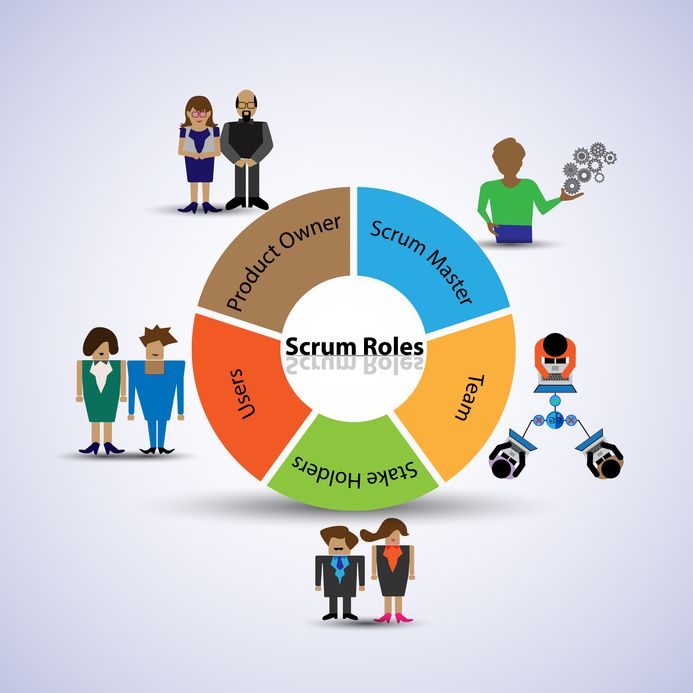
Scrum defines exactly three roles, no more, no less. Furthermore, each role has a clear and distinct purpose. Lagos Data School teaches every Scrum role in its live Agile course. Therefore, this guide explains all three roles in plain English.

Also, Nigerian examples are used throughout to make each role practical. By the end, you will know exactly which role fits your career.
Why Scrum Defines Only Three Roles
Traditional project teams have many job titles and layers. However, Scrum keeps things simple on purpose. Fewer roles mean fewer silos and faster decisions.
Also, every person on the team knows their responsibility clearly. Consequently, Nigerian Scrum teams move faster than traditional teams. Therefore, Scrum’s three-role structure is a deliberate design choice.
Role 1: The Product Owner
The Product Owner decides what the team builds. Furthermore, they decide the order in which items are built.
Also, they manage the product backlog every single day. Consequently, the team always works on the most valuable item first. In short, the Product Owner is the voice of the customer inside the team.
What the Product Owner Does Every Sprint
- Writes user stories: Each backlog item is described from the user’s point of view.
- Sets priorities: High-value items sit at the top of the backlog always.
- Defines acceptance criteria: Each item has a clear pass or fail condition.
- Attends sprint review: Feedback from stakeholders is gathered every sprint.
- Updates the backlog: New ideas and feedback are added after every sprint review.
The Product Owner in Nigerian Teams
In Nigerian startups, the Product Owner is often the founder. Furthermore, in Nigerian banks, this role is often a digital product manager.
Also, NGOs in Nigeria assign this role to the programme lead. Consequently, the Product Owner role exists in every Nigerian industry. Therefore, learning this role opens doors across every Nigerian sector.
What Makes a Great Nigerian Product Owner?
A great Product Owner understands both the business and the users. Also, they make fast, clear decisions under pressure. Furthermore, they say no to low-value requests without hesitation. Consequently, the team builds fewer features but each one matters more.
Role 2: The Scrum Master
The Scrum Master is the team’s servant-leader and coach. Furthermore, they protect the team from outside distractions.
Also, they remove blockers that slow the team down. Consequently, the team focuses on sprint work rather than internal politics. In short, the Scrum Master serves the team — not the other way around.
What the Scrum Master Does Every Sprint
- Facilitates ceremonies: Planning, stand-ups, reviews, and retrospectives are all run by the Scrum Master.
- Removes blockers: Any obstacle slowing the team is escalated and resolved fast.
- Coaches the team: Agile principles and Scrum practices are taught continuously.
- Shields the team: Unplanned work and stakeholder interference are blocked during the sprint.
- Tracks progress: Burndown charts and velocity data are monitored every day.
The Scrum Master in Nigerian Teams
Many Nigerian companies promote a developer into the Scrum Master role. However, the Scrum Master is a coaching role — not a technical one. Furthermore, the best Nigerian Scrum Masters are patient and process-focused.
Also, they coach managers and executives on how to support Agile teams. Consequently, the Scrum Master role is one of the most impactful in Nigeria.
Scrum Master vs Project Manager: Key Difference
| Area | Scrum Master | Project Manager |
| Authority | No formal authority over the team | Authority to assign tasks |
| Focus | Team process and Agile principles | Scope, budget, and timeline |
| Style | Servant-leader and coach | Planner and director |
| Planning | Guides sprint planning only | Owns the full project plan |
| Nigerian salary | ₦3m – ₦8m per year | ₦4m – ₦12m per year |
Role 3: The Developers (Development Team)
Developers are all the people who build the product. Furthermore, this includes designers, testers, writers, and engineers.
Also, the term ‘developer’ in Scrum means anyone who creates the product. Consequently, non-programmers are also called developers in Scrum. Therefore, the word ‘developer’ is broader than most Nigerians assume.
What Makes the Scrum Development Team Unique?
Scrum teams self-organise without a manager assigning tasks. Furthermore, each developer decides their own daily work.
Also, the team takes shared ownership of the sprint goal. Consequently, accountability sits with the whole team — not just one person. In addition, Scrum teams are cross-functional — each member brings a different skill.
The Right Size for a Nigerian Scrum Team
A Scrum team works best with three to nine developers. Furthermore, smaller teams move faster but carry more risk.
Also, larger teams need more coordination and can slow down. Therefore, five to seven developers is the sweet spot for most Nigerian teams.
How All Three Roles Work Together
| Situation | Product Owner Does | Scrum Master Does | Dev Team Does |
| Sprint Planning | Presents top backlog items | Facilitates the meeting | Estimates and commits |
| Daily Stand-up | Listens and notes blockers | Runs the 15-min meeting | Updates progress daily |
| Sprint Review | Accepts or rejects the demo | Organises the event | Demos the increment |
| Retrospective | Participates as a team member | Facilitates improvement actions | Raises honest feedback |
Free Resource: The Official Scrum Guide
Lagos Data School recommends the free Scrum Guide as the first reference for all three roles. Furthermore, it defines every role, event, and artefact in detail.
Also, it is written by Scrum’s founders and available in many languages.
How Lagos Data School Teaches Scrum Roles
Lagos Data School covers all three Scrum roles in its live Agile course. Students practise each role in sprint simulations using Nigerian scenarios. Furthermore, role-play exercises build real confidence before the workplace. Consequently, graduates step into any Scrum role from day one of their new job.
Visit the Lagos Data School training page to enrol today. Also, see our graduates’ Scrum work at the Lagos Data School student portfolio.
Frequently Asked Questions
Q1: Can one person hold two Scrum roles?
The Product Owner and Scrum Master roles must always be separate people. However, a developer can also serve as Scrum Master on very small teams. Also, the Scrum Guide discourages this for teams larger than five people. Therefore, keep the three roles separate as the team grows.
Q2: Which Scrum role pays most in Nigeria?
Senior Product Owners typically earn the most in Nigerian tech. Furthermore, Scrum Masters at senior level earn competitively in banks and fintechs. Also, experienced developers with Scrum skills earn premium salaries in Lagos. Therefore, all three roles offer strong earning potential in Nigeria.
Q3: Do I need certification for a Scrum role in Nigeria?
No certification is required to start in a Scrum role. However, a CSPO, CSM, or PSM I certification improves your job prospects. Also, Lagos Data School prepares students for all three certifications. Therefore, certification accelerates your entry into Nigerian Scrum roles.
Start Your Scrum Role Journey with Lagos Data School
Every great Scrum team needs a strong Product Owner, Scrum Master, and Dev Team. Furthermore, Nigerian companies are hiring for all three roles right now. Lagos Data School gives you the training to fill any Scrum role with confidence.
Visit Lagos Data School and enrol in the Scrum course today.