The 12 Principles of the Agile Manifesto: Complete Guide

The 12 Agile Principles: What Every Nigerian Project Manager Must Know

The Agile Manifesto was written in 2001 by seventeen software experts. It contains four values and twelve principles. Lagos Data School teaches every principle to Nigerian project management students. Therefore, this guide explains each principle in plain, short language.

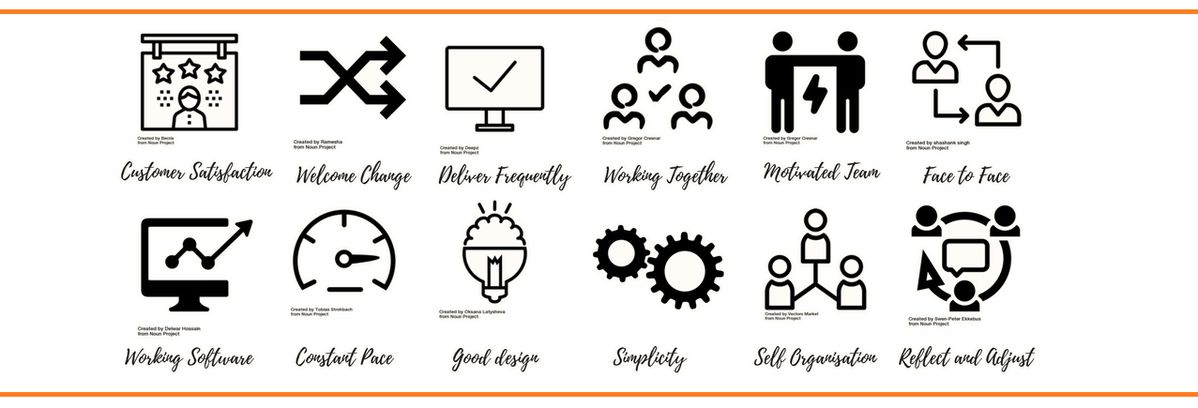
This may contain: the different types of business icons

Also, each principle is linked to a Nigerian work example. By the end, you will understand Agile well enough to apply it from day one.


The Four Core Agile Values

Before the twelve principles, the Manifesto states four core values. Each value places one thing above another. However, Agile does not reject the less-valued items. Instead, it simply prioritises the more valuable ones.


Agile Values This More… …Than This
Individuals and interactions Processes and tools
Working software Comprehensive documentation
Customer collaboration Contract negotiation
Responding to change Following a fixed plan


According to the official Agile Manifesto, these values guide the twelve principles. Furthermore, understanding the values helps you apply the principles correctly.


Principles 1 to 3: Deliver Value to the Customer


Principle 1: Deliver Working Products Early and Often

Agile teams deliver working results early and keep delivering continuously. In fact, early delivery is the number one goal of every Agile team. For example, a Lagos fintech team releases a basic payment feature in week two. Consequently, customers test and give feedback right away. Therefore, the next sprint is shaped by real users rather than assumptions. In short, early delivery builds client trust faster than any status report.


Principle 2: Welcome Changing Requirements

Agile teams welcome change even late in the project. In fact, this flexibility gives clients a real competitive advantage. For example, a client asks to add USSD support midway through an app build. Therefore, an Agile team adds it to the backlog and includes it in the next sprint.

As a result, scope flexibility becomes a feature rather than a problem. However, this only works when change requests go through the product owner first.


Principle 3: Deliver Working Products Frequently

Teams should ship a working product every one to four weeks. In addition, short delivery cycles beat long ones every time. For example, a two-week sprint keeps a Lagos development team focused and accountable.

Moreover, clients see real progress regularly rather than waiting months for a demo. Consequently, trust between the client and the team grows with every sprint.


Principles 4 to 6: Build Great Teams


Principle 4: Business and Developers Must Work Together Daily

Product owners and developers must talk every single working day. In fact, silos between business and tech are one of the main reasons projects fail. For example, a product manager at an Abuja startup joins the daily stand-up every morning. Therefore, business priorities are always clear to the development team.

As a result, the team builds the right things without waiting for weekly meetings.


Principle 5: Build Projects Around Motivated People

Great Agile teams need trust, support, and the right tools. Furthermore, micromanagement kills motivation and slows delivery. For example, a Lagos project manager gives the team autonomy over their own sprint plan. Consequently, ownership increases and output quality improves as well. Therefore, give your team what they need and then trust them to deliver.


Principle 6: Face-to-Face Conversation Is the Best Communication

Talking directly beats sending long emails every time. In fact, most project misunderstandings come from written messages without context. For example, sitting together in a Lagos co-working space beats a twenty-message WhatsApp thread.

Moreover, face-to-face conversations resolve conflict much faster. Therefore, Agile teams always prefer a quick call or meeting over a long document.


Principles 7 to 9: Focus on Quality and Pace


Principle 7: Working Software Is the Only True Measure of Progress

Status reports and slide decks do not prove progress. In fact, only a working product tells you where you truly stand. For example, a Lagos e-commerce team does not celebrate a design document. Instead, they celebrate when the checkout flow works and users can buy products. Therefore, always demo a working feature at the end of every sprint.


Principle 8: Maintain a Sustainable Development Pace

Agile teams work at a pace they can keep up indefinitely. In fact, burnout is one of the biggest killers of long-term team performance. For example, late-night coding every week hurts both quality and morale. Therefore, sprint planning must protect the team from unsustainable workloads. As a result, a well-paced team consistently outperforms an overworked one.


Principle 9: Continuous Attention to Technical Excellence

Clean code and good design keep teams fast. In contrast, technical shortcuts slow everything down over time. For example, a Port Harcourt software team refactors messy code every sprint. Consequently, adding new features becomes faster rather than harder as the project grows. Therefore, invest in code quality from sprint one rather than fixing it later.


Principles 10 to 12: Stay Simple and Keep Improving


Principle 10: Simplicity — Build Only What Is Needed

Agile teams build only what the client needs right now. In fact, extra features that no one asked for waste time and money. For example, a Lagos startup team resists adding a complex dashboard in sprint one. Instead, they focus on the core features that users actually need first. Therefore, every sprint item must be tied to a real user or business need.


Principle 11: Self-Organising Teams Produce the Best Results

The best work comes from teams that manage themselves. In fact, self-organising teams take ownership and deliver with more creativity. For example, a Lagos product team plans its own sprint tasks without waiting for assignments.

As a result, both team ownership and output quality rise significantly. Therefore, trust your team to manage their own work within the sprint boundaries.


Principle 12: Reflect and Improve at Regular Intervals

Teams must stop regularly to review how they are working. In fact, continuous improvement is at the heart of Agile.

For example, a Lagos Scrum team holds a retrospective at the end of every sprint. Consequently, they identify three things to improve and act on them immediately. Therefore, every sprint produces better results than the one before it.


All 12 Agile Principles at a Glance

Use this quick reference table in your daily project work.


# Principle Nigerian Example
1 Deliver value early and continuously Release features every sprint in Lagos
2 Welcome changing requirements Add USSD support mid-sprint without drama
3 Deliver working products frequently Ship every two weeks, not every six months
4 Business and dev collaborate daily Product manager joins the daily stand-up
5 Build around motivated individuals Give the team autonomy over sprint planning
6 Prefer face-to-face communication Talk directly rather than sending long emails
7 Working product = real progress Demo a live feature, not a slide deck
8 Maintain a sustainable pace Protect the team from late-night sprints
9 Focus on technical excellence Refactor code every sprint in Port Harcourt
10 Simplicity — build only what is needed Skip the complex dashboard in sprint one
11 Self-organising teams deliver the best work Team plans its own tasks without micromanagement
12 Reflect and improve at regular intervals Retrospective every two weeks in Lagos


Why These Principles Matter for Nigerian Project Managers

Many Nigerian teams adopt Agile tools like Trello or Jira without understanding the principles. Consequently, they get frustrated when the tools do not solve their deeper problems. However, when teams understand the principles first, the tools make complete sense. Therefore, memorising these twelve principles gives you the foundation for every Agile decision.

In addition, PMP and PMI-ACP exams both test your ability to apply these principles in context. As a result, learning the principles is both a career investment and a certification shortcut.


Common Mistakes Nigerian Teams Make with the Agile Principles

Mistake 1: Treating Stand-Ups as Status Meetings

Many Nigerian teams turn the daily stand-up into a long status update. However, Principle 6 says that communication should be short and direct. Therefore, keep the stand-up to ten minutes and three questions only.


Mistake 2: Skipping the Retrospective

Some Nigerian teams skip the retrospective when they are busy. However, Principle 12 says regular reflection is not optional. Consequently, teams that skip retrospectives repeat the same mistakes every sprint. Therefore, protect the retrospective even on busy sprints.


Mistake 3: Ignoring Technical Debt

Many Nigerian developers skip Principle 9 and ship fast without refactoring. As a result, the codebase becomes harder to change with every sprint.

Therefore, set aside at least ten percent of every sprint for code quality work.


Free Resources to Learn More About Agile Principles

Lagos Data School recommends the official Agile Manifesto as a first read. It is free, short, and written by the people who created Agile.

Also, the Scrum Guide by Schwaber and Sutherland is the official free Scrum reference. Furthermore, it maps directly to PMP and PMI-ACP exam content. In addition, Lagos Data School provides notes and exercises on all twelve principles in class.


How Lagos Data School Teaches the 12 Agile Principles

Lagos Data School covers every principle in its live Agile module. Students apply each principle to Nigerian project scenarios in group exercises. Moreover, the course links every principle to a real Scrum ceremony or practice. For example, Principle 12 is practised through a live sprint retrospective exercise.

Therefore, students leave knowing exactly how to apply Agile on a real Nigerian project.

Visit the Lagos Data School training page to enrol. Also, see what graduates have built at the Lagos Data School student portfolio.


Frequently Asked Questions: The 12 Agile Principles

Q1: Do I need to memorise all 12 principles for the PMP exam?

The PMP exam tests your ability to apply the principles, not recite them. Therefore, understanding each principle in context matters more than memorising words. In fact, practising scenario-based questions is far more effective for exam preparation.


Q2: Which principle is hardest for Nigerian teams to follow?

Principle 11 self-organising teams is often the hardest in Nigerian workplaces. In fact, many Nigerian organisations have a strong top-down management culture.

However, teams that adopt self-organisation consistently outperform those that do not. Therefore, Lagos Data School spends extra time on this principle in every training session.


Q3: Can non-tech Nigerian teams apply these principles?

Yes. Every principle applies to any team that plans and delivers work. For example, Nigerian marketing, HR, and events teams all use these principles successfully.

In addition, Agile principles work for government project teams as well. Therefore, the principles are universal — not just for software developers.


Q4: How long does it take to learn Agile principles fully?

You can read and understand all twelve principles in under one hour. However, applying them confidently on a real project takes two to four sprints of practice. Consequently, Lagos Data School combines classroom teaching with live project exercises.

As a result, students leave training ready to apply Agile on day one.


Master Agile Principles with Lagos Data School

The twelve Agile principles are not just theory. In fact, they are the daily habits of the world’s most effective project teams. Lagos Data School teaches you to apply every principle in real Nigerian projects.

Moreover, every session uses Nigerian case studies so that the learning is immediately practical.

Visit Lagos Data School and enrol in the project management course today.
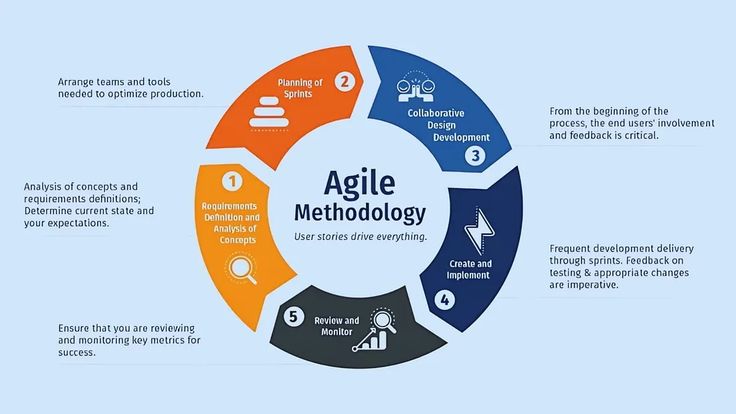
How Agile Methodology Is Transforming Nigerian Tech Companies

How Agile Is Changing the Nigerian Tech Industry

Nigerian tech companies are growing faster than ever. However, old project management methods are slowing many of them down.

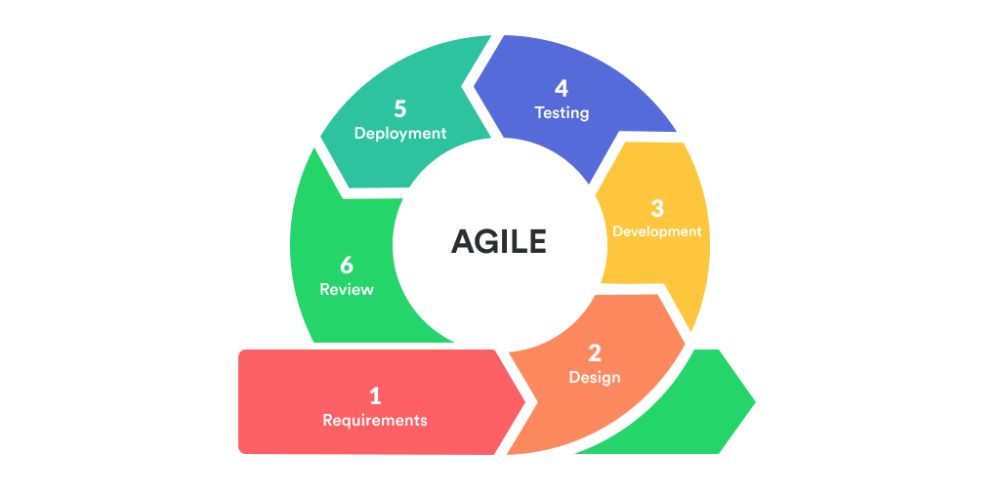
This may contain: the agile method for business development is shown in this graphic style, with arrows pointing to different

Lagos Data School trains Nigerian tech professionals to use Agile and stay competitive. Therefore, this article shows how Agile is transforming Nigerian tech companies right now.

In addition, it shares real examples, key benefits, and career advice. By the end, you will understand why Agile has become the go-to method in Nigerian tech.


What Agile Means for a Nigerian Tech Company

Agile is a way of delivering tech products in short, focused cycles. Each cycle, called a sprint lasts one to four weeks.

Furthermore, the team reviews results at the end of every sprint. Therefore, the product improves with every single cycle. In short, Agile replaces long, rigid plans with fast, flexible delivery. As a result, Nigerian tech companies ship better products in less time.


Why Nigerian Tech Companies Are Adopting Agile

The Nigerian tech market changes very fast. For example, customer needs in Lagos fintech shift monthly.

Also, competition from new startups forces companies to move quickly. Therefore, long twelve-month project cycles no longer work in this environment. Agile solves this by delivering value every two weeks instead. Consequently, companies respond to market changes before they lose customers.


The Role of Funding and Investor Pressure

Nigerian startups now raise funds from international venture capital firms. Furthermore, these investors expect fast, measurable delivery from day one. Agile gives teams a clear sprint-by-sprint delivery record to show investors.

Therefore, Agile is not just a development choice — it is a business requirement. In fact, many Lagos investors now ask whether a startup uses Agile before funding it.


Real Nigerian Tech Companies Using Agile Today

Many top Nigerian tech firms have already adopted Agile. For example, fintech companies run two-week sprint cycles for product releases.

Also, Nigerian healthtech startups use Agile to build and test medical apps quickly. Furthermore, edtech platforms across Lagos use Agile to update course content regularly. Consequently, their users always get fresh, relevant learning experiences.


Agile in Nigerian Banks and Financial Services

Nigerian banks are also embracing Agile in their tech teams. For example, several tier-one Lagos banks now run dedicated Agile squads.

Moreover, these squads release new digital banking features every sprint. Therefore, Nigerian banking apps are improving at a pace customers can notice. In addition, Agile helps these banks reduce the cost of failed digital projects.


Agile in Lagos Software Development Agencies

Software agencies in Lagos now sell Agile delivery as a core service. In fact, clients pay a premium for sprint-based development over fixed-plan projects. Also, agencies report fewer client disputes when sprints are used. Consequently, client satisfaction scores improve from the very first sprint. Therefore, Agile has become a key differentiator for competitive Lagos agencies.


Key Benefits of Agile for Nigerian Tech Teams

  • Faster releases: Working features ship every sprint rather than every six months.
  • Lower failure risk: Problems are caught in sprint one rather than at the final deadline.
  • Happier clients: Clients review real work every sprint and give direct feedback.
  • Better teamwork: Daily stand-ups keep every team member aligned and accountable.
  • Stronger products: Continuous feedback from users shapes every sprint.


Challenges Nigerian Tech Companies Face with Agile

Agile adoption is not always smooth in Nigeria. However, most challenges are manageable with the right training.


Challenge 1: Top-Down Management Culture

Many Nigerian tech firms have strong top-down leadership styles. However, Agile requires self-organising teams that plan their own sprints. Therefore, management must trust teams to make decisions during sprints. In fact, companies that make this shift consistently see faster delivery.


Challenge 2: Inconsistent Internet and Power

Daily stand-ups and sprint tools need reliable internet access. Furthermore, power outages in Lagos can disrupt remote Agile ceremonies. Therefore, smart Nigerian teams use mobile hotspots and async stand-up tools as backups. As a result, the sprint rhythm is maintained even during outages.


Challenge 3: Lack of Trained Scrum Masters

Many Nigerian companies adopt Agile without a trained Scrum Master. Consequently, the process breaks down within the first few sprints. Therefore, investing in Scrum Master training is essential before adopting Agile at scale.

Lagos Data School provides this training for Nigerian tech professionals.


Agile Adoption: Before and After in Nigerian Tech Companies

This table shows the real difference Agile makes for Nigerian tech teams.


Area Before Agile After Agile
Release frequency Every 6–12 months Every 1–4 weeks
Client feedback Only at project end Every sprint review
Problem detection Late in testing phase Sprint one or two
Team communication Weekly email updates Daily 10-minute stand-up
Product quality One shot to get it right Improved every sprint
Budget control Overruns common Costs tracked per sprint
Nigerian example Lagos app delayed 18 months Same app shipped in 8 sprints


Free Resource: The Agile Manifesto

Lagos Data School recommends the Agile Manifesto as a free first read. It explains the four Agile values and twelve principles that every Nigerian tech professional needs.

Also, the Scrum Guide is a free, official reference for Nigerian Scrum teams.


How Lagos Data School Prepares Nigerian Tech Professionals for Agile

Lagos Data School delivers live Agile training for Nigerian tech teams. Students learn sprint planning, daily stand-ups, backlog management, and retrospectives. Moreover, every session uses real Nigerian tech company case studies. Furthermore, graduates leave ready to lead Agile teams on day one.

Visit the Lagos Data School training page to enrol today.

Also, explore what our graduates have built at the Lagos Data School student portfolio.


Frequently Asked Questions

Q1: Which Nigerian tech companies use Agile?

Most Nigerian fintech, edtech, and healthtech companies use Agile today. Furthermore, tier-one banks like GTBank and Access Bank run Agile squads internally. Therefore, Agile skills are in high demand across the Nigerian tech ecosystem.


Q2: How long does Agile adoption take for a Nigerian team?

Basic Agile adoption takes two to four weeks with proper training. However, full cultural adoption across a whole company can take three to six months. Therefore, start with one team and expand Agile gradually across the organisation.


Q3: Do I need a certification to work on an Agile Nigerian tech team?

No certification is required to join an Agile team. However, a certification like PSM or PMI-ACP significantly improves your job prospects. Consequently, Lagos Data School prepares students for both certifications in its live course.


Build Your Agile Career with Lagos Data School

Nigerian tech is moving fast. Furthermore, Agile-trained professionals are the ones leading that movement.

Lagos Data School gives you the practical skills to lead Agile teams in Nigeria.

Visit Lagos Data School and enrol in the project management course today.


Agile Sprint Planning: A Step-by-Step Guide for New Teams

Agile Sprint Planning Made Simple for Nigerian Teams

Sprint planning is the engine of every Agile project. However, many Nigerian teams get it wrong from the start. Lagos Data School teaches teams to plan sprints with clarity and confidence. Therefore, this guide walks through every step of sprint planning.

Also, it uses Nigerian project examples to make each step practical. By the end, your team will plan its first sprint correctly.


What Is Sprint Planning?

Sprint planning is a meeting held at the start of every sprint. Furthermore, the whole Scrum team attends this meeting together. The team agrees on a sprint goal and selects backlog items to complete.

Story pin image

Also, tasks are broken down into work that can be done in the sprint. Consequently, everyone leaves the meeting knowing exactly what to build. In short, sprint planning turns the backlog into a clear delivery commitment.


Who Attends Sprint Planning?

  • Product Owner: Explains backlog priorities and acceptance criteria.
  • Scrum Master: Facilitates the meeting and keeps it within the time box.
  • Development team: Estimates effort and commits to the sprint goal.


How Long Should Sprint Planning Last?

A two-week sprint uses a two-hour sprint planning meeting. Furthermore, a four-week sprint uses up to four hours. Also, the meeting should never exceed eight hours for any sprint length. Therefore, keep planning focused and within the agreed time box.


Before Sprint Planning: Three Things to Prepare


1. A Groomed Product Backlog

The backlog must be prioritised before sprint planning starts. Furthermore, each item at the top must be clear and ready to work on. Also, the Product Owner should write acceptance criteria for each item. Consequently, the team knows exactly when each item is done.


2. Team Capacity

Calculate how many working days the team has in the sprint. Furthermore, subtract leave, public holidays, and non-project meetings. Also, each team member’s availability percentage should be noted. Therefore, the sprint commitment matches real capacity — not wishful thinking.


3. Sprint Velocity

Velocity is the average amount of work completed per sprint.Furthermore, it is measured in story points or task counts. Also, use the last three sprints to calculate a reliable average. Consequently, the team commits to a realistic sprint goal every time.


Step-by-Step: How to Run Sprint Planning


Step 1: Set the Sprint Goal (15 Minutes)

The Product Owner presents the sprint goal first. Furthermore, the sprint goal states the business outcome for this sprint. For example: ‘Users can register and log in to the Lagos payment app.’ Also, the team discusses and agrees on the goal together. Therefore, everyone is aligned on the purpose before selecting tasks.


Step 2: Review the Top Backlog Items (20 Minutes)

The Product Owner presents the highest-priority backlog items. Furthermore, each item must meet the team’s Definition of Ready before it enters the sprint. Also, the team asks questions to clarify any unclear requirements. Consequently, no ambiguous work enters the sprint backlog.


Step 3: Estimate Each Item (30 Minutes)

The team estimates the effort needed for each backlog item. Furthermore, Planning Poker is the most popular estimation technique. Each team member votes privately on the effort using a card deck. Also, large differences in votes trigger a team discussion. Consequently, the team reaches a shared, honest estimate for every item.


Step 4: Select Items That Fit the Sprint (15 Minutes)

The team selects items that fit within the sprint’s capacity. Furthermore, total story points must not exceed the team’s velocity. Also, the team pulls items from the top of the backlog downward. Therefore, the highest-priority work is always delivered first.


Step 5: Break Items into Tasks (20 Minutes)

Each selected item is broken into smaller daily tasks. Furthermore, each task should take no more than one day.

Also, tasks are assigned to specific team members during this step. Consequently, every team member knows their first task before leaving the meeting.


Step 6: Confirm the Sprint Commitment

The team confirms it can achieve the sprint goal. Furthermore, the Scrum Master asks if anyone foresees a risk.

Also, the Product Owner confirms the sprint goal is still the priority. Therefore, the sprint starts with full team alignment and confidence.


Nigerian Sprint Planning Example

A Lagos e-commerce team planned a two-week sprint. Furthermore, their sprint goal was: ‘Customers can check out using Paystack.’

Also, the team had eight working days and a velocity of thirty points. Consequently, they selected six backlog items totalling twenty-eight points. In addition, each item was broken into daily tasks in the final thirty minutes. Therefore, every developer left the meeting with a clear first task.


Common Sprint Planning Mistakes Nigerian Teams Make

Mistake What Goes Wrong How to Fix It
No sprint goal Team works without direction Always define a one-sentence sprint goal first
Overcommitting Team misses the sprint goal every time Use velocity to cap the sprint commitment
Ungroomed backlog Items are unclear at planning time Groom the backlog two days before sprint planning
Skipping estimation Tasks take longer than expected Use Planning Poker for every backlog item
No task breakdown Items stall mid-sprint Break every item into sub-one-day tasks


Free Resource: The Scrum Guide

Lagos Data School recommends the free Scrum Guide as the official sprint planning reference. Furthermore, it covers the sprint planning event in full detail. Also, it explains Definition of Ready and Definition of Done clearly.


How Lagos Data School Teaches Sprint Planning

Lagos Data School runs live sprint planning exercises in its Agile course. Students estimate backlog items, set sprint goals, and build sprint boards. Furthermore, every exercise uses real Nigerian project backlogs. Consequently, graduates run sprint planning meetings confidently from day one.

Visit the Lagos Data School training page to enrol. Also, see our graduates’ work at the Lagos Data School student portfolio.


Frequently Asked Questions

Q1: What is a Definition of Ready in sprint planning?

A Definition of Ready is a checklist each backlog item must meet. Furthermore, it ensures items are clear, estimated, and accepted criteria written. Also, only items that meet the Definition of Ready enter the sprint.


Q2: What if the team runs out of work mid-sprint?

The team pulls the next item from the backlog with Product Owner approval. Furthermore, this is a healthy sign that the team is moving fast. Also, it means velocity was underestimated and should be updated.


Q3: What is Planning Poker?

Planning Poker is a group estimation technique using numbered cards. Furthermore, each team member votes privately on an item’s difficulty. Also, votes are revealed together to avoid anchoring bias. Consequently, estimates are more accurate and more agreed-upon.


Plan Your First Sprint with Lagos Data School

Sprint planning is the skill that makes every Agile project work. Furthermore, teams that plan well deliver well — every single sprint. Lagos Data School gives you the live practice and coaching to plan sprints right.

Visit Lagos Data School and start your Agile journey today.

Velocity in Agile: What It Means and How to Track It

Velocity in Agile: A Plain Guide for Nigerian Teams

Velocity is one of the most useful Agile metrics. However, many Nigerian teams misuse or misunderstand it. Lagos Data School helps Nigerian teams track velocity correctly. Therefore, this guide explains what velocity is and how to use it.

This may contain: the agile cycle is shown in this graphic

Also, it covers how to calculate, track, and improve velocity over time. By the end, your team will use velocity to plan sprints with confidence.


What Is Velocity in Agile?

Velocity is the amount of work a team completes in one sprint. Furthermore, it is measured in story points. Story points represent the size and complexity of a backlog item.

Also, they are not the same as hours or days of work. Consequently, velocity shows how much a team can deliver reliably. In short, velocity is your team’s delivery power per sprint.


What Are Story Points?

Story points are a relative measure of effort. Furthermore, teams assign points using a scale like Fibonacci: 1, 2, 3, 5, 8, 13. A simple task gets 1 or 2 points.

Also, a complex task may get 8 or 13 points. Consequently, points capture complexity, risk, and effort together. Therefore, they are more accurate than estimating in hours alone.


Simple Nigerian Example

A Lagos fintech team completes the following in Sprint 1. Furthermore, each item has a story point value assigned.

Backlog Item Story Points Status
User registration form 3 Done
Email verification flow 5 Done
Password reset feature 3 Done
Paystack payment integration 8 Done
Profile update screen 5 Done


The team completed all five items. Also, the total story points completed equal 24. Therefore, this team’s velocity for Sprint 1 is 24 story points.


How to Calculate Your Team’s Velocity

Velocity is calculated at the end of every sprint. Furthermore, only fully completed items count toward velocity. Items that are started but not finished are not counted.

Also, partially completed items carry zero points. Consequently, the team has a strong incentive to finish work fully. Therefore, avoid half-done items at the end of every sprint.


How to Calculate Average Velocity

Use the last three to five sprints to calculate average velocity. Furthermore, add the story points from each sprint together. Then, divide the total by the number of sprints.

Also, use the average, not the highest sprint, for planning. Consequently, sprint commitments stay realistic and achievable.


Nigerian Example: Average Velocity Calculation

Sprint Story Points Completed Notes
Sprint 1 24 First sprint — team still learning
Sprint 2 28 Team improved after retrospective
Sprint 3 30 Strong sprint, no blockers
Sprint 4 27 One team member was on leave
Sprint 5 31 New tools adopted this sprint
Average 28 Use 28 points for future sprint planning


How to Use Velocity for Sprint Planning

Use your average velocity to set your sprint commitment. Furthermore, do not commit to more points than your average.

Also, reduce the commitment when team members are on leave. Consequently, sprint goals are met consistently rather than missed. However, do not use velocity to push the team to go faster. Therefore, treat velocity as a planning tool — not a performance target.


How to Track Velocity Over Time


Use a Velocity Chart

A velocity chart shows story points completed for each sprint. Furthermore, it reveals trends over time at a glance.

Also, rising velocity shows a team that is improving. However, a sudden drop signals a problem that needs investigation. Consequently, review the velocity chart at every sprint planning session.


Use a Sprint Burndown Chart

A burndown chart tracks work remaining during the sprint. Furthermore, it shows whether the team is on track day by day.

Also, Jira and ClickUp generate burndown charts automatically. Consequently, problems are spotted mid-sprint rather than at the end. Therefore, use both the velocity chart and the burndown chart together.


Common Velocity Mistakes Nigerian Teams Make

Mistake What Happens Fix
Comparing teams Team A feels inferior to Team B Never compare velocity across teams
Counting incomplete items Velocity looks higher than it is Count only fully done items
Ignoring leave days Team overcommits every sprint Subtract leave from capacity first
Using velocity as a target Team rushes and cuts quality Use velocity for planning only
Changing story point scale Historical data becomes useless Keep the same scale for all sprints


How to Improve Velocity Over Time

Improve velocity by removing blockers faster each sprint. Furthermore, better backlog grooming reduces rework mid-sprint.

Also, consistent retrospectives fix process problems that slow the team. Consequently, velocity rises naturally when teamwork improves. However, never force velocity up by reducing quality standards. Therefore, sustainable improvement always beats short-term speed.


Free Resource: Atlassian Velocity Guide

Lagos Data School recommends the Atlassian Agile Velocity Guide as a free reference. Furthermore, it explains velocity charts with clear visual examples.

Also, it covers how to use Jira to track velocity automatically.


How Lagos Data School Teaches Agile Velocity

Lagos Data School teaches sprint velocity in its live Agile project management course. Students calculate velocity, build sprint plans, and read velocity charts. Furthermore, every exercise uses real Nigerian team sprint data. Consequently, graduates track and apply velocity correctly from day one.

Visit the Lagos Data School training page to enrol. Also, see our graduates’ Agile work in the Lagos Data School student portfolio.


Frequently Asked Questions

Q1: Is a higher velocity always better?

No. Higher velocity only matters if quality stays the same. Furthermore, rushing to increase velocity often leads to more bugs. Therefore, a stable, predictable velocity is more valuable than a fast one.


Q2: What is a good velocity for a Nigerian team?

There is no universal good velocity. Also, velocity depends on team size, complexity, and story point scale. Therefore, compare your team’s velocity only to its own past sprints.


Q3: Can non-tech Nigerian teams use velocity?

Yes. Any team that uses story points or task counts can track velocity. Furthermore, Lagos marketing and HR teams use task-count velocity effectively. Therefore, velocity is useful for any Nigerian team that delivers work in cycles.


Track Velocity Confidently with Lagos Data School

Velocity turns sprint data into reliable delivery forecasts. Furthermore, it helps Nigerian teams plan better and commit honestly. Lagos Data School teaches you to track and use velocity on any Agile team.

Visit Lagos Data School and enrol in the Agile course today.

Scrum vs Kanban: Complete Guide

Scrum vs Kanban: Which One Is Right for Your Nigerian Team?

Scrum and Kanban are both popular Agile frameworks. However, they work very differently from each other.

Lagos Data School helps Nigerian teams choose the right framework. Therefore, this guide compares both in plain, simple English. Also, Nigerian work examples are used throughout. By the end, you will know exactly which one to use.


What Is Scrum?

Scrum delivers work in fixed time boxes called sprints. Furthermore, each sprint lasts one to four weeks. Also, Scrum defines three roles: Product Owner, Scrum Master, and Developers.

Consequently, every team member has a clear responsibility. In short, Scrum is a structured framework with ceremonies and fixed roles.

Visit the Scrum Guide for the full official definition.


What Is Kanban?

Kanban is a visual, flow-based framework with no fixed sprints. Furthermore, work flows continuously from a To-Do column to Done.

Also, Kanban limits how much work can be in progress at once. Consequently, the team finishes tasks faster rather than starting more. In short, Kanban is flexible and works best for continuous workflows.

Visit the Kanban Guide for the free official Kanban reference.


Scrum vs Kanban: A Direct Comparison

Use this table to compare both frameworks side by side.


Feature Scrum Kanban
Work style Fixed sprints (1–4 weeks) Continuous flow, no fixed cycles
Roles PO, Scrum Master, Developers No defined roles required
Ceremonies 4 events every sprint None required
Planning Sprint planning before each cycle Pull items as capacity allows
WIP limits Sprint capacity sets the limit Explicit WIP limits per column
Change policy No changes mid-sprint Changes welcomed any time
Metrics Velocity and burndown Lead time and cycle time
Best Nigerian use Product and app development Support, HR, and operations
Learning curve Medium — roles and events to learn Low — easy to start same day
Team size 3–9 people Any size


When to Use Scrum in Nigeria

Use Scrum when your team is building a defined product. Also, use it when you need regular client feedback every sprint.

Furthermore, Scrum suits Nigerian fintech, edtech, and software teams. Consequently, teams that benefit from a structured rhythm choose Scrum.


Nigerian Scrum Use Cases

  • Lagos payment app team: Ships new features every two-week sprint.
  • Abuja government IT unit: Delivers a digital service portal in quarterly sprints.
  • Nigerian edtech startup: Updates course content with a two-week sprint cycle.


When to Use Kanban in Nigeria

Use Kanban when work arrives unpredictably throughout the day. Also, use it when there are no clear sprint-sized deliverables.

Furthermore, Kanban suits Nigerian IT support and HR teams best. Consequently, teams that handle ongoing, mixed workloads choose Kanban.


Nigerian Kanban Use Cases

  • Lagos IT helpdesk: Tracks support tickets as they arrive using a Kanban board.
  • Abuja HR recruitment team: Moves candidates through hiring stages on a visual board.
  • Nigerian marketing agency: Manages continuous content publishing with WIP limits.


Can a Nigerian Team Use Both Scrum and Kanban?

Yes. This combination is called Scrumban. Furthermore, Scrumban suits teams that have both sprint work and ongoing tasks. Also, many Nigerian product teams use Kanban between sprints for bug fixes.

Consequently, Scrumban gives structure where needed and flexibility everywhere else. Therefore, mixing both frameworks is perfectly valid for Nigerian teams.


Key Differences at a Glance

Question Choose Scrum If… Choose Kanban If…
Work type? You build products sprint by sprint. Work arrives unpredictably every day.
Team roles? You want clear PO and SM accountability You prefer no fixed role definitions
Feedback? Regular sprint reviews suit your client. Continuous delivery fits better.
Nigerian fit? Fintech, software, edtech teams IT support, HR, marketing teams


Free Resource: Scrum Guide and Kanban Guide

Lagos Data School recommends both the Scrum Guide and the Kanban Guide as free starting references. Furthermore, both are short and easy to read in one sitting. Also, they clearly explain the core rules of each framework.


How Lagos Data School Teaches Scrum and Kanban

Lagos Data School covers both Scrum and Kanban in its live Agile course. Students practise sprint boards and Kanban boards in every session. Furthermore, Nigerian case studies show when to apply each framework. Consequently, graduates choose the right tool for every Nigerian project.

Visit the Lagos Data School training page to enrol. Also, explore graduates’ Agile work at the Lagos Data School student portfolio.


Frequently Asked Questions

Q1: Is Kanban easier to learn than Scrum?

Yes. Kanban has fewer rules and no mandatory ceremonies. Furthermore, a team can start using Kanban on the same day they learn it. Also, Scrum requires training in roles, events, and artefacts before starting. Therefore, Kanban is the better entry point for complete Agile beginners.


Q2: Which framework do Lagos tech companies prefer?

Most Lagos tech companies use Scrum for product development. However, operations and support teams in those same companies often use Kanban. Also, many companies run both frameworks simultaneously in different departments. Therefore, knowing both frameworks makes you valuable across any Nigerian company.


Q3: Can Kanban be used for a Nigerian construction project?

Yes. Kanban boards work well for construction punch lists and snagging tasks. Furthermore, subcontractors can track their tasks visually without Scrum training. Also, site managers use Kanban columns like: Pending, In Progress, and Inspected. Therefore, Kanban applies to Nigerian construction teams just as easily as tech teams.


Choose Wisely and Build with Lagos Data School

Scrum and Kanban are both powerful frameworks for Nigerian teams. Furthermore, the right choice depends on your type of work and team structure. Lagos Data School trains you to use both with confidence and clarity.

Visit Lagos Data School and enroll in the Agile course today.

Hi, How Can We Help You?
Welcome To
Lagos Data School

Artificial Intelligence (AI), Machine Learning and Robotics Programmes Are Now Available!!!

Enroll Now!

Thank You
100% secure website.