Agile vs Waterfall: The Ultimate Project Management Comparison in 2026

Agile vs Waterfall: The Choice Every Nigerian Project Manager Must Make

Every Nigerian project manager faces this choice at some point. Should you use Agile or Waterfall on your next project?

Both methods work well. However, each one fits a different type of project. Lagos Data School helps you make this choice with confidence. Therefore, this guide explains both methods clearly. In addition, it compares them side by side using Nigerian examples. By the end, you will know exactly which approach to use and why.


What Is the Waterfall Method?

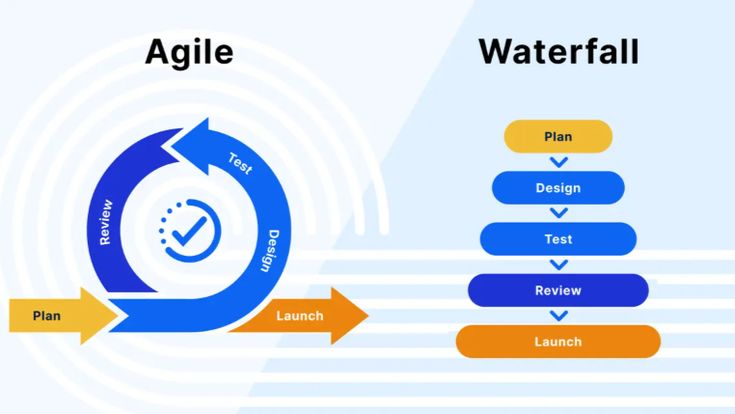
This may contain: the waterfall model is shown with several steps labeled in different colors and font on it

Waterfall is a step-by-step project management approach. Each phase must finish before the next one starts. For example, you complete planning before you start design. Furthermore, you complete design before you write a single line of code. Think of it as a staircase. You move forward and never go back up. Therefore, all requirements must be known before work begins. The typical Waterfall phases are Requirements, Design, Development, Testing, and Deployment.


Where Waterfall Works Best in Nigeria

Waterfall works best when requirements are fixed and clear. For example, construction projects in Nigeria suit Waterfall perfectly. Also, government contracts in Abuja often require Waterfall by default. Regulatory projects with fixed compliance deadlines are another strong fit. However, Waterfall struggles when the client changes their mind midway. Any late change can trigger costly rework across multiple phases. Therefore, use Waterfall only when your scope is stable from day one.


Key Advantages of Waterfall for Nigerian Teams

  • Clear structure: Every team member knows what to do and when.
  • Easy to document: All requirements are written down before work begins.
  • Client-friendly: Clients agree to a fixed scope and budget upfront.
  • Audit-ready: Nigerian regulators prefer the formal paper trail Waterfall produces.
  • Simple to manage: Progress is easy to measure at each phase gate.


Common Weaknesses of Waterfall

Waterfall does not handle change well. In fact, changes discovered late in the project are very expensive to fix. Also, clients see no working product until the very end. Consequently, surprises at delivery can damage trust and project outcomes. For this reason, Waterfall is a poor fit for fast-moving digital projects.


What Is the Agile Method?

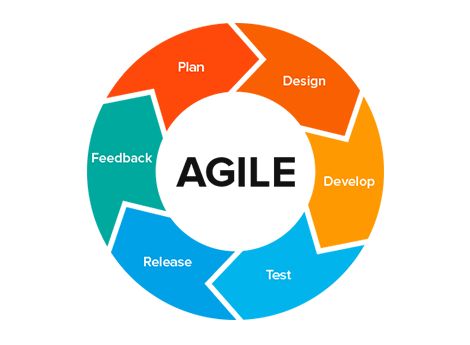
This may contain: a circular diagram with the words metaologa agile in spanish and english on it

Agile is a flexible, cyclical project management approach. Work is delivered in short cycles called sprints. Each sprint lasts between one and four weeks. Moreover, the team reviews progress at the end of every sprint. Therefore, the plan is adjusted regularly based on real results. Agile teams welcome change rather than avoid it. In short, Agile is built for projects where requirements will evolve.


Where Agile Works Best in Nigeria

Agile works best when requirements are unclear or likely to change. Software development is the most common example in Nigeria. For example, Nigerian fintech companies like Flutterwave use Agile daily. Also, digital marketing teams across Lagos run campaigns in sprint cycles. Furthermore, product teams at Nigerian startups use Agile to ship features fast. As a result, they respond to user feedback in days rather than months. However, Agile requires a disciplined and communicative team to work well.


Key Advantages of Agile for Nigerian Teams

  • Fast delivery: Useful features reach users at the end of every sprint.
  • Easy to adapt: Scope changes are welcomed rather than resisted.
  • Strong teamwork: Daily stand-up meetings keep everyone aligned.
  • Client involvement: Clients review work every sprint and give direct feedback.
  • Early risk detection: Problems appear in sprint one, not at the final deadline.


Common Weaknesses of Agile

Agile can feel chaotic without a skilled Scrum Master. Also, scope creep is a real risk if the product backlog is not managed well. Furthermore, fixed-price contracts are hard to write for Agile projects. Consequently, Nigerian clients who expect a fixed cost upfront may push back on Agile. In addition, Agile requires daily team discipline that some Nigerian teams need time to build.


Agile vs Waterfall: A Direct Comparison for Nigerian Projects

Use this table to compare both approaches across factors that matter most.


Factor Agile Waterfall
Planning style Continuous and adaptive All upfront before work starts
Delivery style Working product every sprint One delivery at the project end
Flexibility High — changes are welcomed Low — changes are expensive
Client involvement Every sprint review At start and end only
Documentation Lightweight and timely Heavy and formal
Best Nigerian use Tech, fintech, digital, startups Construction, government, compliance
Risk detection Early — caught in sprint one Late — found during testing
Team structure Self-organising and cross-functional Hierarchical with defined roles
Contract type Time and materials preferred Fixed price works well
Nigerian example Lagos fintech mobile app build Abuja federal road construction


How to Choose the Right Method for Your Nigerian Project

Ask yourself these three simple questions. First, are your requirements fixed and agreed by all stakeholders? If yes, then Waterfall is likely your best choice. However, if requirements may change, choose Agile instead.


Question 2: How Long Is Your Project?

Short projects under three months often suit Waterfall well. Also, the overhead of sprint ceremonies is not always worth it for a small scope. On the other hand, longer projects over six months benefit greatly from Agile. Therefore, regular sprint reviews catch drift and scope creep early. As a result, long Agile projects stay on track far better than long Waterfall ones.


Question 3: How Experienced Is Your Team?

Agile needs a disciplined and self-managing team. Therefore, if your team is new to project management, start with Waterfall. Also, Agile requires strong daily communication habits. Consequently, invest in team training before using Agile on a high-stakes project. In short, match the method to the maturity of your team first.


The Hybrid Approach: Using Agile and Waterfall Together

Many Nigerian organisations use a mix of both methods. For example, they plan the overall project using a Waterfall structure. Then, they deliver each phase using Agile sprints. Consequently, teams get stability where they need it most. Also, they get flexibility where that adds the most value. In fact, most advanced Nigerian project teams move toward a hybrid model over time. Therefore, learning both methods gives you the widest range of career options.


What Nigerian Employers Expect from Project Managers Today

Nigerian employers now expect project managers to know both Agile and Waterfall. Moreover, many job posts in Lagos and Abuja now ask for Agile experience specifically. For example, fintech firms, banks, and tech startups all list Agile skills in their job descriptions. Furthermore, government and construction firms still require Waterfall knowledge for bids and tenders. Therefore, a project manager who knows both methods earns more and gets hired faster. In addition, PMP certification now covers both approaches in equal depth. As a result, Lagos Data School prepares every student for both methods in one course.


Free Resources to Learn More

Lagos Data School recommends the Agile Manifesto as a free starting point. It is short, clear, and written by the founders of the movement. Also, the Project Management Institute offers free resources on both methods. In addition, the PMI website covers PMP and PMI-ACP certification paths for Nigerian professionals.


How Lagos Data School Teaches Agile and Waterfall

Lagos Data School covers both Agile and Waterfall in its live project management course. Students compare both methods using real Nigerian case studies. Moreover, every student practises choosing the right approach for different project scenarios. Furthermore, the course covers hybrid project management, sprint planning, and Waterfall documentation. Therefore, Lagos Data School graduates are ready for any project environment in Nigeria. To enrol, visit the Lagos Data School training page. Also, explore our graduates’ project work at the Lagos Data School student portfolio.


Frequently Asked Questions: Agile vs Waterfall Nigeria

Q1: Can a Nigerian construction project use Agile?

Construction projects can adopt Agile principles for planning and team communication. However, the physical build still follows a sequential Waterfall order. Therefore, a hybrid approach works best for Nigerian construction projects.


Q2: Which method do Nigerian banks prefer?

Most Nigerian banks use Waterfall for regulatory and compliance projects. However, they increasingly use Agile for digital product development. Consequently, knowing both methods makes a Nigerian banker far more valuable. In addition, many Nigerian banks now run dedicated Agile squads for their tech teams.


Q3: Does the PMP exam cover both methods?

Yes. The PMP exam now covers both predictive (Waterfall) and adaptive (Agile) approaches equally. Therefore, Lagos Data School prepares every student for both sections of the exam. In fact, approximately half of PMP exam questions now focus on Agile and hybrid approaches.


Q4: Is Agile harder to learn than Waterfall?

Agile has fewer formal steps than Waterfall. However, Agile requires stronger team communication and daily discipline. Therefore, many Nigerian professionals find Waterfall easier to start with. In short, both methods are learnable. Lagos Data School makes both approachable for every student.


Q5: Which method pays more in Nigeria?

Agile skills are in higher demand in the Nigerian tech and fintech sectors right now. Moreover, Agile-certified project managers in Lagos typically earn more than those without Agile knowledge. However, Waterfall expertise is still essential for government and infrastructure projects. Consequently, professionals who know both methods command the highest salaries in Nigeria.


Make Your Choice and Build Your Career at Lagos Data School

Agile and Waterfall are both powerful tools. However, the right one depends on your project, your client, and your team. Lagos Data School teaches you both methods so you can make the right call every time. Furthermore, every student leaves with practical skills and a professional certification path. Therefore, your next project deserves a trained, confident, and certified project manager.

Visit Lagos Data School and enrol in the project management course today.
The 12 Principles of the Agile Manifesto: Complete Guide

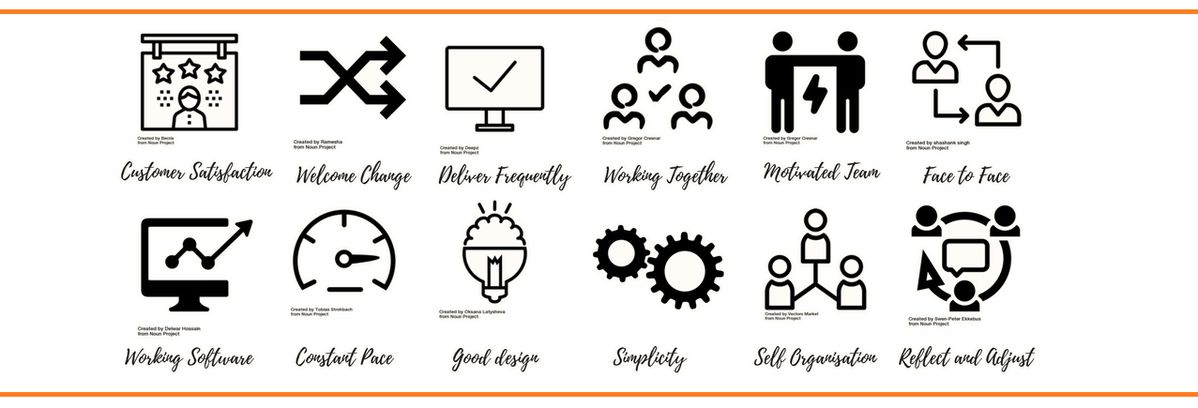
The 12 Agile Principles: What Every Nigerian Project Manager Must Know

The Agile Manifesto was written in 2001 by seventeen software experts. It contains four values and twelve principles. Lagos Data School teaches every principle to Nigerian project management students. Therefore, this guide explains each principle in plain, short language.

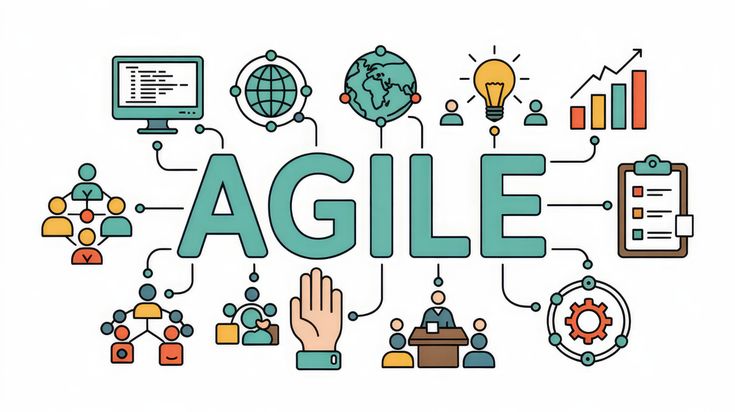
This may contain: the different types of business icons

Also, each principle is linked to a Nigerian work example. By the end, you will understand Agile well enough to apply it from day one.


The Four Core Agile Values

Before the twelve principles, the Manifesto states four core values. Each value places one thing above another. However, Agile does not reject the less-valued items. Instead, it simply prioritises the more valuable ones.


Agile Values This More… …Than This
Individuals and interactions Processes and tools
Working software Comprehensive documentation
Customer collaboration Contract negotiation
Responding to change Following a fixed plan


According to the official Agile Manifesto, these values guide the twelve principles. Furthermore, understanding the values helps you apply the principles correctly.


Principles 1 to 3: Deliver Value to the Customer


Principle 1: Deliver Working Products Early and Often

Agile teams deliver working results early and keep delivering continuously. In fact, early delivery is the number one goal of every Agile team. For example, a Lagos fintech team releases a basic payment feature in week two. Consequently, customers test and give feedback right away. Therefore, the next sprint is shaped by real users rather than assumptions. In short, early delivery builds client trust faster than any status report.


Principle 2: Welcome Changing Requirements

Agile teams welcome change even late in the project. In fact, this flexibility gives clients a real competitive advantage. For example, a client asks to add USSD support midway through an app build. Therefore, an Agile team adds it to the backlog and includes it in the next sprint.

As a result, scope flexibility becomes a feature rather than a problem. However, this only works when change requests go through the product owner first.


Principle 3: Deliver Working Products Frequently

Teams should ship a working product every one to four weeks. In addition, short delivery cycles beat long ones every time. For example, a two-week sprint keeps a Lagos development team focused and accountable.

Moreover, clients see real progress regularly rather than waiting months for a demo. Consequently, trust between the client and the team grows with every sprint.


Principles 4 to 6: Build Great Teams


Principle 4: Business and Developers Must Work Together Daily

Product owners and developers must talk every single working day. In fact, silos between business and tech are one of the main reasons projects fail. For example, a product manager at an Abuja startup joins the daily stand-up every morning. Therefore, business priorities are always clear to the development team.

As a result, the team builds the right things without waiting for weekly meetings.


Principle 5: Build Projects Around Motivated People

Great Agile teams need trust, support, and the right tools. Furthermore, micromanagement kills motivation and slows delivery. For example, a Lagos project manager gives the team autonomy over their own sprint plan. Consequently, ownership increases and output quality improves as well. Therefore, give your team what they need and then trust them to deliver.


Principle 6: Face-to-Face Conversation Is the Best Communication

Talking directly beats sending long emails every time. In fact, most project misunderstandings come from written messages without context. For example, sitting together in a Lagos co-working space beats a twenty-message WhatsApp thread.

Moreover, face-to-face conversations resolve conflict much faster. Therefore, Agile teams always prefer a quick call or meeting over a long document.


Principles 7 to 9: Focus on Quality and Pace


Principle 7: Working Software Is the Only True Measure of Progress

Status reports and slide decks do not prove progress. In fact, only a working product tells you where you truly stand. For example, a Lagos e-commerce team does not celebrate a design document. Instead, they celebrate when the checkout flow works and users can buy products. Therefore, always demo a working feature at the end of every sprint.


Principle 8: Maintain a Sustainable Development Pace

Agile teams work at a pace they can keep up indefinitely. In fact, burnout is one of the biggest killers of long-term team performance. For example, late-night coding every week hurts both quality and morale. Therefore, sprint planning must protect the team from unsustainable workloads. As a result, a well-paced team consistently outperforms an overworked one.


Principle 9: Continuous Attention to Technical Excellence

Clean code and good design keep teams fast. In contrast, technical shortcuts slow everything down over time. For example, a Port Harcourt software team refactors messy code every sprint. Consequently, adding new features becomes faster rather than harder as the project grows. Therefore, invest in code quality from sprint one rather than fixing it later.


Principles 10 to 12: Stay Simple and Keep Improving


Principle 10: Simplicity — Build Only What Is Needed

Agile teams build only what the client needs right now. In fact, extra features that no one asked for waste time and money. For example, a Lagos startup team resists adding a complex dashboard in sprint one. Instead, they focus on the core features that users actually need first. Therefore, every sprint item must be tied to a real user or business need.


Principle 11: Self-Organising Teams Produce the Best Results

The best work comes from teams that manage themselves. In fact, self-organising teams take ownership and deliver with more creativity. For example, a Lagos product team plans its own sprint tasks without waiting for assignments.

As a result, both team ownership and output quality rise significantly. Therefore, trust your team to manage their own work within the sprint boundaries.


Principle 12: Reflect and Improve at Regular Intervals

Teams must stop regularly to review how they are working. In fact, continuous improvement is at the heart of Agile.

For example, a Lagos Scrum team holds a retrospective at the end of every sprint. Consequently, they identify three things to improve and act on them immediately. Therefore, every sprint produces better results than the one before it.


All 12 Agile Principles at a Glance

Use this quick reference table in your daily project work.


# Principle Nigerian Example
1 Deliver value early and continuously Release features every sprint in Lagos
2 Welcome changing requirements Add USSD support mid-sprint without drama
3 Deliver working products frequently Ship every two weeks, not every six months
4 Business and dev collaborate daily Product manager joins the daily stand-up
5 Build around motivated individuals Give the team autonomy over sprint planning
6 Prefer face-to-face communication Talk directly rather than sending long emails
7 Working product = real progress Demo a live feature, not a slide deck
8 Maintain a sustainable pace Protect the team from late-night sprints
9 Focus on technical excellence Refactor code every sprint in Port Harcourt
10 Simplicity — build only what is needed Skip the complex dashboard in sprint one
11 Self-organising teams deliver the best work Team plans its own tasks without micromanagement
12 Reflect and improve at regular intervals Retrospective every two weeks in Lagos


Why These Principles Matter for Nigerian Project Managers

Many Nigerian teams adopt Agile tools like Trello or Jira without understanding the principles. Consequently, they get frustrated when the tools do not solve their deeper problems. However, when teams understand the principles first, the tools make complete sense. Therefore, memorising these twelve principles gives you the foundation for every Agile decision.

In addition, PMP and PMI-ACP exams both test your ability to apply these principles in context. As a result, learning the principles is both a career investment and a certification shortcut.


Common Mistakes Nigerian Teams Make with the Agile Principles

Mistake 1: Treating Stand-Ups as Status Meetings

Many Nigerian teams turn the daily stand-up into a long status update. However, Principle 6 says that communication should be short and direct. Therefore, keep the stand-up to ten minutes and three questions only.


Mistake 2: Skipping the Retrospective

Some Nigerian teams skip the retrospective when they are busy. However, Principle 12 says regular reflection is not optional. Consequently, teams that skip retrospectives repeat the same mistakes every sprint. Therefore, protect the retrospective even on busy sprints.


Mistake 3: Ignoring Technical Debt

Many Nigerian developers skip Principle 9 and ship fast without refactoring. As a result, the codebase becomes harder to change with every sprint.

Therefore, set aside at least ten percent of every sprint for code quality work.


Free Resources to Learn More About Agile Principles

Lagos Data School recommends the official Agile Manifesto as a first read. It is free, short, and written by the people who created Agile.

Also, the Scrum Guide by Schwaber and Sutherland is the official free Scrum reference. Furthermore, it maps directly to PMP and PMI-ACP exam content. In addition, Lagos Data School provides notes and exercises on all twelve principles in class.


How Lagos Data School Teaches the 12 Agile Principles

Lagos Data School covers every principle in its live Agile module. Students apply each principle to Nigerian project scenarios in group exercises. Moreover, the course links every principle to a real Scrum ceremony or practice. For example, Principle 12 is practised through a live sprint retrospective exercise.

Therefore, students leave knowing exactly how to apply Agile on a real Nigerian project.

Visit the Lagos Data School training page to enrol. Also, see what graduates have built at the Lagos Data School student portfolio.


Frequently Asked Questions: The 12 Agile Principles

Q1: Do I need to memorise all 12 principles for the PMP exam?

The PMP exam tests your ability to apply the principles, not recite them. Therefore, understanding each principle in context matters more than memorising words. In fact, practising scenario-based questions is far more effective for exam preparation.


Q2: Which principle is hardest for Nigerian teams to follow?

Principle 11 self-organising teams is often the hardest in Nigerian workplaces. In fact, many Nigerian organisations have a strong top-down management culture.

However, teams that adopt self-organisation consistently outperform those that do not. Therefore, Lagos Data School spends extra time on this principle in every training session.


Q3: Can non-tech Nigerian teams apply these principles?

Yes. Every principle applies to any team that plans and delivers work. For example, Nigerian marketing, HR, and events teams all use these principles successfully.

In addition, Agile principles work for government project teams as well. Therefore, the principles are universal — not just for software developers.


Q4: How long does it take to learn Agile principles fully?

You can read and understand all twelve principles in under one hour. However, applying them confidently on a real project takes two to four sprints of practice. Consequently, Lagos Data School combines classroom teaching with live project exercises.

As a result, students leave training ready to apply Agile on day one.


Master Agile Principles with Lagos Data School

The twelve Agile principles are not just theory. In fact, they are the daily habits of the world’s most effective project teams. Lagos Data School teaches you to apply every principle in real Nigerian projects.

Moreover, every session uses Nigerian case studies so that the learning is immediately practical.

Visit Lagos Data School and enrol in the project management course today.

Agile Project Management for Non-Tech Teams: Complete 2026 Guide

Agile for Non-Tech Nigerian Teams: The Short Answer Is Yes

Agile was born in the software world. However, it has spread far beyond tech teams. Lagos Data School teaches Agile to marketing, HR, finance, and operations professionals across Nigeria. Furthermore, all of them apply it successfully in their daily work. Therefore, this guide answers the question directly: can non-tech Nigerian teams use Agile? In short, yes, and this guide shows you exactly how.


Why Non-Tech Teams Think Agile Is Not for Them

Many Nigerian professionals assume Agile is only for software developers. However, this is a common and understandable mistake. In fact, the confusion comes from Agile language. Words like sprint, backlog, and velocity sound very technical. Consequently, non-tech professionals often assume the method is too complex for them. However, the core idea of Agile is simple: plan in short cycles, deliver quickly, and improve regularly. Therefore, any team that does work can use Agile regardless of their industry.


The Core Agile Concepts Translated for Non-Tech Teams

Non-tech teams do not need to use software language to run Agile. Instead, they simply use business equivalents for each Agile term. Furthermore, the structure stays exactly the same.


The Sprint Becomes a Work Cycle

Instead of calling it a sprint, non-tech teams call it a work cycle. For example, a Lagos marketing team runs a two-week campaign cycle. Moreover, each cycle ends with a review of results and a plan for the next one. Consequently, the team improves its campaigns every two weeks rather than once a quarter.


The Product Backlog Becomes a Work List

The backlog simply becomes a prioritised list of tasks or deliverables. Therefore, the team tackles the most important items first in each work cycle. For example, an Abuja HR team keeps a list of recruitment tasks and policy reviews. In addition, they pick the top five items to complete each sprint. As a result, the most valuable HR work always gets done first.


The Daily Stand-Up Stays the Same

The daily stand-up needs no translation at all. Teams meet for ten minutes each morning and answer three questions. First: what did I do yesterday? Second: what will I do today? Third: what is blocking me? Furthermore, Nigerian marketing teams in Lagos already run morning check-ins. Therefore, Agile simply gives that habit a structure and a clear purpose.


The Retrospective Becomes a Team Review

At the end of each work cycle, the team reviews what went well and what to improve. For example, a Port Harcourt logistics team meets every Friday afternoon. They discuss three wins, three challenges, and three actions for next week. As a result, the team improves every single week rather than staying stuck in old habits.


Real Nigerian Non-Tech Teams Using Agile Right Now

Agile is not just a theory for non-tech teams in Nigeria. In fact, these real-world examples prove it works across many industries.


Marketing Teams in Lagos

Lagos marketing agencies now run campaigns in two-week sprint cycles. Social media content, paid ads, and email campaigns are all planned and reviewed in sprints. Consequently, Nigerian marketing directors report faster results and fewer wasted budgets. Furthermore, Agile makes it easy to cut what is not working after just two weeks. Therefore, marketing teams spend money where it delivers real results.


HR Teams in Abuja

Government and private sector HR teams in Abuja use Kanban boards for recruitment. Each candidate moves through columns: Applied, Screened, Interviewed, Offered, and Hired. Consequently, hiring managers see the status of every candidate at a single glance. Moreover, bottlenecks are spotted immediately before they delay onboarding. Therefore, recruitment moves faster and candidate experience improves as a result.


Event Management Teams Across Nigeria

Nigerian event planners use Agile sprint cycles for large conferences and owambes. For example, each sprint covers a different phase: venue, vendors, guests, and rehearsal. Moreover, the daily stand-up keeps vendors, clients, and logistics teams aligned. Consequently, surprises drop sharply because everyone checks in every day. Therefore, the event delivers on time and within budget far more often.


Finance and Operations Teams in Nigerian Banks

Nigerian banks and insurance firms now run Agile pilots in their operations teams. For example, monthly reporting cycles are broken into weekly sprints. Reports are reviewed iteratively rather than submitted once at month-end. As a result, errors are caught in week one rather than discovered after submission. Furthermore, clients and auditors receive cleaner and faster reports every time.


Agile vs Traditional for Nigerian Non-Tech Teams

Here is a direct comparison showing what changes when a non-tech team adopts Agile.


Area Traditional Approach Agile Approach
Planning frequency Once per quarter or project Every 1–2 week sprint
Review frequency Monthly or at project end End of every sprint
Scope flexibility Fixed — changes need approval Flexible — changes are welcomed
Team communication Weekly email updates Daily 10-minute stand-up
Progress visibility Status reports and slides Kanban board updated daily
Problem detection Late — often at deadline Early — caught in sprint one
Nigerian example Quarterly Lagos ad campaign Two-week campaign sprint cycle


Simple Agile Tools for Nigerian Non-Tech Teams

Non-tech Nigerian teams do not need expensive software to run Agile. In fact, these simple tools work well from day one.


Trello, Free Kanban Board

Trello is a free visual task management tool. Visit Trello to create a free account. Nigerian teams use it for content calendars, HR pipelines, and event planning boards. Furthermore, Trello works on both mobile and desktop — ideal for teams across Nigeria.


Notion, Free Project Wiki and Sprint Board

Notion combines a task board, a document wiki, and a database in one place. Moreover, Nigerian marketing and HR teams use it to track sprint tasks and store team knowledge. In addition, Notion has a free plan that is more than enough for most Nigerian non-tech teams.


Physical Kanban Boards

A whiteboard with sticky notes works just as well as any software tool. In fact, many Nigerian teams in areas with unreliable internet use physical boards effectively. Therefore, a physical board is always a valid option — especially in shared Lagos office spaces.


How to Start Using Agile as a Non-Tech Nigerian Team This Week

Starting Agile does not require a big project or a full team rollout. Instead, follow these four simple steps to begin this week.


  • Step 1 — Write your work list: List every task your team needs to complete this month. Rank them by priority.
  • Step 2 — Choose your first sprint: Pick the top five to ten tasks to complete in the next two weeks.
  • Step 3 — Start daily stand-ups: Meet for ten minutes each morning. Keep it short, standing, and structured.
  • Step 4 — Hold a retrospective: At the end of week two, discuss three wins and three improvements.


Repeat this cycle every two weeks. Moreover, Agile becomes a natural habit quickly. In fact, most Nigerian non-tech teams see clear results within the first month.


What to Expect in the First Three Sprints

Sprint 1: Expect Some Confusion

The first sprint is always the hardest. However, this is normal for every new team. Team members may not know how to estimate task sizes correctly. In addition, the stand-up may run longer than ten minutes at first. Therefore, be patient and focus on the process rather than the output.


Sprint 2: Expect Improvement

The second sprint always runs smoother than the first. As a result of the first retrospective, the team fixes at least one problem. Furthermore, task estimation becomes more accurate. Consequently, the team finishes closer to its sprint goal.


Sprint 3: Expect Results

By sprint three, the team has a working rhythm. Moreover, stakeholders start to see consistent, predictable delivery. In addition, team morale improves because everyone can see progress. Therefore, by week six, Agile is no longer an experiment, it is the team’s normal way of working.


Free Resources for Non-Tech Agile Adoption

Lagos Data School recommends the Kanban Guide as a free starting point. It is short, practical, and perfect for non-tech Nigerian teams. Also, the Scrum Guide is the official free reference for teams adopting full Scrum. Furthermore, both guides are available in digital formats that work on Nigerian mobile devices.


How Lagos Data School Teaches Agile for Non-Tech Teams

Lagos Data School runs Agile training for professionals from marketing, HR, finance, and operations backgrounds. Furthermore, live sessions use Nigerian non-tech examples throughout every module. Students practice sprint planning, Kanban board management, and retrospectives in group exercises. Moreover, they use real Nigerian business scenarios, not generic textbook examples. Consequently, graduates apply Agile on their teams from the very first week after training.

Visit the Lagos Data School training page to enrol. Also, see our graduates’ real-world Agile projects at the Lagos Data School student portfolio.


Frequently Asked Questions: Agile for Non-Tech Teams Nigeria

Q1: Do I need a certification to use Agile as a non-tech professional?

No certification is needed to start using Agile today. However, a certification such as PMI-ACP or CSM shows your expertise to Nigerian employers.

Furthermore, Lagos Data School prepares students for both exams in its live course. Therefore, getting certified is a smart investment for any non-tech Nigerian professional.


Q2: How long does it take to see results with Agile?

Most Nigerian non-tech teams see improved communication within the first sprint. Furthermore, faster delivery typically appears by sprint two or three.

Consequently, the full payoff is visible within four to eight weeks. Therefore, the return on investment from Agile training is very fast.


Q3: What if my manager does not support Agile?

Start small with your immediate team first. In fact, run one two-week sprint without calling it Agile. Then, present the results to your manager at the end of week two.

Consequently, most Nigerian managers respond to results rather than methodology names. Therefore, let the outcomes make the argument for you.


Q4: Is Agile suitable for Lagos event management businesses?

Yes. Event management is one of the best fits for Agile in Nigeria. In fact, events have clear deliverables, tight deadlines, and many moving parts.

Furthermore, the Kanban board works perfectly for vendor tracking and task management. Therefore, every Lagos event management professional should learn Agile basics.


Q5: Can a Nigerian government team use Agile?

Yes. Several Nigerian federal and state agencies are piloting Agile in their project management offices. However, government projects often require formal documentation as well.

Consequently, a hybrid of Agile sprints and Waterfall documentation works best for government teams. Therefore, Lagos Data School teaches both approaches to every student.


Non-Tech Teams: Agile Works for You Too

Agile is not a software tool. In fact, it is a mindset and a set of practical habits. Any Nigerian team that plans, delivers, and reviews work can benefit from Agile.

Moreover, the results appear faster than most teams expect. Lagos Data School teaches Agile to professionals from every sector in Nigeria. Therefore, your team deserves a smarter, faster, and more structured way to work.

Visit Lagos Data School and enrol in the Agile project management course today.


Best Agile Certifications for Project Managers in Nigeria

Agile Certifications in Nigeria: Which One Should You Get?

Agile skills are in high demand across Nigerian tech, finance, and operations sectors. However, not all Agile certifications carry the same weight in Nigeria.

Lagos Data School helps Nigerian professionals choose the right certification. Therefore, this guide compares the top Agile certifications available to Nigerians. In addition, it explains the cost, requirements, and career value of each one. By the end, you will know exactly which certification to pursue first.


Why Agile Certification Matters for Your Nigerian Career

Many Nigerian professionals learn Agile on the job without any formal credential. However, a certification proves your knowledge to employers and clients. Furthermore, certified Agile professionals in Lagos earn significantly more on average. In fact, several Nigerian job posts now list Agile certification as a requirement. Consequently, getting certified moves your CV to the top of the shortlist. Therefore, the return on investment from an Agile certification is very high in Nigeria.


Certification 1: PMI-ACP (PMI Agile Certified Practitioner)

The PMI-ACP is offered by the Project Management Institute. Furthermore, it is one of the most respected Agile certifications in the world.

Story pin image

Visit PMI.org for full details. In addition, the PMI-ACP covers multiple Agile frameworks — not just Scrum. Therefore, it is the best all-round Agile certification for Nigerian project managers.


PMI-ACP Requirements

  • Education: Secondary degree (or higher).
  • General project experience: 2,000 hours of general project management experience.
  • Agile experience: 1,500 hours of Agile project work.
  • Training: 21 contact hours of Agile training.


PMI-ACP Exam and Cost

The exam has 120 questions and lasts three hours. Furthermore, the exam costs $435 USD for PMI members and $495 for non-members.

However, PMI membership costs $139 per year and saves money on the exam fee. Therefore, joining PMI before registering for the exam is the smarter financial choice.


Who Should Get the PMI-ACP in Nigeria?

The PMI-ACP is ideal for experienced Nigerian project managers moving into Agile roles. Also, it suits professionals who already hold a PMP and want to add Agile credentials. Consequently, it is the most career-expanding Agile certification for senior Nigerian professionals.


Certification 2: ICP-ACC (ICAgile Certified Professional — Agile Coaching)

The ICP-ACC is offered by ICAgile. It focuses on Agile coaching skills rather than Agile project management. Visit ICAgile for more.

This may contain: the icp - acc certified professional logo is shown in blue and white, with an

Furthermore, the ICP-ACC is designed for professionals who coach Agile teams. Therefore, it is the right choice for Scrum Masters and team leaders in Nigerian organisations.


ICP-ACC Requirements and Cost

No prior certification is required for the ICP-ACC. However, prior Agile experience and Scrum knowledge are strongly recommended. Furthermore, the course is instructor-led and involves group coaching exercises.

Also, the cost varies by training provider but typically ranges from $1,000 to $2,000 USD. Consequently, it is one of the more affordable specialist Agile coaching certifications available.


Who Should Get the ICP-ACC in Nigeria?

The ICP-ACC is ideal for Scrum Masters and team leads in Nigerian companies. Also, it suits HR professionals who want to facilitate Agile transformation within organisations.

Furthermore, Nigerian consultants who run Agile adoption programmes benefit greatly from this credential.


Certification 3: CSM (Certified ScrumMaster)

The CSM is offered by the Scrum Alliance. It is the most popular entry-level Scrum certification in Nigeria. Visit Scrum Alliance for details.

Furthermore, the CSM is widely recognised by Nigerian tech companies and startups. Therefore, it is the best first Agile certification for Nigerian professionals just starting.


CSM Requirements and Cost

You must attend a two-day Certified Scrum Master course to sit the CSM exam. Furthermore, the course is delivered by a Certified Scrum Trainer (CST).

Also, the exam consists of fifty questions and requires a score of 74% to pass. In addition, the course and exam combined typically cost between $500 and $1,000 USD. Consequently, the CSM is one of the most accessible Agile certifications for Nigerian beginners.


Who Should Get the CSM in Nigeria?

The CSM is ideal for any Nigerian professional stepping into a Scrum Master role. Also, software developers, product managers, and team leads benefit greatly from it.

Furthermore, the CSM gives you a strong foundation before pursuing the PMI-ACP.


Certification 4: PSM (Professional Scrum Master) by Scrum.org

The PSM is offered by Scrum.org and comes in three levels: PSM I, PSM II, and PSM III. Visit Scrum.org for details. Furthermore, it is fully online with no mandatory training course required. Consequently, it is one of the most accessible Agile certifications for Nigerian professionals.


PSM Requirements and Cost

No formal training is required before the PSM exam. However, Lagos Data School strongly recommends structured preparation before attempting the PSM. Furthermore, the PSM I exam costs $150 USD.

Also, it consists of eighty questions and requires an 85% pass score. Therefore, preparation is essential — the high pass mark catches many unprepared candidates.


Agile Certifications Compared: Which Is Best for Nigeria?

Use this table to compare the top Agile certifications for Nigerian professionals.


Certification Offered By Level Cost (USD) Best For Nigeria
PMI-ACP PMI Intermediate $435–$495 Experienced PMs moving to Agile
ICP-ACC ICAgile Intermediate $1,000–$2,000 Scrum Masters and Agile coaches
CSM Scrum Alliance Beginner $500–$1,000 First Agile cert for all professionals
PSM I Scrum.org Beginner $150 Self-study beginners and developers
PMI-ACP PMI Advanced $435–$495 Senior PMs adding Agile credentials


Which Agile Certification Should You Start With in Nigeria?

If you are new to Agile, start with the PSM I or CSM. Furthermore, both are beginner-friendly and widely recognised by Nigerian employers. However, if you already have project management experience, go for the PMI-ACP.

Also, if you want to coach Agile teams, the ICP-ACC is the right specialist choice. Therefore, match your certification to your current role and your career goal.


Free Resources to Prepare for Your Agile Certification

Lagos Data School recommends the free Scrum Guide as prep material for both CSM and PSM exams.

Also, PMI.org offers free study resources and exam guides for the PMI-ACP. Furthermore, both resources are free to download and work well on Nigerian mobile devices.


How Lagos Data School Prepares You for Agile Certification

Lagos Data School prepares Nigerian professionals for PMI-ACP, CSM, and PSM certifications. Students receive live instruction, mock exams, and exam strategy coaching.

Moreover, every session uses Nigerian project scenarios to make abstract concepts practical. Consequently, Lagos Data School graduates pass their exams with confidence.

Visit the Lagos Data School training page to enrol. Also, see what certified graduates have built at the Lagos Data School student portfolio.


Frequently Asked Questions: Agile Certifications Nigeria

Q1: Can I take these exams from Nigeria?

Yes. All four certifications allow online examination from Nigeria. Furthermore, you can take them from home using a stable internet connection.

Therefore, location is not a barrier to getting certified in Nigeria.


Q2: How long does it take to prepare for the PMI-ACP?

Most candidates spend eight to twelve weeks preparing for the PMI-ACP. However, professionals with Agile work experience often need less preparation time.

Consequently, starting Lagos Data School’s structured programme is the fastest path to passing.


Q3: Which certification pays best in Nigeria?

The PMI-ACP consistently commands the highest salary premium in Nigerian job postings. Therefore, the PMI-ACP offers the best long-term return on investment for most Nigerians.


Get Agile Certified with Help from Lagos Data School

Agile certification is one of the best career investments a Nigerian professional can make. Furthermore, the demand for certified Agile practitioners in Nigeria is growing every year.

Lagos Data School prepares you with live training, mock exams, and expert guidance.

Visit Lagos Data School and start your certification journey today.

CSM vs PMI-ACP: The Ultimate Guide for Nigerian Professionals

PMI-ACP vs CSM: The Agile Certification Dilemma for Nigerian Professionals

Two certifications come up most often in Nigerian Agile career conversations. Furthermore, both the PMI-ACP and the CSM carry real weight with Nigerian employers.

Lagos Data School helps Nigerian professionals choose between them clearly. Therefore, this guide compares both certifications across every factor that matters. In addition, Nigerian salary data and employer preferences are included. By the end, you will know exactly which certification to pursue first.


What Is the PMI-ACP?

The PMI-ACP stands for PMI Agile Certified Practitioner. Furthermore, it is offered by the Project Management Institute — a globally respected body.

Story pin image

Also, the PMI-ACP covers multiple Agile frameworks, not just Scrum. Consequently, it is the broadest Agile certification available to Nigerian professionals. In fact, it tests knowledge of Scrum, Kanban, Lean, XP, and hybrid approaches.


PMI-ACP Requirements at a Glance

  • Education: Secondary school certificate or higher.
  • General project experience: 2,000 hours of project management work.
  • Agile experience: 1,500 hours of Agile project work within the last three years.
  • Agile training: 21 contact hours of Agile-specific education.
  • Exam: 120 questions in three hours. Online or at a test centre.


PMI-ACP Exam Cost in Nigeria

The exam costs $435 USD for PMI members and $495 for non-members. Furthermore, PMI membership costs $139 per year.

However, membership saves $60 on the exam fee and gives access to free PMI resources. Therefore, joining PMI before registering is the smarter financial decision. Also, the exam can be taken fully online from any location in Nigeria.


What Is the CSM?

This may contain: the scrum alliance logo is shown in an orange circle with white dots on it

The CSM stands for Certified ScrumMaster. Furthermore, it is offered by the Scrum Alliance — the world’s largest Scrum body. Also, the CSM is the most popular entry-level Agile certification in Nigeria. Consequently, Nigerian job posts for Scrum Master roles frequently list CSM as preferred. In short, the CSM proves that you understand and can facilitate the Scrum framework.


CSM Requirements at a Glance

  • Training: Attend a two-day live CSM course from a Certified Scrum Trainer (CST).
  • Exam: 50 questions with a 74% pass mark. Taken online after the course.
  • No prior experience required: The CSM is open to complete beginners.
  • Renewal: Must be renewed every two years with 20 Scrum Education Units (SEUs).


CSM Cost in Nigeria

The two-day CSM course and exam combined cost between $500 and $1,000 USD. Furthermore, the cost varies by training provider and location. Also, some Nigerian training providers offer the course in naira with local payment options. Consequently, the CSM is accessible to a wider range of Nigerian professionals.


PMI-ACP vs CSM: A Direct Comparison for Nigerian Professionals

Use this table to compare both certifications side by side.


Factor PMI-ACP CSM
Offering body Project Management Institute (PMI) Scrum Alliance
Level Intermediate to Advanced Beginner to Intermediate
Experience needed 3,500 hours total project experience None required
Frameworks covered Scrum, Kanban, Lean, XP, hybrid Scrum only
Exam questions 120 questions in 3 hours 50 questions online after course
Pass mark Not publicly disclosed 74%
Cost (USD) $435–$495 $500–$1,000 (incl. course)
Renewal Every 3 years (PDUs required) Every 2 years (SEUs required)
Nigerian employer preference Senior PM and tech roles Scrum Master and team lead roles
Salary impact (Nigeria) ₦2m–₦5m increase ₦1m–₦3m increase


Which Certification Should You Choose First in Nigeria?


Choose the CSM If…

You are new to Agile and want a beginner-friendly credential. Furthermore, you are applying for Scrum Master or team lead roles in Nigeria. Also, you prefer a structured two-day course over self-study preparation. In addition, you want to get certified within the next four to eight weeks. Consequently, the CSM is the fastest path into a Nigerian Agile career.


Choose the PMI-ACP If…

You already have project management experience of three years or more. Furthermore, you want a certification that covers multiple Agile frameworks.

Also, you are applying for senior Agile roles or project management positions in Nigeria. In addition, you already hold a PMP and want to add an Agile credential. Consequently, the PMI-ACP gives senior Nigerian professionals the broadest credential available.


Should You Get Both?

Many top Nigerian Agile professionals hold both the CSM and the PMI-ACP. Furthermore, the CSM builds your Scrum foundation early in your career. Then, the PMI-ACP deepens and broadens that knowledge at the senior level. Consequently, holding both certifications makes your CV the strongest in any Nigerian hiring process. Therefore, plan to get the CSM first and then pursue the PMI-ACP within two to three years.


What Nigerian Employers Say About PMI-ACP vs CSM

Nigerian fintech companies generally prefer the CSM for Scrum Master roles. However, banks and large corporates often list PMI-ACP for senior project positions. Furthermore, international NGOs and development partners in Nigeria respect both equally. Also, consulting firms in Lagos increasingly ask for either certification on Agile contracts. Consequently, both certifications open real doors in the Nigerian job market.


Free Resources to Help You Prepare

Lagos Data School recommends the Agile Practice Guide from PMI as free PMI-ACP preparation. Furthermore, the Scrum Guide is the official free CSM and PSM study reference. Also, both resources work well on Nigerian mobile devices and are free to download.


How Lagos Data School Prepares You for Both Certifications

Lagos Data School delivers live training for both PMI-ACP and CSM in Nigeria. Students complete mock exams, exam strategy sessions, and group study exercises. Moreover, every session uses Nigerian project scenarios to make theory practical.

Therefore, graduates approach their exams with real confidence rather than guesswork. Visit the Lagos Data School training page to enrol today. Also, explore our certified graduates’ work at the Lagos Data School student portfolio.


Frequently Asked Questions: PMI-ACP vs CSM Nigeria

Q1: Which exam is harder — PMI-ACP or CSM?

The PMI-ACP is significantly harder because it covers multiple Agile frameworks. However, the CSM requires thorough understanding of Scrum to pass comfortably. Therefore, both exams reward disciplined preparation rather than last-minute cramming.


Q2: Can I take both exams online from Nigeria?

Yes. Both the PMI-ACP and the CSM can be taken fully online from Nigeria. Furthermore, a stable internet connection and a webcam are the only technical requirements. Consequently, your location in Nigeria does not affect your ability to get certified.


Q3: Which certification is more valuable in Nigerian tech startups?

The CSM is more commonly recognised in Nigerian tech startups and small Agile teams. However, PMI-ACP holders are preferred when startups scale up and hire senior project leads. Therefore, start with the CSM and add the PMI-ACP as your career progresses.


Make the Right Certification Choice with Lagos Data School

Choosing the right Agile certification is one of the best career decisions you can make. Furthermore, both the PMI-ACP and CSM open strong doors in the Nigerian job market. Lagos Data School helps you prepare, practise, and pass whichever exam you choose.

Visit Lagos Data School and start your certification journey today.

Hi, How Can We Help You?
Welcome To
Lagos Data School

Artificial Intelligence (AI), Machine Learning and Robotics Programmes Are Now Available!!!

Enroll Now!

Thank You
100% secure website.