Python vs Excel for Time Series Forecasting: Which Should You Learn First?

This is one of the most common questions Lagos Data School gets from students who are just starting. Should I learn Python or Excel for forecasting? Which one will help me get a job faster? Which one will serve me better in the long run?

The honest answer is not as simple as picking a winner. Both tools have real strengths. Both have real limits. And the right choice depends on where you are now, what kind of work you want to do, and what Nigerian employers in your target sector actually use.

This guide walks through the comparison clearly and honestly, so you can make the right choice for your own situation rather than following general advice that may not fit the Nigerian market you are stepping into.

Lagos Data School created this guide as part of our data analytics career-help work. We train Nigerian analysts every day, and we see firsthand which tool choices lead to good outcomes and which ones slow people down.


What Is Time Series Forecasting?

Before comparing the tools, let us quickly ground ourselves in what time series forecasting actually means. A time series is any dataset where values are recorded at regular intervals over time. Monthly sales figures. Daily website visits. Weekly stock levels. All of these are time series.

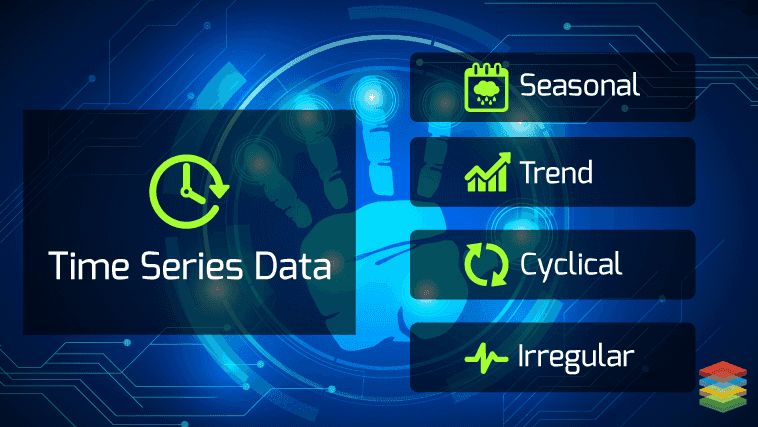
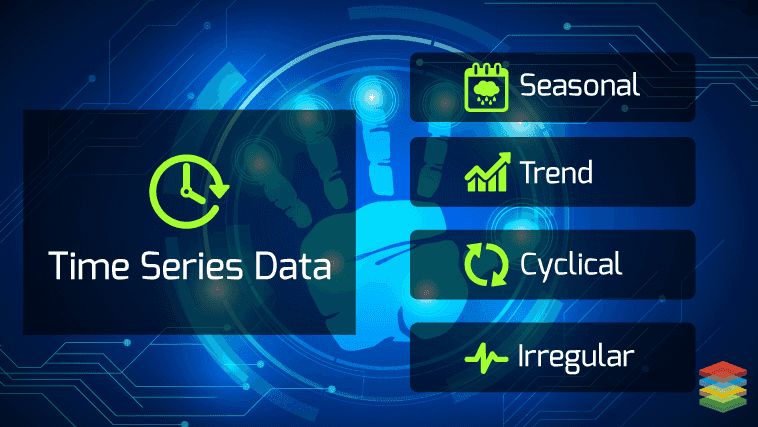
This may contain: the time series diagram is shown with several different types of items in each circle, including data

Time series forecasting is the act of using that historical data to predict future values. If you know how your sales have moved over the past twelve months, forecasting helps you estimate what the next three months might look like.

This skill is used across banking, retail, telecoms, logistics, and government work in Nigeria. Any business that wants to plan rather than react after the fact needs someone who can do this work.


What Excel Can Do for Time Series Forecasting

Excel has been the tool of choice for Nigerian business analysts for decades. It is installed on almost every office computer in the country. Most hiring managers understand it. Most decision makers trust a report that comes out of it.

For time series forecasting work, Excel gives you a few built-in tools.

Trendlines on Charts

You can add a trendline to any Excel line chart with just a few clicks. This draws a straight or curved line through your historical data and can extend it forward to show where the trend is heading. It is not a full forecasting model, but it provides a useful visual signal quickly, with no formula writing required.

Moving Average

Excel’s Data Analysis Toolpak includes a moving average tool. You select your data range, choose how many periods to average, and Excel generates the smoothed output and a chart in seconds. This is genuinely useful for business reporting and for showing management a simple, clean trend.

FORECAST Function Family

Excel has a FORECAST.ETS function that applies exponential smoothing to time series data. It handles some seasonality automatically and returns a point forecast for any future period you specify. For a Nigerian SME owner or a business analyst who needs a quick forecast without writing code, this function is a practical, accessible option.

Manual Calculation of Seasonal Indices

A skilled Excel user can build a fairly detailed seasonal forecast right inside a spreadsheet. It takes more effort than Python, but any manager can open the file and see the work directly.


What Excel Cannot Do Well

Excel’s forecasting capabilities are real, but they have clear limits that matter increasingly as your data grows or your needs become more specific.

  • Excel slows down a lot with large datasets, often any file over 50,000 rows
  • It has no built-in ARIMA model, which is one of the most widely used statistical forecasting methods
  • Seasonal adjustments in Excel are manual and error-prone at scale
  • It is hard to repeat an Excel forecast because the steps sit inside the file, not in a separate, clear record
  • Excel models are hard to automate or schedule, meaning someone must manually update them each period
  • Working together on a complex Excel forecast model is messy and often leads to version mix-ups


What Python Can Do for Time Series Forecasting

Python is the leading language for data science and machine learning across the world. It is fast becoming the standard in Nigerian banking, fintech, and larger firm data teams. For time series forecasting, it gives you tools that go well past what Excel can do.

pandas

The pandas library lets you load, clean, and manipulate time series data with a few lines of code. It handles date parsing, resampling between different time periods, and missing value treatment automatically. Working with a million rows of daily sales data is no harder than working with a hundred.

statsmodels

The statsmodels library has a full ARIMA tool, seasonal breakdown features, and data stability tests. This gives you the rigour that serious forecasting needs, most of all in banking and finance.

Prophet

Prophet, built by Meta, handles seasonal patterns, public holidays, and trend shifts on its own. You can model Nigerian public holidays directly and get a clear, visual forecast in very few lines of code. Lagos Data School teaches Prophet as a core tool because it gives good results fast, even for analysts still building their stats knowledge.

scikit-learn

For machine learning approaches to forecasting, scikit-learn gives you many regression model types that can be set up for time series work. This opens the door to more complex, richer models that go beyond what basic statistical methods can do.

Automation and Scheduling

Python forecasting scripts can run on a schedule on their own, pulling fresh data, making new forecasts, and sending results to a dashboard or report with no human step needed. This is not possible in Excel at any real scale.


What Python Cannot Do As Easily?

Python is not without its own limits, and being honest about these helps you set realistic expectations.

  • Python has a learning curve that is steeper than Excel. This is most true for those with no prior coding background
  • Sharing results requires extra steps, since not everyone can run a Python script
  • Setup and environment management can be confusing for beginners
  • Simple, one-off forecasts are faster to do in Excel than to write from scratch in Python
  • Turning Python output into a clear story for a non-technical manager takes real extra effort


A Direct Comparison


Factor Excel Python
Ease of learning Easier for beginners Steeper at first
Speed for simple tasks Faster for quick jobs More setup needed
Handling big data Slows down fast Handles large files well
ARIMA and stat models Not built-in Full support
Automation Very limited Strong automation
Nigerian job market Expected at most firms Growing fast in banks and fintechs
Long-term career value Good for analysts Very high for data professionals


Which One Should Nigerian Analysts Learn First?

Lagos Data School’s honest recommendation is this: if you already know Excel reasonably well, start Python. If you do not yet know Excel, build a solid Excel base first, then move to Python.

Here is the reasoning behind this. Excel is a prerequisite for most Nigerian office jobs right now, not just data jobs. If you cannot use Excel confidently, you will struggle in many roles even before you get to do any forecasting work. Master it first if you have not already.

Once Excel is in place, Python is the natural and important next step. Python opens doors that Excel cannot, especially in Nigerian banks, fintechs, and larger firms that are building serious data teams. The salary difference between an Excel analyst and a Python-using data analyst in Nigeria is real and significant.


How to Build Both Skills Efficiently

The good news is that you do not have to choose one and ignore the other forever. Many Nigerian data professionals use both, picking the right tool for each specific task.

Use Excel when you need a quick, explainable answer for a non-technical manager. Use Python when you are building a serious model that will run regularly, handle large data, or need a level of accuracy that Excel cannot reach.

A Practical Learning Path

Weeks 1 to 4: Excel fundamentals, data cleaning, pivot tables, and the FORECAST.ETS function.

5 to 8: Introduction to Python, pandas, and plotting with matplotlib.

9 to 12: Time series basics in Python, moving averages, and your first Prophet forecast.

13 to 16: ARIMA in statsmodels, model evaluation, and building a full forecasting pipeline.

This sixteen-week path takes a complete beginner from no data skills to a working forecasting skill in both tools. Lagos Data School structures it into a guided, hands-on course.


What Nigerian Employers Actually Expect

Lagos Data School talks with Nigerian employers regularly to understand what they truly want from data analyst candidates. Here is what they consistently say.

At the entry level, most Nigerian employers expect strong Excel. This is the minimum table stake for almost any analyst role. Weak Excel skills are a red flag for most hiring managers, even those who use Python themselves.

At the mid level, Python is increasingly listed as a requirement rather than a nice-to-have. Nigerian banks and fintechs have been building Python-based data pipelines for several years now. Staff who can maintain and extend these pipelines are in genuine, growing demand.

At the senior level, employers expect both tools, plus the ability to explain results clearly to business leaders who use neither. This mix of deep tech skill and clear communication is the most valued profile in the Nigerian data job market right now.


Real Nigerian Analyst Profiles

To make this concrete, here are three real-world profiles that Lagos Data School sees among our graduates and hiring network.

Profile 1: The Excel-Strong Business Analyst

This person works at a mid-size Nigerian company. They produce monthly reports, track KPIs, and use FORECAST.ETS to project next month’s revenue for management presentations. Excel is their primary tool. They may add basic Python skills over time but are productive and valued right now. Salary range is above average for general office work.

Profile 2: The Junior Data Analyst With Python

This person works at a Nigerian fintech or a bank’s data team. They write Python scripts that pull data from a database, run a monthly forecast using Prophet, and output results to a shared dashboard. They use Excel for quick checks and ad hoc tasks but live primarily in Python. Salary is noticeably higher than the Excel analyst.

Profile 3: The Forecasting Specialist

This person works at a large Nigerian bank or a consulting firm. They build, maintain, and improve a suite of forecasting models that feed business decisions across multiple departments. They are comfortable with both Excel and Python, can explain statistical methods to non-technical audiences, and are seen as a key, hard-to-replace member of their team. Salary is among the highest in the Nigerian data field.

Lagos Data School trains students to progress along this path, starting at Profile 1 and building steadily toward Profile 3 over two to three years of genuine, focused skill development.


Common Misconceptions to Clear Up

Misconception 1: Python Will Replace Excel

Python has not replaced Excel in Nigerian offices and is unlikely to do so in the near term. Too many business processes, reports, and communication formats are built around spreadsheets. Excel and Python coexist in most serious data teams, each handling the tasks it does best.

Misconception 2: You Need a Programming Background to Learn Python

You do not. Many Lagos Data School students with no prior coding experience have learned Python to a job-ready level within three to four months of focused, structured study. The learning curve is real, but it is manageable with the right guidance.

Misconception 3: Excel Is Only for Non-Technical People

Excel mastery is a real, valuable skill even for strong tech professionals. Being able to produce a clean, well-laid-out Excel model that a business leader can read and trust is something many Python users cannot do well. Nigerian employers value this skill at every level.


Practice Exercises for Both Tools

Lagos Data School suggests the exercises below to help Nigerian analysts build real skill in both tools, not just theory.

Excel Exercises

  • Download three years of monthly sales data and build a moving average forecast for the next six months
  • Use FORECAST.ETS to project quarterly revenue and compare it to the moving average output
  • Work out seasonal index values by hand for a dataset with a clear yearly cycle
  • Build a simple dashboard with charts showing historical data alongside the forecast

Python Exercises

  • Load a CSV of daily sales data with pandas and plot it as a line chart with matplotlib
  • Build a Prophet forecast for the same dataset and compare it to the Excel output
  • Run an ADF stationarity test using statsmodels and apply differencing if needed
  • Build a simple ARIMA model and evaluate it using MAE against a held-out test period


What Lagos Data School Students Say About This Choice

Lagos Data School has run this exact debate in our classrooms many times. Here is what actually happens when we ask Nigerian students to share their honest take after learning both tools.

Almost every student who started with Excel and then moved to Python says the same thing. Excel made me feel safe. Python made me feel powerful. The truth is that you need both of those feelings at different points in your career.

The students who tried to skip Excel and go straight to Python often hit a wall when they had to share their work with a manager or a client. They could build the model. They could not produce a clean, readable output that a non-technical person could open and trust right away.

The students who learned Excel first and then moved to Python found the transition much smoother than they expected. Many of the ideas carry over. The way you think about rows and columns, about aggregating data, about spotting errors, these all transfer naturally from Excel to Python.

So the debate between the two tools is real, but it is not as sharp as it first appears. They work together more than they compete. Lagos Data School teaches both, in order, because that is what leads to the best real-world outcomes for Nigerian analysts.


A Practical Example: The Same Forecast in Two Tools

Let us make this very concrete. Imagine a Lagos bakery that wants to forecast next month’s bread roll sales.

In Excel, the owner opens her sales spreadsheet, selects the last twelve months of daily sales, adds a trendline to the chart, and reads off the projected value for next month. It takes ten minutes. She can print it and show it to anyone. Done.

In Python, a data analyst loads the same data into pandas, runs a Prophet forecast, and gets back a prediction with a confidence range shown as a shaded band on a clear chart. The model accounts for the bakery’s known weekly patterns and the Christmas peak automatically. It takes thirty minutes to set up the first time but runs in two minutes every month after that.

Which is better? That depends on the question. For the owner doing this herself for one product, Excel is fine and fast. For an analyst maintaining monthly forecasts across 200 products for six branches, Python is the only realistic option.

The tool should fit the task. That is the simple rule. And knowing both tools means you can always choose the right one rather than being limited to just one way of working.


What Matters More Than the Tool

Here is something Lagos Data School believes deeply. The tool you use matters far less than how clearly you can think about the problem in front of you.

The best analysts we know are not the best because they know Python better than anyone else. They are the best because they ask better questions, know what the business needs before they open a single tool, know which part of the data tells the real story, and they know how to say it clearly once they have found it.

A bad analyst with Python will produce a confusing, unusable output. A good analyst with Excel will produce a clear, useful, and trusted result. The tool does not make the analyst. The analyst makes the tool useful.

So yes, learn Python. Yes, learn Excel. But most of all, learn to think clearly about data problems. Learn to ask a sharp question. Learn to look at data and know what matters and what does not. That skill is what separates the best Nigerian data professionals from the rest. And it is something Lagos Data School trains into every student, alongside the technical tools, from day one.


The Short Version of Everything in This Guide

If you have skimmed this guide and want the plain short version, here it is.

Start with Excel if you do not know it yet. Excel is the base. You need it for almost any Nigerian data job. It is fast for simple tasks. It is easy to share. Every manager can read it.

Add Python once Excel is solid. Python is more powerful. It handles more data, does more things, and opens doors Excel cannot open, most of all in banks, fintechs, and larger firms.

Use both together. They are not rivals. They are partners. Let Excel be your fast, simple tool for quick tasks. Let Python be your serious tool for complex models and automated work.

Get good at both. Then focus on being someone who thinks well about business data problems. That is the real skill. Lagos Data School trains you to build all of this, step by step.

Pick one. Start today. One hour. That is all it takes to begin.

Do not overthink it. Just start.


Recommended External Resource

For free, hands-on Python data science exercises, visit Kaggle Learn’s Python and data science courses: https://www.kaggle.com/learn.


A Tool Choice Self-Check

Before deciding which tool to focus on next, run through this short check.

  • Are you already confident with Excel for data work, pivot tables, and charts?
  • Do Nigerian job ads in your target sector mention Python as a requirement or preference?
  • Are you targeting a role that involves large datasets or automated reporting pipelines?
  • Do you have three to four months to invest in structured Python learning?

If you said yes to questions one and two and no to three and four, Excel is your focus for now. If you said yes to all four, Python is your clear next step. Either way, Lagos Data School has a clear path to help you build the skill you need next. It is built for the Nigerian market. It works.


About Lagos Data School

Lagos Data School is Nigeria’s top school for cybersecurity, data science, cloud, and analytics. Every idea in this guide is part of our hands-on course.

Our teachers are real security pros, not just classroom staff. So you learn from people who guard live networks every day.

We run classes on weekdays, weekends, and online. So no matter your time, we have a slot for you. Beyond skills, we also give you a real certificate and links to job partners.

Visit Lagos Data School today to view our courses and join the next class.

Learn the right tool first. Train with Lagos Data School.
Time Series Forecasting Explained: Tools and Techniques for Data Analysts in Lagos

Data analysts in Lagos deal with time-based data every single day. Monthly sales figures. Daily website visits. Weekly stock levels. All of these are what we call time series data, and knowing how to forecast from them is one of the most valuable skills a data analyst can build.

This guide explains time series forecasting in plain, clear terms. It covers the key ideas, the main techniques, and the top tools that Lagos-based data analysts use in real work settings.

Lagos Data School made this guide as part of our data analytics course. We build this skill directly into our training because it comes up again and again in real Nigerian data roles.


What Is Time Series Data?

Time series data is any set of values recorded at regular points in time. The time gap between each point must be the same. This could be every hour, every day, every week, or every month.

This may contain: the time series diagram is shown with several different types of items in each circle, including data

Here are a few clear examples from the Nigerian business world.

  • A bank’s daily transaction count over the past two years
  • A telecoms firm’s monthly active user count over 36 months
  • A supermarket’s weekly revenue figures for the past year
  • A generator fuel reseller’s daily sales volume across 12 months

All of these share one feature: each data point is linked to a specific point in time, and the order of those points matters a great deal.


What Is Time Series Forecasting?

Time series forecasting is the process of using past, time-stamped data to make predictions about future values. If you know how a business’s sales have behaved over the past two years, a forecasting model can use that pattern to estimate what sales might look like over the next three months.

This is not guessing. It is pattern recognition. The model finds real, repeating patterns in the historical data and uses those patterns to project forward with a measured level of confidence.


Key Concepts Every Lagos Analyst Should Know

Before you start building forecasting models, a few core ideas are worth understanding clearly.

Trend

A trend is a long-term direction in the data. Sales that rise consistently month after month have an upward trend. A telecom firm losing subscribers over time has a downward trend. Identifying the trend is the first step in any forecast.

Seasonality

Seasonality refers to patterns that repeat at regular intervals. Nigerian retail businesses often see higher sales in December due to the festive season. A fuel reseller may see a weekly peak every Friday. These repeating cycles are called seasonal patterns.

Noise

Noise is random variation in the data that has no clear pattern or cause. Every real dataset contains some noise. Good forecasting models learn to separate meaningful patterns from this background noise.

Stationarity

A time series is said to be stationary when its average value and its spread do not change over time. Many forecasting models work best on stationary data. If your data is not stationary, you apply a technique called differencing to make it so before running your model.


Main Techniques Used in Time Series Forecasting

There are several techniques data analysts in Lagos use for forecasting work. Here are the most important ones, explained in plain terms.

Moving Average

This is the simplest technique. You take the average of the last few data points to predict the next one. If weekly sales for the past four weeks were 100, 110, 90, and 120, the moving average forecast for next week would be 105.

It is easy to calculate and easy to explain to a business manager. But it works best only when data has no strong trend or seasonal pattern.

Exponential Smoothing

Exponential smoothing is like a moving average, but it gives more weight to recent data and less weight to older data. This makes it more responsive to changes in the trend. It is very widely used in Nigerian retail and logistics forecasting.

ARIMA

ARIMA stands for AutoRegressive Integrated Moving Average. It is one of the most widely used statistical forecasting methods in the world. It works well on stationary data and can handle both trend and noise. Lagos data analysts who want to move beyond basic methods often learn ARIMA next.

Prophet

Prophet is a free forecasting tool built by Meta (the company behind Facebook). It was designed to be easy to use even without deep statistics knowledge. It handles seasonal patterns and missing data well, and it works directly in Python or R. Many Nigerian data analysts now use Prophet as their go-to forecasting tool.

LSTM (Long Short-Term Memory)

LSTM is a type of deep learning model that can capture very complex patterns in time series data. It needs more data and more computing power than the other methods, but it can handle patterns that simpler models miss. It is best suited for analysts who already have a solid base in machine learning.


Comparison of Forecasting Methods


Method Best For Skill Level Needed
Moving Average Simple, stable data Beginner
Exponential Smoothing Data with mild trends Beginner to mid
ARIMA Stationary data with noise Mid level
Prophet Data with strong seasonality Mid level
LSTM Complex, large datasets Advanced


Tools Lagos Data Analysts Use for Forecasting

Knowing the techniques is only half the work. You also need to know which tools to use in practice.

Python

Python is the most popular language for forecasting in Nigeria and across the world. Its data tools let you build strong models with less code than you might expect. Lagos Data School teaches Python as the main forecasting tool in our course.

R

R is another strong option, especially for analysts coming from a statistics background. Packages like forecast and tseries are well suited for ARIMA and related methods. Some Nigerian financial institutions use R specifically for their forecasting work.

Excel

For analysts who are not yet ready to code, Excel offers a simple trendline and moving average feature built right into its chart tools. It will not match the power of Python or R, but it is a genuine starting point for beginners.

Power BI and Tableau

Both Power BI and Tableau include some built-in forecasting features that require no coding at all. These are useful for business analysts who need to produce forecast visuals quickly for presentations and reports without writing a single line of code.


A Practical Forecasting Workflow for Lagos Analysts

Here is the step-by-step workflow that Lagos Data School teaches for a real forecasting project.

Step 1: Load and Explore Your Data

Import your time series data into Python or Excel. Plot it as a line chart. Look for obvious trends, seasonal peaks, or sudden drops. This first visual check tells you a great deal about what techniques may work best.

Step 2: Check for Stationarity

Run a simple statistical test such as the Augmented Dickey-Fuller test in Python to check if your data is stationary. If it is not, apply differencing until it becomes so.

Step 3: Choose and Fit Your Model

Based on your data’s characteristics, choose the right technique. Start simple. A basic ARIMA or exponential smoothing model is the right first step for most Lagos analysts working on business forecasting.

Step 4: Evaluate Your Forecast

Compare your model’s predictions against actual past values it did not train on. Use error metrics such as Mean Absolute Error (MAE) or Root Mean Squared Error (RMSE) to measure how accurate the model truly is.

Step 5: Present the Results Clearly

A good forecast is only useful if the people making decisions can understand it. Plot your forecast on a clear chart with confidence intervals shown. Use plain language to explain what the numbers mean for the business.


Common Mistakes Lagos Data Analysts Make With Forecasting

Lagos Data School sees these errors come up often in student work and in real-world projects.

  • Trying to forecast too far ahead when you do not have enough past data to back it up
  • Ignoring a clear seasonal pattern that the data shows again and again
  • Picking a complex model like LSTM before trying simpler methods first
  • Not keeping a test set aside before you train your model on the full data
  • Showing one forecast number with no range of likely values around it


Why Every Lagos Analyst Should Know at Least One Forecasting Method

You do not need to master all five methods on this list to add real value as an analyst. But knowing at least one well opens many doors that a general data role alone would not.

Think about it from a hiring manager’s point of view. Two candidates apply for the same data role. Both can clean data. Both can build a chart. But one can also say: I have built a sales forecast for a real business and it was accurate to within 8%.

That one extra thing makes a real, clear difference. It shows the manager that this analyst can do work that directly helps the firm plan better, spend smarter, and grow faster.

This is why Lagos Data School teaches forecasting as a core part of our data analytics course, not as an extra topic saved for advanced learners. Every analyst in Nigeria who wants to be truly useful to a real business should be able to build at least a basic, working forecast from their own data.


Time series forecasting is a core skill in banking, telecoms, retail, logistics, and government work across Nigeria. Analysts who can build and explain good forecasts are in real demand. They also earn above-average pay compared to general data roles.

Lagos Data School graduates who focus on forecasting often report strong job offers from Nigerian banks, fintech firms, and supply chain firms. These employers need this skill applied to real Nigerian data.


Plain Advice for Lagos Data Analysts Starting Out

If all the method names and tool names above feel like a lot at once, here is the honest advice Lagos Data School gives to every new analyst who walks through our door.

Start with one method. Not five. Just one.

Pick moving average. Learn it well. Use it on one real dataset from a business you know. See what it tells you. Then move on to the next method only when you feel truly at ease with the first.

This slow, steady approach might feel less exciting than trying to learn ARIMA and LSTM at the same time. But it leads to real, lasting skill. And real, lasting skill is what Nigerian employers actually pay for.

Lagos Data School trains analysts this way every year. The ones who go slow and stay steady at the start are always the ones who go furthest in the end.

So pick one. Learn it well. Then move on. That is the whole plan.


Recommended External Resource

For free, hands-on time series tutorials using Python, visit the Towards Data Science forecasting guide on Medium: https://towardsdatascience.com/time-series-forecasting-with-python-8d7d1f7d6b8c


A Forecasting Readiness Self-Check

Run through this short check to see where you stand as a Lagos data analyst.

  • Can you identify a trend and a seasonal pattern in a data chart?
  • Do you know how to import and plot time series data in Python or Excel?
  • Have you heard of ARIMA or Prophet and understand roughly what they do?
  • Can you explain what MAE or RMSE means when someone asks you about model accuracy?

If you said yes to all four, you have a solid enough base to start building real forecasting models now. If you said no to any of them, Lagos Data School’s data analytics course covers each of these points in a clear, practical way built for Nigerian analysts.


About Lagos Data School

Lagos Data School is Nigeria’s top school for cybersecurity, data science, cloud, and analytics. Every idea in this guide is part of our hands-on course.

Our teachers are real security pros, not just classroom staff. So you learn from people who guard live networks every day.

We run classes on weekdays, weekends, and online. So no matter your time, we have a slot for you. Beyond skills, we also give you a real certificate and links to job partners.

Visit Lagos Data School today to view our courses and join the next class.

Forecast with confidence. Train with Lagos Data School.

Which Data Career Pays More in Lagos in 2026? Find Out Now

Data is the biggest growth sector in Lagos right now. Every firm wants data staff. So, two roles come up again and again: data analyst and data scientist.

Yet, most people do not know the real gap between the two. They both work with data. However, what they do each day is very different.

Furthermore, they are not paid the same. One is easier to break into. The other pays more at the top. Therefore, choosing the right path now can save you years of wasted effort.

Lagos Data School has trained hundreds of data pros across Nigeria. Its 2026 research covers salaries, job demand, and skill gaps across both roles. So, this guide gives you the full, honest picture.

This article is fully written and researched by Lagos Data School. It breaks down both careers side by side. Moreover, it tells you exactly which path fits your goals, background, and timeline.


Data Analyst vs Data Scientist: The Core Difference

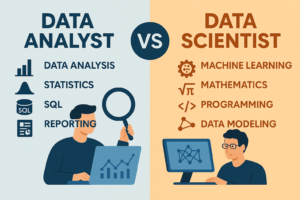
The simplest way to explain the gap is this. A data analyst looks at what already happened. A data scientist tries to predict what will happen next.

So, a data analyst might review last month’s sales and build a chart to show the trend. Moreover, they spot patterns and share findings with the team. Therefore, their output is a report or a dashboard that helps the firm make a choice.

A data scientist, however, builds code and models that run on data. Furthermore, they use machine learning to train a system that can make forecasts on its own. As a result, their output is often a working tool or a prediction engine that runs without human input.

Both roles are needed. Both are well paid. However, the path to each one is different. So, knowing which one fits you is the first step.


Full Side-by-Side Comparison

Factor Data Analyst Data Scientist
Main Job Clean and explain past data Build models to predict the future
Key Tools Excel, SQL, Power BI, Tableau Python, R, ML libraries, Spark
Skills Needed SQL, Excel, stats, charts Python, ML, deep stats, coding
Entry-Level Pay Lagos ₣2.5M – ₣4.5M ₣4M – ₣6M
Mid-Level Pay Lagos ₣4.5M – ₣6.5M ₣6M – ₣9M
Senior Pay Lagos ₣6M – ₣9M ₣9M – ₣15M
Time to Get Job-Ready 3 – 6 months 6 – 12 months
Demand in Lagos 2026 Very High High and Growing
Best For Beginners, non-coders, analysts Coders, math lovers, researchers

Source: Lagos Data School Employer Survey, Q1 2026


What Does a Data Analyst Do in Lagos?

A data analyst in Lagos spends most of their time with data that already exists. They collect it, clean it, and make sense of it. So, their job is to answer the question: what happened and why?

Specifically, they use tools like SQL to pull data from databases. Then they use Excel, Power BI, or Tableau to visualise it. Furthermore, they write reports and present findings to non-tech teams. Therefore, strong writing and chart skills matter just as much as technical ones.

Moreover, data analysts work in almost every Lagos industry. Banks, telecoms, retail firms, and startups all need them. Also, government agencies and NGOs hire data analysts to review program data. As a result, the job market is wide and the demand is consistent.


Day-to-Day Tasks of a Lagos Data Analyst

  • Pull and clean data from databases using SQL
  • Build dashboards and reports in Power BI, Tableau, or Excel
  • Find trends and patterns in sales, HR, or operations data
  • Present findings to managers and teams in clear, plain language
  • Monitor key numbers and flag any data that looks out of place
  • Work with product or ops teams to track goals and targets


What Tools Do Lagos Data Analysts Use?

SQL is the most used tool. Every data analyst in Lagos needs to write SQL queries well. Furthermore, Excel remains a key tool for cleaning and reviewing data. So, strong Excel skills are a must even in 2026.

Also, Power BI and Tableau are the top dashboard tools in Lagos. Most banks and telecoms firms use one of the two. Moreover, Python is useful for data analysts but not always required at entry level. Therefore, it is good to know but not the first thing to learn.


What Does a Data Scientist Do in Lagos?

A data scientist in Lagos builds systems that learn from data. They write code, train models, and ship tools that make predictions on their own. So, their job is to answer the question: what will happen and what should we do about it?

Specifically, they use Python or R to write machine learning code. Furthermore, they work with large data sets and apply stats methods to train models. Also, they test and fine-tune these models before handing them to an engineering team. Therefore, coding skills are a must for this role, not just a nice-to-have.

Moreover, data scientists in Lagos often work in fintech, health, and e-commerce. They build fraud detection models, demand forecasts, and customer ranking tools. As a result, their work often goes straight into a live product that thousands of people use.


Day-to-Day Tasks of a Lagos Data Scientist

  • Write Python or R code to clean, model, and test data
  • Build and train machine learning models for prediction tasks
  • Work with engineering teams to ship models into live products
  • Test model accuracy and improve results over time
  • Research new methods and tools to solve data problems
  • Document code and methods so other team members can follow


What Tools Do Lagos Data Scientists Use?

Python is the main tool. Every data scientist in Lagos needs to code well in Python. Furthermore, they use libraries like Pandas, NumPy, Scikit-learn, and TensorFlow. So, comfort with code is not optional.

Also, SQL is needed at a strong level. Data scientists pull their own data and clean it in code. Moreover, tools like Spark and cloud platforms like AWS or GCP are used for large data sets. Therefore, a data scientist needs a broader and deeper tech stack than a data analyst.


Skills Comparison: What Each Role Needs

The skill sets overlap in some areas but split sharply in others. So, Lagos Data School maps the key skills for both roles below. Use this to see where you stand today and what gaps you need to fill.


Skill-by-Skill Breakdown

Skill Data Analyst Needs Data Scientist Needs Overlap?
SQL Must know well Must know well Yes
Excel Must know well Good to know Partial
Python Good to know Must know well Partial
Power BI / Tableau Must know well Good to know No
Stats / Probability Core basics needed Deep level required Partial
Machine Learning Awareness only Must know well No
Data Cleaning Must know well Must know well Yes
Storytelling / Charts Must know well Good to know No

Source: Lagos Data School Curriculum Framework, 2026


Lagos Data School Insight:  Most Lagos data analyst jobs ask for SQL, Excel, and either Power BI or Tableau. Most data scientist jobs ask for Python, SQL, and at least one machine learning framework. So, SQL is the one skill that crosses both paths.


Salary Guide: What Each Role Pays in Lagos 2026

Pay is one of the biggest factors when choosing a career path. So, Lagos Data School shares real salary data from its employer network below.

Data Analyst Salaries in Lagos

Entry-level data analysts in Lagos earn between 2.5 million and 4.5 million per year. Furthermore, mid-level analysts with two to three years of work earn between 4.5 million and 6.5 million. Moreover, senior analysts and team leads earn up to ₣9 million.

Also, data analysts who specialize in a sector such as fintech or telecoms often earn more. So, deep sector knowledge adds value on top of the core data skills. As a result, the ceiling for a strong analyst is higher than many people think.

Data Scientist Salaries in Lagos

Entry-level data scientists in Lagos earn between 4 million and 6 million per year. So, even at the start, the pay is higher than most analyst roles. Furthermore, mid-level data scientists earn between 6 million and 9 million.

Moreover, senior data scientists at Lagos fintech firms and banks earn between 9 million and 15 million per year. Also, those with machine learning and AI skills command an even higher premium. Therefore, the data scientist path pays more at every level but takes longer to reach.

Key Takeaway:  Data scientists earn more. However, data analysts get hired faster and face less competition at entry level. So, your best move depends on your timeline and your current skills.


Which Path Is Right for You? A Clear Decision Guide

Lagos Data School uses a simple set of questions to help its students choose. So, work through each one and note your answers.

Choose Data Analyst If…

  • You are new to data and want to get job-ready in 3 to 6 months
  • You are strong in Excel or SQL but do not know how to code yet
  • You work in a non-tech role and want to shift into data
  • You want a clear path with strong demand and stable pay in Lagos
  • You prefer working with charts, reports, and business teams

 Best fit:  Beginners, career changers, Excel or SQL users, and those who want to get hired fast without deep coding skills.

Choose Data Scientist If…

  • You already know Python or another coding language
  • You studied maths, stats, or engineering and love numbers
  • You want to build tools and models, not just read and report data
  • You are willing to spend 6 to 12 months before your first role
  • You want the highest possible pay ceiling in the data field

 Best fit:  Coders, engineers, math lovers, and those who are willing to invest more time for higher long-term rewards.

Can You Move from Analyst to Scientist Later?

Yes. In fact, this is a very common path in Lagos. Many data scientists started as analysts. They learned coding and stats on the job and moved up over time. So, starting as an analyst does not close the scientist door.

Furthermore, Lagos Data School offers a progression track that takes students from data analyst to data scientist in stages. So, you can start with the analyst path and level up when you are ready. As a result, you get to market faster without giving up your long-term goal.


Job Demand in Lagos: Which Role Has More Openings?

Both roles are in demand in Lagos. However, data analyst roles outnumber data scientist roles right now. So, if you need a job quickly, the analyst path has more open doors.

Specifically, Lagos Data School’s 2026 job market review found over 600 active data analyst roles in Lagos at any given time. Moreover, the number of data scientist roles was about 220. Therefore, competition for analyst roles is spread across more openings.

Furthermore, the data scientist role is growing fast. As more Lagos firms invest in AI and machine learning, demand for scientists is rising quickly. Also, salaries for data scientists are going up as the skills remain rare. As a result, those who train now will enter a market that is already warm and will only get hotter.


Top Lagos Employers Hiring Data Staff in 2026

Fintech firms hire the most data staff in Lagos. Flutterwave, Kuda, Paystack, and Moniepoint all have active data teams. So, a strong profile and the right skills open doors at the best-paying firms in the city.

Furthermore, telecoms giants like MTN and Airtel run large data teams for customer and network review. Also, banks like GTBank, Zenith, and Access hire both analysts and scientists for risk, fraud, and customer work. Moreover, FMCG firms and logistics companies are building data teams at a fast pace. Therefore, the range of employers is wide across every sector.


How Lagos Data School Trains Both Roles

Lagos Data School is Nigeria’s top practical tech training school. Based in Ikeja, Lagos, it has trained thousands of data experts across both analyst and scientist tracks.

Specifically, the data analyst programme covers SQL, Excel, Power BI, Python basics, and data storytelling. Students build real dashboards and reports from Lagos business data. Furthermore, the programme runs for 10 weeks and is designed around what Lagos employers ask for in interviews.

Moreover, the data scientist programme goes deeper into Python, machine learning, and model deployment. Students build real ML models on Lagos data sets and deploy them to the cloud. So, graduates leave with a portfolio of live work to show employers. Also, the programme runs for 16 weeks with a fast-track option for those with coding experience.

Furthermore, both programmes are taught by active data practitioners, not just trainers. Class sizes are capped at 20 students. Therefore, every student gets personal feedback on every project they submit. As a result, the learning quality is well above what most Lagos training providers offer.

Additionally, career support runs throughout and after both programmes. Lagos Data School gives CV reviews, mock interviews, and direct leads to its employer network. So, most graduates get their first data role within three months of finishing. Consequently, the investment in training pays back fast.


Start Your Data Career in Lagos Today.  Lagos Data School offers both data analyst and data scientist training in Lagos. Visit lagosdataschool.com and enroll today.


How to Enroll at Lagos Data School

Getting started is simple. First, visit lagosdataschool.com and open the Data Analyst or Data Scientist programme page. There, you will find course dates, fees, and the full outline.

Next, fill in the short online form. The team reviews all forms within 48 hours. Moreover, they are on hand by phone and email to answer every question before you sign up.

Furthermore, flexible pay plans are on offer. You can spread the cost across the course. Also, group rates apply for firms that send two or more staff at once. Therefore, cost should not stop you from starting.

Finally, on sign-up you get instant access to the pre-course module. This covers Python or SQL basics depending on the path you choose. As a result, you arrive at the first live session fully ready and confident.


Frequently Asked Questions

What is the main difference between a data analyst and a data scientist?

A data analyst explains what has already happened using data. A data scientist builds models to predict what will happen next. Furthermore, data scientists need stronger coding and maths skills. So, the two roles are related but serve different business needs.

Which pays more in Lagos: data analyst or data scientist?

Data scientists earn more at every level. Entry-level scientists earn between ₣4 million and ₣6 million per year, while analysts start at ₣2.5 million to ₣4.5 million. However, data analyst roles are easier to get into and have more openings in Lagos right now.

How long does it take to become a data analyst in Lagos?

With focused training, you can be job-ready as a data analyst in 3 to 6 months. Lagos Data School’s data analyst programme runs for 10 weeks. Furthermore, career support after the course helps most students land a role within three months of finishing.

Do I need to know how to code to become a data analyst?

Not deeply. You need basic SQL and some Python. However, strong Excel and Power BI skills are enough to land most entry-level analyst roles in Lagos. Lagos Data School teaches all of these from scratch. So, no prior coding is required to join.

Can I switch from data analyst to data scientist later?

Yes. Many Lagos data scientists started as analysts. They built coding and stats skills over time. Lagos Data School offers a progression track that takes you from analyst to scientist in stages. So, starting as an analyst does not close the scientist path.

Which programme does Lagos Data School recommend for beginners?

Lagos Data School recommends starting with the data analyst programme if you are new to data. It gets you job-ready faster and builds the SQL and Python foundations you will need for the scientist path later. Furthermore, both programmes are available in-person and online.


Conclusion

Both data analyst and data scientist roles are great career choices in Lagos. The city needs both. So, neither path is wrong.

Yet, they suit different people. If you want to get hired fast, start with data analyst. If you want the highest pay ceiling and love to code, aim for data scientist. Furthermore, you can always move from one to the other as your skills grow.

Lagos Data School gives you the training, the tools, and the career support to succeed in either path. Its programmes are built around real Lagos jobs and taught by people who work in the field every day. Moreover, small classes and personal feedback mean you learn faster and leave more prepared.

So, the only question left is: which path do you choose? Take the step today. Lagos Data School is ready to help you build a data career that pays well and grows fast in 2026.

Enroll to any of the data career training by clicking either data analysis or data science.


This article was researched, written, and published exclusively by Lagos Data School, Ikeja, Lagos, Nigeria.

Hi, How Can We Help You?
Welcome To
Lagos Data School

Artificial Intelligence (AI), Machine Learning and Robotics Programmes Are Now Available!!!

Enroll Now!

Thank You
100% secure website.