
Remote work is now a permanent part of Nigerian business life. Employees log in from homes in Lekki, client sites in Abuja, and cafes in Port Harcourt. So protecting remote access has become one of the biggest security challenges organizations face.
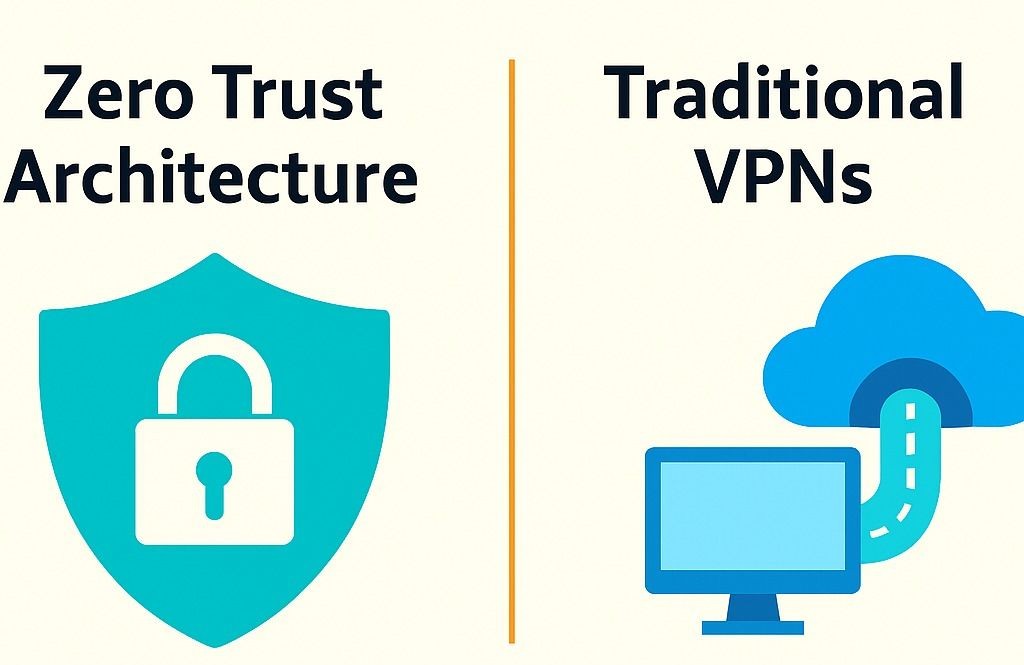
Two solutions dominate this conversation: VPN and Zero Trust Network Access (ZTNA). Both aim to secure remote connections. However, they work in very different ways. Choosing the wrong one could leave your organization dangerously exposed.
Fortunately, this guide makes the decision clear. First, you will learn what a VPN is and how it works. Then, you will explore Zero Trust and its core principles. Next, you will see a direct comparison of both models. After that, you will get real Nigerian business scenarios to guide your choice. Finally, you will learn how to transition from one to the other if needed.
Lagos Data School produced this article as part of our cybersecurity training series. Indeed, both VPN and Zero Trust are covered in depth in our program. So let us break it all down.
The Problem: Why Remote Access Security Is Hard
Traditional network security relied on a simple idea called the perimeter model. Everything inside your office network was trusted. Everything outside was treated as dangerous. So a strong firewall at the boundary was enough.
However, that model no longer works. Today, employees access company systems from many locations. They use personal devices on home internet connections. Furthermore, many business applications have moved from office servers to cloud platforms like AWS and Microsoft Azure.
As a result, the old network perimeter has dissolved. There is no longer a clear inside and outside. Attackers know this. So they target remote workers, stolen credentials, and cloud misconfigurations instead of trying to break through a firewall directly.
Therefore, organizations need a new approach to securing access. That is where VPN and Zero Trust come in. Both try to solve the same problem — but in very different ways.
What Is a VPN?
A Virtual Private Network (VPN) creates an encrypted tunnel between a remote user’s device and the company’s internal network. When you connect through a VPN, your device behaves as if it is sitting inside the office, regardless of where you actually are.

VPNs have been the standard remote access solution for over twenty years. They are widely used across Nigerian banks, law firms, government agencies, and multinational companies. Moreover, they are relatively easy to set up and affordable for small teams.
How a VPN Works
The process works in a few clear steps. First, the user installs a VPN client on their device. Second, they enter their credentials to connect to the company’s VPN server. Third, an encrypted tunnel opens between the device and the server. Finally, all traffic from the device passes through that tunnel and appears to come from the internal network.
Once connected, users typically gain broad access to internal resources. This is both the strength and the weakness of VPN. It is convenient for users. However, it creates serious security risks if any account is compromised.
Strengths of VPN
- Encrypts all data between the user and the network
- Hides the user’s real IP address from outside observers
- Simple to deploy — most teams can set it up quickly
- Affordable — suitable for small and medium-sized businesses
- Works on most devices without complex configuration
Weaknesses of VPN
VPN’s main weakness is their all-or-nothing access model. Once a user is authenticated, they often get access to far more than they need. So if an attacker steals one set of credentials, they gain the same broad access as the real user.
Furthermore, VPNs offer limited visibility into what users do once connected. Security teams cannot easily monitor or control activity inside the tunnel. As a result, insider threats and compromised accounts can go undetected for weeks.
Additionally, VPNs struggle to scale at an enterprise level. Managing hundreds of concurrent connections can slow performance and create bottlenecks. That is why many large Nigerian organizations are looking for alternatives.
What Is Zero Trust Network Access (ZTNA)?
Zero Trust Network Access is built on one powerful idea: never trust, always verify. Unlike VPN, ZTNA does not grant broad network access after a single login. Instead, it checks every access request individually every time.

The Zero Trust model was first described by cybersecurity analyst John Kindervag in 2010. Since then, it has been adopted by Microsoft, Google, the US government, and the UK’s National Cyber Security Centre. Moreover, it is increasingly being discussed by Nigerian banking regulators and enterprise security teams.
How Zero Trust Works
Zero Trust verifies every access request using multiple factors at once. These factors include:
- Who is making the request?, verified through strong identity authentication
- What device they are using; is it managed, patched, and compliant?
- Where the request is coming from; is this location normal for this user?
- What resource is being requested; is this user authorized for this specific app?
- When the request is made, is this a normal time for this type of access?
Only when all factors check out is access granted, and only to the specific resource being requested, not the whole network. Furthermore, verification continues throughout the session. So if anything changes mid-session, access can be revoked instantly.
Strengths of Zero Trust
- Least-privilege access, users only reach what they need
- Continuous verification, not just once at login
- Full traffic visibility, security teams can see and control everything
- Strong insider threat protection, even trusted users are verified constantly
- Cloud-native, built for modern cloud and hybrid environments
- Micro-segmentation, limits how far any breach can spread
Weaknesses of Zero Trust
Zero Trust is more complex to implement than VPN. It requires careful planning, the right tools, and staff training. Moreover, the upfront cost is higher. So smaller Nigerian businesses may find it challenging to adopt all at once.
However, the long-term security gains far outweigh the initial investment, especially for organizations in regulated industries.
VPN vs Zero Trust: Full Comparison
| Criteria | VPN | Zero Trust (ZTNA) |
| Core Idea | Encrypted tunnel to the network | Never trust, always verify |
| Access Model | Broad network access after login | Per-session, per-app access only |
| User Verification | Once at login | Continuous and context-aware |
| Traffic Visibility | Limited inside the tunnel | Full inspection of all traffic |
| Insider Threat Protection | Weak — users have wide access | Strong — least-privilege enforced |
| Cloud Compatibility | Designed for on-premise networks | Built for cloud environments |
| Scalability | Difficult at enterprise scale | Scales easily with cloud growth |
| Setup Complexity | Simple and fast to deploy | Requires careful planning |
| Cost | Lower upfront investment | Higher setup, lower long-term risk |
| Best For | SMBs, small remote teams | Enterprises, regulated industries |
Real Nigerian Business Scenarios
The comparison table gives you the facts. But how do these models apply in real Nigerian workplaces? Here are three common scenarios that Lagos Data School uses in our training program:
Scenario 1: A Small Marketing Agency in Lagos
A twenty-person agency has staff working from home three days a week. They access a shared file server, a project tool, and an accounting app. The IT team is just one person. The budget is tight.
In this case, VPN is likely the right choice. It is quick to deploy and affordable. Moreover, the data sensitivity is moderate, so the broad-access limitation is less of a concern. However, the agency should still enforce MFA and train staff on phishing. So even a basic VPN needs good security habits around it.
Scenario 2: A Commercial Bank in Lagos
A mid-tier bank has five hundred employees across multiple branches. Relationship managers work from client sites. IT staff access sensitive infrastructure. The bank is subject to CBN cybersecurity guidelines.
Here, Zero Trust is the right direction. The bank needs granular control over who accesses what. A junior teller should not be able to reach the core banking system. Furthermore, CBN audits require detailed access logs and evidence of least-privilege controls. So Zero Trust directly meets those regulatory needs.
Scenario 3: A Fast-Growing Fintech
A fintech startup has grown from ten to eighty staff in two years. The team is cloud-native, running on AWS. Half the engineers work remotely. The company plans to open offices in Abuja and Port Harcourt soon.
This company should start building Zero Trust now before scaling makes it harder. Because their infrastructure is already cloud-based, integrating a ZTNA solution is straightforward. Moreover, building Zero Trust principles into the architecture early is far easier than retrofitting them later.
How to Transition from VPN to Zero Trust
A full Zero Trust implementation does not happen overnight. For many Nigerian organizations, a phased approach is the most practical path. Here is the three-phase strategy that Lagos Data School recommends:
Phase 1: Strengthen Your Existing VPN
Start by hardening what you already have. Enforce MFA for all VPN users. Apply network segmentation so VPN users only reach the resources they need. Enable detailed logging and review logs regularly. This alone reduces your risk significantly. So do not wait for a full Zero Trust rollout before improving your VPN security.
Phase 2: Apply Zero Trust to Your Most Critical Systems
Next, identify your most sensitive assets: financial databases, customer PII, infrastructure controls. Apply Zero Trust access controls to these first. Even before a full ZTNA rollout, you can enforce least-privilege access and continuous verification for your highest-risk systems. As a result, your most valuable data gets protected first.
Phase 3: Expand Zero Trust Across the Organization
Finally, extend Zero Trust to all systems and users over time. As your team gains experience and your tools mature, a full Zero Trust architecture becomes achievable. At this stage, your reliance on VPN reduces naturally. Moreover, your overall security posture becomes far stronger than it ever was with VPN alone.
This phased approach lets Nigerian organizations balance security improvement with budget and operational realities. In fact, most successful Zero Trust deployments globally follow a similar path. So do not try to do everything at once; instead, build consistently over time.
Which One Should You Choose?
Here is a simple decision guide based on what Lagos Data School teaches in our cybersecurity program:
Choose VPN if you:
- Run a small or medium-sized business with a limited IT budget
- Have a small, well-known team that is easy to manage
- Need remote access deployed quickly with minimal complexity
- Handle moderate-sensitivity data with basic compliance requirements
Choose Zero Trust if you:
- Operate in banking, healthcare, telecoms, or government
- Handle sensitive customer data or regulated personal information
- Have a large or distributed workforce across multiple locations
- Are cloud-native or currently migrating your systems to the cloud
- Have experienced breaches, credential theft, or insider incidents
- Want to future-proof your security for the next five to ten years
Regardless of which model you choose, the underlying principle stays the same. Access to your network must be controlled, verified, and logged at all times. Both VPN and Zero Trust can support this goal. However, Zero Trust does it more completely and with stronger protection against modern threats.
Recommended External Resource
For the authoritative guide on Zero Trust Architecture, visit NIST SP 800-207: https://csrc.nist.gov/publications/detail/sp/800-207/final.
About Lagos Data School
Lagos Data School is Nigeria’s leading institution for cybersecurity, data science, cloud computing, and analytics training. Every concept in this article, from VPN setup to Zero Trust architecture, is part of our hands-on curriculum.
Moreover, all our instructors are practicing security professionals. So students learn from people who design and manage real access control systems in Nigerian banks, fintechs, and telecoms companies every day.
We offer weekday, weekend, and online learning formats. Furthermore, our programs are open to both beginners and experienced IT professionals looking to advance their careers. Besides technical training, we also provide career coaching, CV reviews, and direct introductions to hiring partners.
Visit Lagos Data School today to explore our cybersecurity program and register for the next cohort. Your cybersecurity career starts here — and we will support you every step of the way.
Your cybersecurity career starts at Lagos Data School.