How to Conduct a Vulnerability Assessment in Nigeria

Every Nigerian business with a digital system faces security risks daily. Furthermore, these risks grow larger with every new device added to the network.

Lagos Data School trains Nigerian professionals to conduct professional vulnerability assessments. Therefore, this guide explains the full process in clear, practical steps.

Also, Nigerian business examples and free tools are included throughout. By the end, you will know how to run a complete vulnerability assessment.


What Is a Vulnerability Assessment?

A vulnerability assessment is a systematic review of security weaknesses. Furthermore, it identifies, classifies, and prioritises vulnerabilities in a system. Unlike penetration testing, it finds weaknesses without actively exploiting them. Also, the output is a prioritised report of all identified security gaps.

Story pin image

Consequently, Nigerian businesses can fix the highest-risk issues first. In short, a vulnerability assessment tells you what is broken before attackers find it.


Vulnerability Assessment vs Penetration Testing: Key Difference

Factor Vulnerability Assessment Penetration Testing
Goal Identify and list all vulnerabilities Exploit vulnerabilities to prove impact
Depth Wide and comprehensive coverage Deep and targeted on specific systems
Exploitation No exploitation — identification only Active exploitation is performed
Output Prioritised vulnerability list Full attack narrative with evidence
Duration Hours to two days typically Days to weeks depending on scope
Cost Lower — ideal for regular assessments Higher — comprehensive and detailed
Nigerian use Quarterly SME security health check Annual deep test for banks and fintechs


Why Every Nigerian Business Needs a Vulnerability Assessment

Nigerian cybercrime losses exceed hundreds of billions of naira every year. Furthermore, SMEs are now the primary target because their defences are weaker. Also, the CBN and NITDA require regular security assessments for regulated sectors.

Consequently, running a vulnerability assessment is both smart and legally required. Therefore, Nigerian businesses that skip this step take unnecessary risks.


Nigerian Industries That Require Regular Vulnerability Assessments

Several Nigerian sectors face mandatory security assessment requirements. Furthermore, each regulator sets its own frequency and scope requirements.


  • Banking sector: CBN requires quarterly vulnerability assessments for all banks.
  • Fintech companies: CBN digital finance guidelines mandate regular security reviews.
  • Healthcare providers: NDPR requires hospitals to assess patient data systems regularly.
  • Telecoms operators: NCC mandates security assessments for all licenced operators.
  • Government agencies: NITDA requires federal agencies to assess their ICT systems.


In short, regulatory compliance now drives most Nigerian security investment. Consequently, non-compliance carries significant financial and reputational penalties.


Tools Used in Vulnerability Assessment

Several tools are used to scan and assess Nigerian business systems. Furthermore, each tool specialises in a different type of assessment.


  • Nessus scanner: Industry-leading vulnerability scanner for networks and systems.
  • OpenVAS is free: Open-source alternative to Nessus for smaller Nigerian businesses.
  • Nmap discovers: Open ports and services across the entire network.
  • Nikto scans: Web servers for thousands of known vulnerabilities automatically.
  • Qualys cloud: SaaS-based scanner ideal for Nigerian remote assessments.


Also, OpenVAS is the most popular free tool for Nigerian SME assessments. Consequently, any Nigerian business can run a basic assessment at zero tool cost.


The Step-by-Step Vulnerability Assessment Process


Step 1: Define the Scope

Start by listing every system, device, and network segment to be assessed. Furthermore, include servers, laptops, printers, routers, and cloud services. Also, web applications and APIs that connect to the business must be included.

Consequently, a clear scope prevents important systems from being overlooked. Therefore, scope definition is the most important step before any scanning begins.


Step 2: Asset Discovery

Asset discovery finds every device currently connected to the Nigerian business network. Furthermore, Nmap is used to scan IP ranges and list all active hosts. Also, undocumented devices such as personal phones and rogue routers are revealed.

Consequently, the full attack surface of the Nigerian business becomes visible. Therefore, asset discovery always reveals more devices than IT staff expect.


Step 3: Vulnerability Scanning

Vulnerability scanning sends probes to every discovered asset automatically. Furthermore, OpenVAS or Nessus is configured with the full asset list. Also, both tools compare findings against databases of thousands of known vulnerabilities.

Consequently, a detailed list of security gaps is generated for every asset. Therefore, the scan report becomes the raw material for risk prioritisation.


Step 4: Vulnerability Analysis and Risk Prioritisation

Not all vulnerabilities are equally dangerous for a Nigerian business. Furthermore, each finding is rated using the CVSS scoring system. Also, CVSS scores range from 0.0 (none) to 10.0 (critical).

Consequently, Critical and High findings are addressed before Medium and Low ones. Therefore, risk prioritisation ensures the most dangerous gaps are fixed first.


CVSS Score Ranges and Nigerian Business Action Priorities

CVSS Score Severity Level Nigerian Business Action Target Fix Time
9.0–10.0 Critical Fix immediately, escalate to senior management Within 24–48 hours
7.0–8.9 High Fix urgently, assign to IT lead this week Within 7 days
4.0–6.9 Medium Schedule fix in the next sprint or patch cycle Within 30 days
0.1–3.9 Low Add to backlog and fix during next maintenance Within 90 days
0.0 None Informational, document for awareness only No action required


Step 5: Reporting

The assessment report is the most important deliverable for Nigerian clients. Furthermore, it must be clear enough for both technical teams and management. Also, every finding must include a description, CVSS score, and fix recommendation.

Consequently, Nigerian executives understand the risk and approve the required budget. Therefore, a well-written report converts a technical scan into a business decision.


Step 6: Remediation and Re-Assessment

The IT team works through the prioritised fix list after the report. Furthermore, a re-scan is run after fixes are applied to confirm success. Also, the re-assessment closes the loop on the full vulnerability management cycle.

Consequently, Nigerian businesses can show auditors and regulators that fixes work. Therefore, always schedule a re-scan within 30 days of delivering the report.


Nigerian Business Vulnerability Assessment Example

A Lagos SME with 50 staff hires a security consultant for an assessment. Furthermore, the scope covers 50 laptops, three servers, and a web application. Asset discovery reveals two personal mobile hotspots connected to the network.

Also, the vulnerability scan finds 12 Critical findings across the servers. Consequently, the report is delivered within two business days of the scan.

Next, the IT team patches all Critical findings within 48 hours. Finally, a re-scan confirms all 12 Critical findings have been resolved. As a result, the business is ready for its next CBN compliance review.


Vulnerability Assessment Checklist for Nigerian Businesses

This checklist ensures no step is missed during a Nigerian business assessment. Furthermore, each item maps to a phase in the process described above.


  • Scope defined: All systems, networks, and apps are listed clearly.
  • Asset inventory: Every network device is discovered and documented.
  • Scanner configured: OpenVAS or Nessus is set up with the full scope.
  • Scan completed: Full scan runs without errors on all assets.
  • Results analysed: All findings are rated and prioritised by CVSS score.
  • Report delivered: Both executive and technical sections are included.
  • Re-scan scheduled: A follow-up scan is booked within 30 days.


In short, completing all seven checklist items delivers a professional assessment. Consequently, Nigerian businesses have a repeatable, auditable security process.


Free Resource: OpenVAS (Greenbone Community Edition)

Lagos Data School recommends OpenVAS Greenbone Community Edition as a free scanning tool. Furthermore, it provides enterprise-grade scanning at zero cost for Nigerian SMEs.

Also, detailed documentation covers installation and configuration on Linux systems. Consequently, any Nigerian IT professional can start scanning today for free.


How Lagos Data School Teaches Vulnerability Assessment

Lagos Data School covers vulnerability assessment in its live cybersecurity course. Students run OpenVAS and Nessus scans in guided lab environments.

Furthermore, report writing and risk prioritisation are practised in every session. Consequently, graduates conduct professional assessments for Nigerian clients from day one.

Visit the Lagos Data School training page to enrol.


Frequently Asked Questions

Q1: How often should a Nigerian business run a vulnerability assessment?

Most Nigerian businesses should run assessments at least quarterly. Furthermore, regulated sectors like banking and telecoms may require monthly scans.

Also, run an assessment immediately after any major system change or deployment. Therefore, quarterly scanning combined with continuous monitoring is the gold standard.


Q2: How much does a vulnerability assessment cost in Nigeria?

A basic SME assessment costs between ₦200,000 and ₦800,000 in Nigeria. Furthermore, enterprise assessments covering many systems cost significantly more.

Also, using free tools like OpenVAS reduces the cost of self-conducted assessments. Therefore, Nigerian SMEs can run basic assessments at very low internal cost.


Q3: Can a Nigerian SME run its own vulnerability assessment?

Yes. OpenVAS and Nmap are free and can be used by trained IT staff. Furthermore, Lagos Data School trains Nigerian IT professionals to run these tools.

Also, self-conducted assessments are valuable between external professional reviews. Consequently, a combination of internal and external assessments provides best coverage.


Q4: Is vulnerability assessment the same as a security audit?

No. A security audit reviews policies, procedures, and compliance against a standard. However, a vulnerability assessment focuses on technical weaknesses in systems.

Also, both are complementary and many Nigerian organisations run both annually. Therefore, schedule both an assessment and an audit for comprehensive security coverage.


Q5: What happens if critical vulnerabilities are found in Nigeria?

Critical findings must be escalated to senior management immediately. Furthermore, a remediation plan with a 48-hour fix deadline is created.

Also, the affected systems may need to be isolated until the fix is applied. Consequently, fast, decisive action limits the risk of exploitation during the window.


Start Protecting Your Nigerian Business with Lagos Data School

A vulnerability assessment is the first step in protecting any Nigerian business. Furthermore, it gives management a clear, prioritised picture of security risks.

Lagos Data School trains you to run professional assessments and deliver client-ready reports.

Visit Lagos Data School and enrol in the cybersecurity course today.
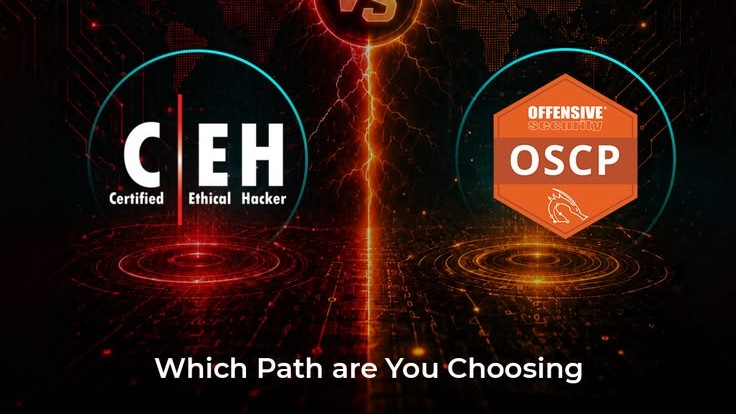
CEH vs OSCP: Complete Guide

Two certifications dominate every Nigerian ethical hacking conversation. Furthermore, both the CEH and OSCP are globally respected credentials.

Lagos Data School helps Nigerian professionals clearly choose the right certification. Therefore, this guide compares both across every factor that matters.

Also, Nigerian salary data and employer preferences are included throughout. By the end, you will know exactly which certification to pursue first.


What Is the CEH (Certified Ethical Hacker)?

The CEH is offered by EC-Council, one of the world’s largest cybersecurity bodies. Furthermore, visit EC-Council for full details and to book the exam. It covers all five phases of ethical hacking across twenty hacking domains. Also, the exam consists of 125 multiple-choice questions in four hours.

This may contain: the ceh logo is red and white with black letters that read certified, medical hacker

Consequently, the CEH is the most widely recognised ethical hacking cert in Nigeria. In short, CEH is the career entry credential that most Nigerian employers recognise first.


CEH Requirements at a Glance

Meeting the CEH requirements is achievable for most Nigerian professionals. Furthermore, two pathways exist depending on your current experience level.


  • Training pathway: Attend EC-Council authorised training then sit the exam.
  • Experience pathway: Two years of security experience qualifies you directly.
  • Exam format: 125 MCQ questions completed in four hours online.
  • Pass mark: 70% required — exact score varies by question bank.
  • Renewal needed: Every three years with 120 ECE credits required.


Also, the exam can be taken online from any location in Nigeria. Consequently, Nigerian professionals in all cities can access the CEH remotely.

CEH Cost for Nigerian Professionals

The CEH exam costs $950 to $1,200 USD depending on the registration route. Furthermore, EC-Council training adds $500 to $2,000 to the total investment. Also, approved training centres in Lagos offer discounted bundles for Nigerians.

Consequently, budgeting ₦2,500,000 to ₦5,000,000 covers both training and the exam. Therefore, the CEH is a significant but worthwhile investment for Nigerian professionals.


What Is the OSCP (Offensive Security Certified Professional)?

The OSCP is the most respected hands-on penetration testing certification globally. Furthermore, it is offered by Offensive Security at offensive-security.com. It requires completing a 24-hour practical hacking exam with no multiple choice. Also, candidates must compromise a specific number of machines to pass.

Consequently, passing the OSCP proves real, practical hacking skill above all else. In short, the OSCP is the certification that Nigerian employers trust most for senior roles.


OSCP Requirements at a Glance

The OSCP requires committed preparation before any registration attempt. Furthermore, prior experience with Linux and basic networking is strongly required.


  • Prior knowledge: Linux proficiency and networking fundamentals are mandatory.
  • Course required: PWK (Penetration Testing with Kali Linux) course is bundled.
  • Lab access: 90-day lab access is included with the standard package.
  • Exam format: 24-hour practical exam — no multiple-choice questions.
  • Pass requirement: Specific machine count plus a professional report submitted.


Also, the PWK course materials are included in every OSCP registration package. Consequently, Nigerian professionals receive structured learning alongside lab practice.


OSCP Cost for Nigerian Professionals

The OSCP bundle costs $1,499 USD for 90 days of lab access. Furthermore, extended lab access packages cost $1,649 for 120 days. Also, the exam attempt is included in the initial registration fee.

Consequently, the OSCP costs between ₦2,400,000 and ₦2,700,000 at current exchange rates. Therefore, the OSCP is more expensive per exam but includes more learning value.


CEH vs OSCP: A Complete Side-by-Side Comparison

Factor CEH OSCP
Offered by EC-Council Offensive Security
Level Intermediate Advanced
Exam format 125 MCQ in 4 hours 24-hour practical exam
Skills tested Broad theoretical and applied Hands-on exploitation only
Prior experience 2 years or approved training Linux + networking basics needed
Course included Optional paid training PWK course bundled in fee
Lab access Not included in base fee 90–120 days included
Cost (USD) $950–$1,200 exam only $1,499–$1,649 full bundle
Renewal Every 3 years — 120 ECE credits Does not expire
Nigerian recognition Widely recognised by all employers Highly valued for senior roles
Salary impact ₦1.5m–₦4m increase ₩4m–₩12m increase


Which Certification Should Nigerian Professionals Pursue First?


Choose the CEH If You Are…

A beginner or intermediate professional entering ethical hacking. Furthermore, the CEH suits you if you want broad theoretical coverage. Also, Nigerian employers in banking and government recognise the CEH widely.

Consequently, the CEH gives you faster entry into Nigerian cybersecurity roles. Therefore, start with the CEH if speed to employment is your primary goal.


Choose the OSCP If You Are…

An experienced ethical hacker with at least one to two years of practice. Furthermore, the OSCP suits you if you want to prove real exploitation skills. Also, Nigerian security consultancies and international firms prize the OSCP highly.

Consequently, OSCP holders in Nigeria consistently command the highest salaries. Therefore, pursue the OSCP after the CEH for the strongest possible combination.


The Ideal Nigerian Certification Path

Many top Nigerian ethical hackers hold both the CEH and the OSCP. Furthermore, the CEH builds your theoretical foundation across all twenty domains. Also, the OSCP proves your hands-on skill with a rigorous practical exam.

Consequently, holding both makes your CV extremely competitive in Nigeria. Therefore, plan to complete the CEH in year one and the OSCP in year two.


What Nigerian Employers Say About CEH vs OSCP

Nigerian employer preferences differ by sector and role level. Furthermore, understanding these preferences helps you choose strategically.


  • Banking sector: CEH is preferred for internal security team roles.
  • Consulting firms: OSCP holders win the most penetration testing contracts.
  • Fintech companies: Both certs are equally welcomed for product security roles.
  • Government agencies: CEH is the most frequently specified in Nigerian tenders.
  • International clients: OSCP is the most trusted credential for remote consulting.


In short, the CEH opens more doors initially across Nigerian industries. Consequently, the OSCP elevates your career ceiling to its highest possible level.


CEH vs OSCP Salary Data for Nigerian Professionals

Certification Role Level Annual Salary (Nigeria)
No certification Junior analyst ₦2,000,000 – ₦4,000,000
CEH only Mid-level ethical hacker ₩4,500,000 – ₩8,000,000
OSCP only Senior pen tester ₩8,000,000 – ₩15,000,000
CEH + OSCP Lead consultant ₩14,000,000 – ₩25,000,000
CEH + OSCP + 10 yrs CISO / Security Head ₩25,000,000 – ₩50,000,000+


How to Prepare for the CEH in Nigeria

Structured preparation is essential for the CEH exam in Nigeria. Furthermore, the exam covers 20 domains — breadth of knowledge is tested.


  • Study the courseware: EC-Council official materials cover all 20 domains.
  • Practice MCQs daily: Repetition across question banks builds exam confidence.
  • Use Boson practice: Boson CEH practice exams mirror the real question style.
  • Revise OWASP Top 10: Web vulnerabilities appear frequently in CEH questions.


Also, Lagos Data School offers structured CEH preparation in every cohort. Consequently, students receive guided study, mock exams, and exam strategy coaching.


How to Prepare for the OSCP in Nigeria

OSCP preparation demands daily hands-on practice over several months. Furthermore, TryHackMe and Hack The Box build the skills the exam tests.


  • TryHackMe first: Complete the Jr Penetration Tester learning path fully.
  • Hack The Box machines: Practise on easy and medium retired Linux machines.
  • Buffer overflow study: Buffer overflow exploitation appears in the OSCP exam.
  • Report writing practice: Write a professional report for every machine compromised.


In short, OSCP preparation is a full-time commitment of three to six months. Consequently, Nigerian professionals who commit fully pass on their first attempt.


Free Resource: TryHackMe OSCP Preparation Path

Lagos Data School recommends TryHackMe for both CEH and OSCP preparation. Furthermore, the Jr Penetration Tester path directly mirrors OSCP exam content.

Also, the CEH prep rooms cover all twenty ethical hacking domains for free. Consequently, Nigerian professionals can prepare for both exams at zero cost.


How Lagos Data School Prepares You for CEH and OSCP

Lagos Data School delivers live CEH preparation training for Nigerian professionals. Students complete mock exams, domain walkthroughs, and exam strategy sessions.

Furthermore, OSCP lab methodology is introduced in the advanced cybersecurity module. Consequently, graduates pass their chosen exam with real confidence and readiness.

Visit the Lagos Data School training page to enrol.


Frequently Asked Questions

Q1: Is the CEH harder than Security+?

Yes. The CEH covers more depth across ethical hacking domains than Security+. Furthermore, CEH questions test application knowledge rather than just definitions.

Also, Security+ is a better first certification before attempting the CEH. Therefore, pursue Security+ first and then the CEH for the strongest progression.


Q2: How long does the OSCP take to complete in Nigeria?

Most Nigerian professionals complete the OSCP preparation in three to six months. Furthermore, those with prior CTF experience may finish faster than average.

Also, the 24-hour exam can be scheduled any day directly through Offensive Security. Therefore, preparation time depends far more on daily practice than prior knowledge.


Q3: Can I take the OSCP exam from Nigeria?

Yes. The OSCP practical exam is taken remotely via a proctored VPN connection. Furthermore, a stable internet connection is the main technical requirement.

Also, Nigerian professionals in Lagos, Abuja, and Port Harcourt pass it regularly. Consequently, location in Nigeria is never a barrier to the OSCP certification.


Q4: Which certification is better for freelance ethical hacking in Nigeria?

The OSCP commands higher rates in freelance and consulting engagements. Furthermore, international clients specifically ask for OSCP on security contracts.

Also, bug bounty platforms reward OSCP holders with private programme invitations. Therefore, the OSCP is the better long-term investment for freelance Nigerians.


Q5: Does the CEH cover the same content as the OSCP?

Both cover ethical hacking but from very different angles and depths. Furthermore, the CEH is broad and theoretical across twenty domains.

Also, the OSCP is narrow and deeply practical — you must hack your way through. Therefore, they complement each other rather than compete.


Choose Your Path and Build Your Career with Lagos Data School

Both the CEH and OSCP are valuable, respected credentials in Nigeria. Furthermore, the right choice depends on your experience, goals, and timeline.

Lagos Data School prepares you for either exam with live training and expert guidance.

Visit Lagos Data School and start your certification journey today.

OWASP Top 10 Vulnerabilities: What Every Dev Must Know

Web application security is a critical skill for every Nigerian developer. Furthermore, insecure code puts millions of Nigerian users at daily risk.

Lagos Data School trains Nigerian developers and ethical hackers to understand the OWASP Top 10. Therefore, this guide explains every vulnerability in plain, clear language.

Also, Nigerian examples and fix recommendations are included for every risk. By the end, you will know how to find, fix, and prevent all ten vulnerabilities.


What Is the OWASP Top 10?

The OWASP Top 10 is the global standard list of web application security risks. Furthermore, it is published free at owasp.org and updated every few years. OWASP stands for Open Web Application Security Project. Also, it is a non-profit foundation that publishes free security guidance.

This may contain: the logo for application security on a dark background with blue and white circles around it

Consequently, the OWASP Top 10 is referenced in every professional web security assessment. In short, it is the baseline that every Nigerian web developer must master.


Why the OWASP Top 10 Matters for Nigerian Developers

Nigerian web applications handle payments, health records, and government data. Furthermore, any of these systems can be compromised through OWASP vulnerabilities. Also, NITDA’s NDPR requires Nigerian organisations to protect user data actively.

Consequently, developers who understand OWASP build more secure products. Therefore, OWASP knowledge is now a professional requirement for every Nigerian dev.


OWASP A01: Broken Access Control

Broken access control is the number one web vulnerability in 2025. Furthermore, it allows users to perform actions beyond their permitted level.

Also, IDOR (Insecure Direct Object Reference) is the most common subtype. Consequently, a Nigerian user can access another user’s account or data.


Nigerian Example: IDOR in a Lagos Fintech App

A Lagos payment app shows account details at this URL: /account?id=1001. Furthermore, changing 1001 to 1002 reveals another customer’s account data.

Also, no authorisation check verifies that the logged-in user owns id=1002. Consequently, any customer can access every other customer’s data easily.


How to Fix A01: Broken Access Control

Implement server-side access checks on every protected resource. Furthermore, deny access by default — allow only what is explicitly permitted.

Also, log all access control failures and alert security teams immediately. Consequently, IDOR attacks are blocked before they reach sensitive data.


OWASP A02: Cryptographic Failures

Cryptographic failures expose sensitive data due to weak or missing encryption. Furthermore, passwords, credit card numbers, and health records are most at risk.

Also, transmitting sensitive data over HTTP instead of HTTPS is a common example. Consequently, Nigerian attackers intercept data in transit on unsecured networks.


How to Fix A02: Cryptographic Failures

Enforce HTTPS across every page of the Nigerian web application. Furthermore, use strong, modern encryption algorithms like AES-256 for data at rest.

Also, hash passwords using bcrypt or Argon2, never MD5 or SHA-1. Consequently, stolen data remains unreadable to attackers without the encryption key.


OWASP A03: Injection Attacks

Injection attacks occur when untrusted data is sent to an interpreter. Furthermore, SQL injection, command injection, and LDAP injection are all included.

Also, Nigerian fintech apps with legacy codebases are highly vulnerable to injection. Consequently, attackers read, modify, or delete entire databases through injection flaws.


How to Fix A03: Injection

Use parameterised queries for every database interaction in your application. Furthermore, input validation and whitelisting block most injection attempts.

Also, deploy a Web Application Firewall for an additional detection layer. Consequently, injection attacks become significantly harder to execute successfully.


OWASP A04: Insecure Design

Insecure design represents fundamental flaws in the application’s architecture. Furthermore, these flaws cannot be fixed by patching — they require redesign.

Also, missing rate limiting on OTP endpoints is a common Nigerian example. Consequently, attackers brute-force OTPs and bypass two-factor authentication.


How to Fix A04: Insecure Design

Apply threat modelling during the design phase of every Nigerian application. Furthermore, use security design patterns like defence-in-depth from day one.

Also, review every user flow for security implications before building starts. Consequently, architectural security flaws are caught before code is written.


OWASP A05: Security Misconfiguration

Security misconfiguration is the most commonly found issue on Nigerian web servers. Furthermore, default credentials, open cloud storage, and verbose error messages cause it.

Also, unnecessary admin panels left accessible on production servers are common. Consequently, attackers access backend systems through basic misconfiguration alone.


How to Fix A05: Security Misconfiguration

Remove all default credentials and rename or hide admin portals. Furthermore, disable verbose error messages that reveal stack traces to users.

Also, configure cloud storage buckets as private by default in all Nigerian deployments. Consequently, the attack surface shrinks significantly with basic hardening applied.


OWASP A06: Vulnerable and Outdated Components

Using outdated libraries introduces known vulnerabilities into Nigerian applications. Furthermore, npm packages, WordPress plugins, and PHP libraries age quickly.

Also, many Nigerian developers never update dependencies after initial deployment. Consequently, attackers exploit publicly disclosed vulnerabilities in outdated components.


How to Fix A06: Vulnerable Components

Run dependency scans using tools like OWASP Dependency-Check regularly. Furthermore, update all libraries and frameworks as soon as patches are released.

Also, remove unused dependencies and plugins from every Nigerian application. Consequently, the attack surface created by third-party components is minimised.


OWASP A07: Identification and Authentication Failures

Authentication failures allow attackers to impersonate legitimate Nigerian users. Furthermore, weak passwords, missing MFA, and broken session management cause them.

Also, session tokens that never expire are a very common Nigerian vulnerability. Consequently, attackers hijack sessions and access accounts without any password.


How to Fix A07: Authentication Failures

Enforce multi-factor authentication for all Nigerian user accounts by default. Furthermore, implement account lockout after five consecutive failed login attempts.

Also, set session tokens to expire after 15–30 minutes of inactivity. Consequently, session hijacking and brute-force attacks become far less effective.


OWASP A08: Software and Data Integrity Failures

Integrity failures occur when code or data is used without verification. Furthermore, insecure software update pipelines are a growing Nigerian threat.

Also, deserialisation of untrusted data can allow remote code execution attacks. Consequently, attackers tamper with updates to install malware on Nigerian systems.


How to Fix A08: Integrity Failures

Verify the digital signature of every software update before installation. Furthermore, use a trusted CI/CD pipeline with integrity checks at every stage.

Also, avoid deserialisation of data from untrusted sources in your Nigerian application. Consequently, supply chain attacks and data tampering are detected before damage occurs.


OWASP A09: Security Logging and Monitoring Failures

Insufficient logging means Nigerian breaches go undetected for weeks or months. Furthermore, without logs, the source of an attack cannot be investigated.

Also, most Nigerian SMEs have no centralised log management or alerting system. Consequently, attackers operate freely inside Nigerian systems without detection.


How to Fix A09: Logging Failures

Log all login attempts, access control failures, and input validation errors. Furthermore, set up automated alerts for critical log events in real time.

Also, store logs in a separate, tamper-proof location outside the main server. Consequently, Nigerian security teams detect and respond to attacks in hours.


OWASP A10: Server-Side Request Forgery (SSRF)

SSRF allows attackers to make the server send requests to unintended locations. Furthermore, cloud-hosted Nigerian applications are particularly vulnerable to SSRF.

Also, attackers use SSRF to access internal services behind firewalls. Consequently, AWS metadata endpoints and internal APIs are exposed to attackers.


How to Fix A10: SSRF

Validate and sanitise all server-side URL inputs against an allowlist. Furthermore, disable HTTP redirects in all server-to-server communications.

Also, use network segmentation to isolate internal services from public servers. Consequently, SSRF attacks are blocked before they reach internal Nigerian systems.


OWASP Top 10 Quick Reference for Nigerian Developers

OWASP Risk Common Nigerian Example Primary Fix
A01: Broken Access Control IDOR on fintech account IDs Server-side authorisation on every endpoint
A02: Cryptographic Failures HTTP used for payment pages Enforce HTTPS and bcrypt password hashing
A03: Injection SQL injection in search forms Parameterised queries and input validation
A04: Insecure Design No OTP rate limiting on login Threat model before coding begins
A05: Misconfiguration Default admin panel credentials Hardening and removing all defaults
A06: Outdated Components Old WordPress plugins with known CVEs Regular dependency scanning and updates
A07: Auth Failures Sessions that never expire MFA and session timeout enforcement
A08: Integrity Failures Unverified software update packages Digital signature verification on updates
A09: Logging Failures No centralised log management Centralised logging with real-time alerts
A10: SSRF Cloud metadata endpoint exposure Allowlist validation on all server URL inputs


Free Resource: OWASP Web Security Testing Guide

Lagos Data School recommends the OWASP Web Security Testing Guide as the essential free reference. Furthermore, it provides detailed testing procedures for all ten OWASP risks.

Also, code-level fix examples are included for most vulnerability types. Consequently, Nigerian developers and ethical hackers have everything they need in one place.


How Lagos Data School Teaches the OWASP Top 10

Lagos Data School covers all ten OWASP vulnerabilities in its live cybersecurity course. Students find and exploit each vulnerability on DVWA and OWASP Juice Shop. Furthermore, fix recommendations and secure coding practices are taught in every module.

Consequently, graduates build and test Nigerian web applications securely from day one.

Visit the Lagos Data School training page to enrol.


Frequently Asked Questions

Q1: How often is the OWASP Top 10 updated?

The OWASP Top 10 is updated approximately every three to four years. Furthermore, the 2021 edition is the current reference used in 2025 in Nigeria.

Also, OWASP publishes interim guidance on emerging threats between editions. Therefore, always check owasp.org for the most current version of the list.


Q2: Do Nigerian frameworks like Laravel protect against OWASP risks?

Yes. Laravel protects against injection, CSRF, and some authentication failures by default. Furthermore, raw query functions and disabled CSRF protection bypass these protections.

Also, framework protection does not cover access control or business logic flaws. Therefore, Nigerian developers must understand OWASP even when using modern frameworks.


Q3: Is OWASP knowledge tested in ethical hacking certifications?

Yes. The CEH heavily tests OWASP Top 10 knowledge across multiple domains. Furthermore, the OSCP exam includes multiple machines with OWASP vulnerabilities.

Also, bug bounty programmes specifically reward OWASP-category vulnerability reports. Therefore, OWASP mastery directly improves both exam performance and earning potential.


Q4: Can I practise OWASP testing for free in Nigeria?

Yes. DVWA and OWASP Juice Shop are free, deliberately vulnerable practice apps.m. Furthermore, PortSwigger Web Security Academy offers free, guided OWASP labs online.

Also, TryHackMe has dedicated OWASP learning paths available on a free account. Consequently, Nigerian beginners can practise every OWASP vulnerability at zero cost.


Q5: Which OWASP vulnerability is most dangerous for Nigerian businesses?

Broken access control (A01) causes the most Nigerian business incidents. Furthermore, it is the easiest to exploit and the hardest to fully prevent.

Also, injection (A03) causes the most serious financial damage when exploited. Therefore, prioritise fixing A01 and A03 above all other OWASP vulnerabilities.


Master the OWASP Top 10 with Lagos Data School

Every Nigerian web developer and ethical hacker must know the OWASP Top 10. Furthermore, it is the foundation of every web security assessment in Nigeria.

Lagos Data School teaches you to find, exploit, and fix every OWASP vulnerability professionally.

Visit Lagos Data School and enrol in the cybersecurity course today.

What Is Network Security? Core Concepts Every Nigerian IT Pro Needs

Introduction

Cyberattacks are rising fast across Nigeria. Banks lose money. Hospitals lose patient data. Government offices go offline for days. So the question is simple, are you prepared?

If you work in IT, network security is your most important skill. It protects the systems people depend on. Moreover, it protects the data that keeps organizations running.

Fortunately, learning network security does not have to be hard. This guide breaks it down clearly. First, you will learn what network security means. Then, you will explore the biggest threats in Nigeria. Next, you will discover the tools that stop those threats. Finally, you will see how to build a career in this fast-growing field.

Lagos Data School produced this article for Nigerian IT professionals. Indeed, all the topics covered here are part of our hands-on cybersecurity training program. So let us get started.


What Is Network Security?

Network security means protecting a computer network from attacks and damage. It uses hardware, software, and policies to stop threats before they cause harm.

This may contain: network security concept with icons and symbols on dark blue textured background - stock photo

In other words, it keeps your data safe and your systems running smoothly. Think of your office network as a physical building. You lock the doors, install cameras and You hire security guards. Network security does all of that, but for your digital environment.

There are three core goals in network security. Experts call them the CIA Triad. Indeed, these three goals guide every security decision you will ever make:

  • Confidentiality: only approved users can view sensitive data
  • Integrity: no one can alter data without being detected
  • Availability: systems stay up and accessible when users need them

Therefore, if you understand the CIA Triad, you already have the right mindset. Lagos Data School teaches this model first in all our cybersecurity courses. It helps students evaluate any tool or policy quickly and clearly.

Also, network security is not just for big companies. Small businesses in Lagos, Abuja, and Port Harcourt face real threats too. So no organization is too small to need a security plan.


Why Network Security Matters in Nigeria

Nigeria is Africa’s largest economy. It is also one of its most connected nations. However, this digital growth brings serious risks. Cybercrime costs Nigerian businesses billions of naira every year.

Moreover, the Nigeria Communications Commission (NCC) warns that attacks are increasing. They are also becoming more targeted and more damaging. So staying ahead of threats is no longer optional, it is a core job requirement for every IT professional.

Furthermore, many Nigerian organizations still have weak security systems. This makes them easy targets. As a result, cybercriminals actively look for Nigerian companies to exploit.

Here are the most common threats you will face in your career:

Phishing Attacks

Phishing is the most common cyber threat in Nigeria. It tricks staff into clicking harmful links or sharing their login details. Furthermore, attackers now research their targets carefully before striking. As a result, even experienced employees can be fooled by a convincing fake email.

Besides emails, phishing also happens through fake SMS messages and social media links. So staff need training to spot these tricks at all times.

Ransomware

Ransomware is malicious software that locks your data. The attacker then demands money before unlocking it. Nigerian hospitals, schools, and government offices have all been hit. In many cases, operations stopped completely for days.

Worse still, paying the ransom does not always bring the data back. Therefore, prevention is far better than trying to recover after an attack.

Man-in-the-Middle Attacks

In this type of attack, a hacker secretly intercepts communication between two parties. It happens most often on unsecured public Wi-Fi — in Lagos cafes, airports, and hotels. Consequently, remote workers without proper security tools face the highest risk.

However, a simple VPN can block many of these attacks. So training staff on safe internet habits is also essential.

Insider Threats

Not every threat comes from outside. Disgruntled employees or poorly trained staff can also cause serious damage. They may accidentally share data or deliberately steal it. Therefore, good security plans must cover internal risks as much as external ones.

Additionally, many insider incidents happen because of weak access controls. So limiting what each staff member can access is a key prevention strategy.

DDoS Attacks

A Distributed Denial of Service (DDoS) attack floods your website or server with fake traffic. The system gets overwhelmed and crashes. Nigerian fintechs and e-commerce platforms have suffered these attacks. In some cases, sites went offline for hours and lost major revenue.

Likewise, government websites have been targeted during sensitive periods. So DDoS protection is an important part of any network security plan.

Social Engineering

Social engineering manipulates people into revealing confidential information. It does not always involve technology. For example, a criminal might call your helpdesk and pretend to be a senior manager. Consequently, untrained staff may give out sensitive system access without question.

That is why security awareness training is just as important as technical tools. Lagos Data School covers both in our cybersecurity program.


Core Components of Network Security

Network security is not a single product you buy and install. Instead, it is a set of layers working together. Each layer adds another line of defence. So if one layer fails, others still protect you.

Lagos Data School teaches all these layers in detail. Here is what every Nigerian IT professional must understand:

1. Access Control

Access control decides who can use your systems and what they can do. It works through two steps: authentication and authorization. Authentication proves who you are. Authorization then decides what you are allowed to access.

Multi-factor authentication (MFA) is one of the best tools available. It asks for two forms of proof, for example, a password plus a one-time code sent to your phone. As a result, even a stolen password cannot give an attacker access.

Moreover, role-based access control (RBAC) is also widely used. It means each staff member only accesses what their job requires. Therefore, a junior accountant cannot see the CEO’s files.

2. Firewalls

A firewall monitors all traffic entering and leaving your network. It uses rules to allow safe data and block threats. Furthermore, modern firewalls can inspect the full content of network packets, not just the headers.

There are several types of firewalls. Basic ones filter by IP address and port. Advanced next-generation firewalls (NGFWs) also detect malware and inspect encrypted traffic. So choosing the right type depends on your organization’s size and risk level.

3. Intrusion Detection and Prevention Systems (IDPS)

An IDPS watches your network traffic for suspicious patterns. When it detects a threat, it alerts your security team. Better still, an Intrusion Prevention System (IPS) can block the threat automatically, without waiting for a human to act.

Many large Nigerian banks and telecoms companies now run IDPS tools inside their Security Operations Centres (SOCs). Additionally, these tools generate logs that help investigators after an incident.

4. Virtual Private Networks (VPN)

A VPN creates an encrypted tunnel between a remote worker and your company network. It protects data travelling over home internet or public Wi-Fi. However, VPNs have a weakness, once connected, users often get access to too many internal resources at once.

That is why many organizations are now moving towards Zero Trust Network Access (ZTNA). It offers tighter, more precise control over who accesses what and when.

5. Endpoint Security

Every device on your network is a potential entry point for attackers. Laptops, phones, tablets, and even printers can all be exploited. Therefore, endpoint security tools protect each device from threats individually.

In Nigeria, many employees use personal phones for work. So security policies must extend beyond the office. Endpoint Detection and Response (EDR) tools are now widely used to monitor and respond to device-level threats.

6. Security Information and Event Management (SIEM)

A SIEM tool collects security data from across your entire network. It then analyses that data to detect threats in real time. Additionally, it stores detailed logs that are essential for post-breach investigations.

Furthermore, SIEM tools help with regulatory compliance. They provide the audit trails that regulators like NITDA require. As a result, organizations using SIEM tools are better prepared for both attacks and audits.

7. Network Segmentation

Segmentation divides your network into separate sections. For example, your finance systems sit on a different segment from the general staff network. Consequently, a breach in one section cannot spread easily to the rest.

Above all, segmentation limits the damage any single attack can cause. It is a low-cost measure with a high security impact. That is why Lagos Data School includes segmentation in every cybersecurity course we run.

8. Data Encryption

Encryption scrambles data so that only authorized parties can read it. Even if a hacker intercepts your data, they cannot use it without the decryption key. Moreover, encryption protects data both in transit and at rest.

In Nigeria, the NDPR requires organizations to protect personal data with appropriate technical measures. So encryption is not just good practice — it is also a legal requirement for many businesses.


Security Frameworks Every Nigerian IT Pro Should Know

Tools alone are not enough. Good security also needs a clear strategy and a tested framework. Fortunately, several globally recognized frameworks help organizations build security step by step.

NIST Cybersecurity Framework

The NIST framework breaks cybersecurity into five functions: Identify, Protect, Detect, Respond, and Recover. It is vendor-neutral and practical for any organization. Moreover, Nigerian multinationals and government agencies already use it as a guide.

Besides being free to use, it also maps well to other standards. So organizations can use NIST as a foundation and add more specific controls on top.

ISO/IEC 27001

ISO 27001 is the global standard for information security management. Getting certified shows clients and partners that your organization takes data seriously. Several Nigerian banks and telecoms companies are actively pursuing this certification today.

Furthermore, ISO 27001 certification can open doors to international contracts. So the investment pays off in both security and business value.

Nigeria Data Protection Regulation (NDPR)

The NDPR is enforced by NITDA. It governs how Nigerian organizations collect, store, and process personal data. Specifically, it requires organizations to implement technical security controls. Therefore, every Nigerian IT professional must understand it well.

Non-compliance leads to serious penalties. Additionally, a data breach without proper controls can trigger public sanctions and reputational damage. So the NDPR is not optional, it is the law.

Lagos Data School teaches all three frameworks in practical terms. In other words, students do not just read about them. They learn how to apply each framework in real Nigerian organizations and workplaces.


Common Network Security Mistakes Nigerian Organizations Make

Even experienced IT teams make security mistakes. Knowing these common errors helps you avoid them. So here are the most frequent mistakes Lagos Data School sees across Nigerian organizations:

Using Weak or Shared Passwords

Many employees still use simple passwords like their name or date of birth. Others share login details with colleagues. As a result, one stolen password can expose an entire system. Therefore, strong password policies and MFA are essential in every organization.

Skipping Security Updates

Software vendors release security patches regularly. However, many Nigerian IT teams delay installing them. Consequently, attackers exploit known vulnerabilities that have already been fixed. So always update software and firmware as soon as patches are available.

No Security Awareness Training

Many breaches happen because staff do not know the risks. They click phishing links, use weak passwords, or share sensitive data carelessly. Moreover, without training, even the best technical tools cannot fully protect an organization. That is why staff training is a core part of any security program.

Flat Networks with No Segmentation

Some Nigerian organizations run a single flat network. Every device connects to every other device. So if one system is breached, the attacker can reach everything else. Segmentation solves this problem directly and at low cost.

No Incident Response Plan

Many organizations do not have a clear plan for when an attack happens. They panic and make poor decisions. As a result, the damage gets worse. Therefore, every organization needs a written, tested incident response plan before an attack occurs.


How to Build a Career in Network Security in Nigeria

The demand for network security professionals in Nigeria is growing fast. Banks, fintechs, hospitals, and government agencies all need skilled people. So there has never been a better time to enter this field.

Furthermore, salaries for cybersecurity professionals in Nigeria are above average for the IT sector. As a result, many young Nigerians are now choosing cybersecurity as a primary career path.

Lagos Data School recommends this clear, step-by-step path:

  • First, build a foundation in networking, learn TCP/IP, DNS, routing, and switching
  • Second, study the core security concepts covered in this article
  • Third, pursue certifications such as CompTIA Security+, CEH, or CISSP
  • Fourth, practise with labs, Capture the Flag (CTF) competitions, and internships
  • Fifth, build a portfolio of real projects to show to employers
  • Finally, commit to daily learning, because cybersecurity never stops evolving

Lagos Data School’s cybersecurity program covers all these steps. Moreover, students work with real tools and industry scenarios. Besides the hands-on training, graduates also receive a recognized certificate and access to our career placement network.

Additionally, Lagos Data School connects graduates with hiring partners across banking, telecoms, and consulting. So your job search starts before your course even ends.


Recommended External Resource

For the official NIST Cybersecurity Framework guide, visit: https://www.nist.gov/cyberframework


About Lagos Data School

Lagos Data School is Nigeria’s top institution for cybersecurity, data science, cloud computing, and analytics training. Every concept in this article is part of our hands-on curriculum. Moreover, all our instructors are practicing security professionals — not just classroom teachers.

We offer weekday, weekend, and online classes. So no matter your schedule, we have a format that works for you. Furthermore, our programs are designed for both beginners and experienced IT professionals looking to advance.

Our graduates work in banks, fintechs, telecoms, and government agencies across Nigeria. They are recognized for their practical skills and job readiness. In fact, many receive job offers before they even complete their program.

Visit Lagos Data School today to view our cybersecurity courses and register for the next cohort. Your network security career starts here — and we will be with you every step of the way.

Build the skills Nigeria needs. Train with Lagos Data School.

How Firewalls Work: Your Complete 2026 Guide

Introduction

Every Nigerian organization connected to the internet faces one big question. How do you keep attackers out while still letting real users in? The answer starts with a firewall.

Firewalls are the most widely used network security tool in the world. However, many IT professionals in Nigeria use them without fully understanding how they work. Some set them up once and never review the rules again. As a result, gaps appear, and attackers find them.

Fortunately, this guide changes that. First, you will learn what a firewall is. Then, you will understand exactly how it works. Next, you will explore the five main firewall types. After that, you will see the key benefits for Nigerian organizations. Finally, you will get a set of practical best practices for 2026.

Lagos Data School produced this article as part of our cybersecurity education series. Indeed, firewall configuration is a core skill in our training program. So let us dive in.


What Is a Firewall?

A firewall is a security tool that monitors network traffic. It sits between your internal network and the outside world. Its job is simple: allow safe traffic in and keep dangerous traffic out.

Firewalls can be hardware devices, software programs, or a mix of both. Moreover, they work by applying a set of rules called a policy to every connection that tries to pass through.

Think of a firewall as the security guard at the gate of a large office complex in Lagos. The guard checks everyone who wants to enter. If your name is on the approved list, you get in. Otherwise, the guard turns you away. A firewall does the same but for network packets, and thousands of times per second.

Furthermore, firewalls have evolved greatly over the years. Early firewalls checked only basic information. Today, advanced firewalls can read the full content of traffic, detect malware, and block threats in real time. So modern firewalls are far more powerful than their early versions.


How Firewalls Work: The Technical Process

To understand firewalls, you first need to know how data travels across a network. All data is broken into small units called packets. Each packet has two parts: a header and a payload.

This may contain: how a firewall works diagram on a white background with the words,'how a firewall works '

The header contains information about the packet. For example, it shows the source IP address, the destination IP address, the protocol, and the port number. The payload contains the actual content being sent, such as a webpage or a file.

When a packet reaches a firewall, the following process takes place:

  • First, the firewall reads the packet’s header information
  • Second, it compares that information against its rule set
  • Third, if the packet matches an allowed rule, it passes through
  • Fourth, if it matches a blocked rule or no rule at all, it gets dropped
  • Finally, the decision is recorded in the firewall’s log for review

This process is called packet inspection. It happens instantly and continuously on any active network. However, different types of firewalls inspect packets at different levels of depth. That difference is what separates a basic firewall from an advanced one.

Moreover, firewall rules are not permanent. IT administrators must review and update them regularly. So keeping your rule set current is just as important as having one in the first place.


The Five Main Types of Firewalls

Not all firewalls offer the same level of protection. Choosing the right type for your organization is a critical decision. Here are the five main types that every Nigerian IT professional must know:

1. Packet Filtering Firewall

A packet filtering firewall checks only the header of each packet. It looks at the source IP, destination IP, protocol, and port number. Based on these details, it allows or blocks the packet.

This type is fast and uses very little processing power. However, it has a significant weakness: it does not check the content of packets. As a result, an attacker can hide malicious data inside a packet that looks safe on the outside.

Packet filtering firewalls are common in home routers and small offices across Nigeria. They provide a basic first layer of defence. But they are not strong enough on their own for enterprise environments.

2. Stateful Inspection Firewall

A stateful firewall goes further than packet filtering. Instead of checking each packet in isolation, it tracks the state of active connections. It keeps a table of all current sessions and checks whether each incoming packet belongs to a known, legitimate connection.

This makes stateful firewalls much more secure. For example, they can detect and block a type of attack called session hijacking where an attacker tries to insert fake packets into an existing conversation.

Moreover, stateful firewalls are the standard baseline for most enterprise networks in Nigeria. Banks, universities, and manufacturing companies across Lagos and Abuja commonly use them as a foundation.

3. Application Layer Firewall

An application layer firewall, also called a proxy firewall, works at a much deeper level. It reads the full content of network traffic, not just the headers. Furthermore, it understands application-level protocols such as HTTP, FTP, DNS, and SMTP.

Because it inspects content directly, it can catch threats hidden inside normal-looking traffic. For example, it can identify a SQL injection attack buried inside a web request, even if the packet headers look perfectly fine.

As a result, application layer firewalls are widely used by Nigerian banks, hospitals, and any organization handling sensitive personal data. They are also the basis for Web Application Firewalls (WAFs), which protect websites and APIs specifically.

4. Next-Generation Firewall (NGFW)

A next-generation firewall is the most powerful type available in 2026. It combines all the capabilities of stateful and application layer firewalls with additional advanced features. These include:

  • Intrusion Prevention System (IPS): detects and blocks attacks in real time
  • SSL and TLS inspection: decrypts and checks encrypted traffic
  • Application awareness: identifies apps by behaviour, not just port numbers
  • Threat intelligence feeds: uses live data on known malicious IPs and domains
  • User identity controls: applies rules based on who the user is, not just their IP

NGFWs are produced by vendors such as Palo Alto Networks, Fortinet, Check Point, and Cisco. They are increasingly used by large Nigerian enterprises, financial institutions, and government agencies. Furthermore, Lagos Data School trains students on NGFW configuration as part of our advanced cybersecurity module.

5. Cloud Firewall (Firewall-as-a-Service)

As Nigerian businesses move to cloud platforms like AWS, Azure, and Google Cloud, traditional on-premise firewalls are no longer enough. Cloud firewalls, also called Firewall-as-a-Service (FWaaS), are designed specifically for cloud environments.

They scale automatically with your workload. So if traffic doubles overnight, your firewall keeps up without any manual intervention. Additionally, they are managed centrally, which reduces the burden on in-house IT teams.

Lagos fintechs, e-commerce startups, and SaaS companies are adopting cloud firewalls rapidly. Moreover, hybrid organizations, those running both on-premise and cloud systems, can use cloud and traditional firewalls together for complete, end-to-end protection.


Firewall Types at a Glance


Firewall Type What It Checks Best Used For
Packet Filtering IP address, port, protocol Small offices, home routers
Stateful Inspection Packet headers + connection state Enterprise baseline protection
Application Layer Full content of application traffic Banks, healthcare, regulated sectors
Next-Generation (NGFW) Everything above + IPS, SSL, threat intel Large enterprises, government agencies
Cloud Firewall (FWaaS) Cloud workloads and SaaS traffic Fintechs, startups, cloud-first businesses


Key Benefits of Firewalls for Nigerian Organizations

A properly configured firewall delivers real, measurable results. Here is what Nigerian IT professionals and business owners should understand:

Blocks Unauthorized Access

Firewalls stop outsiders from entering your network without permission. They block port scanning, brute-force login attempts, and exploit probes before they reach your internal systems. As a result, your network becomes far harder to attack.

Stops Data Theft

Firewalls can detect unusual outbound traffic. For example, if malware tries to send stolen data to an attacker’s server, a firewall can block that connection. This is especially important for Nigerian organizations that store customer financial or personal data.

Enforces Network Segmentation

Firewalls divide your network into separate zones. For instance, the payroll server can sit in a protected zone that general staff cannot reach. Consequently, even if an attacker breaches one zone, they cannot easily move to another.

Supports NDPR Compliance

The Nigeria Data Protection Regulation (NDPR) requires organizations to protect personal data with technical controls. Firewalls are a foundational control that directly meets this requirement. Therefore, organizations without firewalls risk both data breaches and regulatory penalties.

Provides Traffic Visibility

Every firewall decision is logged. These logs are a goldmine of security intelligence. Moreover, they are essential for forensic investigation after an incident. Many firewalls also integrate with SIEM tools, giving security teams a unified view of all network activity.

Reduces Attack Surface

A well-configured firewall closes all unnecessary open ports and services. In other words, it removes entry points that attackers could exploit. So the fewer open doors your network has, the harder it is to breach.


Firewall Best Practices for 2026

Having a firewall is only the first step. How you configure and manage it determines how much protection it actually gives you. Lagos Data School trains students on these essential best practices:

Apply a Default-Deny Policy

Start by blocking all traffic. Then, add rules to allow only what is strictly necessary. This approach is called ‘deny all, allow exceptions.’ It is far safer than trying to block every known threat individually. Furthermore, most Nigerian organizations do the opposite and pay the price.

Update Firmware and Rules Regularly

Cyber threats change daily. Firewall vendors release firmware updates to fix vulnerabilities and improve detection. So install updates as soon as they are available. Additionally, review your rule set regularly, especially after any change to your network. Outdated rules create dangerous gaps.

Enable Logging and Review Logs

Turn on logging for all traffic, especially blocked connections. Then, review those logs at regular intervals. Many successful attacks in Nigeria began as warning signs in firewall logs that no one was reading. Consequently, automated alerts are strongly recommended for high-priority events.

Segment Your Network

Use your firewall to create separate zones for different parts of your organization. For example, keep finance systems apart from HR and general staff networks. As a result, any breach stays contained within one zone. This limits damage and speeds up incident response.

Run Regular Penetration Tests

Do not assume your firewall is working just because it is switched on. Instead, run regular penetration tests to confirm that your rules behave as intended. Lagos Data School graduates are trained to conduct these tests professionally and thoroughly.

Restrict Remote Management Access

Never expose your firewall’s management interface to the public internet. Always use a dedicated management network or a secure VPN for administrator access. Moreover, enforce multi-factor authentication (MFA) on all admin accounts. This prevents attackers from taking control of your firewall directly.

Document All Firewall Rules

Every rule in your firewall should have a clear reason and an owner. So document what each rule does, why it exists, and when it was last reviewed. This makes audits easier and helps your team spot rules that are no longer needed.


Common Firewall Mistakes Nigerian Organizations Make

Even experienced IT teams make firewall mistakes. Here are the most common ones and how to avoid them:

Setting Overly Permissive Rules

Some administrators allow too much traffic to avoid blocking legitimate users. As a result, the firewall becomes almost useless. Therefore, start strict and only open what is genuinely needed.

Never Reviewing the Rule Set

Networks change over time. New applications get added. Old ones get retired. However, many teams never remove outdated firewall rules. Consequently, old rules create hidden entry points for attackers. So schedule a quarterly rule review as a minimum.

Ignoring Encrypted Traffic

Many organizations do not inspect SSL and TLS encrypted traffic. Attackers know this. So they hide malware inside encrypted connections to bypass traditional firewalls. Next-generation firewalls with SSL inspection solve this problem directly.

Relying Only on the Firewall

A firewall is essential. But it is not a complete security solution on its own. Furthermore, sophisticated attacks can bypass firewalls through social engineering, insider threats, or zero-day vulnerabilities. Therefore, always use firewalls alongside other tools like IDPS, endpoint security, and SIEM.


Recommended External Resource

For further reading on firewall standards, visit the Fortinet Firewall Resource Centre: https://www.fortinet.com/resources/cyberglossary/firewall.


About Lagos Data School

Lagos Data School is Nigeria’s leading institution for cybersecurity, data science, cloud computing, and analytics training. Every concept in this article, from packet filtering to NGFW configuration, is part of our hands-on curriculum.

Moreover, all our instructors are practicing security professionals. So students learn from people who configure, manage, and audit real firewalls every day. Besides technical skills, we also teach students how to communicate security concepts to business leaders.

We offer weekday, weekend, and online classes to suit any schedule. Furthermore, graduates receive a recognized certificate and access to our career placement network. In fact, many of our students receive job offers before they even complete their program.

Visit Lagos Data School today to explore our cybersecurity courses and register for the next cohort. Master firewalls. Protect networks. Start here.

Master firewalls. Protect networks. Train with Lagos Data School.

Hi, How Can We Help You?
Welcome To
Lagos Data School

Artificial Intelligence (AI), Machine Learning and Robotics Programmes Are Now Available!!!

Enroll Now!

Thank You
100% secure website.