How to Run an Agile Retrospective That Actually Improves Your Team

How to Run an Agile Retrospective That Works

Most Nigerian teams hold retrospectives but gain nothing from them. However, a well-run retrospective changes a team every sprint. Lagos Data School teaches Nigerian teams to run retrospectives correctly. Therefore, this guide explains every step of a great retrospective.

Also, it covers the most popular formats and real Nigerian examples. By the end, your next retrospective will produce real results.


What Is an Agile Retrospective?

A retrospective is a team meeting held after every sprint. Furthermore, it focuses on how the team works — not what they built. The team answers three simple questions in every retrospective.

This may contain: a hand is pointing to sticky notes on a whiteboard with words written on it

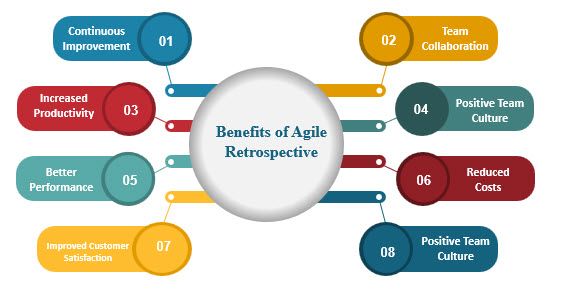
Also, each answer leads to a clear, actionable improvement. Consequently, the team gets better with every single sprint. In short, the retrospective is Agile’s most powerful improvement tool.


The Three Core Retrospective Questions

  • What went well? Celebrate wins so the team repeats what worked.
  • What did not go well? Name problems honestly so they can be fixed.
  • What will we improve? Commit to one or two specific actions for next sprint.


Why Most Nigerian Team Retrospectives Fail

Many Nigerian teams skip the retrospective when they are busy. However, that is exactly when it is needed most.

Also, some teams hold retrospectives but never act on the outputs. Consequently, team members stop engaging and the meeting loses value. Furthermore, some facilitators dominate the discussion rather than listen. Therefore, the retrospective becomes a complaint session instead of a solution session.


The Three Most Common Retrospective Mistakes

Mistake Why It Happens How to Fix It
No action items Team talks but nobody commits to change End every retro with 1–2 written actions
Same problems repeat Actions from last retro are never reviewed Open each retro by reviewing last sprint’s actions
One person dominates Facilitator talks too much Use sticky notes so everyone contributes equally


Step-by-Step: How to Run a Great Retrospective


Step 1: Set the Stage (5 Minutes)

Start by creating a safe space for honest feedback. Furthermore, remind the team that all feedback stays in the room. Also, set a timer so the meeting stays within the agreed time box. In short, a good start leads to better contributions throughout.


Step 2: Review Last Sprint’s Action Items (5 Minutes)

Open the retrospective by checking last sprint’s commitments. Furthermore, mark each action as done, in progress, or dropped.

Also, discuss why any item was not completed. Consequently, the team learns accountability rather than repeating old habits.


Step 3: Gather Data — What Happened This Sprint? (10 Minutes)

Give every team member sticky notes, physical or digital. Furthermore, ask them to write one idea per note.

Also, cover both positive and negative observations from the sprint. In addition, silent writing avoids groupthink and draws out quieter voices. Therefore, every team member’s experience is captured — not just the loudest.


Step 4: Group and Discuss Themes (10 Minutes)

Cluster the sticky notes into common themes on the board. Furthermore, give each cluster a short label.

Also, ask the team to vote on the top two or three themes to discuss. Consequently, the team focuses on what matters most rather than everything at once.


Step 5: Decide on Action Items (10 Minutes)

Pick one or two improvements to implement in the next sprint. Furthermore, write each action as a clear, specific task.

Also, assign each action to a named team member with a due date. In short, vague actions never happen but specific ones do.


Step 6: Close the Retrospective (5 Minutes)

Thank the team for their honesty and engagement. Furthermore, read the action items aloud so everyone hears them.

Also, add the action items to the sprint backlog immediately. Consequently, they will be tracked and reviewed in the next retrospective.


Popular Retrospective Formats for Nigerian Teams


Format 1: Start, Stop, Continue

Each team member writes what to start, stop, and continue doing. Furthermore, this format is simple and works for any team size. Also, it takes less than forty minutes from start to finish. Therefore, it is ideal for busy Nigerian teams with limited time.


Format 2: 4Ls — Liked, Learned, Lacked, Longed For

Teams reflect on four areas: what they liked, learned, lacked, and longed for. Furthermore, this format produces richer insights than the basic three questions.

Also, the 4Ls work well for teams completing a long or complex sprint. Consequently, it reveals deeper team feelings and unspoken needs.


Format 3: Mad, Sad, Glad

Team members write what made them mad, sad, or glad this sprint. Furthermore, this emotional format builds strong team empathy.

Also, it surfaces team morale issues that data alone cannot show. Therefore, use Mad Sad Glad when team motivation seems low.


Nigerian Example: A Lagos Fintech Team Retrospective

A Lagos fintech team ran a retrospective after a difficult sprint. Furthermore, three members felt blocked by unclear requirements. Also, two developers said daily stand-ups were running too long. Consequently, the team committed to two actions for the next sprint.

First, the Product Owner agreed to write clearer acceptance criteria. Second, the Scrum Master set a strict ten-minute stand-up timer. As a result, the next sprint ran more smoothly for everyone.


Free Resource: Retromat

Lagos Data School recommends Retromat as a free retrospective format generator. Furthermore, it offers over a hundred retrospective activities.

Also, filters help you find formats for specific team sizes and maturity levels.


How Lagos Data School Teaches Retrospectives

Lagos Data School runs live retrospective practice sessions in its Agile course. Students facilitate mock retrospectives using real Nigerian team scenarios. Furthermore, they practise all three core formats in group exercises.

Consequently, graduates facilitate effective retrospectives from day one.

Visit the Lagos Data School training page to enrol.

Also, see what graduates have achieved at the Lagos Data School student portfolio.


Frequently Asked Questions

Q1: How long should a retrospective last?

A standard retrospective lasts 45 to 90 minutes. Furthermore, longer sprints need longer retrospectives. Also, keep it within the agreed time box or energy drops fast.


Q2: What if team members are afraid to speak up?

Use anonymous sticky notes to gather honest input. Furthermore, the facilitator must set a safe, blame-free tone at the start. Also, celebrate every piece of feedback — positive or negative.


Q3: How many action items should a retrospective produce?

Commit to one or two action items per retrospective. However, too many actions overwhelm the team and none get done. Therefore, focus on the highest-impact change for the next sprint only.


Run Better Retrospectives with Lagos Data School

A great retrospective makes every sprint better than the last. Furthermore, it builds trust, honesty, and accountability on Nigerian teams.

Lagos Data School teaches you to facilitate retrospectives that drive real change.

Visit Lagos Data School and enrol in the Agile course today.
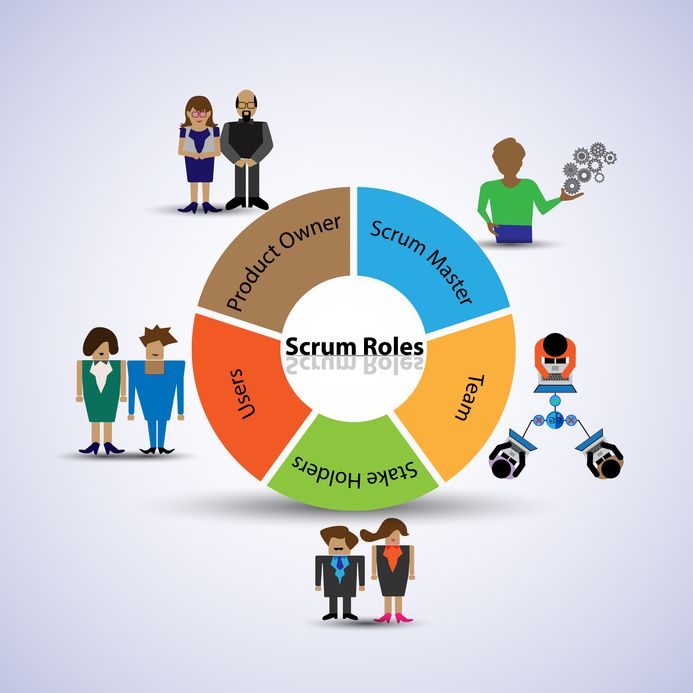
Scrum Roles Explained: Complete 2026 Guide

Scrum Roles Explained for Nigerian Professionals

Scrum defines exactly three roles, no more, no less. Furthermore, each role has a clear and distinct purpose. Lagos Data School teaches every Scrum role in its live Agile course. Therefore, this guide explains all three roles in plain English.

This may contain: three men holding signs with the words three main scrum roles

Also, Nigerian examples are used throughout to make each role practical. By the end, you will know exactly which role fits your career.


Why Scrum Defines Only Three Roles

Traditional project teams have many job titles and layers. However, Scrum keeps things simple on purpose. Fewer roles mean fewer silos and faster decisions.

Also, every person on the team knows their responsibility clearly. Consequently, Nigerian Scrum teams move faster than traditional teams. Therefore, Scrum’s three-role structure is a deliberate design choice.


Role 1: The Product Owner

The Product Owner decides what the team builds. Furthermore, they decide the order in which items are built.

Also, they manage the product backlog every single day. Consequently, the team always works on the most valuable item first. In short, the Product Owner is the voice of the customer inside the team.


What the Product Owner Does Every Sprint

  • Writes user stories: Each backlog item is described from the user’s point of view.
  • Sets priorities: High-value items sit at the top of the backlog always.
  • Defines acceptance criteria: Each item has a clear pass or fail condition.
  • Attends sprint review: Feedback from stakeholders is gathered every sprint.
  • Updates the backlog: New ideas and feedback are added after every sprint review.


The Product Owner in Nigerian Teams

In Nigerian startups, the Product Owner is often the founder. Furthermore, in Nigerian banks, this role is often a digital product manager.

Also, NGOs in Nigeria assign this role to the programme lead. Consequently, the Product Owner role exists in every Nigerian industry. Therefore, learning this role opens doors across every Nigerian sector.


What Makes a Great Nigerian Product Owner?

A great Product Owner understands both the business and the users. Also, they make fast, clear decisions under pressure. Furthermore, they say no to low-value requests without hesitation. Consequently, the team builds fewer features but each one matters more.


Role 2: The Scrum Master

The Scrum Master is the team’s servant-leader and coach. Furthermore, they protect the team from outside distractions.

Also, they remove blockers that slow the team down. Consequently, the team focuses on sprint work rather than internal politics. In short, the Scrum Master serves the team — not the other way around.


What the Scrum Master Does Every Sprint

  • Facilitates ceremonies: Planning, stand-ups, reviews, and retrospectives are all run by the Scrum Master.
  • Removes blockers: Any obstacle slowing the team is escalated and resolved fast.
  • Coaches the team: Agile principles and Scrum practices are taught continuously.
  • Shields the team: Unplanned work and stakeholder interference are blocked during the sprint.
  • Tracks progress: Burndown charts and velocity data are monitored every day.


The Scrum Master in Nigerian Teams

Many Nigerian companies promote a developer into the Scrum Master role. However, the Scrum Master is a coaching role — not a technical one. Furthermore, the best Nigerian Scrum Masters are patient and process-focused.

Also, they coach managers and executives on how to support Agile teams. Consequently, the Scrum Master role is one of the most impactful in Nigeria.


Scrum Master vs Project Manager: Key Difference

Area Scrum Master Project Manager
Authority No formal authority over the team Authority to assign tasks
Focus Team process and Agile principles Scope, budget, and timeline
Style Servant-leader and coach Planner and director
Planning Guides sprint planning only Owns the full project plan
Nigerian salary ₦3m – ₦8m per year ₦4m – ₦12m per year


Role 3: The Developers (Development Team)

Developers are all the people who build the product. Furthermore, this includes designers, testers, writers, and engineers.

Also, the term ‘developer’ in Scrum means anyone who creates the product. Consequently, non-programmers are also called developers in Scrum. Therefore, the word ‘developer’ is broader than most Nigerians assume.


What Makes the Scrum Development Team Unique?

Scrum teams self-organise without a manager assigning tasks. Furthermore, each developer decides their own daily work.

Also, the team takes shared ownership of the sprint goal. Consequently, accountability sits with the whole team — not just one person. In addition, Scrum teams are cross-functional — each member brings a different skill.


The Right Size for a Nigerian Scrum Team

A Scrum team works best with three to nine developers. Furthermore, smaller teams move faster but carry more risk.

Also, larger teams need more coordination and can slow down. Therefore, five to seven developers is the sweet spot for most Nigerian teams.


How All Three Roles Work Together

Situation Product Owner Does Scrum Master Does Dev Team Does
Sprint Planning Presents top backlog items Facilitates the meeting Estimates and commits
Daily Stand-up Listens and notes blockers Runs the 15-min meeting Updates progress daily
Sprint Review Accepts or rejects the demo Organises the event Demos the increment
Retrospective Participates as a team member Facilitates improvement actions Raises honest feedback


Free Resource: The Official Scrum Guide

Lagos Data School recommends the free Scrum Guide as the first reference for all three roles. Furthermore, it defines every role, event, and artefact in detail.

Also, it is written by Scrum’s founders and available in many languages.


How Lagos Data School Teaches Scrum Roles

Lagos Data School covers all three Scrum roles in its live Agile course. Students practise each role in sprint simulations using Nigerian scenarios. Furthermore, role-play exercises build real confidence before the workplace. Consequently, graduates step into any Scrum role from day one of their new job.

Visit the Lagos Data School training page to enrol today. Also, see our graduates’ Scrum work at the Lagos Data School student portfolio.


Frequently Asked Questions

Q1: Can one person hold two Scrum roles?

The Product Owner and Scrum Master roles must always be separate people. However, a developer can also serve as Scrum Master on very small teams. Also, the Scrum Guide discourages this for teams larger than five people. Therefore, keep the three roles separate as the team grows.


Q2: Which Scrum role pays most in Nigeria?

Senior Product Owners typically earn the most in Nigerian tech. Furthermore, Scrum Masters at senior level earn competitively in banks and fintechs. Also, experienced developers with Scrum skills earn premium salaries in Lagos. Therefore, all three roles offer strong earning potential in Nigeria.


Q3: Do I need certification for a Scrum role in Nigeria?

No certification is required to start in a Scrum role. However, a CSPO, CSM, or PSM I certification improves your job prospects. Also, Lagos Data School prepares students for all three certifications. Therefore, certification accelerates your entry into Nigerian Scrum roles.


Start Your Scrum Role Journey with Lagos Data School

Every great Scrum team needs a strong Product Owner, Scrum Master, and Dev Team. Furthermore, Nigerian companies are hiring for all three roles right now. Lagos Data School gives you the training to fill any Scrum role with confidence.

Visit Lagos Data School and enrol in the Scrum course today.

Scrum Events Explained: Your Complete 2026 Guide

Scrum Events Explained for Nigerian Teams

Scrum uses five events to create its delivery rhythm. Furthermore, each event has a strict time box and a clear purpose. Lagos Data School teaches every Scrum event in its live Agile training.

This may contain: a diagram with the words sprint, scrum, and other related items in it

Therefore, this guide explains all five events in plain English. Also, Nigerian work examples are used throughout to make each one practical. By the end, you will know what happens in every Scrum event.


Why Scrum Events Matter for Nigerian Teams

Many Nigerian teams adopt Scrum but skip some of the events. However, skipping even one event breaks the Scrum rhythm. Also, each event feeds directly into the next one. Consequently, the whole delivery cycle breaks down when events are missed. Therefore, run all five events every sprint without exception.


Event 1: The Sprint

The Sprint is the container for all other Scrum events. Furthermore, it is a fixed time box of one to four weeks. Also, a new sprint starts immediately after the previous one ends. Consequently, the team delivers value in a continuous, unbroken rhythm. In short, the Sprint is the heartbeat of every Scrum team.


The Sprint Rules Every Nigerian Team Must Follow

  • Sprint goal is fixed: The sprint goal cannot be changed once the sprint starts.
  • Sprint length is fixed: Two weeks is the most common sprint length in Nigeria.
  • No external interruptions: Unplanned work from outside cannot enter a sprint in progress.
  • Cancel only in extreme cases: Only the Product Owner can cancel a sprint if the goal becomes obsolete.


Choosing a Sprint Length for Nigerian Teams

Sprint Length Best For Nigeria Trade-off
1 week Startups and rapidly changing projects Very fast pace, less time to build
2 weeks Most Nigerian tech and fintech teams Balanced pace — the most common choice
3 weeks Mid-size product teams with complex work More time to build, slower feedback
4 weeks Large enterprise projects in Nigeria Slowest feedback loop — use with caution


Event 2: Sprint Planning

Sprint Planning opens every new sprint. Furthermore, the whole Scrum team attends this meeting together.

Also, it is time-boxed to two hours for every week of sprint length. Consequently, a two-week sprint gets a four-hour planning session. Therefore, a two-week sprint gets exactly four hours of planning time.


What Happens During Sprint Planning?

First, the Product Owner presents the top backlog items. Also, the sprint goal is defined and agreed by the whole team. Furthermore, developers estimate effort using story points.

Next, selected items are broken into daily tasks. Finally, the team confirms it can meet the sprint goal with current capacity.


Nigerian Sprint Planning Example

A Lagos healthtech team runs two-week sprints. Furthermore, their Sprint 8 goal is: ‘Patients can book appointments online.’ Also, the team selects five backlog items totalling 26 story points.

Consequently, the planning meeting finishes in exactly four hours. Therefore, every developer leaves with a clear first task for the next morning.


Event 3: The Daily Scrum (Daily Standup)

The Daily Scrum is a fifteen-minute meeting held every morning. Furthermore, the whole development team attends — but only developers speak.

Also, the Scrum Master facilitates and keeps it strictly to time. Consequently, the team syncs and surfaces blockers before the day starts. In short, the Daily Scrum is the team’s daily heartbeat check.


The Three Daily Scrum Questions

  • What did I complete since the last Daily Scrum?
  • What will I complete before the next Daily Scrum?
  • Is anything blocking my progress right now?


Daily Scrum Tips for Nigerian Teams

Hold the standup standing up — it keeps the meeting short. Also, start at the same time every day without exception. Furthermore, move detailed problem-solving conversations outside the standup. Consequently, the fifteen-minute limit is respected every day. In addition, the Scrum Master removes any blocker raised before the next day.


Event 4: The Sprint Review

The Sprint Review is held at the end of every sprint. Furthermore, the team demos the working increment to stakeholders. Also, the Product Owner formally accepts or rejects each completed item. Consequently, stakeholders see real working software, not just slide decks. Therefore, trust between the team and the client grows every sprint.


What Happens During the Sprint Review?

  • Demo the increment: The team shows what was built this sprint.
  • Gather feedback: Stakeholders ask questions and suggest improvements.
  • Update the backlog: The Product Owner adds feedback as new backlog items.
  • Review the roadmap: The product direction is adjusted based on real sprint outcomes.


Sprint Review in a Nigerian Bank Setting

A Lagos bank’s digital team holds a sprint review every two weeks. Furthermore, the Head of Digital attends every review session. Also, customers are sometimes invited to give direct feedback on new features. Consequently, the team builds exactly what users need rather than what managers assume.


Event 5: The Sprint Retrospective

The Retrospective is the final event of every sprint. Furthermore, it focuses on how the team works — not what they built. Also, it is time-boxed to 45 minutes for every week of sprint length. Consequently, the team improves its process with every single sprint. In short, the Retrospective is Scrum’s most powerful improvement engine.


The Three Retrospective Questions

  • What went well? Celebrate wins so the team repeats what worked.
  • What did not go well? Name problems honestly without blame.
  • What will we improve? Commit to one or two specific actions for the next sprint.


Why Nigerian Teams Skip Retrospectives and Why They Shouldn’t

Many Nigerian teams skip retrospectives when sprints are stressful. However, that is exactly when a retrospective is most needed.

Also, teams that skip retrospectives repeat the same mistakes forever. Consequently, sprint quality never improves without the retrospective. Therefore, protect the retrospective — even if you shorten everything else.


All Five Scrum Events at a Glance

Event When Time Box Who Attends Key Output
Sprint Ongoing 1–4 weeks Whole team Delivered increment
Sprint Planning Start of sprint 2h/sprint week Whole team Sprint goal + backlog
Daily Scrum Every morning 15 minutes Developers Daily sync + blockers
Sprint Review End of sprint 1h/sprint week Team + stakeholders Accepted increment
Retrospective End of sprint 45min/sprint wk Whole team 1–2 improvement actions


Free Resource: The Official Scrum Guide

Lagos Data School recommends the Scrum Guide as the definitive free reference for all Scrum events. Furthermore, it explains the purpose, time box, and outputs of every event. Also, it is available free in over thirty languages online.


How Lagos Data School Teaches Scrum Events

Lagos Data School runs live Scrum event simulations for Nigerian professionals. Students practise all five events in sprint role-play exercises. Furthermore, every exercise uses real Nigerian project scenarios.

Consequently, graduates run Scrum events confidently from their very first sprint. Visit the Lagos Data School training page to enrol.  Also, see our graduates’ Agile work in the Lagos Data School student portfolio.


Frequently Asked Questions

Q1: Can Scrum events be run remotely in Nigeria?

Yes. All five Scrum events work well on Zoom, Google Meet, or Microsoft Teams. Furthermore, tools like Miro and Trello support remote sprint boards and retrospectives. Also, teams in different Nigerian cities run effective remote sprints every day. Therefore, location is never a barrier to running great Scrum events.


Q2: What happens if a Daily Scrum is missed?

Missing one daily standup rarely causes a crisis. However, missing standups regularly breaks team alignment quickly. Also, blockers go unreported, and sprint goals are missed more often. Therefore, protect the Daily Scrum even if it is shortened to five minutes.


Q3: Who should speak at the Sprint Review?

Every developer demos the work they personally completed. Furthermore, the Product Owner provides context before each demo.

Also, stakeholders are encouraged to ask questions and give live feedback. Consequently, the Sprint Review becomes a real conversation — not a presentation.


Master Scrum Events with Lagos Data School

Scrum events create the rhythm that keeps Nigerian teams on track. Furthermore, each event builds on the last to create a full delivery cycle. Lagos Data School trains you to run every Scrum event with skill and confidence.

Visit Lagos Data School and enrol in the Scrum course today.

Scrum Artifacts: Your Complete Guide

Scrum Artifacts Explained for Nigerian Professionals

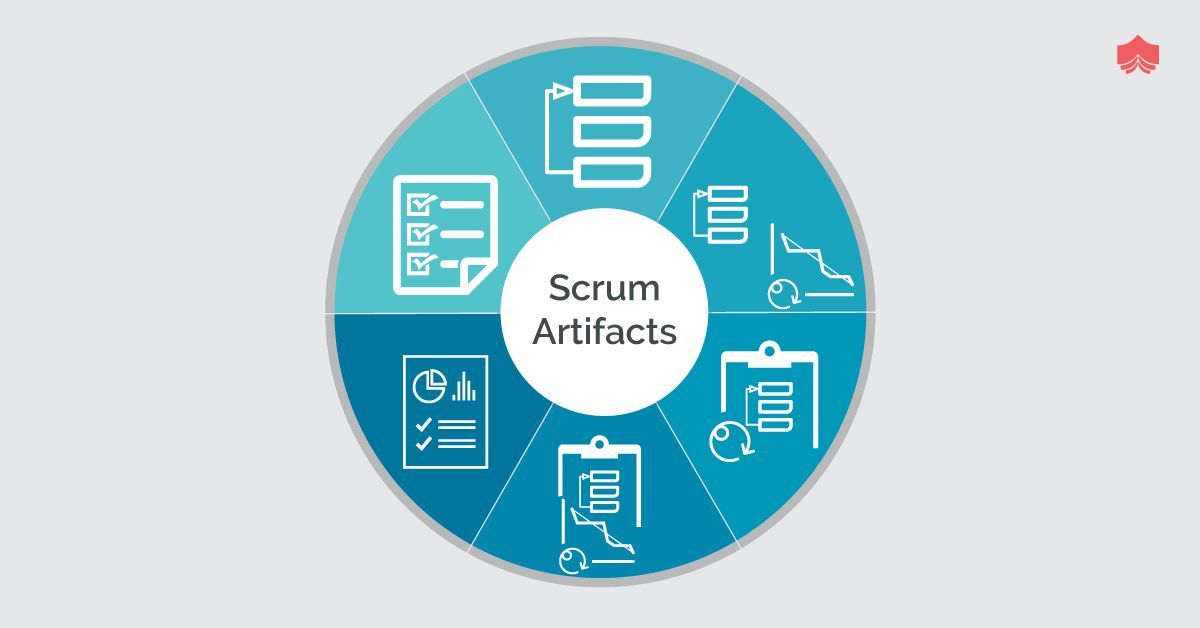
Scrum defines three artefacts and three artefacts only. Furthermore, each one provides transparency at a different level.

Story pin image

Lagos Data School teaches all three artefacts in its live Scrum course. Therefore, this guide explains every artefact in plain English.

Also, Nigerian project examples are used to make each one real. By the end, you will understand and use all three with confidence.


What Is a Scrum Artefact?

A Scrum artefact is a document or output that makes work visible. Furthermore, artefacts reduce guesswork and improve team alignment. Also, they are updated continuously throughout the sprint. Consequently, every team member always sees the current state of work.

According to the Scrum Guide, artefacts create transparency. Therefore, Scrum artefacts are the team’s source of truth.


Artefact 1: The Product Backlog

The Product Backlog is an ordered list of all future product work. Furthermore, it contains features, fixes, improvements, and experiments. Also, the Product Owner owns and manages it every day.

Consequently, the backlog always reflects the latest product priorities. In short, the Product Backlog is the single source of all future work.


What Goes Into the Product Backlog?

  • User stories: Features written from the user’s point of view.
  • Bug fixes: Known issues that need to be resolved in a future sprint.
  • Technical tasks: Infrastructure, security, or performance improvements.
  • Research spikes: Short investigations needed before a feature can be built.
  • Stakeholder requests: New ideas gathered from sprint reviews or user feedback.


How the Product Backlog Is Ordered in Nigerian Teams

The highest-value items always sit at the top of the backlog. Furthermore, the Product Owner uses business value and risk to rank items.

Also, items at the top are detailed and ready to work on.

Consequently, items lower down are less refined and more loosely defined. Therefore, the backlog gets more detailed as items move toward the top.


Nigerian Example: Product Backlog for a Lagos Food App

Priority Backlog Item Type Story Points
1 User can search for restaurants by location User Story 5
2 User can add items to a cart User Story 3
3 User can pay with Paystack User Story 8
4 Fix broken image upload on vendor dashboard Bug Fix 2
5 Improve app load time by 30% Tech Task 5
6 Add delivery tracking feature (future sprint) User Story 13


Backlog Grooming: Keeping the Backlog Healthy

Backlog grooming is a regular session to keep the backlog clean. Furthermore, it is held one to two days before sprint planning. Also, the Product Owner and team refine, estimate, and re-order items.

Consequently, only clear, ready items enter the sprint planning meeting. Therefore, sprint planning runs faster when the backlog is well-groomed.


Artefact 2: The Sprint Backlog

The Sprint Backlog is the team’s plan for the current sprint. Furthermore, it contains three things: the sprint goal, selected backlog items, and tasks.

Also, developers own and update the sprint backlog every day. Consequently, the team always knows what is left to do this sprint. In short, the Sprint Backlog is the team’s daily working plan.


How the Sprint Backlog Is Created

First, the Product Owner presents the top backlog items at sprint planning. Also, the team selects items that fit within the sprint’s capacity. Furthermore, each selected item is broken into daily tasks.

Next, each task is assigned to a developer or left for self-selection.

Finally, the sprint backlog is complete and visible on the team’s board.


Sprint Backlog vs Product Backlog: Key Differences

Feature Product Backlog Sprint Backlog
Scope All future product work This sprint only
Owner Product Owner Development team
Update rate Continuously — every day Every day during the sprint
Detail level Varies — rough to detailed Fully detailed daily tasks
Change rules Can change anytime Cannot change during the sprint
Nigerian use Roadmap for the whole product Daily task board for the sprint


The Sprint Burndown Chart

The sprint burndown chart tracks work remaining in the sprint. Furthermore, it is updated every day by the developers.

Also, a falling burndown line means the team is on track. Consequently, a flat or rising line signals a problem that needs attention. Therefore, review the burndown chart at every Daily Scrum.


Artefact 3: The Product Increment

The Increment is the sum of all completed sprint work. Furthermore, it includes work from every previous sprint as well.

Also, each new sprint adds more value to the existing increment. Consequently, the product grows and improves with every sprint cycle. In short, the Increment is the growing, working version of the product.


What Is the Definition of Done?

The Definition of Done (DoD) is a shared checklist for completed work. Furthermore, every sprint item must pass the DoD before it counts as done. Also, the team defines the DoD together at the start of the project.

Consequently, quality standards are consistent across every sprint. Therefore, partial or untested work is never counted in the sprint increment.


Nigerian Example: Definition of Done for a Lagos Fintech Team

  • Code reviewed: A second developer has reviewed and approved the code.
  • Tests passing: All automated unit and integration tests pass without errors.
  • Security check: The feature has passed a basic OWASP security review.
  • Product Owner accepted: The PO has reviewed and accepted the feature against criteria.
  • Deployed to staging: The feature is live on the staging environment for review.


Why the Increment Must Be Potentially Shippable

Every increment must be in a releasable state at sprint end. Furthermore, this does not mean it must be released — only that it could be. Also, a potentially shippable increment gives the Product Owner full control. Consequently, the team releases when the business is ready — not just when the sprint ends. Therefore, quality and completeness are non-negotiable in every Nigerian sprint.


All Three Artefacts at a Glance

Artefact Owner Updated When Key Commitment
Product Backlog Product Owner Continuously Product Goal
Sprint Backlog Development Team Every day in the sprint Sprint Goal
Product Increment Development Team End of every sprint Definition of Done


Free Resource: The Scrum Guide on Artefacts

Lagos Data School recommends the Scrum Guide for the official definition of all three artefacts. Furthermore, it explains each artefact’s commitment in detail. Also, it is free, short, and easy to read in one sitting.


How Lagos Data School Teaches Scrum Artefacts

Lagos Data School covers all three Scrum artefacts in its live course. Students build real product backlogs and sprint backlogs from Nigerian project briefs. Furthermore, they define a custom Definition of Done for every sprint exercise. Consequently, graduates manage all three artefacts correctly from day one.

Visit the Lagos Data School training page to enrol. Also, explore our graduates’ work at the Lagos Data School student portfolio.


Frequently Asked Questions

Q1: Who can add items to the Product Backlog?

Anyone can suggest items — stakeholders, developers, or users. However, only the Product Owner decides whether to add them. Also, the PO ranks all accepted items by business value. Therefore, the backlog always reflects the Product Owner’s priorities.


Q2: Can the Sprint Backlog change during a sprint?

The sprint goal cannot change once the sprint starts. However, developers can add tasks to the sprint backlog during the sprint. Also, they can remove tasks if they discover a better approach. Therefore, the sprint backlog is flexible in execution but fixed in goal.


Q3: What happens if an increment is not done by sprint end?

Incomplete items are returned to the product backlog. Furthermore, they are re-prioritised for a future sprint. Also, they are never counted in the sprint’s velocity. Consequently, the team only claims velocity for truly completed work.


Q4: How detailed should a product backlog item be?

Items at the top need full detail and acceptance criteria. However, items further down can be rough and loosely defined. Also, the team refines lower items during backlog grooming sessions. Therefore, only refine items when they are close to the top of the backlog.


Master Scrum Artefacts with Lagos Data School

Scrum artefacts make work visible, honest, and accountable. Furthermore, they are the backbone of every great Nigerian Scrum team. Lagos Data School trains you to own, update, and use all three artefacts expertly.

Visit Lagos Data School and start your Scrum journey today.

Risk Management in Projects: A Practical Guide for Nigerian Managers

Are you looking for a practical, Nigeria-specific guide to risk management in projects? If so, your search ends here. Lagos Data School is Nigeria’s leading live technology and data training centre. Indeed, risk management is one of the most critical and most neglected knowledge areas in Nigerian project management. Every project manager, programme analyst, and team lead who works in Lagos, Abuja, Port Harcourt, or any other Nigerian city faces risks that are unique to the Nigerian environment.

Therefore, this guide explains what project risk management is, why it is essential in Nigeria, how risks are identified and assessed, and how a practical risk register is built. In addition, Nigerian examples are used throughout. As a result, by the end of this guide, you will be equipped to manage risks on any Nigerian project professionally.


What Is Project Risk Management?

Project risk management is the systematic process of identifying, assessing, and responding to events that could affect a project’s objectives. Risks are defined as uncertain events that, if they occur, have a positive or negative effect on project goals. Furthermore, risk management is not about eliminating uncertainty; it is about preparing for it so that the project team is never caught off guard.

According to the Project Management Institute’s PMBOK® Guide, risk management consists of six processes: Plan Risk Management, Identify Risks, Perform Qualitative Risk Analysis, Perform Quantitative Risk Analysis, Plan Risk Responses, and Monitor Risks. Additionally, all six processes are applied continuously throughout the project lifecycle, not just at the beginning.


Why Risk Management Is Especially Important in Nigeria

Nigerian projects face risks that are more complex and more varied than those found in more stable environments. Consequently, Nigerian project managers must be more risk-aware than their counterparts in other countries. Below are the key risk categories that are commonly encountered on Nigerian projects:

  • Foreign exchange volatility: Imported materials, software licences, and equipment are priced in US dollars or euros. When the naira depreciates sharply, project budgets are exceeded without a single scope change.
  • Power supply disruptions: Grid power is unreliable across most Nigerian states. Therefore, generator costs, fuel procurement, and downtime must be planned as risk items on every project.
  • Regulatory changes: New CBN, FIRS, or NNPC regulations can affect project financing, procurement, or operations mid-execution. Consequently, regulatory monitoring must be built into the risk management plan.
  • Logistics and supply chain delays: Port congestion at Apapa, road conditions on federal highways, and customs clearance backlogs all introduce material delivery risks that must be planned for.
  • Stakeholder opposition: Community disturbances, political interference, and labour disputes are frequent sources of project disruption in Nigerian states.


In short, risk management in Nigeria is not optional. It is a survival skill for every project manager.


The Risk Management Process: Step by Step

Step 1: Plan Risk Management

The risk management approach is documented in a Risk Management Plan before any risks are identified. This plan defines how risks will be identified, who is responsible, how often the risk register will be reviewed, and what scoring scales will be used for probability and impact. Furthermore, the plan is reviewed and approved by the project sponsor before risk identification begins.

Step 2: Identify Risks

All potential risks are brainstormed with the project team, subject matter experts, and relevant stakeholders. Techniques used include brainstorming sessions, interviews, review of lessons learned from past Nigerian projects, and SWOT analysis. Additionally, a risk prompt list based on Nigerian-specific categories is used to ensure no common local risk is overlooked.

Step 3: Perform Qualitative Risk Analysis

Each identified risk is scored on two dimensions: probability (how likely it is to occur) and impact (how severely it would affect the project if it did occur). Both dimensions are scored on a scale of 1 to 5. The risk score is calculated by multiplying probability by impact. Consequently, risks are ranked from highest to lowest score so that the most critical risks receive the most management attention.

Step 4: Plan Risk Responses

A response strategy is selected for each risk. The four main response strategies for negative risks are: Avoid (eliminate the risk by changing the plan), Transfer (shift the financial impact to a third party, such as an insurer), Mitigate (reduce the probability or impact), and Accept (acknowledge the risk and prepare a contingency). Furthermore, a risk owner is assigned to each risk response so that accountability is clear.

Step 5: Monitor Risks

The risk register is reviewed at every project status meeting. New risks are added as they are identified. Moreover, risk scores are updated as conditions change, and response actions are implemented. As a result, the risk register remains a live, useful document rather than a static report that is filed and forgotten.


The Nigerian Project Risk Matrix

Below is a standard risk scoring matrix used by Lagos Data School to train Nigerian project managers. Probability and impact are each scored from 1 (very low) to 5 (very high). The resulting risk score determines the priority level:

Risk Score (P × I) Priority Level Recommended Response
1 – 4 Low Accept. Monitor at monthly reviews.
5 – 9 Medium Mitigate or transfer. Assign a risk owner.
10 – 14 High Mitigate urgently. Escalate to sponsor.
15 – 25 Critical Avoid or transfer immediately. Treat as top priority.


A Nigerian Analogy: The Generator and the NEPA Bill

Think of risk management as the decision every Lagos household makes about power supply. The risk of grid outage is known, so a generator is purchased (mitigation), fuel is stocked (contingency), and a backup UPS is installed for sensitive equipment (transfer). No one is surprised when NEPA takes light because the risk was planned for.

On the other hand, a project team that ignores risk management is like a household with no generator, no fuel, and no torch. When power goes out — and it always does — the entire operation stops. Therefore, Nigerian project managers who plan for risk keep their projects moving when disruptions occur.


Free Resource: PMI Risk Management Practice Guide

In addition to Lagos Data School’s live training, Lagos Data School recommends the PMI Risk Management Practice Guide as the most authoritative free reference for Nigerian project managers who want to deepen their risk management knowledge. It covers all six risk management processes in detail, includes risk register templates, and provides industry-specific guidance. Furthermore, it is the standard reference for both the PMP and CAPM certification exams. As a result, any Nigerian who studies this guide alongside Lagos Data School’s live training will be equipped to manage risk at a professional, certifiable level.


How Lagos Data School Teaches Risk Management

Lagos Data School’s project management course covers risk management in a dedicated module with live instruction, a full Nigerian risk register exercise, and probability-impact matrix practice. Students build and review risk registers for simulated Lagos fintech and infrastructure projects. Additionally, risk response planning is practised using real Nigerian risk scenarios. In short, Lagos Data School builds the risk management skills that pass the PMP exam and work on real Nigerian projects.

To enrol, visit the Lagos Data School training page. See our graduates’ project work at the Lagos Data School student portfolio.


Frequently Asked Questions: Risk Management in Nigerian Projects

Q1: What Is a Risk Register?

A risk register is a document that lists all identified project risks along with their probability, impact, score, owner, and response strategy. Furthermore, it is updated throughout the project lifecycle and reviewed at every status meeting. In short, the risk register is the primary tool through which risk management is practised on Nigerian projects.

Q2: Who Is Responsible for Risk Management on a Nigerian Project?

The project manager is ultimately responsible for risk management. However, every team member is responsible for identifying and reporting new risks within their area of work. Additionally, the risk owner — the person assigned to a specific risk response — is accountable for implementing and monitoring that response. In short, risk management is a whole-team responsibility, not a solo task.


Risk Management Mastered: Now Build Your Career at Lagos Data School

Ultimately, risk management is the skill that separates reactive Nigerian project managers from proactive ones. Every project in Nigeria faces uncertainty. Consequently, the managers who plan for that uncertainty are the ones whose projects survive budget cuts, exchange rate shocks, and supply chain disruptions.

Therefore, take your next step today. Visit Lagos Data School and enrol in the project management course. As a result, risk registers, risk matrices, response planning, and every other risk management skill will become clear, certified tools in your Nigerian career toolkit.

Hi, How Can We Help You?
Welcome To
Lagos Data School

Artificial Intelligence (AI), Machine Learning and Robotics Programmes Are Now Available!!!

Enroll Now!

Thank You
100% secure website.