What Is Scrum? A Plain-English Guide for Beginners

What Is Scrum? Everything Nigerian Beginners Need to Know

Scrum is the most popular Agile framework in the world. However, many Nigerian professionals still find it confusing. Lagos Data School explains Scrum in plain, simple English. Therefore, this guide covers everything a beginner needs to know.

This may contain: the word scrum is surrounded by gears and cogwheels, which are connected to

Also, it uses Nigerian examples to make every concept clear. By the end, you will understand Scrum well enough to use it.


The One-Sentence Definition of Scrum

Scrum is a framework for delivering work in short, focused cycles. Furthermore, each cycle is called a sprint and lasts one to four weeks. Also, the team reviews progress at the end of every sprint. Consequently, the product improves with every single cycle. In short, Scrum replaces guesswork with a clear, repeating rhythm.


Where Did Scrum Come From?

Scrum was created by Ken Schwaber and Jeff Sutherland in 1995. Furthermore, its official rules are documented in the free Scrum Guide. Also, it is used by millions of teams across every industry. Consequently, Nigerian tech companies, banks, and NGOs all use Scrum today. Therefore, learning Scrum opens doors across every Nigerian career sector.


The Three Scrum Roles

Scrum defines three roles and three roles only. Furthermore, each role has a clear and distinct responsibility.


Role 1: Product Owner

The Product Owner decides what the team builds and in what order. Furthermore, they manage the product backlog every day.

Also, they represent the voice of the customer inside the team. Consequently, the team always works on the most valuable items first. In Nigeria, the Product Owner is often the founder, PM, or client lead.


Role 2: Scrum Master

The Scrum Master is the servant-leader of the Scrum team. Furthermore, they remove blockers that slow the team down. Also, they facilitate all four Scrum ceremonies every sprint. Consequently, the team follows the Scrum process correctly and consistently. In short, the Scrum Master protects the team and the process.


Role 3: Developers

Developers are all the people who build the product. Furthermore, this includes designers, testers, and engineers. Also, developers self-organise and plan their own sprint tasks. Consequently, the team takes ownership of its commitments fully. Therefore, Scrum developers are accountable to the sprint goal — not to a manager.


The Three Scrum Artefacts

Scrum uses three artefacts to manage and track work. Furthermore, each artefact serves a specific purpose in the framework.


Artefact 1: Product Backlog

The product backlog is a prioritised list of all work to be done. Furthermore, the Product Owner owns and updates it continuously. Also, every new feature, fix, or improvement goes into the backlog. Consequently, the team always has a clear list of what to build next.


Artefact 2: Sprint Backlog

The sprint backlog contains the items selected for the current sprint. Furthermore, it is created during sprint planning. Also, it shows every task the team has committed to this sprint. Consequently, the sprint backlog is the team’s daily to-do list.


Artefact 3: Product Increment

The increment is the working product delivered at the end of each sprint. Furthermore, it must meet the team’s Definition of Done. Also, the increment is potentially shippable — ready for users. Therefore, every sprint adds real, tested value to the product.


The Four Scrum Ceremonies

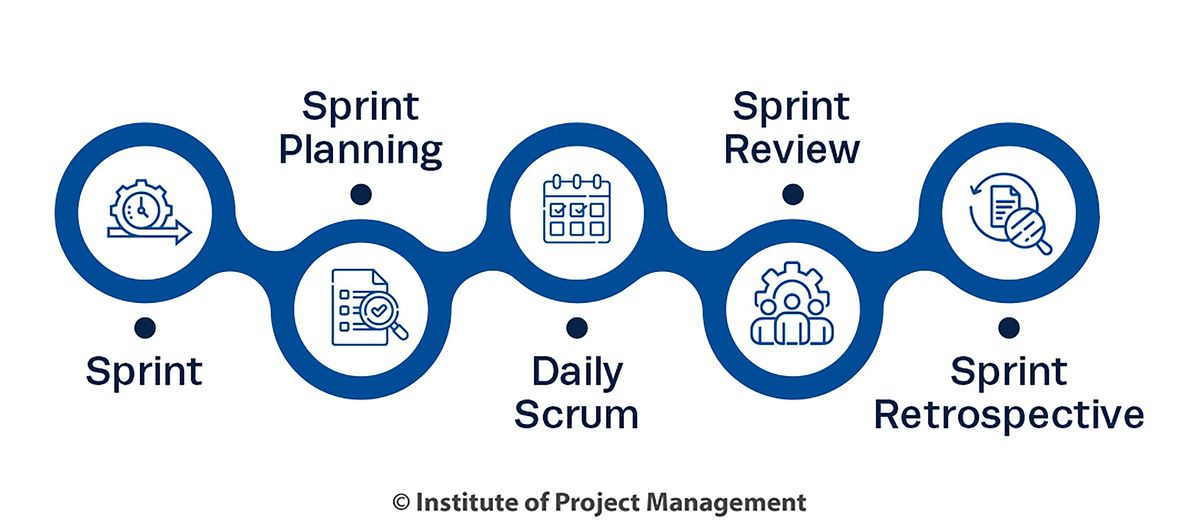
Scrum uses four ceremonies to create its delivery rhythm. Furthermore, each ceremony has a fixed time box and a clear purpose.

Ceremony When Time Box Purpose
Sprint Planning Start of sprint 2 hrs per week of sprint Set sprint goal and select backlog items
Daily Scrum Every day 15 minutes Sync the team and surface blockers
Sprint Review End of sprint 1 hr per week of sprint Demo the increment to stakeholders
Retrospective End of sprint 45 mins per week Improve the team process next sprint


How a Scrum Sprint Works: Day by Day


Day 1: Sprint Planning

The team meets to set the sprint goal and select backlog items. Furthermore, each item is broken into tasks for the week ahead. Also, the team confirms it has enough capacity to meet the goal. Consequently, the sprint starts with full clarity and team alignment.


Days 2–13: Daily Scrum and Sprint Work

Every morning, the team holds a fifteen-minute stand-up. Furthermore, each member answers three simple questions.

First: what did I finish yesterday?

Second: what will I do today?

Third: what is blocking me?

Also, the Scrum Master resolves blockers as soon as they surface. Consequently, the team stays on track toward the sprint goal daily.


Day 14: Sprint Review and Retrospective

The team demos the working increment to stakeholders. Furthermore, feedback is gathered and added to the product backlog. Also, the retrospective follows immediately after the review. Consequently, the next sprint is planned with both fresh feedback and process improvements.


Nigerian Teams Using Scrum Right Now

  • Lagos fintech teams: Run two-week sprints to release payment features continuously.
  • Abuja government IT teams: Use Scrum to deliver digital service portals in phases.
  • Port Harcourt software agencies: Manage client projects with sprint reviews every two weeks.
  • Nigerian edtech startups: Update course content and platform features every sprint.


Scrum vs Agile: Are They the Same Thing?

No. Agile is a mindset and a set of values. Furthermore, Scrum is one specific framework for applying Agile. Also, other Agile frameworks like Kanban and XP exist alongside Scrum.

Consequently, all Scrum teams are Agile, but not all Agile teams use Scrum. In short, Scrum is the most popular way to practise Agile in Nigeria.


Free Resource: The Official Scrum Guide

Lagos Data School recommends the free Scrum Guide as the first thing every beginner should read. Furthermore, it is short, clear, and written by Scrum’s two founders.

Also, it is available in over thirty languages for free download. Therefore, every Nigerian Scrum beginner should read it this week.


How Lagos Data School Teaches Scrum

Lagos Data School delivers live Scrum training for Nigerian professionals. Students run full sprint simulations using real Nigerian project scenarios.

Furthermore, they practise all four Scrum ceremonies in every course module. Consequently, graduates step into Scrum roles with practical confidence.

Visit the Lagos Data School training page to enrol today. Also, explore our graduates’ Scrum projects at the Lagos Data School student portfolio.


Frequently Asked Questions

Q1: Do I need a certification to use Scrum in Nigeria?

No. Any team can start using Scrum without a certification. However, a CSM or PSM I certification proves your knowledge to employers. Also, Lagos Data School prepares students for both certifications. Therefore, certification is strongly recommended for career growth.


Q2: How long does it take to learn Scrum?

You can learn Scrum basics in one to two days of structured training. Furthermore, practical sprint experience builds real confidence quickly. Also, most Nigerian professionals feel comfortable with Scrum after two sprints. Therefore, start practising immediately after your first training session.


Q3: Can Scrum work for teams outside tech in Nigeria?

Yes. Nigerian marketing, HR, operations, and events teams all use Scrum. Furthermore, the ceremonies and artefacts apply to any work delivered in cycles. Also, Lagos Data School trains non-tech Nigerian professionals in Scrum regularly. Consequently, Scrum is a universal tool — not just a developer framework.


Q4: What is the biggest benefit of Scrum for Nigerian teams?

The biggest benefit is early and frequent delivery of real results. Furthermore, Nigerian clients see working products every two weeks. Also, problems are caught in sprint one rather than at the final deadline. Consequently, Nigerian Scrum teams earn client trust much faster than waterfall teams.


Start Your Scrum Journey with Lagos Data School

Scrum is the most practical Agile framework for Nigerian teams. Furthermore, it works across tech, banking, NGOs, and beyond. Lagos Data School gives you the live training and practice to master Scrum.

Visit Lagos Data School and enrol in the Scrum course today.
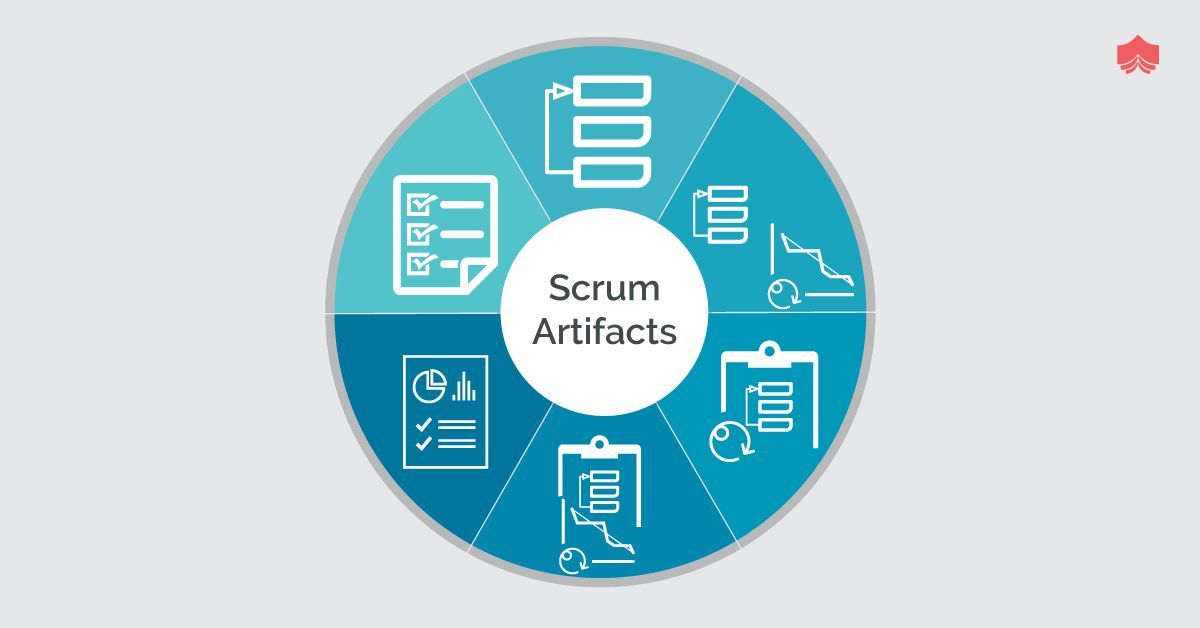
Scrum Artifacts: Your Complete Guide

Scrum Artifacts Explained for Nigerian Professionals

Scrum defines three artefacts and three artefacts only. Furthermore, each one provides transparency at a different level.

Story pin image

Lagos Data School teaches all three artefacts in its live Scrum course. Therefore, this guide explains every artefact in plain English.

Also, Nigerian project examples are used to make each one real. By the end, you will understand and use all three with confidence.


What Is a Scrum Artefact?

A Scrum artefact is a document or output that makes work visible. Furthermore, artefacts reduce guesswork and improve team alignment. Also, they are updated continuously throughout the sprint. Consequently, every team member always sees the current state of work.

According to the Scrum Guide, artefacts create transparency. Therefore, Scrum artefacts are the team’s source of truth.


Artefact 1: The Product Backlog

The Product Backlog is an ordered list of all future product work. Furthermore, it contains features, fixes, improvements, and experiments. Also, the Product Owner owns and manages it every day.

Consequently, the backlog always reflects the latest product priorities. In short, the Product Backlog is the single source of all future work.


What Goes Into the Product Backlog?

  • User stories: Features written from the user’s point of view.
  • Bug fixes: Known issues that need to be resolved in a future sprint.
  • Technical tasks: Infrastructure, security, or performance improvements.
  • Research spikes: Short investigations needed before a feature can be built.
  • Stakeholder requests: New ideas gathered from sprint reviews or user feedback.


How the Product Backlog Is Ordered in Nigerian Teams

The highest-value items always sit at the top of the backlog. Furthermore, the Product Owner uses business value and risk to rank items.

Also, items at the top are detailed and ready to work on.

Consequently, items lower down are less refined and more loosely defined. Therefore, the backlog gets more detailed as items move toward the top.


Nigerian Example: Product Backlog for a Lagos Food App

Priority Backlog Item Type Story Points
1 User can search for restaurants by location User Story 5
2 User can add items to a cart User Story 3
3 User can pay with Paystack User Story 8
4 Fix broken image upload on vendor dashboard Bug Fix 2
5 Improve app load time by 30% Tech Task 5
6 Add delivery tracking feature (future sprint) User Story 13


Backlog Grooming: Keeping the Backlog Healthy

Backlog grooming is a regular session to keep the backlog clean. Furthermore, it is held one to two days before sprint planning. Also, the Product Owner and team refine, estimate, and re-order items.

Consequently, only clear, ready items enter the sprint planning meeting. Therefore, sprint planning runs faster when the backlog is well-groomed.


Artefact 2: The Sprint Backlog

The Sprint Backlog is the team’s plan for the current sprint. Furthermore, it contains three things: the sprint goal, selected backlog items, and tasks.

Also, developers own and update the sprint backlog every day. Consequently, the team always knows what is left to do this sprint. In short, the Sprint Backlog is the team’s daily working plan.


How the Sprint Backlog Is Created

First, the Product Owner presents the top backlog items at sprint planning. Also, the team selects items that fit within the sprint’s capacity. Furthermore, each selected item is broken into daily tasks.

Next, each task is assigned to a developer or left for self-selection.

Finally, the sprint backlog is complete and visible on the team’s board.


Sprint Backlog vs Product Backlog: Key Differences

Feature Product Backlog Sprint Backlog
Scope All future product work This sprint only
Owner Product Owner Development team
Update rate Continuously — every day Every day during the sprint
Detail level Varies — rough to detailed Fully detailed daily tasks
Change rules Can change anytime Cannot change during the sprint
Nigerian use Roadmap for the whole product Daily task board for the sprint


The Sprint Burndown Chart

The sprint burndown chart tracks work remaining in the sprint. Furthermore, it is updated every day by the developers.

Also, a falling burndown line means the team is on track. Consequently, a flat or rising line signals a problem that needs attention. Therefore, review the burndown chart at every Daily Scrum.


Artefact 3: The Product Increment

The Increment is the sum of all completed sprint work. Furthermore, it includes work from every previous sprint as well.

Also, each new sprint adds more value to the existing increment. Consequently, the product grows and improves with every sprint cycle. In short, the Increment is the growing, working version of the product.


What Is the Definition of Done?

The Definition of Done (DoD) is a shared checklist for completed work. Furthermore, every sprint item must pass the DoD before it counts as done. Also, the team defines the DoD together at the start of the project.

Consequently, quality standards are consistent across every sprint. Therefore, partial or untested work is never counted in the sprint increment.


Nigerian Example: Definition of Done for a Lagos Fintech Team

  • Code reviewed: A second developer has reviewed and approved the code.
  • Tests passing: All automated unit and integration tests pass without errors.
  • Security check: The feature has passed a basic OWASP security review.
  • Product Owner accepted: The PO has reviewed and accepted the feature against criteria.
  • Deployed to staging: The feature is live on the staging environment for review.


Why the Increment Must Be Potentially Shippable

Every increment must be in a releasable state at sprint end. Furthermore, this does not mean it must be released — only that it could be. Also, a potentially shippable increment gives the Product Owner full control. Consequently, the team releases when the business is ready — not just when the sprint ends. Therefore, quality and completeness are non-negotiable in every Nigerian sprint.


All Three Artefacts at a Glance

Artefact Owner Updated When Key Commitment
Product Backlog Product Owner Continuously Product Goal
Sprint Backlog Development Team Every day in the sprint Sprint Goal
Product Increment Development Team End of every sprint Definition of Done


Free Resource: The Scrum Guide on Artefacts

Lagos Data School recommends the Scrum Guide for the official definition of all three artefacts. Furthermore, it explains each artefact’s commitment in detail. Also, it is free, short, and easy to read in one sitting.


How Lagos Data School Teaches Scrum Artefacts

Lagos Data School covers all three Scrum artefacts in its live course. Students build real product backlogs and sprint backlogs from Nigerian project briefs. Furthermore, they define a custom Definition of Done for every sprint exercise. Consequently, graduates manage all three artefacts correctly from day one.

Visit the Lagos Data School training page to enrol. Also, explore our graduates’ work at the Lagos Data School student portfolio.


Frequently Asked Questions

Q1: Who can add items to the Product Backlog?

Anyone can suggest items — stakeholders, developers, or users. However, only the Product Owner decides whether to add them. Also, the PO ranks all accepted items by business value. Therefore, the backlog always reflects the Product Owner’s priorities.


Q2: Can the Sprint Backlog change during a sprint?

The sprint goal cannot change once the sprint starts. However, developers can add tasks to the sprint backlog during the sprint. Also, they can remove tasks if they discover a better approach. Therefore, the sprint backlog is flexible in execution but fixed in goal.


Q3: What happens if an increment is not done by sprint end?

Incomplete items are returned to the product backlog. Furthermore, they are re-prioritised for a future sprint. Also, they are never counted in the sprint’s velocity. Consequently, the team only claims velocity for truly completed work.


Q4: How detailed should a product backlog item be?

Items at the top need full detail and acceptance criteria. However, items further down can be rough and loosely defined. Also, the team refines lower items during backlog grooming sessions. Therefore, only refine items when they are close to the top of the backlog.


Master Scrum Artefacts with Lagos Data School

Scrum artefacts make work visible, honest, and accountable. Furthermore, they are the backbone of every great Nigerian Scrum team. Lagos Data School trains you to own, update, and use all three artefacts expertly.

Visit Lagos Data School and start your Scrum journey today.

Scrum vs Kanban: Complete Guide

Scrum vs Kanban: Which One Is Right for Your Nigerian Team?

Scrum and Kanban are both popular Agile frameworks. However, they work very differently from each other.

Lagos Data School helps Nigerian teams choose the right framework. Therefore, this guide compares both in plain, simple English. Also, Nigerian work examples are used throughout. By the end, you will know exactly which one to use.


What Is Scrum?

Scrum delivers work in fixed time boxes called sprints. Furthermore, each sprint lasts one to four weeks. Also, Scrum defines three roles: Product Owner, Scrum Master, and Developers.

Consequently, every team member has a clear responsibility. In short, Scrum is a structured framework with ceremonies and fixed roles.

Visit the Scrum Guide for the full official definition.


What Is Kanban?

Kanban is a visual, flow-based framework with no fixed sprints. Furthermore, work flows continuously from a To-Do column to Done.

Also, Kanban limits how much work can be in progress at once. Consequently, the team finishes tasks faster rather than starting more. In short, Kanban is flexible and works best for continuous workflows.

Visit the Kanban Guide for the free official Kanban reference.


Scrum vs Kanban: A Direct Comparison

Use this table to compare both frameworks side by side.


Feature Scrum Kanban
Work style Fixed sprints (1–4 weeks) Continuous flow, no fixed cycles
Roles PO, Scrum Master, Developers No defined roles required
Ceremonies 4 events every sprint None required
Planning Sprint planning before each cycle Pull items as capacity allows
WIP limits Sprint capacity sets the limit Explicit WIP limits per column
Change policy No changes mid-sprint Changes welcomed any time
Metrics Velocity and burndown Lead time and cycle time
Best Nigerian use Product and app development Support, HR, and operations
Learning curve Medium — roles and events to learn Low — easy to start same day
Team size 3–9 people Any size


When to Use Scrum in Nigeria

Use Scrum when your team is building a defined product. Also, use it when you need regular client feedback every sprint.

Furthermore, Scrum suits Nigerian fintech, edtech, and software teams. Consequently, teams that benefit from a structured rhythm choose Scrum.


Nigerian Scrum Use Cases

  • Lagos payment app team: Ships new features every two-week sprint.
  • Abuja government IT unit: Delivers a digital service portal in quarterly sprints.
  • Nigerian edtech startup: Updates course content with a two-week sprint cycle.


When to Use Kanban in Nigeria

Use Kanban when work arrives unpredictably throughout the day. Also, use it when there are no clear sprint-sized deliverables.

Furthermore, Kanban suits Nigerian IT support and HR teams best. Consequently, teams that handle ongoing, mixed workloads choose Kanban.


Nigerian Kanban Use Cases

  • Lagos IT helpdesk: Tracks support tickets as they arrive using a Kanban board.
  • Abuja HR recruitment team: Moves candidates through hiring stages on a visual board.
  • Nigerian marketing agency: Manages continuous content publishing with WIP limits.


Can a Nigerian Team Use Both Scrum and Kanban?

Yes. This combination is called Scrumban. Furthermore, Scrumban suits teams that have both sprint work and ongoing tasks. Also, many Nigerian product teams use Kanban between sprints for bug fixes.

Consequently, Scrumban gives structure where needed and flexibility everywhere else. Therefore, mixing both frameworks is perfectly valid for Nigerian teams.


Key Differences at a Glance

Question Choose Scrum If… Choose Kanban If…
Work type? You build products sprint by sprint. Work arrives unpredictably every day.
Team roles? You want clear PO and SM accountability You prefer no fixed role definitions
Feedback? Regular sprint reviews suit your client. Continuous delivery fits better.
Nigerian fit? Fintech, software, edtech teams IT support, HR, marketing teams


Free Resource: Scrum Guide and Kanban Guide

Lagos Data School recommends both the Scrum Guide and the Kanban Guide as free starting references. Furthermore, both are short and easy to read in one sitting. Also, they clearly explain the core rules of each framework.


How Lagos Data School Teaches Scrum and Kanban

Lagos Data School covers both Scrum and Kanban in its live Agile course. Students practise sprint boards and Kanban boards in every session. Furthermore, Nigerian case studies show when to apply each framework. Consequently, graduates choose the right tool for every Nigerian project.

Visit the Lagos Data School training page to enrol. Also, explore graduates’ Agile work at the Lagos Data School student portfolio.


Frequently Asked Questions

Q1: Is Kanban easier to learn than Scrum?

Yes. Kanban has fewer rules and no mandatory ceremonies. Furthermore, a team can start using Kanban on the same day they learn it. Also, Scrum requires training in roles, events, and artefacts before starting. Therefore, Kanban is the better entry point for complete Agile beginners.


Q2: Which framework do Lagos tech companies prefer?

Most Lagos tech companies use Scrum for product development. However, operations and support teams in those same companies often use Kanban. Also, many companies run both frameworks simultaneously in different departments. Therefore, knowing both frameworks makes you valuable across any Nigerian company.


Q3: Can Kanban be used for a Nigerian construction project?

Yes. Kanban boards work well for construction punch lists and snagging tasks. Furthermore, subcontractors can track their tasks visually without Scrum training. Also, site managers use Kanban columns like: Pending, In Progress, and Inspected. Therefore, Kanban applies to Nigerian construction teams just as easily as tech teams.


Choose Wisely and Build with Lagos Data School

Scrum and Kanban are both powerful frameworks for Nigerian teams. Furthermore, the right choice depends on your type of work and team structure. Lagos Data School trains you to use both with confidence and clarity.

Visit Lagos Data School and enroll in the Agile course today.

What Is a Sprint in Scrum? Everything You Need to Know

What Is a Sprint in Scrum? A Clear Guide for Nigerian Teams

A sprint is the most important concept in Scrum. However, many Nigerian beginners misunderstand what a sprint really is.

This may contain: an image of the process to produce product in different stages, including printing and packaging

Lagos Data School explains sprints in plain, simple English. Therefore, this guide covers everything you need to know about sprints. Also, Nigerian project examples are used throughout.  By the end, you will know how to plan, run, and close a sprint.


The One-Sentence Definition of a Sprint

A sprint is a short, fixed time box for delivering valuable work.

Furthermore, it lasts between one and four weeks. Also, the team commits to a specific goal at the start of every sprint.

Consequently, the entire team works toward that one goal until the sprint ends. In short, a sprint turns a plan into a working product — every time.


Why Sprints Are the Engine of Every Scrum Team

Sprints create a delivery rhythm that Nigerian teams can rely on. Furthermore, clients see real working results every two weeks.

Also, problems are caught in sprint one, not months later. Consequently, Nigerian projects stay on track far better than with long plans. Therefore, the sprint is the single reason Scrum works so well in practice.


What Happens Inside a Sprint?

Sprint Phase What Happens Who Is Involved
Sprint Planning Sprint goal set. Backlog items selected. Tasks created. Whole team
Daily Scrum 15-minute sync every morning. Blockers surfaced. Developers + SM
Sprint Work Developers build, test, and complete backlog items daily. Developers
Sprint Review Working increment is demoed to stakeholders. Whole team + stakeholders
Retrospective Team reviews process and commits to one improvement. Whole team


How Long Should a Nigerian Sprint Be?

Two weeks is the most popular sprint length in Nigerian tech teams. Furthermore, it gives enough time to build meaningful features. Also, two weeks is short enough to get regular client feedback.

Consequently, most Nigerian fintech and software teams choose two-week sprints.


Choosing the Right Sprint Length

  • 1-week sprint: Best for startups with fast-changing requirements in Nigeria.
  • 2-week sprint: The most common choice for Nigerian product and tech teams.
  • 3-week sprint: Suits Nigerian teams with complex, multi-layered features.
  • 4-week sprint: Reserved for large enterprise projects in Nigerian banks or telecoms.


The Sprint Goal: The Most Important Sprint Element

Every sprint must start with a clear, one-sentence sprint goal. Furthermore, the sprint goal describes the business outcome for this sprint. Also, it helps the team make trade-off decisions mid-sprint.

Consequently, when a blocker appears, the team asks: ‘Does this serve the goal?’ Therefore, a strong sprint goal keeps the team focused when problems arise.


Nigerian Sprint Goal Examples

  • Lagos fintech: ‘Users can register and verify their BVN in under two minutes.’
  • Abuja e-commerce: ‘Customers can add items to a cart and check out with Paystack.’
  • Nigerian HR platform: ‘Recruiters can post a job and receive applications in one flow.’


Sprint Rules Every Nigerian Team Must Follow

First, the sprint goal cannot change once the sprint starts. Also, no new work can be added to the sprint backlog mid-sprint. Furthermore, the sprint length must remain consistent every sprint. Consequently, the team develops a reliable delivery rhythm over time.

However, only the Product Owner can cancel a sprint if the goal becomes invalid. Therefore, sprint rules protect the team from constant disruption.


What Is the Definition of Done in a Sprint?

The Definition of Done is a shared checklist for completed work. Furthermore, every sprint item must pass this checklist to count as done. Also, partial or untested work is never included in the sprint total.

Consequently, quality stays consistent across every Nigerian sprint. In short, the Definition of Done protects the integrity of every sprint.


Sample Definition of Done for a Nigerian Dev Team

  • Code reviewed: A peer has reviewed and approved the code.
  • Tests passing: All automated tests pass with no errors.
  • PO accepted: The Product Owner has reviewed and signed off the item.
  • Deployed to staging: The feature is live on the staging server.


Common Sprint Mistakes Nigerian Teams Make

Mistake What Goes Wrong Fix
No sprint goal Team works without direction Always define one goal before planning
Overcommitting Sprint goal is missed every time Use velocity to set a realistic commitment
Mid-sprint scope creep Sprint plan is disrupted constantly Log new requests in the backlog only
Skipping retrospective Same problems repeat every sprint Protect the retro even if shortened
No Definition of Done Quality varies every sprint Write and agree the DoD before sprint one


The Sprint vs the Iteration: Are They the Same?

Yes. A sprint and an iteration mean the same thing. Furthermore, ‘iteration’ is a general Agile term. Also, ‘sprint’ is the specific Scrum term for the same concept.

Therefore, use ‘sprint’ when your team follows the Scrum framework.


Free Resource: The Official Scrum Guide on Sprints

Lagos Data School recommends the free Scrum Guide for the official sprint definition. Furthermore, it explains sprint planning, sprint cancellation, and sprint goals.

Also, it is available free in many languages and works on Nigerian mobile devices.


How Lagos Data School Teaches Sprints

Lagos Data School runs live sprint simulations in every Agile course session. Students set sprint goals, select backlog items, and run mock stand-ups. Furthermore, every exercise uses real Nigerian project scenarios. Consequently, graduates run their first real sprint with confidence.

Visit the Lagos Data School training page to enrol. Also, see graduates’ Scrum work at the Lagos Data School student portfolio.


Frequently Asked Questions

Q1: Can a sprint be extended in Nigeria?

No. A sprint ends on its agreed end date — always. Furthermore, extending a sprint destroys the team’s delivery rhythm.

Also, incomplete items return to the backlog and re-enter a future sprint. Therefore, never extend a sprint — even when work is almost done.


Q2: What is the minimum team size for a sprint?

A Scrum team needs at least three people to run a sprint. Furthermore, the Scrum Guide recommends three to nine developers.

Also, smaller teams carry more risk when a member is absent. Therefore, aim for at least five team members for a stable Nigerian sprint team.


Q3: How many sprints does a typical Nigerian project run?

Most Nigerian product builds run between six and twenty sprints. Furthermore, a minimum viable product typically takes four to eight sprints.

Also, ongoing products run unlimited sprints as long as the team is active. Therefore, think of sprints as a continuous delivery engine — not a countdown.


Run Confident Sprints with Lagos Data School

Sprints are the heartbeat of every successful Agile team. Furthermore, teams that master sprints deliver faster and more reliably.

Lagos Data School gives you the live practice to run great sprints from day one. Visit Lagos Data School and enrol in the Scrum course today.

Project Management for IT Teams in Lagos: Complete Guide

Why IT Teams in Lagos Need Strong Project Management

Lagos is Nigeria’s tech hub. Hundreds of startups, fintechs, and enterprise IT teams operate here. Yet many Lagos tech projects still miss deadlines and blow budgets.

The reason is simple. Most Lagos IT teams are technically strong but lack project management structure. They write great code but struggle with scope, timelines, and stakeholder updates.

Lagos Data School trains professionals to fix exactly that. This guide shares the best practices every Lagos IT team must adopt today.


Best Practice 1: Define the Scope Before You Write a Line of Code

Scope creep kills Lagos IT projects faster than any technical bug. New features get added mid-sprint without a formal change request. The project expands and the deadline slips.

Every IT project needs a clear scope statement before development starts. List every feature that is in scope. Then list everything that is out of scope.

Use a project charter to document and approve the scope. Get sign-off from the sponsor before any work begins. This one step saves weeks of rework.


Use a Scope Change Request Process

When stakeholders ask for new features, do not say yes immediately. Ask them to submit a formal change request. Review the impact on budget and timeline first.

This protects the project. It also teaches stakeholders to prioritise. Not every idea belongs in the current sprint.


Best Practice 2: Adopt Agile Sprints for Lagos IT Projects

Waterfall works for construction. For IT projects in Lagos, Agile delivers better results. Agile breaks the project into short, focused sprints of one to four weeks.

Each sprint produces working software. The team reviews it, the client approves it, and the next sprint begins. Problems surface early, not at delivery.

The Scrum Guide defines the Scrum framework, which is the most popular Agile approach used by Lagos IT teams. It is free and available online.


Run a Sprint Planning Meeting Every Sprint

At the start of each sprint, the team meets to plan. They select tasks from the product backlog and commit to delivering them by the sprint end date.

This meeting keeps everyone aligned. It gives the project manager visibility into what the team is working on. It also surfaces blockers before they become delays.


Hold Daily Stand-Ups

A daily stand-up is a 15-minute team meeting. Each person answers three questions: What did I finish yesterday? What will I finish today? What is blocking me?

Stand-ups keep the team accountable. Blockers surface within 24 hours. The project manager resolves them before they cascade into multi-day delays.


Best Practice 3: Use the Right Project Management Tools

Many Lagos IT teams track work in WhatsApp groups or Excel sheets. This creates confusion. Tasks are missed, and nobody has a clear view of project status.

Professional project management tools solve this problem. The table below shows the most popular tools used by Lagos IT teams:


Tool Best For Cost
Trello Simple task boards for small Lagos IT teams Free tier available
Jira Agile sprint management for larger teams Paid, widely used in Lagos
Asana Task tracking across cross-functional teams Free and paid tiers
Microsoft Project Formal Gantt scheduling and reporting Paid, used in enterprise
Notion Documentation and project wikis Free and paid tiers


Pick one tool and stick to it. Changing tools mid-project destroys momentum and confuses the team.


Best Practice 4: Communicate Progress to Stakeholders Weekly

Stakeholders in Lagos want regular updates. They do not want to read a 10-page status report. Keep it short and visual.

Send a weekly update every Friday. Include three things: what the team completed this week, what they plan next week, and any risks or blockers.

A simple one-page email or WhatsApp summary works well for most Lagos IT projects. Consistency matters more than format.


Build a RACI Matrix for Every Project

A RACI matrix defines who is Responsible, Accountable, Consulted, and Informed for each task. Many Lagos IT conflicts happen because roles are unclear.

Build the RACI matrix in the first week of the project. Share it with everyone. Refer to it whenever a decision needs to be made.


Best Practice 5: Track Velocity and Improve Every Sprint

Velocity is the amount of work a Lagos IT team completes in one sprint. Track it after each sprint. Over time, the team sees patterns. Some sprints are fast. Others are slow.

Use retrospectives to understand why. At the end of each sprint, the team discusses three things: what worked well, what went wrong, and what to change next sprint.

Teams that run retrospectives consistently improve their delivery speed over time.


A Nigerian Analogy: Building an Aso-Oke vs Buying One

Managing an IT project without structure is like trying to weave aso-oke without a pattern or a loom. You have the thread, the skill, and the time. But without structure, the fabric will not hold.

On the other hand, a weaver who follows a clear pattern and uses the right tools produces a consistent, beautiful result every time. Therefore, Lagos IT teams that adopt project management best practices deliver consistent, high-quality software.


How Lagos Data School Trains IT Project Managers

Lagos Data School offers live project management training designed for Lagos tech professionals. The curriculum covers Agile, Scrum, Gantt charts, stakeholder management, and risk planning. Every session uses real Nigerian IT project scenarios.

Students leave with the skills to manage IT sprints, write project charters, and communicate clearly with Lagos tech stakeholders.

Enrol today at Lagos Data School. See what our graduates achieve at the Lagos Data School student portfolio.


Frequently Asked Questions

Q1: Do Lagos IT Teams Need Formal Project Management?

Yes. Every IT project, no matter how small, benefits from a defined scope, a timeline, and clear roles. Without structure, even a two-person team runs into miscommunication and missed deadlines.

Q2: Is Agile Better Than Waterfall for Lagos IT Teams?

Agile suits most Lagos IT projects because it delivers working software quickly and adapts to changing requirements. Waterfall suits projects with a fixed, well-defined scope. In short, choose based on the project type, not personal preference.

Q3: What Certification Should Lagos IT Project Managers Pursue?

The PMP from PMI is the most recognised certification globally. CAPM is ideal for those just starting. For Agile teams, a Certified Scrum Master (CSM) certification is highly valued by Lagos tech employers.


Start Managing IT Projects Better Today

Great technology means nothing without great project management. Lagos IT teams that master scope control, Agile sprints, stakeholder communication, and retrospectives deliver more, faster, and with less conflict.

Take the next step. Visit Lagos Data School and enrol in the project management course. Your Lagos tech career will never look the same.


© 2026 Lagos Data School  |  www.lagosdataschool.com

Hi, How Can We Help You?
Welcome To
Lagos Data School

Artificial Intelligence (AI), Machine Learning and Robotics Programmes Are Now Available!!!

Enroll Now!

Thank You
100% secure website.